“Tommy looked at her with admiration. 'You're quite a sleuth, Tuppence.'”
— Tommy compliments Tuppence's deductive skills early in their adventure.

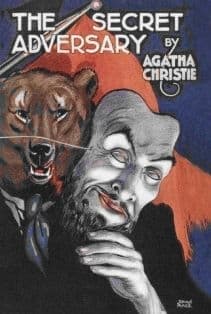
Agatha Christie (1922)
Genre
Thriller / Mystery
Reading Time
268 min
Key Themes
See below
Sign in to track this book
Penniless and seeking adventure, Tommy and Tuppence enter a dangerous world of international espionage when their first 'Young Adventurers Ltd.' assignment to impersonate a missing woman forces them into a race to find her and a secret treaty before England's post-war recovery collapses.
Tommy Beresford, a demobilized officer from the Great War, and Prudence 'Tuppence' Cowley, a former V.A.D., meet by chance in a London restaurant. Both feel the effects of post-war unemployment. Frustrated by their lack of jobs, they decide to form 'The Young Adventurers Ltd.,' offering their services for any task. A mysterious man, Mr. Whittington, overhears their conversation and approaches them with an offer. He needs a young woman to pose as an American named Jane Finn and travel to Paris for a simple assignment. Tuppence, eager for excitement and money, accepts, despite Tommy's concern.
Tuppence, posing as Jane Finn, travels to Paris as Mr. Whittington instructed. However, the assignment quickly turns dangerous when she is offered a bribe to keep quiet and then threatened. Whittington mysteriously disappears, leaving Tuppence in trouble. Upon her return to London, she and Tommy realize they have found something far more important than a simple impersonation. They learn that the real Jane Finn has been missing for five years, along with a secret treaty that, if found by the wrong people, could destabilize post-war Europe. The mention of Jane Finn's name causes strange reactions among various individuals, indicating a widespread conspiracy.
Tommy and Tuppence's initial questions attract the attention of the mysterious Mr. Carter, a high-ranking official in British Intelligence. Mr. Carter explains the full seriousness of the situation: Jane Finn has a secret treaty signed on board the Lusitania before it sank. If a Bolshevik organization makes it public, it could start a new revolution and undermine peace. He offers Tommy and Tuppence the difficult task of finding Jane Finn and the treaty within a month. Despite the great danger, their adventurous spirit and patriotic duty lead them to accept, officially becoming agents in a high-stakes espionage game.
Their investigation begins by tracing survivors of the Lusitania disaster, the ship where Jane Finn was last seen. They learn that Jane had entrusted the treaty to an unknown person before the sinking. At the same time, they meet Julius Hersheimmer, a wealthy and determined American millionaire who is also searching for his cousin, Jane Finn, and the missing documents. Julius, initially wary of Tommy and Tuppence, eventually realizes they are on the same side, and their paths often cross, sometimes leading to difficult alliances and shared dangers as they navigate the treacherous world of spies and revolutionaries.
Tuppence, using her quick thinking and acting skills, infiltrates a private nursing home run by a Dr. Hall. She suspects a connection to the conspiracy, believing that Jane Finn might be hidden there, perhaps with amnesia or being held captive. Posing as a new nurse, she observes the staff and patients, especially a young woman named Annette, who seems unusually distressed and guarded. Tuppence's undercover work brings her close to the conspirators, allowing her to gather important information, but also putting her in great danger as she gets closer to the truth about Annette's identity and the nursing home's true purpose.
Meanwhile, Tommy focuses on a mysterious house in Soho, a known place for Bolshevik sympathizers and suspected headquarters for the shadowy 'Mr. Brown,' the enigmatic leader of the conspiracy. He tries to gain access and gather intelligence, often using disguises and clever strategies. Tommy faces several close calls, including being captured and questioned. His investigations reveal a network of agents working for Mr. Brown and show the ruthlessness of their operation. He learns that Mr. Brown is not a single person but a master of disguise and a collective identity used by the conspirators.
Tuppence's undercover operation at the nursing home takes a dangerous turn when she is discovered. The conspirators abduct and hold her captive, showing the full extent of their ruthlessness. Her disappearance sends Tommy and Julius Hersheimmer into a frantic search. They combine their resources and information, following every lead to find her. The abduction highlights the high stakes of their mission and the personal danger they face, motivating them to work harder to uncover Mr. Brown's identity and rescue Tuppence before it is too late.
Through a series of deductions and fortunate discoveries, Tommy and Julius uncover the true identity of Jane Finn. The young woman named Annette, whom Tuppence befriended in the nursing home, is indeed Jane Finn. She had amnesia after the Lusitania sinking and had been manipulated and hidden by the conspirators, who wanted to use her to access the treaty. The treaty itself was cleverly hidden within a seemingly harmless children's book, a detail that had escaped all previous searches, showing the conspirators' cunning.
The climax occurs during a tense confrontation at a remote country house where Jane Finn and the treaty are being held. Tommy, Tuppence, and Julius, along with Mr. Carter's agents, converge on the location. During the struggle, various members of the conspiracy are arrested. The true identity of 'Mr. Brown' is revealed not as a single individual, but as a master of disguise and a collective title used by the head of the organization. The main antagonist, who had been orchestrating the plot, is unmasked, revealing a surprising figure who had previously seemed harmless.
With the treaty recovered and Jane Finn safely reunited with her cousin Julius, the immediate threat to European peace is gone. The conspirators are brought to justice, and the British government secures the important documents. Tommy and Tuppence, having successfully completed their first and most dangerous adventure, are praised by Mr. Carter. Their 'Young Adventurers Ltd.' is a great success, though with unexpected dangers. Their shared experiences and teamwork strengthen their bond, and they look forward to a future together, perhaps continuing their adventurous pursuits, hinting at a romantic development.
The Protagonist
From a restless, unemployed veteran, Tommy evolves into a capable secret agent, finding purpose and solidifying his bond with Tuppence.
The Protagonist
Tuppence transforms from a restless thrill-seeker into an accomplished and brave secret agent, proving her capabilities and embracing a life of adventure.
The Supporting
Serves as a catalyst and mentor, observing and occasionally intervening to aid Tommy and Tuppence.
The Supporting
From an independent investigator, Julius learns to trust and collaborate with others, ultimately achieving his goal of finding Jane.
The Supporting
Jane's arc is one of recovery, as she is rescued from her captivity and amnesia, returning to her true identity.
The Supporting
Serves as an initial antagonist who disappears, leaving a trail for the protagonists to follow.
The Antagonist
Remains a shadowy, ever-shifting antagonist until his true identity is dramatically revealed in the climax.
The Supporting
Albert grows in confidence and proves his worth as a reliable member of the team.
The novel opens with Tommy and Tuppence struggling with the lack of purpose and opportunity in post-Great War England. They represent a generation affected by conflict and now facing an uncertain future. Their decision to form 'Young Adventurers Ltd.' directly responds to this disillusionment, a desperate search for excitement and meaning. This theme is clear in their initial conversation in the restaurant, where they express their frustration with unemployment and their desire for adventure, setting the stage for their extraordinary journey.
“''We're young, we're not afraid of work – but there's no work!''”
The central conflict of the story involves a Bolshevik conspiracy led by the shadowy 'Mr. Brown,' aiming to destabilize Europe with a secret treaty. This theme highlights the threat posed by extreme political beliefs in the fragile post-war period. The conspirators are ruthless and willing to commit any crime to achieve their goals, from kidnapping to murder. This is shown by their manipulation of Jane Finn and their relentless pursuit of the treaty, illustrating how radical beliefs can undermine peace and order.
“''It's a Bolshevik organisation. They're trying to stir up trouble everywhere.''”
Tommy and Tuppence, despite their inexperience, prove to be effective agents due to their complementary skills and loyalty to each other. Tommy's analytical mind and Tuppence's impulsive daring create a dynamic partnership. Their success, often achieved through unconventional methods, shows that heroism is not only for seasoned professionals. This is clear in their initial recruitment by Mr. Carter, who sees potential in their 'amateur' approach, and throughout their investigation as they outwit more experienced adversaries.
“''You're amateurs, yes. But sometimes, amateurs have a way of seeing things professionals miss.''”
The novel is full of mistaken identity, disguises, and hidden motives. Tuppence herself begins by posing as Jane Finn, and the real Jane Finn has amnesia, hiding her identity. The antagonist, 'Mr. Brown,' is a master of disguise, constantly changing appearance to avoid capture. This theme explores how easily identities can be manipulated and how appearances can be deceiving, making it difficult for the protagonists to tell friend from foe. It emphasizes the pervasive nature of espionage and the need to look beyond the surface.
“''Mr. Brown is a name, not a person. He changes his skin like a chameleon.''”
The secret treaty serves as the driving force of the plot.
The secret treaty signed on the Lusitania is the primary MacGuffin in 'The Secret Adversary.' Its contents are vaguely described as immensely important and capable of destabilizing post-war Europe if it falls into the wrong hands. The specific details of the treaty are less important than its function as the object that everyone is searching for. It motivates the actions of both the protagonists (Tommy, Tuppence, Julius, Mr. Carter) and the antagonists (Mr. Brown and his agents), driving the entire plot forward without needing extensive explanation of its exact clauses.
Jane Finn's amnesia is a key plot point that complicates the search.
Jane Finn's amnesia, a consequence of the Lusitania sinking, is a crucial plot device. It explains why she has been missing and unable to reveal the treaty's location or her true identity for five years. This condition allows the conspirators to manipulate and hide her, adding layers of mystery and difficulty to Tommy and Tuppence's investigation. It also provides a plausible reason for the 'Annette' identity and her distressed state, making her a sympathetic figure whose recovery is tied to the resolution of the central mystery.
Protagonists and antagonists frequently employ disguises and assumed identities.
Undercover work and the use of disguises are central to the espionage narrative. Tuppence poses as Jane Finn, then as a nurse, to infiltrate the nursing home. Tommy uses various disguises to investigate the Soho house and gather information. Conversely, 'Mr. Brown' is a master of disguise, constantly changing his appearance to evade detection and orchestrate his schemes. This device creates suspense, allows characters to access restricted areas, and highlights the themes of identity and deception, making it difficult for characters and readers alike to discern friend from foe.
Tommy and Tuppence are ordinary individuals thrust into extraordinary circumstances.
This device highlights Tommy and Tuppence's initial status as ordinary, unemployed individuals who stumble into a high-stakes espionage plot. They are not trained secret agents but rather 'young adventurers' seeking excitement. Their lack of professional experience makes their journey more perilous and their eventual success more remarkable. This narrative choice allows readers to identify with their struggles and triumphs, emphasizing that courage and ingenuity can come from unexpected sources, effectively turning them into unlikely heroes against a powerful, insidious enemy.
“Tommy looked at her with admiration. 'You're quite a sleuth, Tuppence.'”
— Tommy compliments Tuppence's deductive skills early in their adventure.
“She was young, she was pretty, she was adventurous. She was Tuppence.”
— A description of Tuppence's character and spirit.
“'It's a game, you see. A game of wits.'”
— Jane Howard (aka Janet Vandemeyer) describing the nature of their espionage.
“The greatest criminals are always those who are least suspected.”
— A general observation on the nature of crime, relevant to the mystery.
“'We're in this together, Tuppence. To the bitter end.'”
— Tommy reassures Tuppence of their partnership and loyalty.
“There was a curious look in her eyes, a sort of desperate courage.”
— Describing Jane Howard's demeanor when she is under pressure.
“'It's always the quiet ones, isn't it?'”
— A common trope referenced in the context of uncovering a villain.
“The Secret Adversary was not a person but an idea, a force.”
— Reflecting on the true nature of the enemy they are fighting.
“'I like danger,' said Tuppence simply. 'It makes life interesting.'”
— Tuppence expressing her adventurous spirit and thrill-seeking nature.
“He felt a sudden chill, a premonition of something dark and sinister.”
— Tommy's intuition warning him of impending danger.
“'We must play our parts to perfection, or all is lost.'”
— Julius Hersheimmer emphasizing the importance of their deception.
“The world was full of shadows, and not all of them were cast by the sun.”
— A metaphorical reflection on the hidden dangers and evils in the world.
“'Never underestimate a woman, especially one who looks innocent.'”
— A warning about appearances being deceptive, particularly regarding female characters.
“It was a race against time, with the fate of nations hanging in the balance.”
— Describing the high stakes and urgency of their mission.
Ready to see how well you understood this book? Take our interactive quiz with 10 questions.
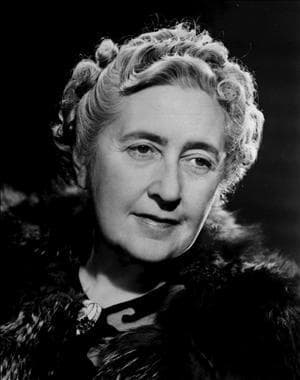
Dame Agatha Mary Clarissa Christie, Lady Mallowan, was an English writer known for her 66 detective novels and 14 short story collections, particularly those revolving around fictional detectives Hercule Poirot and Miss Marple. She also wrote the world's longest-running play, the murder mystery The Mousetrap, which has been performed in the West End since 1952. A writer during the "Golden Age of Detective Fiction", Christie has been called the "Queen of Crime". She also wrote six novels under the pseudonym Mary Westmacott. In 1971, she was made a Dame (DBE) by Queen Elizabeth II for her contributions to literature. Guinness World Records lists Christie as the best-selling fiction writer of all time, her novels having sold more than two billion copies.







