“For the strength of the Pack is the Wolf, and the strength of the Wolf is the Pack.”
— Mowgli's Law of the Jungle


Rudyard Kipling (1887)
Genre
Fantasy / Children's
Reading Time
142 min
Key Themes
See below
Sign in to track this book
Mowgli faces new challenges in India's wild, and the jungle has stories of ancient power and cunning. Kipling wrote these tales from Vermont.
During a severe drought, all the animals of the Seeonee Jungle gather at a drying riverbed, observing the Water Truce called by Hathi the elephant. Mowgli, Baloo, and Bagheera are there. Hathi, answering Mowgli's question about how fear began, tells the old story of the first tiger, Tha, and how the first man, Mowgli's ancestor, got the 'Red Flower' (fire) and became master of all creatures. He explains that fear entered the jungle when man hunted and killed, and how the Law of the Jungle was made to stop such chaos. This story shows Mowgli's unique place as a man-cub raised by animals, understanding both worlds.
Purun Dass, a respected Indian Prime Minister, suddenly leaves his life to become a wandering holy man, Purun Bhagat. He travels to the Himalayas and lives in a deserted shrine, making friends with the local animals: a monkey, a bear, a deer, and others. He lives simply, meditating and watching nature, and gains the animals' trust. One night, a large landslide threatens the nearby village. The animals, especially his monkey friend, warn Purun Bhagat. He then runs to the village, wakes the sleeping people, and leads them to safety just before the landslide covers their homes. He dies peacefully afterward, having completed his spiritual journey through selfless service.
After being forced out of the human village in 'Tiger! Tiger!' (from The Jungle Book), Mowgli returns to the jungle, sad and angry. He tells his animal friends about his bad treatment. Hathi the elephant, remembering an old grudge against men for trapping his ancestors, offers to help Mowgli get revenge. With his three sons, Hathi systematically destroys the village's fields and huts. They trample crops, break walls, and let the jungle take back the farmed land. The villagers, scared by the silent destruction, eventually leave, letting their homes be swallowed by the jungle. This shows nature's power and Mowgli's connection to it.
A jackal named Ko, a Marabou Stork named Adjutant, and a mugger crocodile named Mugger (or Gavial) meet on a sandbank in the Ganges River. They are all animals linked to death and scavenging. They talk about their ways of finding food and their roles in the natural cycle of decay. The Mugger, very old and clever, tells of his long history of preying on humans and animals. As they talk, the river swells, signaling a big flood. The Mugger looks forward to the food the flood will bring, showing nature's indifferent and harsh side.
Mowgli, led by Kaa the python, finds a treasure room under an old ruined city, guarded by a blind white cobra, the 'White Hood.' Inside, he finds a beautiful ankus, an elephant goad, covered with jewels. Not knowing its value to humans, Mowgli takes it and plays with it. Bagheera is scared, explaining that the ankus is a 'death-trap' for men, making them kill for it. Mowgli, not understanding human greed, throws it away. Soon after, he finds five bodies around the ankus; each person had killed the last for it. This proves Bagheera's warning and strengthens Mowgli's dislike for human desire.
Kotuko, a young Inuit boy, and his family face starvation during a hard Arctic winter. Their dogs are gone, and the village shaman blames an evil spirit, Quiquern. Kotuko, driven by a vision and the need for food, goes on a dangerous journey across the ice and snow with his younger sister, Kadlu. He endures extreme cold and hunger, believing he is guided by the spirit of the 'Pack' – a group of wolves. He finds his lost sled dogs, who had been separated during a storm, and a large herd of musk-oxen, saving his village from famine. His journey shows resilience, resourcefulness, and the deep connection between the Inuit and their environment.
A large pack of dholes, the Red Dogs of the Dekkan, enters the Seeonee Jungle, threatening the Seeonee Wolf Pack. Akela, now old, fears the pack's destruction. Mowgli, having heard of the dholes' fierceness from Ikki the porcupine, plans a strategy. He asks Kaa the python, who suggests using the 'Death Trap' – a narrow gorge full of angry bees. Mowgli lures the dholes into the gorge, where they are stung. As they try to escape, the Seeonee wolves attack them from the other side, pushing them into the river where Kaa, waiting, kills the remaining invaders. The Seeonee Pack, though losing some members, is saved, and Mowgli shows his leadership and cleverness.
As Mowgli grows up, he feels a strange restlessness and a longing he doesn't understand, called 'the spring running.' He feels more separate from his animal family, sensing a basic difference. He meets Messua and her son, his former human mother and brother, and feels drawn to them. Bagheera, Baloo, and Kaa acknowledge this change, understanding that Mowgli's place is eventually among humans. Though sad to leave his jungle and animal parents, Mowgli accepts his future, recognizing the strong, natural call of his own kind. He says goodbye to his animal family and goes back into the human world, accepting his identity as a man.
The Protagonist
Mowgli transitions from an innocent man-cub to a cunning leader who saves his adopted family, eventually accepting his human destiny and leaving the jungle.
The Supporting
Bagheera remains a steadfast protector and guide for Mowgli, accepting his eventual departure with a heavy heart but understanding.
The Supporting
Baloo continues his role as a wise, if sometimes sleepy, mentor to Mowgli, providing moral guidance and support.
The Supporting
Kaa consistently acts as a powerful, cunning ally, using his ancient wisdom and strength to aid Mowgli and the pack.
The Supporting
Hathi maintains his role as a revered elder, sharing ancient wisdom and occasionally intervening in jungle affairs with his immense power.
The Supporting
Akela's arc sees him continue to lead the Seeonee Pack with wisdom and courage, accepting his mortality with dignity while ensuring the pack's future.
The Supporting
Purun Bhagat transforms from a powerful worldly leader to a humble spiritual hermit, finding ultimate fulfillment in selfless service.
The Supporting
Messua provides a connection to Mowgli's human past and future, offering him a bridge back to his own kind.
The Antagonist
The Dholes act as a catalyst for Mowgli's strategic genius, ultimately being annihilated by his cunning plan.
This theme is important to Mowgli's story. He struggles with his dual nature: a man raised by animals. He is 'neither man nor wolf' for much of his life, feeling apart from both worlds at different times. In 'Letting in the Jungle,' he gets revenge on the human village that rejected him, showing loyalty to the jungle. Yet, in 'The Spring Running,' he feels a strong pull toward humanity, realizing he cannot stay in the jungle forever. This shows the universal human search for belonging.
“For the Law of the Jungle — which is by far the oldest Law in the world — has an exception for things that are neither man nor beast.”
The book often compares the clear, old, and sometimes brutal but fair Law of the Jungle with the changing, greedy, and often violent 'laws' of man. The jungle's law values survival, respect for limits, and the connection of all creatures, as seen in the Water Truce. In contrast, human laws, especially about property and wealth (as in 'The King's Ankus'), cause greed, conflict, and death. Mowgli's inability to understand human desire shows the simple nature of the jungle's code.
“This is the Law of the Jungle — as old and as true as the sky; And the Wolf that shall keep it may prosper, but the Wolf that shall break it must die.”
Kipling explores how humans destroy and change the natural world. 'Letting in the Jungle' shows nature's ability to take back what man has built, as Hathi and his sons systematically break down the village. 'How Fear Came' establishes man's original power over animals through the 'Red Flower' (fire) and the start of fear. The story of Purun Bhagat shows a different side: a man who finds peace and even salvation by joining with nature, rather than controlling it, and saves a community through his connection to the natural world.
“When the Man-cub was born, there was no Fear, because the Man was the strongest of all the animals.”
Mowgli's story is a coming-of-age narrative. He changes from a playful man-cub into a leader who can plan to save his pack, as in 'Red Dog.' He learns to use his human intelligence within the jungle. His decision in 'The Spring Running' to leave the jungle is the final step in accepting his adult identity and responsibilities, recognizing that he must follow his nature, even if it means sadness and separation from his family.
“It is time, little brother, that thou shouldst go to thine own kind. It is time for thee to be a man.”
Animals endowed with human-like speech, thought, and social structures.
Kipling extensively uses anthropomorphism, giving animals the ability to speak, reason, and form complex social hierarchies and laws. This allows for allegorical storytelling, where animal interactions reflect human society and morality. Mowgli's ability to communicate with animals is central to the narrative, blurring the lines between human and animal worlds and making the jungle a vibrant, sentient community with its own culture and ethics. This device enables the exploration of themes like law, justice, and belonging through an animalistic lens.
Stories within a story, often told by a character.
The book employs embedded narratives, particularly in 'How Fear Came,' where Hathi the elephant recounts the ancient origin of fear to the other animals during a Water Truce. This device adds depth and historical context to the jungle's lore, establishing foundational myths and explaining existing power dynamics and customs. It allows Kipling to explore themes of origins and the past, providing a richer understanding of the jungle's unwritten laws and traditions through the wisdom of its oldest inhabitants.
A set of unwritten rules governing animal conduct and survival.
More than just a theme, 'The Law of the Jungle' functions as a critical plot device. It is a detailed, ethical code that governs the lives of the animals, particularly the wolves. Mowgli is taught this law by Baloo and Bagheera, and it dictates everything from hunting etiquette to social hierarchy and mutual aid. It provides structure to the jungle society, influencing character decisions and driving conflicts (e.g., when the Law is threatened by invaders like the dholes). It acts as a moral compass and a framework for survival, distinguishing the ordered jungle from the chaotic human world.
Objects representing abstract concepts.
Kipling uses potent symbolism throughout the stories. 'The Red Flower' (fire) symbolizes man's unique power, mastery over nature, and the origin of fear among animals. The jeweled 'Ankus' in 'The King's Ankus' symbolizes human greed and the corrupting influence of material wealth, leading to death and destruction. These symbols are not merely decorative but drive plot points and deepen thematic understanding, illustrating the stark differences between human and animal values and the fundamental forces at play in Mowgli's world.
“For the strength of the Pack is the Wolf, and the strength of the Wolf is the Pack.”
— Mowgli's Law of the Jungle
“He knew that the jungle is not a place to be afraid of, but a place to be understood.”
— Mowgli's understanding of his home
“Man goes to Man at the last.”
— Bagheera's recurring observation about Mowgli's destiny
“The jungle is full of people who want to tell you what to do, but you must choose your own path.”
— Kaa's advice to Mowgli
“We be of one blood, ye and I.”
— Mowgli's address to various animals, using the Master-Word
“It is not good to be a man and a wolf at the same time.”
— Mowgli reflecting on his dual nature
“All the jungle knows that when a cub has been bought for the price of a bull, he belongs to the Pack.”
— Akela reminding Shere Khan of Mowgli's adoption
“The jungle has many voices, but only a few speak truth.”
— Baloo teaching Mowgli about discernment
“There is no hunting like the hunting of man, and no game like man-game.”
— Shere Khan's predatory philosophy
“You can always tell a true friend by the way he acts when you are in trouble.”
— Bagheera's loyalty to Mowgli
“The greatest joy of the jungle is to run free, without fear or restraint.”
— Mowgli's love for his wild life
“The Law of the Jungle never orders anything without a reason.”
— The underlying logic of the jungle's rules
“Though he was a man, he had the heart of a wolf.”
— Describing Mowgli's deep connection to his wolf family
“The jungle remembers everything.”
— A common refrain emphasizing the enduring nature of the wilderness and its history.
Ready to see how well you understood this book? Take our interactive quiz with 10 questions.
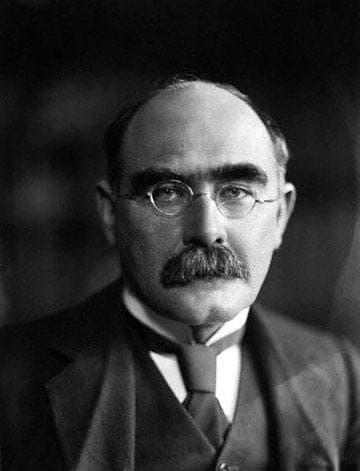
Joseph Rudyard Kipling was an English novelist, short-story writer, poet, and journalist. He was born in British India, which inspired much of his work.







