“The past is a foreign country; they do things differently there.”
— A general reflection on the past and its mysteries, echoing the famous L.P. Hartley line.

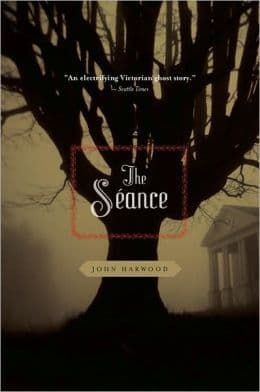
John Harwood (2007)
Genre
Historical Fiction / Mystery
Reading Time
360 min
Key Themes
See below
Sign in to track this book
In a Victorian world of shadows and spirits, Constance Langton inherits a cursed manor and a chilling mystery, forcing her to confront a generations-old disappearance that threatens to consume her, body and soul.
Constance Langton grows up in a sad London household, shadowed by the death of her older sister, Eleanor, who died as a child. Her father, a barrister, is distant, while her mother, Mrs. Langton, is consumed by grief and ill health. Constance, a solitary and imaginative child, often feels neglected and struggles to connect with her parents, who remain trapped in their sorrow. Their life is somber, with Eleanor's memory a constant presence that shapes the emotional climate of their home and Constance's early understanding of loss and the supernatural.
Desperate to ease her mother's suffering, Constance convinces her to attend a séance hosted by the charismatic medium, Mrs. Temple. Mrs. Langton, frail and susceptible, believes she can communicate with Eleanor beyond the grave. During the séance, the atmosphere is charged, and Mrs. Langton experiences an overwhelming emotional episode, collapsing shortly after a supposed message from Eleanor. The event proves too much for her delicate health, and she dies a few days later, leaving Constance an orphan and deeply traumatized by the experience. She questions the nature of the spiritual world and the medium's intentions.
Following her parents' deaths, Constance receives a surprising inheritance: Wraxford Hall, a dilapidated and isolated manor in the English countryside, along with a substantial sum of money. The bequest comes from an unknown benefactor and is handled by a solicitor, Mr. Finch. Wraxford Hall, however, is no ordinary inheritance; it has a sinister reputation. Years before, the previous owners, the Wraxford family, mysteriously vanished from the house without a trace, leaving behind a local legend and an unsolved police investigation. Constance is warned against living there but feels an inexplicable pull to uncover its secrets.
Against advice, Constance decides to move into Wraxford Hall, accompanied by her loyal housekeeper, Mrs. Pike, and a few servants. The house is in disrepair, filled with dust-shrouded furniture and a sense of abandonment. Local villagers are wary of the Hall, telling tales of ghosts and a curse associated with the Wraxford family's disappearance. Constance, despite her initial apprehension, feels a strange connection to the house and a growing determination to understand its past. She begins to explore the vast, echoing rooms, sensing that the house holds more than just memories.
Constance looks into the history of Wraxford Hall and the Wraxford family. She reads old newspaper clippings, legal documents, and local records, slowly piecing together the events surrounding their vanishing. The official police report offered no clear answers, suggesting a voluntary departure or a tragic accident, but never ruling out foul play. Constance discovers that the Wraxfords were a wealthy but eccentric family, and their disappearance led to much speculation. She notices inconsistencies in the accounts and realizes that the truth is far more complex and sinister than initially presented, hinting at betrayal and deception within the family.
While exploring a hidden compartment in the library, Constance finds diaries belonging to Mary Wraxford, the young daughter of the vanished family. These diaries become a link to the past, providing a personal and unsettling account of life at Wraxford Hall leading up to the disappearance. Mary's entries reveal growing tension, strange occurrences, and her suspicions about certain individuals within the household, particularly the family's governess, Miss Gilder. The diaries hint at a dark secret and suggest that the family did not simply vanish but were victims of a deliberate act.
As Constance continues her investigation, she begins to experience inexplicable events within Wraxford Hall. She hears whispers, sees fleeting shadows, and feels a chilling presence. Objects move on their own, and phantom footsteps echo in empty corridors. These occurrences, initially dismissed as imagination or the house's age, become more frequent and vivid, leading Constance to question if the spirits of the Wraxford family are trying to communicate with her or if she is succumbing to the house's sinister influence. She grapples with her skepticism and the chilling possibility of genuine supernatural activity.
Constance's solitary investigation is interrupted by the unexpected arrival of Mr. Steerforth, a seemingly refined but unsettling man who claims to be a distant relative of the Wraxford family, or perhaps an executor of their estate. He expresses an interest in the Hall and its contents, particularly certain documents. Steerforth's presence is suspicious; he is overly inquisitive, evasive about his true motives, and seems determined to obstruct Constance's efforts to uncover the truth. He attempts to discredit her findings and subtly threatens her, revealing a sinister intention.
Through diligent research and piecing together clues from Mary's diaries and other documents, Constance uncovers Mr. Steerforth's true identity: he is not a relative but an accomplice to the original crime. He was involved with Miss Gilder, the governess, in a plot to defraud the Wraxford family and seize their assets. The 'disappearance' was, in fact, a carefully orchestrated murder, with the bodies hidden within the very grounds of Wraxford Hall. Steerforth's return was to retrieve incriminating evidence or to ensure the secret remained buried.
Constance confronts Mr. Steerforth with her discoveries, leading to a tense and dangerous confrontation within the Hall. Steerforth, realizing he has been exposed, tries to silence Constance. However, Constance, armed with knowledge and a new resolve, manages to outwit him. The climax reveals the full extent of the gruesome plot, including the location of the Wraxford family's remains. With the truth finally brought to light, Steerforth is apprehended, and the Wraxford Mystery is solved. Constance, though scarred by the experience, finds a sense of peace, having brought justice to the vanished family.
Following the resolution of the Wraxford Mystery, the Hall is no longer a place of dread but a reminder of a dark chapter finally closed. The Wraxford family's remains are given a proper burial, and their story is finally told. Constance, having bravely faced the past, emerges a stronger, more independent woman. She decides to keep Wraxford Hall, not as a haunted relic, but as a home she has reclaimed from its sinister history. Her journey through grief and mystery has made her a resilient individual, ready to embrace a future unburdened by the ghosts of her own past or those of Wraxford Hall.
The Protagonist
Constance evolves from a grieving, somewhat passive orphan into a courageous and resourceful detective, finding her voice and purpose by solving the Wraxford Mystery.
The Supporting
Her character remains static, defined by her grief, and serves primarily to propel Constance's story forward through her death.
The Supporting
Her role is primarily functional, initiating a key plot point, and she does not undergo significant personal development.
The Antagonist
He serves as the primary obstacle to Constance's investigation, ultimately revealed as a murderer and thwarted by her determination.
The Supporting/Mentioned
Her character's development is static, as she is deceased, but her diaries act as a dynamic force in the plot, revealing the past.
The Supporting
Her character remains consistent, serving as a pillar of support for Constance throughout the ordeal.
The Mentioned
Her role is to be revealed as the primary instigator of the Wraxford family's demise, a historical antagonist.
The novel opens with Constance's family consumed by grief for her deceased sister, Eleanor. This pervasive sorrow shapes Constance's early life and motivates her mother's fateful visit to the séance. Grief is a powerful, sometimes destructive force, capable of isolating individuals and clouding judgment. Constance's journey to Wraxford Hall is, in part, an escape from her own family's grief and an attempt to find meaning in loss. The Wraxford family's disappearance is another manifestation of loss, a violent one, with Constance's investigation bringing closure to their unresolved fates.
“Constance grew up in the shadow of a ghost, not of a spirit, but of a memory, the memory of her sister Eleanor.”
The entire plot revolves around the pursuit of truth behind the Wraxford mystery, which is shrouded in layers of deception, rumor, and misdirection. Constance must distinguish between genuine clues and deliberate falsehoods, between supernatural phenomena and human villainy. The spiritualist séance itself highlights the blurred lines between belief and trickery. The novel constantly challenges the reader and Constance to question what is real and what is fabricated, ending with the unmasking of Mr. Steerforth's elaborate lie and the revelation of the true, brutal events at Wraxford Hall.
“The house whispered secrets, but it was up to her to discern which were echoes of the past and which were deliberate lies.”
From the séance to the haunting of Wraxford Hall, the novel plays with the tension between the supernatural and rational explanations. Constance, initially a skeptic, experiences unsettling phenomena within the Hall, leading her to question her beliefs. The local legends and her personal experiences suggest a ghostly presence, yet the ultimate resolution reveals a very human, horrific crime. The book implies that while the supernatural may be a powerful psychological force, human evil often underlies what appears to be paranormal, using fear and superstition as a cloak.
“Was it the house itself that was haunted, or merely the dark deeds committed within its walls that cast such a long, cold shadow?”
Constance is often isolated, first by her family's grief, then by her orphan status, and finally by her solitary investigation at Wraxford Hall. This isolation forces her to rely on her own intelligence and resilience. The decaying Hall itself is a symbol of isolation, cut off from the outside world and its judgment. Through her solitary pursuit of the truth, Constance develops a strong sense of independence and self-reliance, proving capable of facing danger and uncovering dark secrets on her own terms. Her journey is one of forging her own path in a world that often seeks to control or dismiss her.
“She was alone in the vast, echoing house, but in that solitude, she found a strange, fierce strength.”
A decaying manor house with a sinister reputation, central to the mystery.
Wraxford Hall is more than just a setting; it's a character in itself. Its dilapidated state, isolated location, and local legends create an oppressive, eerie atmosphere. The house acts as a repository of secrets, with hidden rooms, forgotten documents, and the psychological impact it has on Constance. It functions as a catalyst for the mystery, drawing Constance into its past, and also as a physical manifestation of the unresolved grief and horror that permeate the narrative. The 'haunting' elements blur the line between supernatural and psychological, keeping the reader on edge.
Information sources that may be biased, manipulated, or incomplete.
The novel utilizes elements of unreliable narration through the lens of spiritualism and the fragmented nature of historical documents. The séance itself is a prime example, where Mrs. Temple's pronouncements are open to interpretation and potentially deceptive. Mary Wraxford's diaries, while crucial, are the perspective of a child, and thus might miss nuances or misinterpret adult actions. Constance must sift through rumors, incomplete police reports, and personal accounts, constantly questioning the veracity of what she uncovers, forcing both her and the reader to actively engage in discerning the truth.
An unexpected inheritance that propels the protagonist into the central conflict.
Constance's inheritance of Wraxford Hall and its accompanying funds is the primary plot driver. It provides her with the means and the motivation to leave her melancholic life and actively engage with a new, dangerous purpose. The bequest is mysterious in its origin, immediately raising questions about who would leave her such a property and why, thereby initiating her investigation into the Wraxford family's past. It acts as a literal and metaphorical doorway to the core mystery of the novel.
A hidden document that provides crucial, first-hand information to solve the mystery.
Mary Wraxford's hidden diaries are a classic plot device that allows for direct access to past events and characters' thoughts, even across decades. They serve as the primary source of reliable information for Constance, providing intimate details and critical clues that official reports or local gossip could not. The diaries not only advance the plot by revealing the truth of the Wraxford family's fate but also allow for a deeper emotional connection to the victims, making their tragedy more poignant for Constance and the reader.
“The past is a foreign country; they do things differently there.”
— A general reflection on the past and its mysteries, echoing the famous L.P. Hartley line.
“There are some doors that, once opened, can never truly be closed again.”
— Protagonist's realization after delving into a disturbing family secret.
“Sometimes, the most terrifying things are not those that go bump in the night, but those that reside within us.”
— A character contemplating the psychological horror of guilt and hidden desires.
“A house, like a person, can hold its own secrets, etched into its very foundations.”
— Describing the oppressive atmosphere of a house central to the mystery.
“The truth, like a ghost, often demands to be seen, no matter how much we try to deny its presence.”
— Reflecting on the inevitability of confronting difficult realities.
“Belief is a powerful thing, capable of both creating and destroying reality.”
— Discussing the nature of spiritualism and its effects on individuals.
“The dead do not always rest easy, especially when their stories remain untold.”
— A recurring theme about the lingering influence of past events and unresolved narratives.
“Memory is a fickle companion, capable of both illuminating and obscuring the past.”
— Protagonist's struggle to piece together fragmented recollections.
“It is not the darkness itself that frightens us, but what we imagine might be lurking within it.”
— Exploring the psychological aspects of fear and the unknown.
“Every family has its shadows, some deeper and more ominous than others.”
— A general observation about the hidden aspects of family histories.
“The most convincing deceptions are often woven from threads of truth.”
— Understanding how a particular deceit was constructed and maintained.
“Silence can be more eloquent than any words, especially when it conceals a terrible truth.”
— Reflecting on the unspoken elements of the mystery.
“Sometimes, the only way to escape the past is to confront it head-on, no matter how painful.”
— The protagonist's journey towards resolution and understanding.
“The veil between worlds is thinner than many believe, especially in places steeped in sorrow.”
— A character's musing on the proximity of the spiritual realm.
Ready to see how well you understood this book? Take our interactive quiz with 10 questions.