“Indeed the safest road to hell is the gradual one - the gentle slope, soft underfoot, without sudden turnings, without milestones, without signposts.”
— Screwtape advising Wormwood on how to corrupt his patient subtly.

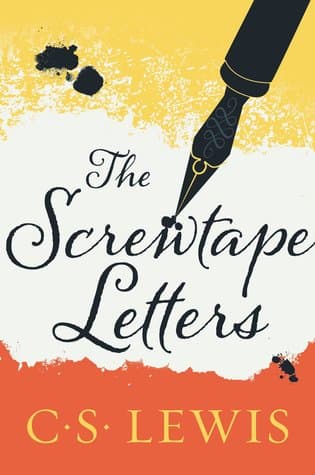
C.S. Lewis (1942)
Genre
Fantasy / Spirituality / Philosophy
Reading Time
240 min
Key Themes
See below
Sign in to track this book
A senior demon, Screwtape, advises his nephew Wormwood on corrupting a human soul, offering a satirical look at temptation, faith, and the human condition in an inverted epistolary novel.
The book starts with an opening letter from Screwtape, a senior demon, to his nephew Wormwood, a junior tempter. Screwtape teaches Wormwood the subtle art of tempting a human 'patient' — a young British man who has recently become a Christian. Screwtape stresses distracting the patient with everyday thoughts and worldly worries, rather than direct arguments against faith. He tells Wormwood to use the patient's spiritual dryness and common annoyances, like a church organist's sound, to cause doubt. The first letters set up the satirical idea and the inverted moral world of the demonic view, where good is 'the Enemy' and evil is 'Our Father Below'.
Screwtape continues to advise Wormwood on how to handle the patient's early days as a Christian. He warns against letting the patient feel lasting spiritual joy, suggesting Wormwood should instead encourage a focus on the 'real world' and the physical discomforts of church. Screwtape points out that the patient's first emotional high will fade, and this 'trough' period is a good chance for temptation. He tells Wormwood to make the patient feel his conversion was just a phase or an experiment, and to use the patient's annoyance with his mother or other churchgoers, turning small complaints into bigger resentments.
The patient starts making new friends, and Screwtape sees this as a new way to tempt him. He suggests Wormwood should either isolate the patient or, more effectively, lead him toward friends who are outwardly smart but morally loose, or those who follow a 'fashionable' form of Christianity that lacks true meaning. Screwtape encourages Wormwood to make the patient feel intellectually superior, making him look down on his simpler, more religious Christian friends and family. This pride can make the patient dismiss real faith as unsophisticated and adopt a cynical, critical view of spiritual matters.
The patient falls in love with a good Christian woman, which upsets Screwtape, as this love strengthens his faith. Screwtape changes his plan, telling Wormwood to corrupt this genuine affection. He advises turning the patient's love into mere lust, or into a possessive, selfish desire for the woman, rather than a selfless love. Screwtape also suggests using the patient's pride in his new relationship, making him feel better than others who are not as 'enlightened' in their romantic choices. The goal is to make the patient focus on himself and his own desires, rather than on his beloved's well-being or his relationship with God.
With World War II starting, Screwtape finds new chances for temptation. He advises Wormwood to use the patient's fear and worry, encouraging him to focus on an uncertain future rather than the present. Screwtape also suggests causing a feeling of disappointment and anger toward God for allowing such suffering. He warns against letting the patient embrace true patriotism or self-sacrifice, instead encouraging a selfish desire for safety or a cynical view of human nature. The goal is to make the patient feel that faith is useless or even cruel in the face of widespread suffering and chaos.
Screwtape writes several letters about weakening the patient's prayer life. He tells Wormwood to make prayer feel like a chore, a meaningless habit, or to encourage the patient to focus on his own feelings during prayer rather than on God. Screwtape also advises Wormwood to make the patient pray for selfish reasons or to judge others based on how well they seem to pray. He encourages hypocrisy, where the patient acts religious in public but has cynical or unkind thoughts in private. The goal is to break the patient's real connection with God through misguided or insincere prayer.
Screwtape constantly reminds Wormwood that big, dramatic sins are often less effective than a steady build-up of small, seemingly unimportant wrongdoings. He argues that these 'slight deviations' slowly wear down the patient's moral sense and make him less sensitive to evil. Screwtape encourages Wormwood to make the patient believe these small sins are harmless, or that he can easily repent later. This slow loss of conscience makes it easier for the patient to commit bigger sins over time, leading to a slow but sure drift away from God. This subtle method is key to demonic success.
Screwtape is especially annoyed when the patient starts to recognize and fight temptation, blaming 'the Enemy's' direct help. Screwtape advises Wormwood to make the patient proud of his new self-awareness, turning the act of resisting temptation into spiritual pride. He also suggests making the patient believe he is uniquely strong or perceptive, thus separating him from the humility and support of other Christians. The ultimate goal is to make the patient focus on his own strength and goodness, rather than on his reliance on God, falling into a more subtle form of pride.
Sadly for the demons, the patient dies during an enemy air raid. In the final letters, Screwtape shows his extreme disappointment and anger at Wormwood's failure to get the patient's soul. Screwtape describes the patient's last moments, where he turned to God with real faith and love, escaping the demons' grip. Screwtape vividly portrays the patient's rise to 'the Enemy's' presence, surrounded by angels, while Wormwood is left to face his superiors' anger. Screwtape ends with a chilling description of Wormwood's coming punishment, hinting at his own wish to consume Wormwood's being.
In the very last letter, Screwtape, no longer pretending to be a mentor, openly delights in Wormwood's failure and coming doom. He describes the horrible fate awaiting Wormwood — being eaten by other demons as punishment for losing his patient's soul. Screwtape's true, predatory nature is fully shown, without any family affection. This final letter highlights hell's brutal, self-serving nature, where even cooperation is driven by malice and failure leads to ultimate destruction. It contrasts sharply with 'the Enemy's' love and forgiveness.
The Antagonist
Screwtape's character arc is inverted; he remains consistently evil, his 'development' only revealing deeper layers of his depravity and self-interest as the letters progress.
The Supporting
Wormwood's arc is one of consistent failure, leading to his ultimate destruction, demonstrating the unforgiving nature of Hell.
The Protagonist (unseen)
The Patient's arc is one of spiritual growth and perseverance, despite numerous temptations, culminating in his salvation.
The Supporting
Her role is primarily static, serving as a steadfast example of Christian virtue and a source of good influence.
The Mentioned
Represents the unchanging, ultimate evil.
The Mentioned
Represents the unchanging, ultimate good.
The Mentioned
A static, illustrative character, providing context for the demonic 'education system'.
The Mentioned
A static, illustrative character, providing context for the demonic 'education system'.
The main theme is the sneaky nature of temptation, shown from the perspective of the tempters. Lewis reveals that temptation often comes not as big, clear evils, but as subtle twists of good, small compromises, and using everyday annoyances. Screwtape constantly tells Wormwood to distract the patient, encourage spiritual dryness, foster intellectual pride, and turn real love into lust or possessiveness. The book shows that spiritual battle is a constant, inner fight, over thoughts, intentions, and reactions to daily life, as seen in the Patient's struggles with prayer and his relationships.
“Indeed the safest road to Hell is the gradual one—the gentle slope, soft underfoot, without sudden turnings, without milestones, without signposts.”
Pride, especially intellectual and spiritual pride, is consistently shown as one of the most dangerous sins. Screwtape often tells Wormwood to make the patient feel better than others — his mother, his less intellectual churchgoers, or those with less 'fashionable' views. This self-love leads to being cut off from God and others. Even when the patient notices temptation, Screwtape tries to turn this self-awareness into a source of pride, making him feel uniquely perceptive. The demons' own hierarchy, where Screwtape eventually wants to consume Wormwood, also shows the ultimate self-serving nature of pride.
“All vices are rooted in the same soil of self-love, and pride is the most fertile of them all.”
Despite the demonic viewpoint, the book implicitly supports the power of true love, both divine and human, as the ultimate cure for evil. Screwtape and Wormwood are constantly frustrated by 'the Enemy's' mysterious love for humanity and the Patient's ability for selfless love, especially for the Christian Girl. True love, as shown by 'the Enemy', is self-giving and seeks the good of the other, which is hated by hell's self-serving nature. The Patient's eventual salvation is rooted in his turning to God in love and trust, showing love's power to redeem.
“He really loves the hairless bipeds whose souls you are trying to capture.”
Lewis argues that evil is often not grand or spectacular, but appears in the mundane, the trivial, and the everyday. Screwtape's advice is full of ways to use minor annoyances (like a church organist), petty arguments, spiritual dryness, and subtle shifts in perspective. He emphasizes that small, repeated sins are more effective than dramatic ones in corrupting a soul. This theme warns that one must be watchful against seemingly harmless compromises and distractions that slowly erode faith and goodness, showing how easily evil can enter ordinary life.
“The safest road to Hell is the gradual one—the gentle slope, soft underfoot, without sudden turnings, without milestones, without signposts.”
The whole book uses an inverted moral system where what humans see as good (love, humility, God) is seen as evil by the demons, and what humans see as evil (hatred, pride, damnation) is seen as good. 'Our Father Below' is the ultimate good, and 'the Enemy' (God) is the ultimate evil. This inversion allows Lewis to make fun of human failings and theological ideas by seeing them through a twisted lens. It makes the reader re-examine their own understanding of good and evil, and appreciate the true nature of Christian virtues that the demons find so confusing and repulsive.
“We want cattle who can finally become food; He wants servants who can finally become sons.”
The entire novel is a series of letters.
The novel is presented as a collection of letters from Screwtape to Wormwood. This epistolary format allows Lewis to directly present the demonic perspective without needing a human narrator to filter or interpret it. It creates an intimate, conspiratorial tone, drawing the reader into the demons' world. The one-sided correspondence also leaves gaps, forcing the reader to infer Wormwood's actions and the Patient's struggles, making the reader an active participant in understanding the narrative. It effectively highlights the subjective and biased nature of the demonic viewpoint.
Using humor and exaggeration to criticize human and spiritual failings.
Lewis employs ironic satire throughout the letters. The demons' 'advice' is presented as serious and logical within their infernal framework, but the underlying intent is to expose and critique human weaknesses and spiritual dangers. For example, Screwtape's disdain for humility or his 'concern' for the Patient's spiritual dryness are deeply ironic. This device allows Lewis to deliver profound theological and moral insights in an engaging and often humorous way, making complex spiritual concepts accessible and memorable by showing their twisted reflection.
Screwtape's perspective is intentionally biased and distorted.
Screwtape serves as an unreliable narrator, as his entire worldview is based on an inversion of good and evil. He consistently misinterprets God's actions and motives, viewing love as a weakness and humility as a trick. This unreliability is crucial to the book's purpose, as it forces the reader to discern the truth by understanding the demonic distortion. By presenting evil's perspective as 'truth', Lewis encourages the reader to critically evaluate their own assumptions and recognize the subtle lies that can masquerade as wisdom.
Abstract concepts are personified as characters and events.
While not a strict allegory in every detail, the book uses allegorical elements. Screwtape and Wormwood personify the forces of temptation and evil, while 'the Enemy' (God) and 'Our Father Below' (Satan) personify ultimate good and evil. The Patient represents humanity's spiritual journey. Events like 'spiritual dryness' or 'the trough' become concrete challenges. This device helps to make abstract theological concepts, such as spiritual warfare and the nature of sin, more tangible and understandable by embedding them within a narrative of personal struggle and infernal machination.
“Indeed the safest road to hell is the gradual one - the gentle slope, soft underfoot, without sudden turnings, without milestones, without signposts.”
— Screwtape advising Wormwood on how to corrupt his patient subtly.
“The great thing is to direct the patient's attention to the future, or to the past, but never to the present.”
— Screwtape instructing Wormwood on distracting the patient from present duties or spiritual moments.
“Gratitude looks to the Past and love to the Present; fear, avarice, lust, and ambition look ahead.”
— Screwtape explaining how different emotions relate to time, favoring those that look ahead for evil's purposes.
“All mortals tend to turn into the thing they are pretending to be.”
— Screwtape on the power of habit and pretense in shaping character.
“The Enemy relies on a curious fantasy of His own, which He calls 'Free Will.'”
— Screwtape's cynical view of human free will and God's design.
“Prosperity knits a man to the World. He feels that is 'finding his place in it,' while adversity drives him out of it and Him.”
— Screwtape discussing how both prosperity and adversity can be used for temptation.
“Your patient is a man of science. That is a good thing. Let him regard science as the only real knowledge.”
— Screwtape encouraging Wormwood to promote scientism and dismiss other forms of knowledge.
“The game is to get them away from the stable, solid, perennial, and into the shifting, wild, and ephemeral.”
— Screwtape's strategy to move humans away from eternal truths towards fleeting trends.
“He wants them to learn to walk and must therefore take away His hand; and if only a little, and for a little while, they stumble, and if a little cloud of bewilderment darkens their understanding, He is not displeased.”
— Screwtape's analysis of God allowing humans to struggle and learn independently.
“The more often he feels without acting, the less he will be able ever to act, and, in the long run, the less he will be able to feel.”
— Screwtape on the danger of sentimentality without corresponding action.
“It is funny how mortals always picture us as putting things into their minds: in reality, our best work is done by keeping things out.”
— Screwtape explaining the subtle art of omission and distraction in temptation.
“Never forget that when we are dealing with any pleasure in its healthy and normal and satisfying form, we are dealing with a great weapon of the Enemy.”
— Screwtape's frustration that God created pleasures which, when enjoyed rightly, can draw humans to Him.
“The safest road to Hell is the gradual one – the gentle slope, soft underfoot, without sudden turnings, without milestones, without signposts.”
— A repeated, foundational piece of advice from Screwtape to Wormwood on the slow corruption of a soul.
“Humility is not thinking less of yourself, but thinking of yourself less.”
— While not directly attributed to Screwtape, this is a common paraphrase of Lewis's teaching on humility, often reflected in the devils' attempts to foster pride.
Ready to see how well you understood this book? Take our interactive quiz with 10 questions.

Clive Staples Lewis was a British writer, literary scholar, and Anglican lay theologian. He held academic positions in English literature at both Oxford University and Cambridge University. He is best known as the author of The Chronicles of Narnia, but he is also noted for his other works of fiction, such as The Screwtape Letters and The Space Trilogy, and for his non-fiction Christian apologetics, including Mere Christianity, Miracles, and The Problem of Pain.







