“For the Lord does not see as man sees; for man looks at the outward appearance, but the Lord looks at the heart.”
— This is a direct biblical quote, often echoed by the characters, particularly during moments of judgment or self-reflection.

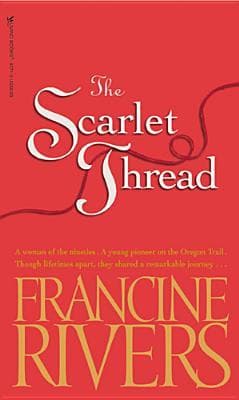
Francine Rivers (1996)
Genre
Historical Fiction / Romance
Reading Time
540 min
Key Themes
See below
Sign in to track this book
Two women, separated by a century but united by a scarlet threaded quilt and a shared journey of faith, discover the enduring power of surrender and God's unconditional love amidst life's trials.
Sierra Jensen, a modern interior designer, feels disconnected from her husband, Paul, and unfulfilled in her career. Her life looks successful, but she wants something more meaningful. Visiting her grandmother, she finds an old, unfinished quilt with a scarlet thread, and a hidden journal belonging to her ancestor, Mary Kathryn McMurray. Sierra begins to read Mary Kathryn's story, hoping to find a connection or understanding for her own problems. The journal entries take Sierra back to the 19th century, showing a life different yet similar in its emotional struggles and search for purpose.
Mary Kathryn McMurray arrives in America from Scotland with her family, settling in Harmony, California, during the gold rush era. Her family, especially her father, Duncan, is deeply rooted in their Presbyterian faith and strict traditions. Mary Kathryn is a spirited young woman, divided between her family and her growing attraction to Ethan Cooper, a charismatic and ambitious young man from a less religious background. Despite her father's disapproval, Mary Kathryn is drawn to Ethan, dreaming of a life with him that differs from her family's plans. Her family's struggles to settle in the new land add pressure to her decisions.
Against her father's wishes, Mary Kathryn continues to meet Ethan in secret. Their romance grows, and Ethan, despite his lack of strong faith, promises to provide a good life for her. They become secretly engaged, a decision Mary Kathryn keeps from her parents, knowing it would cause pain and disapproval. She believes Ethan's love is enough to overcome any obstacles, including their differing beliefs. This time is filled with both joy and a growing sense of guilt for Mary Kathryn, as she struggles with loyalty to her family and her deep love for Ethan, convinced their love will conquer all.
Mary Kathryn marries Ethan, much to her family's dismay and her father's deep disappointment. Initially, she believes she has found happiness, but the realities of marriage quickly appear. Ethan's ambition takes over, causing him to neglect Mary Kathryn emotionally. He becomes involved in business dealings, often prioritizing profit over integrity. Mary Kathryn soon discovers Ethan's unfaithfulness, which breaks her idealistic view of their marriage. She feels isolated and heartbroken, questioning her choices and the man she married. Her faith, once strong, begins to falter under her suffering.
At the same time as Mary Kathryn's story, Sierra's own marriage to Paul continues to get worse. She feels Paul is distant and preoccupied, and her attempts to connect with him are met with indifference. The discovery of Mary Kathryn's journal, detailing a similar marital breakdown, deeply affects Sierra. She confronts Paul about his emotional unavailability, and he eventually confesses to having an affair with a colleague. This revelation devastates Sierra, mirroring Mary Kathryn's betrayal. Sierra's world collapses, and she is at a crossroads, unsure how to save her marriage or her own identity.
After years of enduring Ethan's betrayals and the emotional toll of their marriage, Mary Kathryn reaches a breaking point. With guidance from her family and the steadfast love of her sister, Sarah, she begins to return to her faith. She realizes she had placed her hope and identity in Ethan, rather than in God. A spiritual awakening happens, leading her to surrender her life and broken marriage to God's will. This surrender brings her a deep sense of peace and a renewed purpose, guiding her actions even with continued adversity with Ethan.
With her renewed faith, Mary Kathryn dedicates herself to serving others, especially the struggling women in Harmony. She becomes a strong and compassionate presence in her community, offering comfort, practical help, and spiritual guidance. The scarlet thread she uses in her quilting becomes a symbol of God's redemption and the blood of Christ. She begins to see her life, even its painful parts, as woven into God's larger plan. Her work and witness touch many lives, showing the power of faith and selfless love, even as her personal situation with Ethan remains difficult.
Devastated by Paul's infidelity, Sierra withdraws, struggling to process the betrayal. She feels deep anger and hurt, questioning everything she thought she knew about her marriage. Inspired by Mary Kathryn's journey of faith and forgiveness, Sierra tries to confront Paul, but their conversations are full of pain and misunderstanding. They decide to separate, giving each other space to reflect and heal. This time is difficult for Sierra, who must confront her own failures and her part in the marital breakdown, even as she deals with Paul's actions.
Mary Kathryn continues to live a life devoted to God and her community. Despite Ethan's continued struggles and his eventual decline, she remains steadfast in her love and commitment to him, showing unconditional love and forgiveness. She raises her children in faith and leaves a lasting impact on those around her. Her journal entries end with her testimony to God's faithfulness, even through great suffering. She finishes the quilt, a representation of her journey and the enduring scarlet thread of God's grace, leaving it as a legacy for future generations.
As Sierra continues to read Mary Kathryn's journal, she gains insight into forgiveness, surrender, and God's unconditional love. She realizes that like Mary Kathryn, she had placed her hope in a person rather than in God. Through prayer and reflection, Sierra finds the strength to forgive Paul, for her own healing. She understands that true love is sacrificial and unwavering. This spiritual clarity allows her and Paul to begin the difficult process of reconciliation, slowly rebuilding their marriage on a foundation of faith and mutual commitment, guided by the lessons from the scarlet thread.
The Protagonist
From a discontented and self-focused individual, Sierra transforms into a woman of faith who embraces forgiveness and surrenders to God's will.
The Protagonist/Ancestor
Mary Kathryn evolves from a headstrong young woman seeking earthly love to a woman of deep faith who finds her identity and purpose in God, despite immense suffering.
The Supporting
Paul moves from a state of emotional detachment and infidelity to seeking forgiveness and rebuilding his marriage on a stronger foundation.
The Supporting
Ethan's character remains largely unchanged in his self-centeredness, serving as the catalyst for Mary Kathryn's profound spiritual growth and her demonstration of steadfast love.
The Supporting
Duncan remains a consistent figure of steadfast faith, providing a moral anchor for Mary Kathryn despite their initial disagreements.
The Supporting
Sarah remains a consistent character of unwavering faith and support, serving as a spiritual anchor for Mary Kathryn.
The Supporting
Her role is primarily as a catalyst, providing the historical artifacts that initiate Sierra's journey of self-discovery.
The Mentioned
His role is to provide spiritual counsel and encouragement to Mary Kathryn.
The book's central theme is the journey of faith and surrendering one's will and circumstances to God. Both Mary Kathryn and Sierra try to control their lives and relationships, which leads to disappointment. Mary Kathryn's path, marked by Ethan's betrayals, forces her to let go of her expectations and find her identity in God alone. Sierra, facing her own marital crisis, learns through Mary Kathryn's example that peace and healing come from trusting her life and marriage to God. This theme is shown by Mary Kathryn's repeated returns to God and Sierra's decision to forgive Paul and rebuild her life on a spiritual foundation.
“I had put my hope in a man, and he had failed me. Only God could truly fill the emptiness in my soul.”
The novel explores the power of redemption and forgiveness, for the individual and in relationships. Mary Kathryn's journey shows forgiving an unfaithful spouse and finding redemption through service and faith, even when her husband does not fully change. Sierra, hurt by Paul's affair, struggles with forgiveness but eventually finds the strength to extend grace, inspired by her ancestor. The scarlet thread symbolizes the redemptive blood of Christ, weaving through generations of sin and brokenness to offer hope and new beginnings. This theme shows that forgiveness is a choice that frees the forgiver and allows for reconciliation.
“Forgiveness wasn't for him; it was for me, to set my own heart free.”
The narrative structure explores generational legacy, as Sierra directly engages with the life and lessons of her ancestor, Mary Kathryn. The unfinished quilt and the journal are links between past and present, showing how the struggles, triumphs, and spiritual lessons of one generation can affect another. Sierra finds guidance and comfort knowing her pain and choices echo Mary Kathryn's, suggesting a timeless human experience connected through family and faith. The 'scarlet thread' metaphor extends to the idea of a spiritual lineage passed down through time.
“The thread that bound us was invisible, yet stronger than any earthly chain.”
The book compares human love, with its flaws, against the steadfast and unconditional nature of divine love. Mary Kathryn initially places her hope in Ethan's romantic love, only to be hurt by his failures. Her journey teaches her that lasting love comes from God, and this divine love allows her to love Ethan unconditionally despite his shortcomings. Sierra experiences similar disappointment with Paul's love and must learn to distinguish between conditional human love and God's unfailing love, which then empowers her to love Paul with a renewed, more resilient heart. This theme shows that human relationships are stronger when rooted in a divine foundation.
“I had sought love in the wrong places, believing a man could fill the God-shaped void within me.”
Both protagonists deal with questions of identity and purpose. Mary Kathryn initially defines herself by her relationship with Ethan and her desire for a worldly life, losing herself in his shadow. Her spiritual awakening helps her rediscover her identity as a child of God and find purpose in serving others. Sierra, successful in her career, feels unfulfilled and questions her worth when her marriage fails. Reading Mary Kathryn's story, she learns that her identity is not tied to her marital status or career achievements, but to her relationship with God, leading her to a deeper sense of self and a more meaningful purpose.
“My worth was not in my accomplishments, nor in my husband's love, but in the eyes of my Creator.”
Two interconnected stories unfold simultaneously across different centuries.
The novel employs a dual timeline structure, alternating between Sierra Jensen's contemporary story and Mary Kathryn McMurray's 19th-century journal entries. This device allows for a direct comparison of their experiences, highlighting the timeless nature of human struggles and spiritual journeys. The parallel narratives create dramatic irony and foreshadowing, as Sierra often reads about Mary Kathryn's challenges just as she faces similar ones. This structure emphasizes the generational legacy and the idea that lessons from the past can guide the present, effectively intertwining their destinies.
A recurring motif symbolizing God's redemption, grace, and interwoven destiny.
The scarlet thread is a central and multi-layered symbol in the novel. Literally, it is the thread Mary Kathryn uses in her quilting, connecting pieces of fabric into a cohesive whole. Symbolically, it represents the blood of Christ, God's redemptive love, and the thread of grace that runs through both Mary Kathryn's and Sierra's lives, connecting their individual stories to a larger divine tapestry. It signifies God's faithfulness, even in times of brokenness and sin, and serves as a visual reminder of the hope and redemption available through faith. It also represents the unbreakable bond of family and spiritual heritage.
A tangible link between generations, representing unfinished journeys and the need for completion.
The antique, unfinished quilt discovered by Sierra serves as a powerful tangible link between her and her ancestor, Mary Kathryn. It represents Mary Kathryn's life, with its moments of joy, sorrow, and unfulfilled dreams, as well as the ongoing spiritual journey that requires continued effort and faith. For Sierra, completing the quilt symbolizes her own journey of healing, finding closure, and embracing the lessons from the past. It signifies that life's tapestry is never truly finished until one surrenders to God's ultimate design, and that even in 'unfinished' states, there is beauty and purpose.
A literary device providing direct access to the past and offering guidance for the present.
The journal is the primary mechanism through which Mary Kathryn's story is told and directly impacts Sierra's life. It serves as a personal, intimate window into Mary Kathryn's thoughts, struggles, and spiritual growth. For Sierra, reading the journal is not just a historical account but a form of mentorship and divine guidance. The journal entries allow the reader to experience Mary Kathryn's journey firsthand, building empathy and making her lessons more impactful as they are directly applied to Sierra's contemporary challenges. It's a testament to the enduring power of written legacy.
“For the Lord does not see as man sees; for man looks at the outward appearance, but the Lord looks at the heart.”
— This is a direct biblical quote, often echoed by the characters, particularly during moments of judgment or self-reflection.
“Love isn't a feeling, it's a choice. And sometimes it's a very hard choice.”
— A realization many characters come to, especially those struggling in difficult marriages or relationships.
“Sometimes the greatest blessings come wrapped in the ugliest packages.”
— Often said in reference to unexpected challenges or difficult people who ultimately bring about positive change.
“God's love is not based on our performance, but on His perfect character.”
— A theme frequently explored as characters grapple with their imperfections and past sins.
“Forgiveness is not forgetting, but remembering without pain.”
— Characters often struggle with forgiving themselves and others for deep wounds.
“The past can be a prison, or it can be a pathway to understanding.”
— Reflects the journey of characters confronting their history and making peace with it.
“Hope is not a wish, but a certainty based on God's promises.”
— Characters cling to this belief during times of despair and uncertainty.
“True strength is not found in never falling, but in rising every time we fall.”
— A recurring message as characters face numerous setbacks and trials.
“Sometimes God has to break us to remake us.”
— Often applies to characters experiencing profound loss or hardship that leads to spiritual transformation.
“Beauty fades, but a kind heart lasts forever.”
— A lesson learned by characters who initially prioritize superficial qualities.
“We are all broken in some way, but it is in our brokenness that God's light can shine through.”
— A comforting thought for characters feeling unworthy or ashamed of their flaws.
“The greatest gift you can give someone is your prayers.”
— Characters frequently turn to prayer for themselves and for others, highlighting its importance.
“Every step of faith is a victory, no matter how small.”
— Encourages characters and readers alike to acknowledge progress in their spiritual journeys.
Ready to see how well you understood this book? Take our interactive quiz with 10 questions.
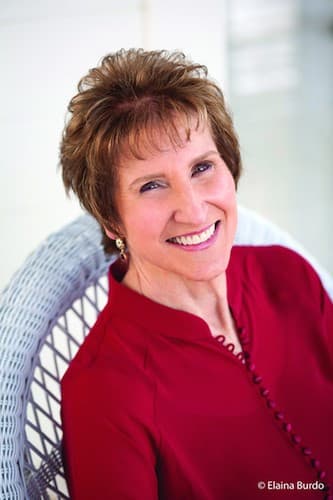
Francine Sandra Rivers is an American author of fiction with Christian themes, including inspirational romance novels. Prior to becoming a born-again Christian in 1986, Rivers wrote historical romance novels. She is best known for her inspirational novel Redeeming Love, while another novel, The Last Sin Eater, received its own film adaptation released in 2007 by Fox Faith. A film based on Redeeming Love was released on January 21, 2022 through Pinnacle Peak Pictures and Universal Pictures.







