“The wind howled a mournful song through the skeletal trees, carrying with it the scent of burning wood and something else... something metallic.”
— Early description of the setting and atmosphere.

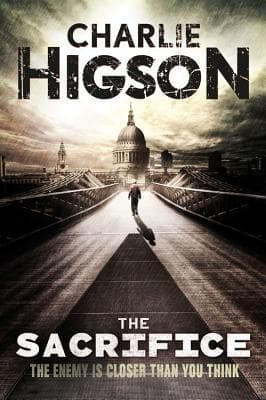
Charlie Higson (2012)
Genre
Children's / Historical Fiction / Young Adult
Reading Time
1000 min
Key Themes
See below
Sign in to track this book
In a post-apocalyptic London, a young boy named Sam journeys through a city filled with monstrous adults, seeking his sister, while an ancient evil gathers its forces and a talking infected man reveals clues about the plague's nature.
After a difficult journey, Small Sam and The Kid reach the Tower of London, a safe place for a group of survivors led by Jordan Hordern. Sam quickly fits in, finding friends among Jordan's group, especially with Courtney, who is clever and practical. Despite the safety and friendship, Sam remains restless. He wants to find his younger sister, Ella, who was separated from him early in the apocalypse. The Kid, always loyal, is ready to follow Sam anywhere. Ed, a more careful member of the Tower group, strongly warns against leaving the safe walls, speaking of the great dangers outside, but Sam's resolve to find Ella is stronger than his fear.
Ignoring Ed's warnings, Sam and The Kid start their search west, through the dangerous 'no-go zone'—an area known for many 'The Dead' and other unseen threats. Their journey is full of risk, forcing them to navigate ruined streets and avoid crowds of infected adults. Along the way, they meet a small, isolated group of child survivors, including a resourceful girl named Brooke. Brooke and her group, though careful at first, eventually join Sam and The Kid, forming a weak alliance. They share their limited resources and knowledge to survive the hostile land, each driven by their own desperate hopes and fears.
Meanwhile, Shadowman, an experienced survivor who understands the dangers in post-apocalyptic London, tracks a figure named Saint George across north London. Saint George is a charming and manipulative leader who quickly gathers an army of child followers, promising them salvation and a new world. Shadowman sees Saint George as a very dangerous threat, predicting the terrible results of his growing influence. He tries to warn other survivor groups and people about Saint George's true plans and the extreme beliefs he puts in his followers, but his warnings are mostly ignored or met with doubt by those who do not believe him or are too busy with their own immediate survival.
During their trip west, Sam's group makes a shocking discovery: an infected adult named Wormwood. Unlike other infected adults, Wormwood can speak, though his words are broken and often unsettling. This meeting is important, as Wormwood's fragmented speech begins to explain the origins and nature of the mysterious disease that has destroyed humanity. His words, though hard to understand, suggest the disease was man-made, a weapon gone terribly wrong. This unexpected source of information gives the first real answers to questions that have troubled the children since the apocalypse began, offering a bit of understanding amid the widespread horror and uncertainty.
As Shadowman keeps watching, Saint George's power and influence grow quickly. His army of child followers expands, drawn by his promises of a better future and his magnetic, almost prophet-like, talk. He makes them fiercely loyal and devoted, turning them into a disciplined but terrifying force. Saint George uses their desperation and fear, shaping them into tools for his will. The children under his command are not just survivors; they are fanatics, ready to follow his every order, even if it means fighting other survivor groups or doing violent acts. Shadowman watches in horror as Saint George's movement becomes a significant and organized threat.
Shadowman, knowing Saint George's true abilities and the coming danger, tries to unite different survivor groups against this common enemy. He approaches various groups, explaining Saint George's methods, his growing army, and the threat he poses to all children. However, his efforts are largely unsuccessful. Many survivors are too focused on their own immediate struggles for food and safety, or they simply do not believe the extent of Saint George's power. Others view Shadowman with suspicion, unable to grasp the strategic long-term threat. His warnings are ignored, leaving him more isolated and frustrated as he watches Saint George's power continue to grow unchecked.
As Sam, The Kid, Brooke, and their new allies continue their journey west, they start to see signs of Saint George's growing influence. They find areas cleared or claimed by his followers, marked with his symbols. They see firsthand the disciplined, almost military-like organization of Saint George's child army. These encounters are tense and often violent, forcing Sam's group to change their plans and fight for survival not only against the infected adults but also against other children. The reality of Saint George's threat becomes clear, shifting their focus from just surviving the infected to understanding and possibly facing this new, organized human enemy.
The story ends in a terrible fight where Saint George's full plans are revealed. He believes a 'sacrifice' is needed to cleanse the world and start a new era, and he tricks his followers into thinking they are part of a divine mission. This 'sacrifice' involves a horrific act where Saint George plans to kill those he sees as 'unworthy' or 'weak' to create his ideal society. Sam, Shadowman, and their allies, despite their differences, must come together to stop this terrible act. The book's peak is a desperate struggle to stop Saint George's ritual, showing the brutal choices and moral problems faced by the surviving children in this ruined world.
During the crisis with Saint George, the secret information from Wormwood becomes very important. Sam, or others in his group, review and try to understand Wormwood's broken statements about the disease. His ramblings, at first thought to be madness, now seem to hold key parts of a larger mystery. They suggest the disease was not just an accident but possibly a biological weapon meant to 'cleanse' humanity, or perhaps an experiment that went terribly wrong. The chance of a 'cure' or at least a way to lessen the disease's effects is hinted at, offering a small hope amid the despair, even if how to achieve it remains unclear and dangerous.
The direct threat from Saint George and his 'sacrifice' is eventually faced, but the ending is far from complete. While the most immediate danger is stopped, the cost is high, and the survivors are left with the emotional and physical scars of the conflict. The book ends with many questions still unanswered. The disease's origin, a possible cure, and humanity's long-term survival remain urgent concerns. Sam is no closer to finding Ella, and the world is still a dangerous, unpredictable place. The ending sets up future books, showing that the children's fight for survival and some normal life is far from over.
The Protagonist
Sam evolves from a purely survival-driven individual to someone who understands the larger threats facing humanity, leading him to confront not just the infected but also human dangers like Saint George.
The Supporting
The Kid remains a constant, unwavering presence, providing steadfast support to Sam and demonstrating the power of loyalty in the face of adversity.
The Supporting
Shadowman attempts to rally survivors against a new human threat, highlighting the difficulty of unifying disparate groups in a fractured world.
The Antagonist
Saint George rises as a major human threat, establishing himself as a cult leader who manipulates children for his own twisted vision of a new world.
The Supporting
Wormwood's presence introduces the possibility of understanding the disease, shifting the narrative from pure survival to the pursuit of knowledge.
The Supporting
Jordan provides a glimpse into organized survival, highlighting the challenges of leadership and maintaining order in a post-apocalyptic world.
The Supporting
Courtney demonstrates the importance of human connection and friendship, even in dire circumstances, providing Sam with a temporary sense of belonging.
The Supporting
Brooke's introduction expands Sam's group, symbolizing the necessity of alliances and cooperation for survival.
The Mentioned
Ed serves as a voice of caution, representing the understandable fear and desire for safety in a dangerous world.
Sam's constant search for Ella drives the story, showing the strong bonds of family. Despite the apocalypse's dangers, Sam's commitment to finding his sister is more important than anything else. The Kid's steady loyalty to Sam reflects this theme, proving that even in a bare world, human connections and the hope of reunion provide the deepest motivation and comfort. This is clear when Sam ignores the Tower's safety to go into the dangerous 'no-go zone' only for Ella.
“He knew he couldn’t stay. Not when Ella was out there somewhere. He had to find her.”
Saint George shows how dangerous manipulation and extreme beliefs can be in a desperate world. His ability to gather and control an army of child followers by offering false promises of salvation and a new world shows how easily fear and hope can be twisted. The children under his command become fanatics, willing to do terrible things in his name. This theme is explored through Shadowman's attempts to expose Saint George, and Sam's group's encounters with his brainwashed followers, highlighting the destructive power of a charismatic leader.
“He spoke of sacrifice, of a new beginning, and the children believed him, every word.”
The mystery of the disease's origin and a possible cure is a constant theme. The meeting with Wormwood, the infected adult who can speak, becomes a key moment in this search for knowledge. His cryptic ramblings offer the first real clues about what the 'Dead' truly are and where the plague came from. This theme suggests that survival is not just about physical strength but also about curiosity and the urgent need to understand the disaster that has hit humanity, even if the answers are terrifying.
“His words were broken, like shattered glass, but they held pieces of the truth they all craved.”
The children in 'The Sacrifice' must face terrible horrors and make harsh choices that forever take away their innocence. They must kill to live, deal with betrayal, and see the worst parts of human nature, even among other children. The actions of Saint George's followers, who are children themselves, doing violence against their peers, show this theme. Sam's journey, and his choices, reflect the constant moral compromises needed to survive in a world where childhood has been brutally stolen.
“There were no rules anymore, no grown-ups to tell them right from wrong. Only survival.”
The book looks at how communities form and break apart under extreme pressure. The Tower of London is a fragile attempt at organized survival, offering temporary safety. However, the need to leave and the conflicts with groups like Saint George's army show the constant struggle to build and keep alliances. Sam's group, starting with just him and The Kid, grows to include Brooke and others, showing that sharing resources and trust, despite initial suspicion, is vital for facing bigger threats. Shadowman's difficulty in warning other groups about Saint George further highlights this theme.
“Alone, they were nothing. Together, they might have a chance.”
A dangerous, heavily infected area symbolizing extreme peril and the unknown.
The 'no-go zone' is a geographical plot device representing the most dangerous and unexplored areas of London, heavily populated by 'The Dead.' Its existence immediately establishes a high-stakes environment for Sam's journey, signifying extreme peril and the unknown. Venturing into this zone heightens suspense, forcing characters to rely on their wits and resourcefulness. It also serves to isolate survivor groups, making communication and alliance-building difficult, thereby emphasizing the fragmentation of society and the immense challenges of travel.
Cryptic utterances from a unique infected adult, providing exposition and foreshadowing.
Wormwood's ability to speak, despite being infected, functions as a crucial expositional device. His fragmented and often disturbing ravings provide the first real clues about the origins and nature of the disease, answering long-standing questions for both the characters and the reader. This device adds a layer of mystery and horror, as the truth is revealed in a disturbing, non-linear fashion. It also serves to foreshadow potential future developments, such as a possible cure or a deeper understanding of the infection, driving the narrative forward with the promise of more answers.
A fortified location offering temporary safety and a stark contrast to the outside world.
The Tower of London serves as a sanctuary plot device, providing a temporary safe haven for Sam and The Kid. Its fortified walls and organized community offer a stark contrast to the chaos and danger of the outside world. This device allows for character development within a relatively stable environment, showing Sam's capacity for friendship and his internal conflict between safety and his quest. It also highlights the fragility of such havens, as Sam's ultimate decision to leave underscores that true safety is elusive and personal missions often outweigh communal security.
The antagonist's name and iconography, evoking distorted religious and heroic ideals.
The name 'Saint George' and the associated iconography are powerful symbolic plot devices. Saint George is a legendary figure known for slaying a dragon, often seen as a protector and a symbol of good triumphing over evil. By naming the antagonist 'Saint George,' the author creates a deliberate and chilling inversion of these ideals. It symbolizes how heroism and faith can be twisted into fanaticism and cruelty in a post-apocalyptic world. This device underscores the theme of corrupted innocence and the perversion of traditional values, making the antagonist's actions even more disturbing.
“The wind howled a mournful song through the skeletal trees, carrying with it the scent of burning wood and something else... something metallic.”
— Early description of the setting and atmosphere.
“Fear was a cold knot in his stomach, but defiance, a small, stubborn spark, still flickered.”
— Character's internal struggle with fear and courage.
“They were children, yes, but the world had taken away their childhoods, leaving them with the hardened eyes of old men.”
— Observation about the impact of the harsh environment on the young characters.
“Hope was a dangerous thing in these times, a fragile flame easily extinguished.”
— Reflection on the precarious nature of hope in a bleak situation.
“The past was a ghost that haunted their every step, a memory of what they had lost.”
— Characters' lingering grief and remembrance of their former lives.
“Survival wasn't about being strong, it was about being smart. And sometimes, it was about being lucky.”
— A character's philosophy on what it takes to survive.
“The silence was worse than any scream, a heavy blanket that smothered all sound, all hope.”
— Description of an oppressive and frightening silence.
“Every day was a fight, every meal a victory, every night a gamble.”
— Summary of the daily struggle for existence.
“He learned that the greatest monsters weren't always the ones with fangs and claws. Sometimes, they wore human faces.”
— Realization about the nature of evil and human cruelty.
“The world had broken them, but it hadn't broken their spirit. Not yet.”
— Observation about the resilience of the characters despite hardship.
“There was a grim beauty in their defiance, a refusal to simply lie down and die.”
— Description of the characters' stubborn resistance.
“The forest whispered secrets, ancient and dark, secrets that promised both danger and a strange kind of solace.”
— The mysterious and dual nature of the forest setting.
“He knew then that some sacrifices were not about giving something up, but about choosing what to protect.”
— A character's understanding of the deeper meaning of sacrifice.
“The past was a burden, but it was also a map, showing them the way they had come, and perhaps, the way they had to go.”
— Reflection on the dual role of the past in guiding future actions.
Ready to see how well you understood this book? Take our interactive quiz with 10 questions.

Charlie Higson is a British author, best known for his thrilling Young Adult horror series, 'The Enemy'. He also penned the popular 'Young Bond' series, including titles like 'SilverFin' and 'Hurricane Gold'. Higson's work often features suspenseful plots and relatable teenage protagonists facing extreme situations.

Dan Gemeinhart
4.5
Kate O'Hearn
4.4

Jeanne Birdsall
4.4

Jen Wang
4.4

Wendelin Van Draanen
4.3

John Marsden
4.3

Chris Van Allsburg
4.3
Jennifer A. Nielsen
4.2