“The truth, I've learned, isn't always a reward. Sometimes it's a punishment.”
— Minnow reflects on the consequences of uncovering difficult truths.

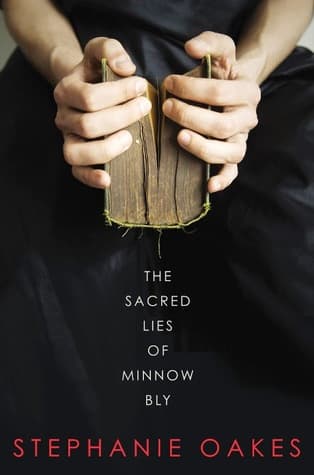
Stephanie Oakes (2015)
Genre
Thriller / Mystery / Young Adult
Reading Time
800 min
Key Themes
See below
Sign in to track this book
A handless cult escapee navigates juvenile detention and an FBI deal, forced to unearth the fiery secrets of her past and a murdered prophet to reclaim a future she never knew existed.
Seventeen-year-old Minnow Bly arrives at a juvenile detention facility. She was found near the burnt Kevinian cult compound, where their Prophet was murdered. Minnow herself is a victim, with her hands amputated. She refuses to speak to authorities about what happened, leading to her arrest. She shares a cell with a tough, protective girl named Jude and struggles to adjust to life outside the isolated cult. Her silence comes from deep fear and ingrained loyalty, not defiance.
Minnow's story often flashes back to her life in the Kevinian cult, a community founded by the charismatic Prophet Kevin. Children, including Minnow, believe Kevin is a divine figure and the only way to salvation. Life is hard, controlled by Kevin's increasingly strange rules, and filled with manual labor and fear of the outside world, called 'The World of Men.' Minnow's parents are devoted followers, and she, like all the children, learns to distrust outsiders and follow the cult's rules. She remembers the communal living, strict dress codes, and constant teaching.
As Minnow gets older, she starts to doubt the Prophet's absolute power. Small acts of rebellion and quiet talks with other unhappy youths feed her doubts. Her growing skepticism increases when an injured outsider, a young man named Jude (not the same Jude from juvie), stumbles into the camp. Minnow, against the Prophet's rules, helps him recover. She is fascinated by his stories of 'The World of Men' and what he knows. This interaction plants a seed of rebellion and curiosity in her, showing her there is more to life than the cult.
Minnow and Jude's secret meetings become more frequent and intimate. Jude teaches Minnow to read and write using a hidden book, further opening her eyes to the world beyond the cult. Their relationship grows into a forbidden love, a stark contrast to the Prophet's teachings about purity and outside influence. Minnow finds comfort and intellectual stimulation with Jude, which directly clashes with the unwavering faith Kevin demands. Their bond poses a threat to the Prophet's control over Minnow's heart and mind.
Prophet Kevin's behavior becomes more erratic and cruel. He introduces harsher punishments, demands more unreasonable sacrifices, and isolates the community further. His sermons become more aggressive, and he shows paranoia, leading to public shaming and physical abuse of followers for small mistakes. Minnow sees the suffering of her community and the fear Kevin creates, confirming her belief that the cult is not the paradise it claims to be. This time marks a turning point where Minnow's disillusionment becomes clear.
Minnow and Jude are eventually discovered, leading to a horrifying public event. As punishment for their forbidden relationship and Minnow's defiance, the Prophet orders the amputation of Minnow's hands. This act is meant to warn all followers and definitively separate Minnow from 'The World of Men.' The trauma of this event is immense, leaving Minnow physically and emotionally scarred. However, it also strengthens her resolve to escape and seek justice, deepening her hatred for the Prophet and his oppressive rule.
After the amputation, Minnow must live with her injuries, learning to do daily tasks without hands. Her spirit remains strong, and her defiance is now internal, a quiet rage against the Prophet. Jude, having escaped punishment, tries to stay in contact and support her, but their interactions become more dangerous. Minnow sees the cult falling apart, the growing unrest among younger members, and the Prophet's descent into madness, all while secretly planning her escape or revenge.
The cult's end comes with a catastrophic fire that burns the compound. In the chaos, Minnow finds herself face-to-face with Prophet Kevin. In a moment of opportunity, driven by years of suffering and the loss of her hands, Minnow acts, leading to the Prophet's death. The exact details are initially unclear, but Minnow played a key role in the death of her tormentor and the destruction of the cult's home. She then flees the burning compound.
While in juvenile detention, FBI Agent Wilson approaches Minnow. Wilson is investigating the cult and the Prophet's murder. She senses Minnow's hidden knowledge and offers her a deal: if she testifies and reveals the truth about the cult's abuses and the Prophet's death, she could get a reduced sentence or even freedom. This offer presents Minnow with a difficult choice: betray the loyalty she was taught to have for the cult, even for a man she despises, in exchange for a chance at a real life outside prison. It tests her courage and her ability to trust.
Minnow decides to accept Agent Wilson's offer. At trial, she bravely tells the full, horrific story of her life in the cult, the Prophet's abuses, the amputation of her hands, and the events leading to the fire and Kevin's death. She reveals that she killed Kevin, pushing him into the fire after he was injured. Her testimony is raw and painful, but it exposes the truth and brings justice to the victims of the Kevinian cult. This act is a final, strong break from her past.
After her testimony, Minnow is released from juvenile detention. She receives prosthetic hands and begins the difficult process of adjusting to life in 'The World of Men,' a place she was taught to fear. She finds support in unexpected places, especially from Jude, her cellmate, who becomes a loyal friend. Minnow deals with her trauma, the loss of her past, and the challenges of building a new identity. She is determined to embrace her freedom and build a future for herself, finding strength in her own resilience and voice.
The Protagonist
Minnow transforms from a brainwashed, silenced cult member into a powerful voice for justice and an advocate for her own freedom.
The Antagonist
Kevin descends further into madness and cruelty, leading to his downfall and death.
The Supporting
Jude serves as the catalyst for Minnow's awakening and her desire for freedom.
The Supporting
Jude evolves from a suspicious peer to a loyal and understanding friend for Minnow.
The Supporting
Agent Wilson facilitates Minnow's path to justice and freedom by offering her a critical opportunity.
The Supporting
Minnow's mother remains largely static in her devotion, highlighting the pervasive nature of cult influence.
The Supporting
Minnow's father remains a passive figure, unable to challenge the cult's authority.
The Supporting
The twins remain symbols of lost innocence and the cult's hold on the young.
The novel explores how unquestioning belief, especially in a charismatic leader like Prophet Kevin, can lead to oppression, violence, and loss of individual freedom. Minnow's childhood is controlled by Kevin's cruel rules, ending in the amputation of her hands as punishment. The cult's isolation and constant reinforcement of its dogma keep members, including Minnow's parents, from questioning the Prophet, even when faced with clear injustice. This theme is key to understanding the cult's psychological hold.
“What they had done to my hands was the work of the Prophet. It was the work of God. That's what they told me. That's what I believed.”
Minnow's journey is about finding and reclaiming her voice. For years, fear, indoctrination, and the physical trauma of her hands being taken silence her. Her initial refusal to speak to authorities after the cult's end comes from ingrained loyalty and fear. However, as she processes her trauma and gains perspective, her decision to testify against the cult and expose the Prophet's abuses becomes an act of self-liberation. Her testimony, despite its pain, is her ultimate rebellion and her path to reclaiming her identity and agency.
“I had been told my whole life what to say and what to think. Now it was my turn to decide.”
Minnow's story shows the human spirit's ability to recover from extreme trauma. Despite losing her hands, seeing cruelty, and enduring years of abuse, Minnow survives. Her physical recovery and adaptation to life without hands reflect her emotional and mental healing. She learns to trust again, form new relationships, and navigate a world she was taught to fear. Her determination to not only survive but to thrive and seek justice shows her deep inner strength.
“They took my hands, but they couldn't take my mind. They couldn't take my will.”
Having grown up in a cult where her identity was defined by following the Prophet's rules, Minnow goes on a journey of self-discovery. In juvenile detention, she must confront who she is outside the cult's influence. Her interactions with Jude (the outsider) and Jude (the cellmate), her learning to read, and her decision to testify all help her understand herself as an individual with her own thoughts, desires, and agency. She redefines her identity not by her past trauma, but by her courage and choices.
“I was Minnow Bly, and I was more than what they had made of me.”
The novel explores the blurred lines between good and evil, especially within the cult. Prophet Kevin, initially seen as a savior by his followers, becomes evil through his abuses and manipulations. However, the book also examines the good intentions of some cult members, like Minnow's parents, who believe they are doing God's work. This highlights how easily good intentions can be twisted into harmful actions under a powerful leader. It questions whether individuals are inherently good or evil, or if circumstances and indoctrination shape their morality.
“Evil doesn't always look like a monster. Sometimes it looks like a prophet, promising salvation.”
Alternating timelines between Minnow's present in juvie and her past in the cult.
The novel employs a dual narrative structure, alternating between Minnow's present-day experiences in juvenile detention and extensive flashbacks to her life within the Kevinian cult. This device slowly reveals the horrifying details of her past, building suspense around the circumstances of the Prophet's death and the amputation of Minnow's hands. It allows the reader to understand Minnow's trauma and her internal struggles as she tries to reconcile her past with her present, creating a compelling mystery that unfolds gradually.
Minnow's hands symbolize her identity, agency, and connection to the world.
Minnow's hands are a powerful symbol throughout the novel. Their amputation represents the Prophet's attempt to strip her of her agency, her ability to connect with the outside world (through touch, writing), and her very identity. The loss of her hands is a constant physical reminder of her trauma and the cult's cruelty. Conversely, the eventual acquisition of prosthetic hands symbolizes her journey towards healing, reclaiming her independence, and finding a new way to interact with the world and forge her own path.
Minnow's personal and subjective account of events.
The story is told entirely from Minnow's first-person perspective. This intimate viewpoint allows the reader direct access to her thoughts, fears, and internal struggles as she grapples with her past and present. It emphasizes her subjective experience of indoctrination, trauma, and eventual liberation, making her journey deeply personal and emotionally resonant. The first-person narrative is crucial for understanding the psychological impact of the cult and the nuanced process of Minnow finding her own voice.
A stark dichotomy between the cult's isolation and the outside world.
The novel establishes a clear dichotomy between the isolated Kevinian cult, which refers to everything outside its borders as the 'World of Men,' and the actual outside world. This contrast is a key plot device, highlighting the cult's manipulative control and its deliberate creation of fear and ignorance. Minnow's journey involves bridging this gap, unlearning the cult's lies about the 'World of Men,' and eventually integrating into it, symbolizing her escape from mental and physical imprisonment.
“The truth, I've learned, isn't always a reward. Sometimes it's a punishment.”
— Minnow reflects on the consequences of uncovering difficult truths.
“There are some things you can't unsee, and some things you can't unfeel.”
— Minnow grapples with traumatic memories and experiences.
“Hope is a dangerous thing. It can drive a man insane.”
— Minnow considers the double-edged nature of hope in desperate situations.
“Sometimes the only way to save yourself is to burn everything down.”
— Minnow contemplates radical actions for survival and liberation.
“Secrets are like fires. They can keep you warm, or they can burn you alive.”
— Minnow reflects on the power and peril of keeping secrets.
“You can forgive someone, but that doesn't mean you have to let them back into your life.”
— Minnow considers the complexities of forgiveness and setting boundaries.
“Fear is a powerful motivator, but it's a terrible master.”
— Minnow observes how fear influences people's actions and decisions.
“The world outside the fence was a different kind of wild. More dangerous, in some ways, because it pretended to be tame.”
— Minnow contrasts her isolated upbringing with the complexities of modern society.
“Even in the darkest places, there can be a flicker of light.”
— Minnow finds small moments of hope or connection amidst her suffering.
“The stories we tell ourselves, they're the ones that truly shape us.”
— Minnow considers the impact of personal narratives and beliefs.
“Silence can be a weapon, or it can be a shield.”
— Minnow learns to use silence strategically in different situations.
“Sometimes, the only way to find your own path is to get lost first.”
— Minnow's journey of self-discovery often involves confusion and uncertainty.
“Pain doesn't always make you weaker. Sometimes, it makes you sharper.”
— Minnow reflects on how her suffering has refined her perception and resolve.
“The greatest prison isn't made of bars, but of the lies you believe about yourself.”
— Minnow realizes the psychological impact of self-deception and external manipulation.
Ready to see how well you understood this book? Take our interactive quiz with 10 questions.







