“A man's got to stand for something, or he'll fall for anything.”
— Tyrel Sackett reflecting on the need for principles.

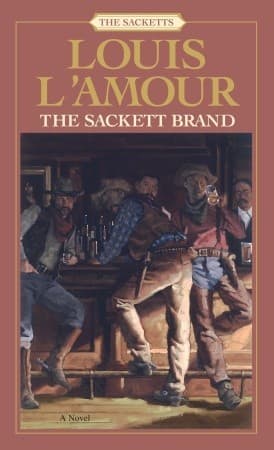
Louis L'Amour (1980)
Genre
Historical Fiction
Reading Time
176 min
Key Themes
See below
Sign in to track this book
Cornered under the Mogollon Rim by forty vengeful gunslingers, Tell Sackett must hold his ground until his diverse, fiercely loyal family—from outlaws to bankers—can ride in to defend their brand against overwhelming odds.
Tell Sackett, a lone rider, is ambushed and chased by forty gunmen from the Lazy A ranch, led by Jud Higgins. They trap him under the Mogollon Rim. Tell, known for his marksmanship and survival skills, finds a good spot among rocks and sparse plants. The Lazy A men want to capture him, to hang him or kill him, believing he is on their land or has wronged their boss, Cass Bannon. Tell, however, will not be taken easily and prepares for a fight, using his limited ammunition and the rough land to his advantage against many enemies.
As the Lazy A gunmen get closer, Tell Sackett shows his fighting skill. He uses his rifle accurately, shooting several of his pursuers from hidden spots. Jud Higgins and his men, frustrated by Tell's toughness and the losses he causes, become more desperate. They try to smoke him out with fire, but Tell expects their moves, moving through the rocks and brush. He wounds more men and avoids immediate capture, forcing the Lazy A outfit to spread out and move carefully. Tell's main goal changes from just surviving to gaining time, hoping for an unexpected chance or help.
Unknown to Tell, news of the large manhunt and the attack on a Sackett spreads across the Western lands. Through frontier communication—riders, saloon talk, and telegraph wires—various Sackett relatives learn of Tell's bad situation. Orrin Sackett, a respected cattleman, and his wife, Laura, are among the first to hear. They understand the unspoken Sackett rule: an attack on one is an attack on all. Other Sacketts, from mountain men like Logan to law-abiding citizens and even those with a past, begin to react, seeing the threat to their family's honor and survival. The call to arms, though not stated, is heard.
The different parts of the Sackett family, spread across states and doing different jobs, start heading towards the Mogollon Rim. Orrin Sackett, a practical and skilled leader, immediately organizes a rescue, gathering supplies and men. From the high mountains, the strong Logan Sackett and his relatives, known for tracking and fighting, begin their fast descent. Tyrel Sackett, another skilled and independent member, also sets out, driven by the strong loyalty that defines their family. Each Sackett brings their skills and experience to the coming fight, united by the promise to stand by their own, no matter the cost or the odds.
Under constant pressure from the Lazy A gunmen, Tell Sackett continues his resistance. He is wounded, his ammunition is low, and he is tired. Despite his bad situation, Tell's will to live remains strong. He uses every trick he knows—the land for ambushes, fake retreats—and makes his pursuers pay for every step. Jud Higgins, angry about the losses and Tell's refusal to give up, increases the attack, sending wave after wave of men. Tell knows he cannot last forever, but he is determined to make his last stand as costly as possible for his enemies, hoping to gain a little more time.
Just as Tell Sackett is almost at his limit, a new group enters the fight. Orrin Sackett, leading loyal men and family, arrives with a loud charge. They launch a surprise attack on the Lazy A forces from an unexpected direction, catching Jud Higgins and his men off guard. The Lazy A gunmen, who had been focused only on Tell, suddenly find themselves fighting on two fronts. Orrin's smart tactics and the strength of his attack change the battle, causing confusion among the attackers. Tell, seeing his family's faces, finds new strength and joins the counter-attack effectively.
The battle grows as Logan Sackett and his tough mountain relatives, having moved through the difficult land with speed and stealth, arrive to help Orrin and Tell. Logan, a force of nature, leads his men with fierce energy, using their knowledge of the wilderness and their fighting skills effectively. The Lazy A gunmen, already weakened by Orrin's attack, are now completely overwhelmed by the Sacketts' combined power. The Sacketts fight with coordinated, almost natural unity, turning the ambush into a defeat. The Lazy A forces, discouraged and outmatched, begin to break and run, taking heavy losses.
With the Lazy A forces in disarray, the Sacketts chase them. They do not seek to kill every last man, but to scatter them completely and send a clear message: attacking one Sackett means facing the anger of the whole family. Jud Higgins, wounded and scared, tries to gather his remaining men but fails. The Sacketts show their better horsemanship and tactical teamwork, ensuring that the Lazy A outfit is fully defeated and spread out. This pursuit not only secures their victory but also cements their reputation as a firm and strong family that protects its own with loyalty and deadly skill.
After the battle, the Sacketts, led by Orrin, Tyrel, and Logan, confront Cass Bannon, the wealthy owner of the Lazy A ranch, who planned the attack on Tell. Bannon, at first arrogant, is shocked by his defeat and the unified Sackett family. He tries to bluff and deny responsibility, but the Sacketts, calm but firm, make it clear that his actions have consequences. They demand an explanation for the attack and a promise that no Sackett will be targeted again. The confrontation is tense, but Bannon, realizing he is outmatched, is forced to back down and accept the Sacketts' power.
Afterward, the Sacketts gather, caring for their wounded and thinking about what happened. Tell, though injured, is safe and thankful for his family's help. The experience strengthens the deep loyalty and strong bond that defines the Sackett family. They discuss the 'Sackett Brand'—not a mark on cattle, but an inner code of honor, courage, and support for each other. This event reminds them, and the wider frontier, that while individual Sacketts may travel far, they are always connected, and an attack on one will always bring the full force of the family against the attacker.
The Protagonist
From a lone wolf fighting for survival, Tell Sackett is reaffirmed in his place within the larger Sackett family, showcasing the power of collective strength.
The Supporting
Orrin solidifies his role as a unifying leader within the Sackett family, demonstrating his strategic prowess and unwavering loyalty.
The Supporting
Logan's role reinforces the diverse strengths within the Sackett family, showcasing the effectiveness of his mountain-bred fighting style in a unified effort.
The Supporting
Tyrel's journey to aid Tell reinforces his commitment to the Sackett family code, demonstrating his unwavering loyalty.
The Antagonist
Bannon's arc is one of hubris leading to his downfall, as his arrogance is shattered by the unexpected unity and power of the Sackett family.
The Supporting
Higgins experiences a rapid decline from confident leader to a defeated and demoralized man, showcasing the consequences of underestimating his opponents.
The main theme of the novel is the strong bond and loyalty among the Sackett family. When one Sackett is threatened, all Sacketts respond, no matter the distance or their own lives. This theme is clearest when Orrin, Logan, and Tyrel, along with other relatives, stop everything to ride to Tell's aid, showing that family honor is more important than anything else. The 'Sackett Brand' itself is a symbol for this inner, unspoken code, proving that individual strength grows when united by blood and shared values. The Sacketts' united front against Cass Bannon's forces shows the power of this group identity.
“Hunt one Sackett and you hunt 'em all. So they're riding in from all over—mountain Sacketts, outlaws, cattlemen, bankers and the rest. They'll fight with Tell on this one.”
While Louis L'Amour often praises the independent individual, this novel looks at the balance between individual skill and group strength. Tell Sackett, a strong individual, is at first alone against forty men, showing great personal toughness. However, his survival and the defeat of the Lazy A forces are only possible through his family's combined efforts. The story suggests that while individual skill is important, there are times when even the strongest person needs group support. The Sacketts, while very independent, understand the power of their united 'brand' in overcoming great odds, proving that a strong community can protect its members when an individual cannot.
“Tell knew he could not hold out indefinitely, but he was determined to make his last stand as costly as possible for his enemies, hoping to buy just a little more time. Time for his kin to ride.”
The novel explores the frontier idea of justice, which often falls outside formal law. Cass Bannon's attempt to use force to remove Tell Sackett is met with the Sacketts' own fast and clear retribution. The Sacketts do not just rescue Tell; they actively chase and defeat Bannon's forces, making sure Bannon understands the results of his actions. This theme highlights how frontier society regulated itself, where personal honor and family reputation are protected through decisive action, and those who do wrong are held accountable by the people they offend.
“They didn't seek to annihilate every last man, but to scatter them completely and send an unmistakable message: attacking one Sackett means facing the wrath of the entire clan.”
The tough life of the American frontier demands great resilience, a quality Tell Sackett shows. Trapped and outnumbered, Tell's ability to survive against incredible odds shows not only his physical strength but also his mental toughness and resourcefulness. He uses every trick he knows—cleverness, knowledge of the land, and sheer willpower—to continue his stand. This theme extends to the entire Sackett family, who show their resilience by overcoming obstacles and traveling long distances to confront a powerful enemy, proving that adaptability and a strong spirit are necessary for survival in the untamed West.
“He was wounded, his ammunition dwindling, and exhaustion began to set in. Despite his dire circumstances, Tell's will to survive remained unbroken.”
The unspoken signal that rallies the Sackett family to defend one of their own.
This device is crucial to the plot, as it drives the convergence of the disparate Sackett family members. The news of Tell's peril acts as an immediate, non-verbal 'call to arms' that every Sackett understands and responds to. It highlights the deep-seated loyalty and inherent family code, setting in motion the various journeys that lead to the climactic battle. This device effectively transforms a solo survival story into a grand family saga, demonstrating the power of shared heritage and responsibility.
A formidable natural barrier and strategic setting for the initial ambush.
The Mogollon Rim serves as more than just a backdrop; it's a critical element in the plot. Its rugged, defensible terrain allows Tell Sackett to hold off a vastly superior force, showcasing his survival skills and buying precious time. It also acts as a natural funnel, concentrating the conflict and making the arrival of the other Sacketts more dramatic and impactful. The Rim itself becomes a character, dictating tactics and adding to the epic scale of Tell's stand.
The initial situation where the protagonist faces an almost impossible challenge.
This device immediately establishes high stakes and suspense. Tell Sackett being cornered by forty armed men creates an insurmountable challenge that makes his individual resistance heroic and the eventual family intervention even more triumphant. It emphasizes the Sacketts' collective power when they turn the tables, demonstrating that even the most overwhelming odds can be overcome by unity and skill, amplifying the theme of collective strength.
A symbolic representation of the family's honor, code, and unbreakable bond.
More than just a name, 'The Sackett Brand' functions as a powerful metaphor throughout the story. It symbolizes the unwritten code of loyalty, courage, and mutual protection that defines the Sackett family. It's the reason Sacketts from all walks of life ride to Tell's aid, and it's the message they send to Cass Bannon. This device elevates the conflict from a simple feud to a defense of a profound family identity and way of life, giving deeper meaning to their actions.
“A man's got to stand for something, or he'll fall for anything.”
— Tyrel Sackett reflecting on the need for principles.
“The wind blows where it lists, and you hear the sound thereof, but canst not tell whence it cometh, and whither it goeth.”
— A philosophical observation about the unpredictable nature of life, echoing biblical verse.
“There's no justice in this world for a man who won't fight for himself.”
— Tyrel's harsh realization about self-reliance in the untamed West.
“A man learns more from his mistakes than from his successes.”
— A moment of introspection after a setback.
“Some men are born to trouble as the sparks fly upward.”
— Observing the inherent difficulties some individuals face.
“The only real freedom is the freedom to choose your own path.”
— Tyrel pondering the meaning of true liberty.
“Fear is a poor companion on a long trail.”
— Advising against allowing fear to dictate actions.
“The wilderness teaches you things a town never will.”
— Highlighting the lessons learned from nature and isolation.
“A good horse and a straight-shooting gun are a man's best friends out here.”
— Practical advice for survival in the frontier.
“There's a time to talk and a time to act, and knowing the difference can save your hide.”
— Emphasizing the importance of discernment in dangerous situations.
“Every man has a brand, whether he knows it or not.”
— The central theme of the book, referring to one's reputation and character.
“It ain't what you take with you, it's what you leave behind that matters.”
— A reflection on legacy and the impact of one's life.
“The mountains don't care about your troubles, but they'll teach you how to carry 'em.”
— Nature as a harsh but effective teacher of endurance.
“Sometimes the hardest fight is the one you have with yourself.”
— Tyrel confronting his own doubts and fears.
Ready to see how well you understood this book? Take our interactive quiz with 10 questions.
Biography coming soon.







