“Once there was a little bunny who wanted to run away.”
— The opening line, setting up the entire story.

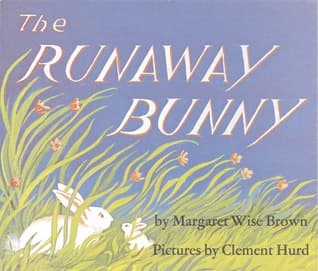
Margaret Wise Brown (1942)
Genre
Fantasy / Children's
Reading Time
5 min
Key Themes
See below
Sign in to track this book
A mother bunny reassures her adventurous child that her love will always find them, no matter how far they roam.
A small white bunny sits with his mother, Mama Bunny. He playfully tells her he is going to run away. This statement sets up a series of imaginative scenes. Mama Bunny responds to each of his escape plans with her own imaginative counter-plan, always promising she will find him no matter where he goes or what he becomes. This first declaration starts the back-and-forth between mother and child, establishing the story's main idea: a child's wish for independence and a mother's constant love and protection.
The little bunny first imagines turning into a fish and swimming away in a brook. He pictures himself darting through the water, free. But his Mama Bunny immediately says that if he becomes a fish, she will become a fisherman. She explains she will cast her line and reel him in, showing her ability to get him back even from a watery escape. This exchange shows the mother's determined and clever nature, proving her love will overcome any physical barrier the bunny might imagine.
Next, the little bunny thinks about becoming a bird and flying high, soaring away from his mother. He pictures himself with wings, free in the sky. His Mama Bunny responds by saying that if he becomes a bird and flies away, she will become a tree. She explains he will surely come home to rest in her branches, suggesting she will provide a safe, natural place for him, drawing him back. This idea reinforces the mother as a constant source of comfort and shelter.
The little bunny then imagines becoming a mountain climber, going up tall, rocky peaks and escaping into the wild. He sees himself as a lone adventurer, high above the world. But his Mama Bunny's response is quick and comforting: if he becomes a mountain climber, she will become a tall mountain. She says she will be the mountain he climbs, making sure he is always on her and thus always within her reach. This shows the mother's protective presence, making herself a part of his journey.
In another try to get away from his mother, the little bunny dreams of becoming a small crocus in a hidden garden. He pictures himself as a tiny, beautiful flower, blending in with nature. Yet, his Mama Bunny simply says that if he becomes a crocus in a hidden garden, she will become a gardener. She will search among the flowers until she finds him, highlighting her sharp eye and steady effort to find him, no matter how small or hidden he tries to be. This shows her attentiveness and nurturing role.
The little bunny's imagination takes him to the sea, where he decides he will become a sailor on a big ship and sail far away. He pictures himself on a grand voyage, exploring distant places. His Mama Bunny, however, calmly states that if he becomes a sailor, she will become the wind. She will blow his ship right back home to her, showing her power to guide his path and ensure his safe return, even across vast oceans. This shows her guiding force in his life.
The little bunny's next whimsical idea is to become a circus acrobat, leaping and tumbling through the air, doing amazing tricks. He pictures himself as a dazzling performer, free from normal rules. But his Mama Bunny responds by saying that if he becomes a circus acrobat, she will become a tightrope walker. She will walk the rope and catch him if he falls, assuring him of her constant support and safety, even in his riskiest adventures. This emphasizes her role as a protector from harm.
The little bunny's imagination peaks when he declares he will become a little boy and run away to the moon. This is perhaps his most ambitious escape plan, aiming for an entirely different place. Yet, his Mama Bunny's love knows no limits, not even space. She simply says that if he becomes a little boy and runs away to the moon, she will become his mother and follow him there. This shows that her love and presence go beyond even space itself. This is the ultimate expression of her steady commitment.
After all his imaginative attempts to run away and his mother's consistent, loving responses, the little bunny finally gives up the game. He realizes that no matter what he becomes or where he goes, his mother's love will always find him and bring him back. This realization marks a point where the playful fantasy gives way to the comforting reality of his mother's steady presence. The game of hide-and-seek, though imaginative, ultimately strengthens his bond with his mother.
With his imaginative escapes done and his mother's strong reassurance of love established, the little bunny finally says, 'Shucks,' and declares he might as well stay right where he is and be her little bunny. This statement shows his acceptance of his mother's unconditional love and the comfort of staying with her. The playful rebellion stops, replaced by a feeling of security and belonging. The story ends with a simple, heartfelt wish for carrots, showing a return to the everyday comforts of home and family.
The Protagonist
The little bunny starts by testing boundaries and ends by accepting the comforting security of his mother's unwavering love.
The Supporting
Mama Bunny remains consistently loving and reassuring, demonstrating the steadfast nature of maternal affection.
The main theme is a mother's steady and unconditional love for her child. Mama Bunny always assures the Little Bunny that no matter where he goes or what he becomes, she will find him and bring him back. This creates a strong sense of security, showing the child that even when they try to be independent or 'run away,' they are always loved and safe. For example, when the Little Bunny wants to be a bird, Mama Bunny becomes a tree for him to rest in, symbolizing her constant support and safe place.
“If you run away from me, said his mother, for you are my little bunny. I will run after you. For you are my little bunny.”
The story explores the natural tension between a child's growing wish for independence and exploration, shown by the Little Bunny's imaginative escapes, and the deep need for a parent's comfort and security. The Little Bunny repeatedly tries to imagine scenarios where he is free and cannot be caught, but each time, his mother's response gently reminds him that her love is a constant, comforting presence, not a restriction. His choice to 'stay right here' shows this tension resolved, with comfort winning over the urge to stray.
“Shucks, said the little bunny, I might as well stay right where I am and be your little bunny.”
The entire story is an imaginative game between mother and child. Both characters engage in a playful back-and-forth, changing into different animals, objects, and even celestial bodies. This highlights the role of imagination in childhood development and communication. The story confirms that playful fantasy is a safe space for children to explore fears, wishes, and limits, all within a caring setting. The illustrations help make this imaginative world feel real within the story.
“If you become a little boy and run away to the moon, said his mother, I will become your mother and follow you.”
Mama Bunny's ability to become whatever is needed to reach or care for her child—whether a fisherman, a tree, a mountain, or even following him to the moon—shows how widespread and complete parental love is. Her love is shown as a force that goes beyond physical barriers, distance, and even different forms of being. This theme reassures children that their parents' love is always with them, even when they are not physically present, providing a constant emotional anchor.
“If you become a fish in the brook, I will become a fisherman and I will fish for you.”
A repetitive, alternating dialogue structure.
The story employs a classic call-and-response structure. The Little Bunny 'calls' with a declaration of running away and transforming into something new, and the Mama Bunny 'responds' with an equally imaginative counter-transformation, always with the promise of finding him. This repetitive pattern creates a comforting rhythm, reinforces the central theme of unwavering love, and allows young readers to anticipate the mother's reassuring reply. It builds suspense in a gentle, playful way, leading to the ultimate resolution.
Characters changing forms to represent concepts.
Both the Little Bunny and Mama Bunny metaphorically transform into various natural elements, animals, or roles (fish, bird, tree, fisherman, mountain, etc.). These transformations are not literal but serve as metaphors for the child's desire for freedom and the mother's protective, omnipresent love. Each transformation allows the story to explore different scenarios of escape and retrieval, illustrating the boundless nature of the mother's devotion in a visually engaging and imaginative way.
The use of repeated phrases for comfort and emphasis.
The phrase 'For you are my little bunny' is repeated throughout the story, often accompanying Mama Bunny's declarations of finding her child. This repetition acts as a soothing refrain, emphasizing the unbreakable bond and the mother's constant affirmation of her child's identity and belonging. It provides a sense of security and predictability for young readers, reinforcing the central message of unconditional love and making the narrative feel safe and comforting.
Using fantasy to explore and resolve emotional tensions.
The entire 'conflict' of the Little Bunny wanting to run away is handled through imaginative play rather than real-world confrontation. This device allows the story to explore a child's natural urges for independence and boundary-testing in a safe, non-threatening way. By playing out these scenarios in fantasy, the Little Bunny can 'test' his mother's love without actually leaving, and the Mama Bunny can reassure him without resorting to punishment or strict rules, ultimately strengthening their bond through understanding and affection.
“Once there was a little bunny who wanted to run away.”
— The opening line, setting up the entire story.
“If you run away, said his mother, I will run after you. For you are my little bunny.”
— The mother bunny's first response to her child's desire to leave.
“If you run away and become a fish in a brook, I will become a fisherman and fish for you.”
— The mother's imaginative promise to find her bunny, no matter the form.
“If you run away and become a bird, I will be a tree that you may come home to.”
— The mother offering herself as a place of safety and return.
“If you run away and become a sailboat, I will be the wind and blow you where I want you to go.”
— The mother asserting a gentle, guiding control over her child's journey.
“Shucks, said the bunny, I might just as well stay where I am and be your little bunny.”
— The bunny's realization that he cannot truly escape his mother's love and care.
“And he did. So he stayed home and was his mother's little bunny.”
— The conclusion of the main narrative, confirming the bunny's decision.
“Have a carrot, said the mother bunny.”
— The mother offering a simple, loving gesture at the very end.
“If you become a crocus in a hidden garden, I will be a gardener and I will find you.”
— The mother's promise to seek out her child even in disguise and seclusion.
“If you become a rock on the mountain top, I will be a mountain climber and climb to where you are.”
— The mother's determination to overcome obstacles to reach her child.
“If you become a little boy and go into a house, I will be your mother and I will find you there.”
— The mother's ultimate assertion of her role and connection, transcending forms.
“If you run away and become a circus acrobat, I will be a trapeze artist and catch you.”
— The mother promising to provide safety and support during daring adventures.
“If you run away and become a little star, I will be a spaceman and travel to you.”
— The mother's commitment to follow her child even to the most distant places.
Ready to see how well you understood this book? Take our interactive quiz with 10 questions.
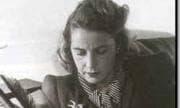
Margaret Wise Brown was an American writer of children's books, including Goodnight Moon and The Runaway Bunny, both illustrated by Clement Hurd. She has been called "the laureate of the nursery" for her achievements.







