“The miller's daughter was so beautiful that she was famous throughout the land. But she was also terribly poor.”
— Opening lines, establishing the miller's daughter's status.

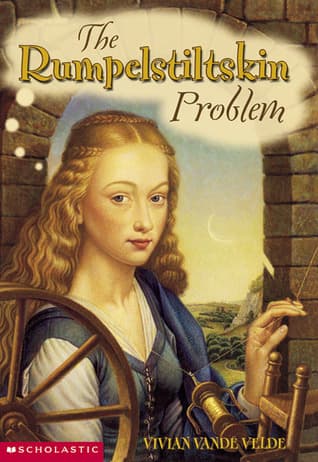
Vivian Vande Velde (2000)
Genre
Fantasy / Children's / Young Adult
Reading Time
90 min
Key Themes
See below
Sign in to track this book
Vivian Vande Velde wittily unravels the nonsensical threads of Rumpelstiltskin, spinning six ingenious and often hilarious alternative tales that finally make sense of the absurd.
The book begins by looking at the original Rumpelstiltskin fairy tale, pointing out its plot holes. The author questions why the miller would lie about his daughter's ability to spin straw into gold, why the king would believe such a claim, and why the imp, Rumpelstiltskin, would have such strange demands. This first section sets the stage for the retellings by showing the 'problem' each new version tries to solve, focusing on the lack of logical character motivation and realistic outcomes in the traditional story. It asks the reader to consider how small changes can alter a story's meaning.
In this version, the miller's daughter, Elise, can truly turn straw into gold, a magic gift from her grandmother. Her father, a kind but foolish man, boasts of her talent to the King, hoping for a better life for her. The King, a greedy ruler, locks Elise in a room full of straw, demanding gold by morning. Elise, scared, uses her magic, but the effort leaves her weak. She realizes the King's greed will trap her forever, leading to a desperate search for escape.
This retelling focuses on a king who is deep in debt. When he hears a rumor of a miller's daughter who can spin straw into gold, he sees it as his only hope. The 'imp' in this story, a clever magical being, seeks out people in trouble to make good deals. He offers to spin gold for the king, not the daughter, in exchange for increasingly valuable items—first a ring, then a necklace, and finally, the king's firstborn child. The king, blinded by financial desperation, agrees to these terms without understanding the long-term consequences, putting his future child in danger.
Here, the miller's daughter, Hilda, is not a passive victim but a clever young woman. Her father, a boastful man, exaggerates her talents to the King, a vain and easily tricked ruler. When Hilda is told to spin straw into gold, she makes up a story about an imp who helps her, knowing the King is superstitious. The 'imp' in this tale is imaginary, a tool she uses to gain power. She pretends to be upset about giving up her firstborn, knowing the King will step in. Her real struggle is not with a magical being, but with keeping up her lie and escaping the King's demands.
In this version, the King is obsessed with gold, to the point of madness. He believes the miller's boast without question, driven by his greed. The miller's daughter, Eleanor, is truly scared and helpless. The 'imp' is a minor, mischievous entity who genuinely helps her but is easily tricked. The main conflict happens when the King's greed takes over; he demands more gold, neglecting his kingdom and duties. Eleanor, after her last task, escapes the castle not by outsmarting the imp, but by the King's own self-destruction, as his obsession leads to his kingdom's ruin and his death.
This story completely reworks the 'straw into gold' idea. The miller's daughter, Anya, is a skilled weaver, making tapestries that shimmer like gold. Her father, a proud but naive man, describes her work in exaggerated terms to the King, who misunderstands him. The 'imp' is not a magical creature but a rival weaver, a bitter and jealous man who secretly helps Anya, hoping to expose her as a fraud and take credit for her work. The conflict is about Anya's struggle to produce something that meets the King's literal demand for gold, while the 'imp' tries to undermine her, leading to a point where Anya must reveal her true talent and the nature of the 'gold' she produces.
In this final retelling, the miller's daughter, Greta, cannot spin straw into gold. However, an imposter, a magical creature or human, takes her place in the King's castle, driven by their own plans. This imposter, who *can* spin gold, demands the firstborn child, not out of meanness, but perhaps to gain a human child or for some other magical reason. The real Greta wonders about her family and kingdom, while the imposter handles the King's demands and the child's birth. The story looks at identity, substitution, and the results of deception, both planned and accidental.
A repeated element across several tales is the new interpretation of the imp, Rumpelstiltskin. In some versions, he is a magical being with a specific purpose, like collecting children or making deals. In others, he is a human character, a rival, a trickster, or even imagined. Vivian Vande Velde uses these changes to explore different story possibilities, asking why such a character would exist and what their true reasons might be. By changing the imp's nature, the author alters the stakes and moral meaning of the story, making him a more complex figure than the simple bad guy of the original.
The King's character changes greatly across the retellings. From a greedy tyrant to a naive ruler, a desperate monarch, or even a gold-mad individual, his portrayal shapes much of the plot. These variations show how a single character's main reason can drive a completely different story. The author uses these diverse depictions to challenge the simple 'evil king' idea of the original, giving more nuanced reasons for his actions and the results that follow, often making him a more central and active part of the unfolding drama.
In each retelling, the miller's daughter has more choice and a clearer personality than her original counterpart. She is no longer just a beautiful girl forced into an impossible task. Instead, she is a magical individual, a clever deceiver, a skilled artisan, or a scared but resourceful young woman. Her actions, choices, and struggles become central to the plot, allowing for more complex character development and more satisfying endings. This shift from passive object to active subject is a key part of Vivian Vande Velde's re-examination of the fairy tale's sexism.
The idea of 'straw into gold' is reimagined in several ways. In some tales, it is literal magic, a true transformation. In others, it is a misunderstanding, a metaphor for something else, like beautiful tapestries that *look* like gold, or even a clever lie. This look at the 'gold' itself adds depth to the story, moving beyond a simple magical premise. It allows the author to look at themes of value, perception, and truth, making the central magical element a more intriguing and less literal plot point, and offering diverse explanations for how such an impossible feat could occur.
The Protagonist
Her arc shifts from a passive recipient of fate to an active shaper of her destiny, learning to navigate danger and utilize her unique skills or intellect.
The Antagonist/Supporting
His arc varies from suffering a downfall due to his greed to being outwitted by the daughter or simply being a catalyst for the story's events without significant personal change.
The Antagonist/Supporting
His arc shifts from a magical antagonist who is outsmarted to a more complex figure whose motivations are explored, or he may not have a personal arc, simply serving as a plot device.
The Supporting
His arc is generally static; he initiates the conflict but rarely undergoes significant personal change, often remaining unaware of the full extent of the danger he has caused.
Many of the retellings explore how truth can be twisted, and how deception, whether planned or accidental, drives the story. The miller's initial lie about his daughter's ability starts things, but the later deceptions (the daughter pretending to have help, a rival pretending to be an imp, the King's self-deception about his wealth) shape the plot. This theme questions what is real and what is seen, and how appearances can be manipulated for power or survival. For example, in 'The Name Game,' Hilda's entire strategy relies on a made-up 'imp' to outwit the King.
“It is not always the truth that sets you free, but sometimes the cleverest lie.”
A central theme across the collection is the miller's daughter changing from a passive victim into someone who controls her own future. In the original tale, she is merely an object to be bargained over. Vande Velde consistently gives her characters intellect, skill, or magic, allowing them to face their problems with resourcefulness. Whether she's a magic-user, a clever planner, or a skilled artisan, the daughter actively seeks solutions and fights for her survival and freedom, challenging traditional fairy tale gender roles and promoting self-reliance. This is clear in 'Straw Into Gold' where Elise actively tries to escape the King's greed.
“She would not be a pawn in a king's game, but a player in her own right.”
The destructive power of greed, especially the King's desire for gold, is a repeated idea. His greed makes him make unreasonable demands and often blinds him to the true value of things, including his kingdom and his own child. In some versions, his greed directly leads to his downfall or the ruin of his kingdom, showing how unchecked desire can be self-destructive. This theme is most clear in 'A King's Folly,' where the King's obsession literally leads to his death, showing that wealth cannot buy happiness or security if pursued at any cost.
“Gold, in the hands of a fool, is but a gilded cage.”
The entire book is an exercise in this theme. By presenting six alternative versions of a single fairy tale, Vande Velde shows how stories can be reshaped, reinterpreted, and given new meaning through different viewpoints and logical adjustments. It encourages readers to look at familiar stories, question their assumptions, and appreciate the creative potential of altering even small details. The introduction clearly states the 'problem' with the original, setting up the idea that stories are flexible and can be improved, showing the author's own awareness of how stories work.
“Every story holds a thousand other stories within it, waiting to be told.”
The central device of presenting multiple alternative versions of a single fairy tale.
This is the overarching plot device of the entire book. Vivian Vande Velde takes the core premise of 'Rumpelstiltskin' and systematically alters key elements—character motivations, magical abilities, the nature of the 'imp,' and the meaning of 'gold'—to create entirely new, logically coherent narratives. This device allows for a comprehensive exploration of the original story's flaws and demonstrates how minor changes can lead to vastly different outcomes and thematic interpretations, essentially solving 'the Rumpelstiltskin problem' in various creative ways.
Altering the underlying reasons for characters' actions to drive new plots.
Instead of characters acting simply because 'that's what happens in the fairy tale,' Vande Velde provides logical and diverse motivations for each character in every retelling. The miller's boast might stem from genuine love, foolish pride, or misinterpretation. The King's greed is given context, from debt to madness. The imp's demands are rooted in specific desires, not just arbitrary magic. This device ensures that the plot progresses organically from the characters' internal states and external circumstances, making their actions understandable and the story more engaging.
Explaining or redefining the fantastical elements of the original tale.
The seemingly arbitrary magic of 'spinning straw into gold' and the imp's powers are either grounded in more specific magical systems, explained as non-magical phenomena (like skilled weaving), or revealed to be part of a deception. This device removes the 'deus ex machina' feel of the original, providing rational (within the story's context) explanations for how impossible feats occur. By doing so, the author makes the fantastical elements integral to the plot's logic rather than just unexplained magic, increasing the story's believability and allowing for more complex conflicts.
Questions the veracity of the original tale's perspective.
While not explicitly a single unreliable narrator, the book as a whole functions as a critique of the 'unreliable' nature of traditional fairy tales. By offering multiple, contradictory versions, Vande Velde implies that the original Rumpelstiltskin story is 'unreliable' due to its logical inconsistencies and lack of detail. Each retelling is an attempt to correct or complete a narrative that was, in its initial form, lacking in internal truth or explanation, thereby making the reader question the 'truth' of any single story.
“The miller's daughter was so beautiful that she was famous throughout the land. But she was also terribly poor.”
— Opening lines, establishing the miller's daughter's status.
“I can spin straw into gold, if I choose.”
— The boast made by the miller to the king about his daughter's abilities.
“The king was overjoyed, and ordered her to be taken to a room full of straw, with a spinning wheel, and commanded her to spin it all into gold by morning, or she would die.”
— The king's challenge to the miller's daughter.
“Oh dear! I don't know how to spin straw into gold!”
— The miller's daughter's internal realization of her predicament.
“What will you give me if I spin it for you?”
— Rumpelstiltskin's first demand from the miller's daughter.
“And he spun all the straw into gold, as if by magic.”
— Description of Rumpelstiltskin's magical act.
“I must have a child, or I shall die of loneliness!”
— One of the alternative versions of the miller's daughter's motivation.
“Perhaps I should have asked for a pony instead.”
— A humorous thought from the miller's daughter in one of the alternative tales.
“What if Rumpelstiltskin wasn't an evil imp, but just a very lonely little man?”
— A question posed by the author, exploring an alternative interpretation of the character.
“The king was not a greedy man, but a foolish one, easily impressed by grand claims.”
— An alternative interpretation of the king's character.
“It's not always about what you get, but what you give up to get it.”
— A moral lesson drawn from one of the story variations.
“Sometimes the greatest magic is simply believing in yourself, even when no one else does.”
— A thematic reflection on self-belief.
“And so, the miller's daughter, through her own cleverness, found a way to save herself without the help of any magical creature.”
— A resolution in one of the alternative endings, emphasizing the daughter's agency.
“A name is a powerful thing, a piece of your very soul.”
— Reflecting on the significance of Rumpelstiltskin's name.
Ready to see how well you understood this book? Take our interactive quiz with 10 questions.

Biography coming soon.







