“The only way to break a curse is to love, and the only way to love is to be willing to be broken.”
— Foreshadowing the central theme of the book and the family's curse.

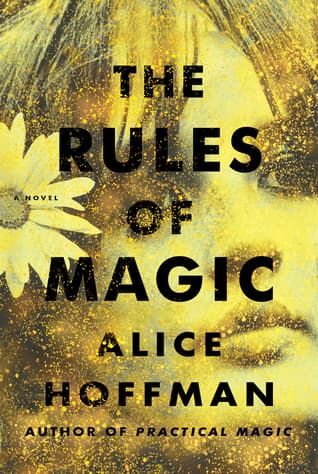
Alice Hoffman (2017)
Genre
Fantasy / Historical Fiction / Romance
Reading Time
7-8 hours
Key Themes
See below
Sign in to track this book
In a prequel to 'Practical Magic,' the Owens siblings navigate forbidden love and growing powers in 1960s New York, trying to outrun a centuries-old curse that promises heartbreak to all who love.
Susanna Owens, from a cursed magical family, raises her three children—Frances (Franny), Juliet (Jet), and Vincent—in a New York City brownstone in the late 1950s. She sets strict rules to protect them from the family's magical curse, which says any Owens woman who falls in love will cause her lover's death. These rules forbid moonlight, red shoes, black clothing, cats, crows, candles, and magic books, with the most important rule being 'never fall in love.' Despite Susanna's efforts, the children show early magical abilities: Franny's temper causes storms, Jet can read minds, and Vincent has strong charm. Their lives are carefully managed, but the children know they are different.
When Susanna gets sick, she sends her children to live with her sister, Aunt Isabelle, in the Owens ancestral home in Massachusetts. This move is a turning point, as Isabelle embraces their magic instead of hiding it. The children find the family's magic library, a garden with strange plants, and stories of their ancestors, including Maria Owens, the first Owens witch. They learn more about the curse and begin to understand their powers. Franny practices spells, Jet studies family history, and Vincent experiments with his charm, all with Isabelle's encouragement. This time helps them connect with their true selves and their magical heritage.
Back in New York, the Owens siblings grow up, finding love despite their mother's warnings. Franny falls for a young man named Adam, a relationship marked by strong feelings and her growing magic. Jet feels a deep connection with a quiet, artistic boy named Levi, whose thoughts she can access. Vincent, always charming, falls for a mysterious and dangerous woman named Gillian. Each of these relationships tests the Owens curse. Franny's love for Adam leads to a tragic accident that increases her fear of her powers. Jet's empathy for Levi shows her a future of heartbreak. Vincent's affair with Gillian is chaotic and destructive, hinting at the curse's impact.
Vincent, wanting to defy the curse and live without magic, falls deeply in love with Elizabeth. He tries to hide his magic and his family's past, seeking a normal life. But his charm and the underlying Owens magic are too strong. He tries to break the curse by having a child, believing a new generation born of true love might escape the family's fate. His reckless pursuit of love and normalcy, however, puts Elizabeth in danger and leads to a tragic end, confirming the curse's power and the danger of trying to escape it through sheer will. His actions deeply affect his sisters.
Jet Owens, with her empathy and ability to read thoughts, dedicates her life to helping others. She works as a librarian, connecting with people and offering comfort, often using her magic subtly. Her love for Levi, a kind man, grows, but she is always aware of the curse. When Levi gets sick, Jet uses her magic to ease his suffering, sacrificing parts of herself. Her deep compassion and selflessness define her path, even as she experiences great personal loss. Jet's journey shows love as both a source of pain and a powerful force for good, even if it means heartbreak.
After Adam's tragic death, Franny decides to understand and control her strong magical abilities. She returns to the Owens home in Massachusetts, studying the family's magic books and her ancestors' teachings. She learns to tend the magic garden, brew potions, and channel her emotions into spells. Her journey is one of change, from a young woman afraid of her powers to a confident witch. Franny accepts her destiny, choosing to live fully within her magic rather than escaping it, becoming the strong woman who will later protect her nieces. Her path is about control and acceptance.
The lives of Franny, Jet, and Vincent are shaped by the Owens curse. Vincent's attempt to defy it with Elizabeth ends in tragedy, leaving a lasting void and a legacy that haunts the family. Jet experiences the slow, painful loss of Levi, her love a constant source of joy and sorrow, forcing her to face the limits of her healing magic. Franny's early heartbreak with Adam strengthens her resolve to master her powers, but the memory of his death shows the curse's brutal reality. Each sibling pays a high price for loving, highlighting the story's main conflict: the struggle between human desire and a centuries-old magical rule.
Despite his tragic end, Vincent leaves an important and unexpected legacy. His relationship with Elizabeth, though cursed, leads to the birth of a son, Adam. This son, raised away from the direct influence of Owens magic, represents hope for a future generation possibly free from the curse's direct impact, or at least a new branch of the family. Vincent's desire for a normal life, while costing him his own, ensures that a part of him continues, a connection that will eventually lead back to the Owens sisters in an important way. His legacy shows the lasting power of love, even against a curse.
After significant losses and understanding the full weight of the family curse, Franny and Jet decide to return to the ancestral Owens home in Massachusetts. This move shows their full acceptance of their magical identities and their commitment to living as witches. They tend the magic garden, study the family's magic lore, and begin to become the powerful, somewhat private, and respected Owens aunts. This period marks their transition into the figures known from 'Practical Magic,' establishing their knowledge of potions, spells, and their family's unique magic. They create a safe place for themselves, embracing their destiny.
As Franny and Jet settle into their lives in Massachusetts, they hear about Vincent's son, Adam, and his eventual connection to their family. This new generation brings both renewed hope and the lingering fear of the curse. The sisters, now strong witches, understand that while the curse remains, love is a powerful force. They continue to look for ways to lessen its effects, to live authentically, and to keep the family's magic alive. The story ends with them accepting their roles, ready to face the future, carrying their past but also the lasting possibility of breaking the curse for future generations, a theme that continues into 'Practical Magic.'
The Protagonist
Franny transforms from a fearful and angry young woman into a powerful, self-accepting witch who embraces her family's magical legacy.
The Protagonist
Jet evolves from a shy, burdened empath to a compassionate, self-sacrificing witch who uses her gifts for healing and understanding.
The Protagonist/Tragic Figure
Vincent attempts to defy the curse through love and normalcy but ultimately succumbs to its power, leaving a complex and vital legacy.
The Supporting
Susanna remains steadfast in her protective but restrictive approach, her influence shaping her children's initial rebellion and later understanding.
The Supporting
Isabelle serves as a consistent source of magical knowledge and acceptance, enabling the Owens children to understand and embrace their true identities.
The Supporting
Adam's role is primarily to catalyze Franny's embrace of her magical power through tragic loss.
The Supporting
Levi's love and eventual illness serve to deepen Jet's empathy and commitment to healing, despite personal heartbreak.
The Supporting
Elizabeth's life is tragically intertwined with Vincent's attempt to break the curse, making her a vital part of his legacy.
The Mentioned
Maria's story is the origin point of the family curse, a fixed historical event that shapes all subsequent Owens lives.
The main theme is the Owens family curse: any Owens woman who falls in love will cause her lover's death. This appears tragically throughout the story. Franny's first love, Adam, dies in an accident after she expresses her feelings, making her fear intimacy. Jet experiences the slow, painful death of Levi, a loving partner, which she links to the curse. Vincent's pursuit of Elizabeth, despite warnings, leads to her tragic end, showing the curse's relentless nature. The characters constantly face the choice of embracing love and risking loss, or avoiding it and living without deep connection.
“Never, ever, fall in love. That was the first rule, the most important one, the one that could save them from the tragedy that was their birthright.”
The Owens siblings struggle with accepting their magic versus fighting it. Susanna tries to suppress their magic, forcing them to live 'normal' lives, which makes them feel like outsiders. Aunt Isabelle, however, encourages them to use their gifts, providing a place where they can learn. Vincent actively fights his magic and the curse, seeking a normal life, which leads to his tragic end. Franny initially fears her powers but eventually works to master them, finding strength in acceptance. Jet, though quiet, learns to use her empathy and healing magic for good, blending her gifts with her compassionate nature. Their journeys show different ways to accept oneself in the face of a unique, powerful heritage.
“The Owens children were not like other children; they were made of stardust and shadows, and a magic that ran in their blood.”
The story is deeply rooted in the Owens family's history, especially the curse from Maria Owens. Each generation inherits this legacy of magic and heartbreak, shaping their lives and choices. Susanna's strict rules come from her own experiences with the curse, trying to protect her children from the same pain. The children's visit to Aunt Isabelle's ancestral home immerses them in this history, revealing stories of their ancestors and the origins of their gifts and burdens. Vincent's desire for a son is an attempt to break this cycle, while Franny and Jet eventually become guardians of the family's magic traditions, ensuring the legacy continues, with hope for future redemption.
“The past was a living thing in that house, breathing in the scent of herbs, whispering through the pages of old spell books, and humming in the blood of the Owens women.”
Despite their individual paths and struggles with love, the bond between Franny and Jet is a constant source of strength. They are each other's confidantes, protectors, and anchors. When Vincent is lost, their sisterly bond becomes even more important, helping them grieve and move forward together. Their decision to return to the Massachusetts home and live together as witches solidifies their strong connection. This theme shows how, even with a curse that isolates them in love, the love between sisters provides powerful, lasting support and understanding.
“There was a language between sisters, a secret code of understanding that no one else could ever truly know.”
The story explores the tension between the Owens' magic and the desire for a 'normal' life. Susanna's rules try to force her children into a mundane existence, denying their magic. But magic constantly appears in their lives, from Franny's temper affecting weather to Jet's mind-reading. Vincent's tragedy comes from his strong desire to escape magic and embrace the normal world, believing it will free him from the curse. The story suggests that for the Owens, magic is part of their identity; trying to deny it leads to greater conflict, while accepting it, as Franny and Jet eventually do, allows for a more authentic life.
“They were not meant for ordinary lives, no matter how much their mother wished it.”
A magical curse that dooms Owens women's lovers to an untimely death.
The central plot device, originating with Maria Owens, dictates that any man who falls in love with an Owens woman will suffer an early death. This curse creates the primary conflict for the protagonists, forcing them to choose between love and safety, and driving many of their actions and tragic experiences. It acts as a constant, looming threat, shaping character decisions, fostering internal conflict, and providing the narrative's inherent dramatic tension. The curse is both a magical phenomenon and a metaphor for the pain and sacrifice often associated with profound love.
A magical sanctuary and repository of family history and lore.
The Owens home serves as a symbolic and literal sanctuary for the family's magic. It is where Aunt Isabelle lives and where the children truly begin to understand their heritage. The house contains the magical garden, the library of grimoires, and the lingering presence of past generations. It functions as a place of learning, healing, and acceptance, contrasting with Susanna's suppressive New York City brownstone. The house is a character in itself, embodying the family's history and providing the setting for the sisters' eventual embrace of their magical identities and their future as the 'Practical Magic' aunts.
A list of behaviors and items forbidden by Susanna to protect her children.
Susanna's list of 'rules' (no moonlight, red shoes, black, cats, crows, candles, magic books, and especially no falling in love) acts as a narrative device to highlight the tension between suppressing and embracing magic. These rules are initially presented as protective measures but are gradually revealed to be restrictive and ultimately ineffective against the inherent magic of the Owens children. The breaking of these rules often signifies a character's rebellion or growing acceptance of their true nature, leading to significant plot developments and character growth, and underscoring the futility of fighting one's true self.
A garden filled with plants possessing magical properties, cultivated by the Owens witches.
The magical garden at the Owens home is a potent symbol and practical resource. It provides the herbs and ingredients for potions, spells, and healing remedies, directly connecting the Owens women to the earth and their natural magic. It represents growth, life, and the inherent power of nature, mirroring the family's own magical lineage. The cultivation of the garden, particularly by Franny and Jet, signifies their acceptance of their magical roles and their commitment to their heritage, transforming it into a place of both power and solace.
“The only way to break a curse is to love, and the only way to love is to be willing to be broken.”
— Foreshadowing the central theme of the book and the family's curse.
“Magic, it was understood, was a dangerous thing, a force that could twist and turn and lead to unexpected ends.”
— Narrator describing the family's cautious relationship with their own powers.
“Sometimes the greatest love stories are the ones that are never told.”
— Reflecting on forbidden or unspoken affections within the family.
“There was a reason they called it falling in love. It was a plunge, a leap, a moment when you lost all control.”
— Susanna's perspective on the intensity of new love.
“The past was not a place to visit, but a place to escape from.”
— Jet's desire to leave behind the family's legacy and the pain it caused.
“Every garden, no matter how wild, held a secret. Every secret, no matter how small, had a truth.”
— Franny's connection to nature and her ability to uncover hidden things.
“A house was not just walls and a roof, but the sum of all the lives lived within it, the laughter and the tears, the joys and the sorrows.”
— Describing the profound history and emotional weight of the Owens' home.
“The heart, like a wild bird, could not be caged. It would always find a way to fly free.”
— Reflecting on the untameable nature of desire and emotion.
“Sometimes what you most wanted was exactly what you couldn't have, and that was the cruelest magic of all.”
— Susanna grappling with the limitations imposed by the family curse.
“There was a thin line between magic and madness, and the Owens family often danced on it.”
— Highlighting the eccentricities and intense emotions of the family.
“The greatest spell was not one cast with words, but with a life lived fully and without regret.”
— Jet's eventual understanding of true power and fulfillment.
“Love was not a choice, but a destiny, written in the stars and whispered on the wind.”
— Reflecting on the fated nature of certain romantic connections.
“Even the darkest night would eventually yield to the dawn, and even the deepest sorrow could be healed by time.”
— A message of hope amidst the family's trials and tribulations.
Ready to see how well you understood this book? Take our interactive quiz with 10 questions.

Alice Hoffman is a celebrated American novelist known for her magical realism and explorations of family, love, and loss. Her notable works include the bestselling 'Practical Magic' series, 'The Museum of Extraordinary Things,' and 'The Rules of Magic.' Hoffman's poignant storytelling and vivid imagery have earned her widespread critical acclaim and a dedicated readership.







