“They were all going to die here. It was just a matter of time.”
— The group realizes the hopelessness of their situation after being trapped by the vine.

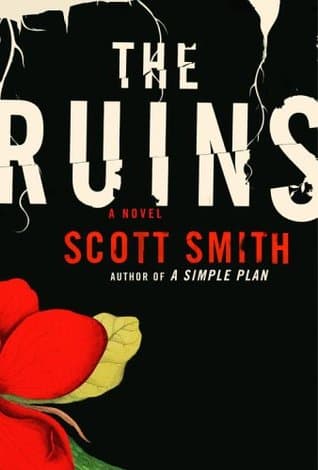
Scott Smith (2005)
Genre
Thriller / Mystery
Reading Time
360 min
Key Themes
See below
Sign in to track this book
A Mexican vacation turns into a desperate fight for survival when friends become trapped by a carnivorous plant at a Mayan ruin.
Amy and Jeff, along with Stacy and Eric, are on vacation in Mexico. They meet Mathias, a German tourist whose brother, Heinrich, disappeared after going to an archaeological dig site. Mathias has a rough map and convinces the group to help him find Heinrich. Jeff is cautious, but the four Americans agree to go with Mathias into the dense jungle. They pack supplies, not knowing this day trip will become a horrifying ordeal. Their journey takes them deep into an unfamiliar and unsettling environment, far from the resort's safety.
Following Mathias's map, the group finds a hidden, overgrown Mayan ruin covered in strange red flowers. As they get closer, armed Mayan villagers emerge from the jungle. They speak an unknown language and carry bows and arrows. The Mayans protect the ruins and stop the group from leaving. Jeff tries to explain why they are there, but they cannot communicate. Mathias tries to go down a shaft at the center of the ruins, thinking Heinrich is there. The Mayans shoot him in the leg, trapping the entire group on top of the hill, surrounded and cut off. The flowers on the ruins start to interest and disturb them.
Trapped on the ruins, the group understands the horror of their situation. Mathias's leg wound quickly worsens. The red vines covering the ruins start to interact with him. One night, a vine goes into his wound, causing him extreme pain. The group finds out the vines are alive and predatory. They communicate by copying sounds and phrases they have heard. The vines also start to consume Mathias, growing into his flesh. The Mayans watch from below, offering no help. They seem to know about the vines and keep the group confined to the cursed site. The group realizes the flowers are not just plants, but active, malevolent beings.
Running low on water and supplies under the hot sun, the group gets desperate. They see a well-like shaft going down into the ruins. Thirsty, they decide to explore it, thinking it might have water. Jeff volunteers to go down first, using a rope. At the bottom, he finds not water, but the decomposing body of Heinrich, Mathias's brother. Heinrich's legs are amputated, and his body is covered in the same red vines. This confirms their horrible suspicions about the plant. This discovery destroys any remaining hope of rescue or a simple explanation, making their fear and despair worse.
As days pass, the vines torment the group psychologically, especially Stacy. They copy her voice, whispering insults and playing on her insecurities about Eric and Amy. Stacy, already stressed and dehydrated, starts to believe the vines are inside her, feeling them move under her skin. This leads to increasing paranoia and self-harm. Delusional, she tries to cut out what she thinks are vines growing inside her, causing severe wounds. The group struggles to hold her back, showing their worsening mental states and the vines' insidious psychological attack.
Stacy's self-inflicted wounds become badly infected, and the vines go deep into her. Jeff, with no medical experience, has to amputate her leg in a gruesome attempt to save her from the spreading infection and the vines. The amputation is horrific and only briefly delays the inevitable. Later, with supplies low and the vines more aggressive, Eric makes a plan. He believes if one of them is consumed by the vines, the others might escape. He sacrifices himself, letting the vines envelop him, in a desperate, though ultimately useless, attempt to distract the Mayans and the vines long enough for the remaining survivors to potentially get away.
With Eric gone, only Amy and Jeff remain. Amy realizes the vines are attracted to blood and warmth. She suggests one of them must sacrifice themselves as a distraction, drawing the vines' attention away from the other, who can then try to escape down the hill. Jeff, though, is already giving in to despair and the physical effects of the ordeal. He is also injured, and the vines have started to go into his body. As his condition worsens, he becomes more disoriented and resigned to his fate, making Amy's escape plan harder and more tragic. He starts to lose the will to fight, leaving Amy to carry the burden of survival alone.
Jeff's mental state quickly worsens under the vines' influence. They copy Amy's voice, telling him she is already dead and urging him to give up. Confused and in great pain, Jeff starts to hallucinate and believe the vines are his only comfort. Amy sees his complete surrender and knows he cannot be saved. She makes the hard decision to end his suffering and use his death as a final distraction. She smothers him with a pillow, completing her part of their grim agreement. This act shows her love for him and her desperate will to survive, even at the cost of unimaginable personal horror.
After killing Jeff, Amy uses his body as a lure for the vines, creating a brief distraction. She then tries to escape, carefully going down the hill, trying to avoid the watchful Mayan villagers and the widespread vines. Her final fate is somewhat unclear, but it implies a tragic end. While she gets off the ruin site, the huge jungle, the Mayans, and the insidious vines suggest her chances of true survival are very small. The story ends with the implication that the horrors of the ruins cannot be escaped, and Amy is only delaying her inevitable death in the vast, uncaring jungle.
The Protagonist
Transforms from a cautious girlfriend into a determined, ruthless survivor, making unimaginable sacrifices.
The Protagonist
Starts as a pragmatic leader but descends into despair and delusion, ultimately succumbing to the vines.
The Supporting
Quickly succumbs to paranoia and self-mutilation due to the vines' psychological torment.
The Supporting
Maintains strength and loyalty, ultimately making a selfless sacrifice for the group.
The Supporting
Initiates the journey to the ruins and becomes the first to be physically consumed by the vines.
The Mentioned
His fate is revealed, solidifying the horror of the vines.
The Antagonist
Maintain their vigilant guard, ensuring no one leaves the ruins alive.
The Antagonist
Systematically consume and psychologically torment the group, proving to be the ultimate, inescapable threat.
The novel shows the extreme things humans do to survive when facing inescapable horror. As resources run out and the threat grows, characters must make increasingly terrible decisions, like Jeff amputating Stacy's leg or Amy killing Jeff. These acts, born of desperation, strip away their civility and force them to face the animalistic core of survival. They question what humanity remains under such extreme pressure, showing how quickly morality disappears.
“What do we do now? Jeff thought. What do we do now, when everything is gone?”
The sentient vines do not just kill physically; they systematically break down the characters' minds through psychological torment. By copying voices and exploiting insecurities, especially with Stacy, the vines cause extreme paranoia and delusion. This theme shows how fear, combined with isolation and a lack of control, can lead to self-destruction and mental breakdown. This is as deadly as any physical threat. The characters turn against each other and themselves, showing the destructive power of a mind under attack.
“The vines were inside her, she could feel them moving, growing, pushing against her skin.”
The physical trap on the hill by the Mayan villagers, along with the dense jungle around them, creates a strong feeling of isolation. This isolation is not just geographical but also psychological, as the group is cut off from any hope of rescue or outside communication. This theme makes their despair worse and highlights their vulnerability. It emphasizes that once they entered the ruins, they were truly alone, facing a horror no one would ever find out about or believe.
“No one would ever find them here. No one would ever know.”
In 'The Ruins,' nature itself is the antagonist. The jungle is not just a setting but an active, malevolent force shown by the sentient vines. It represents an ancient horror that does not care about human suffering, slowly consuming its victims and putting them back into its ecosystem. This theme changes the idea of nature as harmless, presenting it as a terrifying, ancient, and ultimately stronger power that humans cannot fight.
“It was not a plant, not really. It was a hunger.”
The extreme conditions, lack of resources, and constant psychological attack from the vines push the characters to their breaking points. Stacy's quick descent into madness, with self-harm and strong hallucinations, is a clear example. Jeff also experiences significant mental decline and delusion near the end. This theme explores how fast the human mind can unravel when under immense stress, showing that sanity is a fragile thing easily shattered by overwhelming terror and despair.
“The vines were whispering now, murmuring her name, telling her secrets, things she didn't want to hear.”
The primary antagonist, a predatory plant life capable of physical and psychological torment.
The sentient vines are the central plot device and antagonist. They are not merely an environmental hazard but an intelligent, predatory organism that actively traps, injures, and consumes the characters. Their ability to mimic sounds and voices allows them to psychologically torment the group, exploiting their fears and insecurities. This device creates a unique and deeply unsettling form of horror, blurring the lines between physical and mental threats, and making the 'monster' an omnipresent, inescapable part of the environment itself.
External enforcers of the entrapment, preventing escape from the ruins.
The Mayan villagers serve as an external plot device that ensures the characters remain trapped on the ruins. By acting as silent, armed guards who shoot anyone attempting to leave, they remove any possibility of conventional escape. Their presence adds to the sense of hopelessness and isolation, as they are a human barrier that the group cannot overcome, forcing them to confront the vines without external intervention. They represent an ancient, unyielding force that understands the true nature of the ruins.
A confined space revealing past horrors and offering false hope.
The well-like pit at the center of the ruins functions as a crucial plot device. Initially, it offers the desperate hope of water, driving the characters to explore it. However, it quickly becomes a reveal of past horrors, containing Heinrich's mutilated body, confirming the vines' deadly nature. Later, it becomes a potential, albeit dangerous, escape route or a place for disposal. Its claustrophobic nature also enhances the themes of entrapment and the slow, inevitable descent into despair.
The vines' ability to imitate sounds and voices, used for psychological warfare.
The vines' ability to mimic human voices and other sounds is a powerful psychological plot device. It allows the vines to actively engage in mental torment, whispering insults, playing on insecurities, and creating delusions, particularly in Stacy. This device blurs the line between reality and hallucination, making the characters question their own sanity and further isolating them from each other, as they can no longer trust what they hear. It elevates the horror beyond physical threats to a deeply personal, internal struggle.
A catalyst for the journey, leading the group to their doom.
The crudely drawn map carried by Mathias acts as the initial inciting plot device. It is the object that guides the unsuspecting group into the jungle and directly to the hidden ruins. Without the map, the characters would never have found the location, thus setting the entire horrifying chain of events in motion. It symbolizes the allure of discovery and adventure that tragically leads to their ultimate demise, underscoring the irreversible nature of their fateful decision to follow it.
“They were all going to die here. It was just a matter of time.”
— The group realizes the hopelessness of their situation after being trapped by the vine.
“It was like a living thing, a predator, and they were its prey.”
— Describing the sentient, carnivorous vine that stalks the characters.
“The ruins didn't want them to leave. It was that simple.”
— Reflecting on the ancient site's malevolent control over their fate.
“Fear is a poison. It seeps into your thoughts and turns them against you.”
— A character observes how paranoia and dread erode the group's cohesion.
“We came here looking for adventure, and we found a nightmare.”
— One of the tourists laments their decision to explore the Mayan ruins.
“The vine doesn't just kill you. It makes you watch.”
— Noting the plant's cruel method of slowly consuming its victims.
“In the end, it wasn't the ruins that destroyed us. It was each other.”
— Commentary on how internal conflicts escalate in dire circumstances.
“Every scream was a beacon, drawing it closer.”
— Describing how noise attracts the predatory vine.
“There are places in this world that should remain untouched.”
— A warning about disturbing ancient, cursed sites.
“Hope is the last thing to die, and the first to betray you.”
— Reflecting on false optimism in a hopeless situation.
“It learned from us. It adapted.”
— Observing how the vine becomes more cunning by studying human behavior.
“The silence was worse than the screams. It meant it was near.”
— Describing the eerie calm before the vine attacks.
“We weren't explorers. We were intruders.”
— Acknowledging their violation of the sacred ruins.
“The jungle doesn't care about your plans. It only cares about survival.”
— Highlighting the indifferent, brutal nature of the environment.
“Some truths are better left buried.”
— Suggesting that uncovering the ruins' secrets led to their doom.
Ready to see how well you understood this book? Take our interactive quiz with 10 questions.

Biography coming soon.







