“The greatest trick the Devil ever pulled was convincing the world he didn't exist.”
— A recurring philosophical idea discussed by characters.

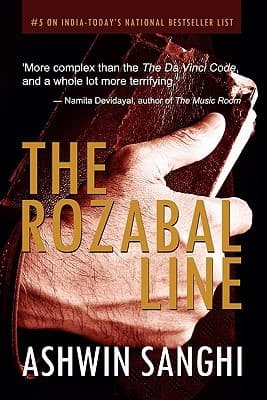
Ashwin Sanghi (2010)
Genre
Thriller / Fantasy / Historical Fiction / Spirituality / Mystery
Reading Time
350 min
Key Themes
See below
Sign in to track this book
From a screaming librarian in London to a tomb in Kashmir and a shadowy Vatican assassin, a Jesuit priest's fragmented visions unravel a global conspiracy tied to Christ, the Mahabharata, and an impending Armageddon.
In London, librarian Alice Langton finds a strange cardboard box instead of a Mahabharata text. Inside, a horrific sight makes her faint. At the same time, a global network called the Lashkar-e-Talatashar, or 'Army of the 13,' begins to appear. Its members suffer fates similar to Christ and his apostles. Their goal is to start Armageddon. This organization's violent actions and their mirroring of biblical figures immediately signal a deep, dangerous conspiracy. It hints at ancient secrets and a catastrophic plan that spans continents and centuries, drawing the attention of various secret groups.
Father Vincent Sinclair, a Catholic priest, has vivid, out-of-time visions where he sees himself and familiar faces in different historical periods. These disturbing images hint at a deep connection to an ancient secret. Driven by a need to understand these fragmented memories and their violent meanings, Father Vincent travels to India. His destination, and the source of his unsettling visions, seems deeply rooted in India's history and spiritual traditions. This draws him closer to the mystery the Lashkar-e-Talatashar also pursues, unknowingly putting him in danger.
Inside the Vatican's secret walls, a beautiful and ruthless assassin, known as the 'She-Wolf,' works with a twisted religious zeal. She vows to eliminate all who do not follow her extreme beliefs. Her actions are part of a larger, secret effort to control ancient stories. Meanwhile, in Tibet's serene, spiritual mountains, Buddhist monks search for the reincarnation of an important spiritual leader. These seemingly separate stories, the violent enforcement of a belief and the peaceful search for spiritual continuity, are subtly linked. They suggest a common underlying secret that both groups are circling, one through destruction, the other through preservation.
In Kashmir, a simple tomb called Rozabal has great importance. This tomb is believed to hold the remains of a prophet, and an ancient riddle connected to it is central to the global conspiracy. The secrets buried in Rozabal are wanted by various groups, including the Lashkar-e-Talatashar and the secret society watching Father Vincent. The tomb's location in a politically unstable area makes the search for its secrets more difficult. Its discovery could unravel historical and religious stories, possibly triggering the very Armageddon that some groups want and others try to prevent.
As Father Vincent Sinclair goes deeper into his quest in India, a secret society closely watches him. This powerful, mysterious group is committed to preventing an ancient secret from being known, even if it means extreme measures, including wiping out creation itself. Their watchful presence shows the great power and danger linked to the truths Father Vincent unknowingly seeks. This society acts as a strong opponent, always manipulating events and people to keep things as they are. This creates a high-stakes race against time for Father Vincent to uncover the truth before they silence him and his discoveries forever.
Through his increasingly clear visions, Father Vincent begins to put together the historical connections that link him to a hidden family line and a deep secret. He sees himself as various historical figures, suggesting a cycle of reincarnation or a shared spiritual inheritance. These visions reveal a story spanning thousands of years, connecting ancient Jewish mystics, Gnostic Christians, and early Islamic figures. The fragmented memories gradually come together into a coherent, yet shocking, alternative history that challenges traditional religious teachings and points to a single truth that has been suppressed for centuries, forming the core of the ancient riddle.
The end of Father Vincent's journey and his visions brings the shocking revelation of the true identity of the person buried in the Rozabal Tomb. The tomb is not just that of a local prophet. It is, controversially, revealed to be the final resting place of Jesus Christ, who, in this story, did not die on the cross but survived and traveled to India. This disclosure fundamentally challenges the main beliefs of Christianity and other Abrahamic religions, giving a reason for the Armageddon sought by the Lashkar-e-Talatashar. It also makes the secret society's efforts to suppress this truth even more important.
The Lashkar-e-Talatashar's plan is to use the truth about Christ's survival to create chaos and start a global conflict, believing it will bring a new era. They use the symbolic deaths of their members, mirroring Christ and his apostles, to spread their twisted beliefs. Meanwhile, the Vatican, through operatives like the 'She-Wolf,' actively suppresses this truth, seeing it as a catastrophic threat to its authority and the faith of billions. The conflict grows as both sides race to control the story around the Rozabal secret, leading to violent clashes.
The plot explores Mary Magdalene's historical role, showing her not just as a follower but as a key figure in Christ's life and in preserving his true teachings. The story suggests that she, along with Christ, established a hidden family line in India, protecting their knowledge and bloodline. This lineage is important for understanding the ancient secret and Father Vincent's recurring visions. Mary Magdalene's character becomes a symbol of suppressed feminine divinity and an alternative interpretation of early Christian history. This challenges traditional religious structures and reveals the true depth of the conspiracy.
Father Vincent Sinclair, now fully aware of the secret and the dangers of revealing it, confronts both the Lashkar-e-Talatashar and the secret society. He faces a moral choice: reveal the truth and possibly cause global chaos, or help suppress it for societal stability. The climax includes intense action and philosophical debates, as Vincent navigates treacherous alliances and betrayals. The fate of the ancient secret, and the world, depends on his final decision about the truth of Rozabal.
The Protagonist
Vincent transforms from a confused priest to a reluctant guardian of a world-altering secret, grappling with the moral implications of its revelation.
The Antagonist
She remains steadfast in her mission, serving as a relentless force against anyone who threatens the Vatican's secrets, without significant personal change.
The Supporting
From a terrified bystander, she becomes a more informed, albeit still vulnerable, participant in the conspiracy.
The Antagonists
Their collective arc is to fulfill their destructive prophecy, remaining committed to their extremist ideology.
The Antagonists/Supporting
They maintain their secretive and manipulative role throughout, acting as a constant threat to anyone nearing the truth.
The Mentioned/Symbolic
Her historical role is gradually revealed, becoming a foundational element of the central mystery.
The Mentioned/Symbolic
His historical narrative is deconstructed and reinterpreted, revealing a different path for his life and legacy.
The novel questions the nature of historical and religious truth. It contrasts established beliefs with suppressed stories. Father Vincent's journey makes him consider if truth should always be revealed, even if it shatters basic beliefs and risks global chaos. The conflict between the Vatican's desire to uphold traditional beliefs and the Lashkar-e-Talatashar's intent to use an alternative truth shows the destructive potential when belief systems are challenged. The story suggests that 'truth' is often subjective and shaped by those in power. Its revelation can have unforeseen and catastrophic consequences.
“What if the greatest truth is also the greatest lie?”
A main theme is the tension between strict religious rules and individual spiritual discovery. Father Vincent, a Catholic priest, struggles with visions that directly contradict the Church's teachings. The ancient secret, especially the idea of Christ's survival and a hidden family line, challenges the very foundations of organized Christianity. The novel explores how organized religion can suppress alternative spiritual paths and historical facts to maintain power and control. It suggests that true spirituality might lie in personal discovery and unconventional interpretations, as seen in the story's Gnostic elements.
“Faith is a crutch for those who cannot bear the truth.”
The Lashkar-e-Talatashar shows the dangers of religious extremism. Its members are willing to commit extreme acts, including self-sacrifice and causing global chaos, based on a distorted belief system. The 'She-Wolf' also represents this theme. Her strong belief in her twisted creed justifies ruthless violence. The novel illustrates how strong, unquestioning adherence to an ideology, whether for destruction or preservation, can lead to moral corruption and catastrophic results. It serves as a warning about the destructive power of absolute conviction when not balanced by empathy or reason.
“When faith becomes a weapon, humanity becomes its victim.”
Reincarnation is central to Father Vincent's disturbing visions. It suggests that certain souls or spiritual energies are reborn across different eras, influencing historical events. His ability to 'remember' past lives or connections points to a cyclical nature of history and the recurrence of certain truths or conflicts. This theme is reinforced by the Buddhist monks' search for a reincarnation and the idea of an ancient lineage. It implies that history is not just a linear progression but a series of interconnected cycles where past events continually resonate and influence the present. This offers chances for both redemption and repetition.
“The past is not dead; it is not even past.”
Father Vincent's disturbing visions serve as a direct link to the past and the central mystery.
Father Vincent Sinclair's prophetic visions are the primary plot device driving the narrative. These fragmented, anachronistic images provide him with crucial clues and a compelling personal reason to investigate the ancient secret. They function as a bridge between the present and the historical past, gradually revealing the hidden lineage and the true events surrounding Jesus Christ. The visions are not merely sensory experiences but also psychological triggers, compelling Vincent to embark on his perilous journey and serving as a narrative tool to slowly unravel the complex historical puzzle for both him and the reader.
The Rozabal Tomb acts as the central object of desire and conflict.
The Rozabal Tomb in Kashmir functions as the central MacGuffin of the story. Its true contents and the ancient riddle associated with it are the ultimate goal that all factions, from Father Vincent to the Lashkar-e-Talatashar and the clandestine society, are seeking to either reveal or conceal. While its specific identity (Jesus Christ's burial place) is the ultimate revelation, the tomb itself serves as the catalyst for the global conspiracy and the driving force behind the characters' actions, providing a tangible focus for the abstract 'ancient secret' and creating immediate high stakes for its discovery.
A mysterious clandestine group that creates constant tension and opposition.
The clandestine society that shadows Father Vincent is a classic plot device used to generate suspense and provide a formidable, ever-present antagonist. Their enigmatic nature, vast resources, and extreme willingness to protect the ancient secret (even at the cost of global destruction) create a constant sense of danger and urgency. This society serves as a foil to Vincent's quest for truth, representing the forces of suppression and control. Their actions, though often unseen, manipulate events and characters, ensuring that the stakes remain incredibly high throughout the narrative and that Vincent's journey is fraught with peril.
“The greatest trick the Devil ever pulled was convincing the world he didn't exist.”
— A recurring philosophical idea discussed by characters.
“History is written by the victors. And sometimes, by those who erase the victors.”
— Reflecting on the manipulation of historical narratives.
“Faith, true faith, is not about believing what is seen, but believing what is not.”
— A discussion on the nature of spiritual belief.
“Sometimes, the greatest truths are hidden in plain sight, disguised as myth or legend.”
— Exploring the concept of ancient secrets embedded in folklore.
“The line between genius and madness is often blurred, especially when one challenges established dogma.”
— Considering the historical persecution of those with unconventional ideas.
“Every secret has a shelf life. Eventually, it crumbles, revealing its core.”
— A reflection on the inevitability of secrets being uncovered.
“What if the greatest conspiracy is not about hiding something, but about making us believe something else entirely?”
— Pondering the nature of large-scale deception.
“The past is never truly dead. It is not even past.”
— Emphasizing the lingering influence of historical events.
“For some, enlightenment comes through revelation. For others, through destruction.”
— Discussing different paths to understanding or change.
“The greatest battles are not fought with swords, but with ideas.”
— Highlighting the power of ideology and belief systems.
“To truly understand the present, one must first unravel the threads of the past.”
— A detective's approach to solving historical mysteries.
“The world is full of signs, if only we learn to read them.”
— Encouraging a deeper observation of surroundings and events.
“Perhaps the greatest blasphemy is not questioning God, but refusing to question man's interpretation of Him.”
— Challenging religious orthodoxy and human authority.
“Sometimes, the most dangerous knowledge is the one that sets you free.”
— Referring to the perilous consequences of uncovering certain truths.
Ready to see how well you understood this book? Take our interactive quiz with 10 questions.

Ashwin Sanghi is a critically acclaimed Indian author known for his bestselling thriller novels. His works, including "The Krishna Key," "The Rozabal Line," and "The Sialkot Saga," blend mythology, history, and suspense. Sanghi's ability to weave intricate plots with ancient Indian lore has earned him a significant readership in the Indian fiction scene and beyond.







