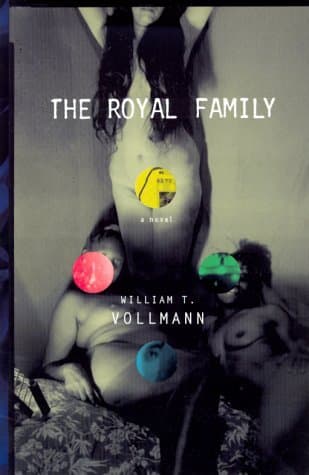
The Ghost of Irene
Henry Tyler, a struggling private detective in San Francisco, is haunted by Irene's recent suicide. Irene was his ambitious lawyer brother John's wife. Henry was secretly in love with Irene, and her death causes deep grief, blurring reality. He often sees and talks to Irene's ghost, who offers fragmented advice about his brother and the city's underworld. This ghost is both a comfort and a torment, pushing Henry further into isolation and an obsessive search to understand loss and degradation. His detective work, already failing, becomes secondary to his internal struggle and his growing interest in the city's marginalized.
The Search for the Queen
Driven by grief and a growing interest in the city's darkest corners, Henry Tyler begins a desperate search for the legendary 'Queen of the Prostitutes.' This figure, rumored to rule San Francisco's Tenderloin district, represents to Henry an essence of degradation, power, and perhaps, a perverse royalty among the dispossessed. His search takes him deep into the city's red-light districts, its grimy bars, and forgotten alleys. He interviews sex workers, pimps, and street dwellers, often recording their stories and observations in his notebook, hoping to find clues about the Queen's identity and location. This search is less about a person and more about a symbol for Henry's internal journey.
John's Ascent and Disdain
John Tyler, Henry's brother, is the opposite of Henry. A successful and ambitious contract lawyer, John moves up the corporate ladder, valuing order, status, and material success. He sees Henry's bohemian life, his failing detective agency, and his growing obsession with the city's underworld with pity and thinly veiled contempt. John is largely unaware, or perhaps willfully ignorant, of Henry's deep grief over Irene, his own wife. Their interactions are tense, marked by John's attempts to 'fix' Henry and Henry's quiet resentment of John's perceived normalcy and lack of empathy. John's world of clean offices and respectable colleagues contrasts with Henry's descent into the Tenderloin.
Encounters with the Dispossessed
As Henry's search for the Queen grows, he spends countless hours immersed in the lives of San Francisco's marginalized. He visits dive bars, shelters, and street corners, talking with prostitutes, drug addicts, and homeless individuals. He observes quietly, often taking notes on their conversations, struggles, and philosophies. These encounters give him a raw, unfiltered view of human suffering and resilience. He meets many characters, each with their own tragic or defiant story. Through these interactions, Henry begins to see a different kind of 'royal family' – one made of those cast out by society, yet having an undeniable dignity and a complex social structure. These interactions further separate him from mainstream society.
The Nature of Possession
Henry's relationship with Irene's ghost and his pursuit of the Queen of the Prostitutes explores the nature of possession – both literal and metaphorical. He is controlled by Irene's memory; her ghost is a constant companion that shapes much of his emotional state. He also seeks to 'possess' the Queen, not physically, but to understand her power, her rule over a realm of the dispossessed. This dual obsession shows how humans try to claim or understand what is lost or unattainable. Irene's ghost often speaks of possession, hinting that John 'possessed' her in life, while Henry now 'possesses' her memory, a more unsettling form of ownership.
Office Politics and Hypocrisy
Despite his immersion in the underworld, Henry occasionally interacts with John's corporate world, attending family gatherings or briefly entering John's office. These forays remind him of the hypocrisy and superficiality he sees in the middle class. He observes the polite facades, the backroom dealings, and the unspoken judgments that mark John's professional life. The contrast between the raw honesty, though brutal, of the street and the polished deceit of the corporate world is striking. Henry sees a different kind of 'prostitution' in how people compromise their values for success and social standing, further solidifying his disdain for conventional society and his commitment to his dark quest.
The Many Faces of the Queen
As Henry continues his search, he meets several women rumored to be the Queen, or who embody qualities that match his evolving idea of her. Some are powerful madams, others are wise street veterans, and some are young, vulnerable prostitutes who show fierce independence. Each encounter adds to the Queen's mythology, making her less of a single person and more of an archetype. He realizes that the 'Queen' might not be one individual, but a symbol representing the collective strength, resilience, and sorrow of the Tenderloin's women. This elusive nature of the Queen fuels Henry's philosophical inquiry into leadership and degradation.
The Royal Family of the Streets
Through his interactions and observations, Henry understands the social dynamics within the Tenderloin. He begins to see a complex, unwritten hierarchy among the prostitutes, drug addicts, and homeless individuals – a 'royal family' of the streets. This family, though dispossessed and often brutalized, follows its own codes of conduct, loyalty, and protection. He sees figures of authority, wisdom, and even a perverse nobility among them, especially in the older, more experienced women. This realization strengthens his belief that the true 'royal family' is not one of inherited wealth or power, but one formed in shared suffering and survival on society's edges.
Irene's Unfolding Secrets
Irene's ghost, a constant presence in Henry's life, slowly reveals fragmented details about her past and her strained marriage to John. Her ethereal conversations often allude to John's coldness, his ambition, and perhaps a sense of entrapment she felt within their respectable, middle-class life. The ghost's words, though often cryptic, deepen Henry's understanding of Irene's despair and the reasons for her suicide. These revelations further cement Henry's belief that his brother's clean, ordered world was more suffocating than the chaotic, yet honest, world he now inhabits. The ghost often questions Henry's motives and his pursuit of the Queen.
The Paradox of Freedom
Henry struggles with the paradox of freedom and degradation he observes in the lives of the street people. While their existence is harsh, marked by poverty, violence, and addiction, he also sees a raw freedom – a liberation from societal expectations, material possessions, and middle-class norms. This freedom, however, comes at a great cost, often leading to degradation. Henry questions if this brutal autonomy is true liberty or another kind of enslavement. His own journey, shedding his former life's constraints, mirrors this paradox, as he finds a strange liberation in his descent.
Henry's Transformation
As the novel progresses, Henry Tyler changes internally. His initial grief over Irene slowly becomes a deeper philosophical inquiry into life, death, and society. He sheds the last bits of his respectable, though failing, private detective persona, fully embracing his role as an observer and chronicler of the dispossessed. His appearance becomes more disheveled, his habits more erratic, and his connection to the mainstream world almost entirely severed. This transformation is not necessarily an improvement, but a reorientation of his values and purpose, driven by his search for understanding and his connection with Irene's ghost and the street's 'royal family'.
The Elusive Resolution
The novel does not end with a neat resolution or the definitive 'finding' of a single Queen of the Prostitutes. Instead, Henry's quest remains open-ended, a continuous journey of observation and understanding. The Queen, like Irene's ghost, becomes less of a tangible entity and more of a symbol – an embodiment of the power, resilience, and suffering of the marginalized. Henry's mission shifts from finding a person to understanding a phenomenon, a social structure, and a philosophy. The story emphasizes that the journey's true value lies not in a destination, but in the insights gained and the internal change experienced, leaving the reader to consider truth and meaning.