“The wind had an edge to it, like a razor, and the cold was a living thing that tried to crawl inside your bones.”
— Describing the harsh Tibetan climate.

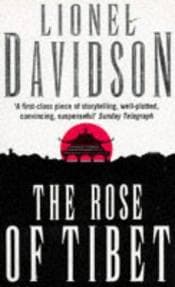
Lionel Davidson (1994)
Genre
Thriller / Lifestyle / Historical Fiction / Mystery / Romance
Reading Time
340 min
Key Themes
See below
Sign in to track this book
A British film director's quest for his missing brother in the treacherous, isolated kingdom of Tibet unravels a perilous web of ancient prophecies, forbidden love, and a race against time to uncover a sacred treasure before a ruthless warlord.
Charles Houston, a struggling screenwriter in London, hears that his estranged older brother, Peter, a mountaineer and gemologist, has disappeared in the Himalayas. Peter's will names Charles as his sole heir, stating Charles must go to Tibet to claim a mysterious 'rose' – a legendary ruby. Charles is skeptical and reluctant, but financial need and a vague sense of duty push him. He learns Peter was last seen with Sherpas heading toward the remote, unstable region of Sikkim, near Tibet. This news begins Charles's unwilling entry into a world far from his usual life, hinting at the dangerous adventure ahead in the high mountains.
Charles travels to Sikkim, a small kingdom between India and Tibet. There, he meets Colonel Douglas, a British officer, who dismisses Peter's activities and warns Charles against going into Tibet, citing political instability and dangerous terrain. Douglas reluctantly gives Charles a letter Peter left behind, which mentions a 'Rose of Tibet' and a 'hidden valley.' The letter also refers to Buddhist monks and a spiritual quest. Charles starts to realize Peter's disappearance is not a simple accident but something more significant and secret, involving ancient treasures and possibly dangerous groups in the region.
Following clues from Peter's letter, Charles finds a respected Lama in a remote Sikkimese village. The Lama confirms Peter's deep involvement with Tibetan Buddhism and his search for spiritual understanding, hinting at a specific, secluded monastery. The Lama explains Peter was not just a gemologist but on a spiritual journey, looking for a legendary ruby known as the 'Rose of Tibet,' believed to have mystical powers and guarded by a secret order of monks. The Lama gives Charles directions and an introduction letter to the Monastery of the Golden Flower, a hidden sanctuary deep in the Tibetan mountains, where Peter was last known to be going.
With the Lama's guidance and a local Sherpa, Charles begins his difficult trek into forbidden Tibetan territory. The journey is full of dangers: treacherous mountain passes, extreme weather, and the constant threat of Chinese patrols, as Tibet is under Chinese occupation. Charles, unprepared for such an expedition, struggles physically and mentally. During the journey, he learns about the harsh realities of Tibetan life and its people's deep spiritual beliefs. The Sherpa shares stories of the 'Rose of Tibet' and its legendary guardians, increasing Charles's curiosity and strengthening his resolve to find his brother and the truth, despite the dangers.
After weeks of travel, Charles finally reaches the Monastery of the Golden Flower, an ancient Buddhist sanctuary hidden deep in a secluded valley. The monastery is unlike anything Charles has seen, a self-sufficient community of monks devoted to spiritual practice and preserving old knowledge. He learns Peter had indeed arrived there and lived among the monks, adopting their way of life. The monks, initially cautious, gradually accept Charles, recognizing his family connection to Peter. He discovers Peter had changed, moving beyond his material interests to a deeper spiritual understanding, becoming a part of their secluded society.
Inside the monastery, Charles learns the true meaning of the 'Rose of Tibet.' It is not just a valuable ruby but a sacred jewel, an ancient relic believed to hold the spiritual essence of their lineage and protect their valley's unique ecosystem. He discovers Peter, through his gemological skills and spiritual commitment, had become the main guardian of the Rose, earning the monks' trust. Peter had recognized the ruby's unique properties and its importance to the monks' way of life. Charles realizes his brother's will was a test, a way to ensure the Rose's protection and to introduce Charles to the monastery's secrets, suggesting a deeper purpose for his own journey.
The peaceful life of the Monastery of the Golden Flower is broken by the growing threat of the Chinese invasion of Tibet. News reaches the secluded valley that Chinese military forces are destroying monasteries, suppressing Tibetan culture, and taking valuable artifacts. The monks, led by their Abbot, realize their sanctuary and the sacred 'Rose of Tibet' are in great danger. Charles sees the monks' fear and determination to protect their heritage. This outside threat makes Charles face the real stakes of his journey and the responsibility his brother had taken on, pushing him to decide whether to flee or join the monks in their desperate efforts.
Charles learns the full story of Peter's fate: Peter had sacrificed himself to distract Chinese forces, allowing the monks to hide the 'Rose of Tibet' and prepare to escape. The monks, with Charles's help, plan to smuggle the 'Rose' out of Tibet to safety. This involves a dangerous journey through the mountains, avoiding Chinese patrols and enduring the elements. Charles, initially a reluctant participant, now feels a strong connection to his brother's legacy and the monks' situation. He commits fully to the mission, understanding that protecting the Rose is about preserving a culture and a spiritual way of life, not just a jewel.
The escape from the Monastery of the Golden Flower is difficult. Charles, disguised as a monk, joins a small group chosen to carry the 'Rose of Tibet' to safety. They travel treacherous mountain paths, often at night, battling severe weather and constant fear of being discovered. Chinese soldiers, aware of the monastery's valuables, are actively pursuing them. Charles's resourcefulness and Peter's training help him guide the monks through dangerous terrain and evade patrols. The journey becomes a desperate race against time, with the fate of the Rose and the monks' survival at stake, forming a strong bond between Charles and his new companions.
In a final confrontation, Charles and the surviving monks are cornered by Chinese soldiers near the border. Using his knowledge of the terrain and his growing courage, Charles creates a diversion, allowing the monks to cross into safety. He faces a small group of soldiers, using both his quick thinking and a desperate fight to protect the 'Rose.' Ultimately, Charles delivers the 'Rose of Tibet' to a British official working discreetly to help Tibetan refugees. Though physically and emotionally scarred, Charles has fulfilled his brother's legacy, ensuring the jewel's safety and preserving a piece of Tibetan heritage. He has changed from a cynical screenwriter into a courageous protector.
Charles Houston eventually returns to London, a changed man. The cynical, struggling screenwriter has been replaced by someone with a deeper understanding of life, spirituality, and sacrifice. He carries with him the memory of his brother, Peter, and the experiences of the Tibetan mountains and its people's resilient spirit. The 'Rose of Tibet,' now safely hidden, represents more than a jewel; it symbolizes a spiritual journey and the enduring power of culture against oppression. Charles's life is forever marked by his adventure, and he finds a new purpose, perhaps even a new direction for his writing, filled with the wisdom and courage he found in Tibet.
The Protagonist
Charles transforms from a cynical, materialistic individual into a courageous, spiritually aware protector of a sacred culture, fulfilling his brother's legacy.
The Supporting/Catalyst
Peter's arc is revealed posthumously, showing his transformation from an adventurer to a spiritual guardian who sacrifices himself for a higher cause.
The Supporting
The Abbot remains a steadfast and wise leader, guiding his community through crisis and entrusting Charles with a vital mission.
The Supporting/Antagonist (initially)
Douglas remains largely static, representing the colonial perspective, but his provision of Peter's letter ultimately aids Charles's quest.
The Supporting
The Lama serves as a static spiritual guide, setting Charles on the correct path to understanding his brother's journey.
The Supporting
The Sherpa remains a steadfast and capable guide, facilitating Charles's physical journey and cultural immersion.
The Antagonist
The Chinese soldiers serve as a consistent external threat, driving the narrative's conflict and forcing the characters into desperate actions.
This theme explores Charles Houston's personal change from a cynical, materialistic person into a courageous and spiritually aware one. At first motivated by money, Charles's journey into Tibet makes him confront his own limits. He lets go of his superficial concerns as he sees the deep spirituality and resilience of the Tibetan monks, and his brother Peter's selflessness. The harsh realities of the Himalayas and the Chinese invasion strip away his old identity, revealing a new purpose and an appreciation for non-material values. This change is clear in his commitment to protecting the 'Rose of Tibet' and the monks, a cause far from his initial goals.
““He had come to find a ruby, and instead found a reason.””
The novel shows the contrast between Western materialism and Tibetan spirituality, and the clash between Chinese communist expansion and the peaceful Tibetan way of life. Charles, representing the West, struggles to understand the monks' spiritual devotion and their reverence for the 'Rose of Tibet.' This cultural difference is set against the brutal reality of the Chinese invasion, which aims to destroy Tibetan identity, religion, and autonomy. The story highlights how fragile ancient cultures are when facing modern power struggles, and the desperate efforts to preserve heritage against overwhelming odds. The monastery's hidden valley becomes a symbol of this endangered cultural sanctuary.
““The rose was not merely a jewel; it was a heartbeat, a memory, a prayer. And they were coming to crush it.””
Sacrifice is a main theme, shown most strongly by Peter Houston and the Tibetan monks. Peter's sacrifice to protect the 'Rose of Tibet' and help the monks escape causes Charles's change and commitment. The monks, in turn, risk everything – their lives, their sanctuary – to preserve their sacred jewel and spiritual heritage. Charles, initially driven by self-interest, eventually accepts a sense of duty, understanding his mission goes beyond personal gain. This theme explores the idea that true value is not in material things, but in protecting what is sacred, whether it is a cultural artifact, a spiritual belief, or the lives of others.
““Peter had chosen a different path, one of devotion and ultimate sacrifice. Charles now understood why.””
Both Charles and Peter, in their own ways, are looking for deeper meaning in their lives. Peter finds it in the spiritual wisdom of Tibetan Buddhism and his role as guardian of the 'Rose.' Charles, at first aimless in London, goes on a journey that leads him to a strong sense of purpose and belonging. In the secluded monastery, he finds a community and a cause that connects with a part of himself he never knew existed. His search for a physical object becomes a spiritual journey, leading him to a sense of belonging not just to a place, but to a shared human effort of preserving beauty and spirit.
““He had spent his life searching for stories, but now he was living one, and it was more real than any script.””
The Himalayan landscape acts as a powerful element. Its immense scale, beauty, and harshness test Charles, helping him change. The mountains are both a barrier and a sanctuary, providing a natural defense for the Monastery of the Golden Flower while also testing human endurance. The harsh environment removes Charles's urban comforts and forces him to face his physical and mental vulnerabilities, creating a deeper connection to nature and a sense of humility. The landscape emphasizes the isolation and sacredness of the Tibetan culture it protects.
““The mountains were not merely scenery; they were a living, breathing entity, demanding respect, offering both sanctuary and peril.””
A mysterious and valuable object that drives the plot and motivates the characters.
The 'Rose of Tibet' functions as a classic MacGuffin, initially presented as a legendary, valuable ruby that Charles is tasked with claiming as his inheritance. Its perceived value and mystery propel Charles into his adventure. However, as the story progresses, the Rose transcends its role as a mere object of desire. It evolves into a powerful symbol of Tibetan culture, spirituality, and resistance against oppression, ultimately becoming a sacred artifact whose protection is paramount. Its true significance changes from a material treasure to a spiritual and cultural emblem, deepening the narrative's themes.
The archetypal narrative pattern of a protagonist's quest, transformation, and return.
Charles Houston's journey perfectly aligns with the 'Hero's Journey' archetype. He begins in his 'ordinary world' (London screenwriter), receives a 'call to adventure' (Peter's disappearance and will), crosses the 'threshold' (entering Tibet), faces numerous 'trials and tribulations' (treacherous mountains, Chinese soldiers), and experiences a profound 'transformation' (from cynical to courageous). He undergoes a 'death and rebirth' of his former self and ultimately returns, though not to his original state, having gained wisdom and a new purpose. This structure provides a universal framework for his personal growth and the unfolding adventure.
A wise and guiding character who assists the protagonist on their quest.
Several characters serve as mentor figures to Charles, most notably the Lama in Sikkim and the Abbot of the Monastery of the Golden Flower. The Lama provides the initial spiritual guidance and direction, legitimizing Peter's quest and pointing Charles towards the hidden monastery. The Abbot, in turn, acts as a profound spiritual and practical mentor within the monastery, helping Charles understand the true significance of the 'Rose' and the monks' way of life. These mentors provide knowledge, wisdom, and moral support, enabling Charles to navigate the unfamiliar cultural and spiritual landscape and ultimately fulfill his destiny.
A narrative device where a character is placed in an unfamiliar and often challenging environment.
Charles Houston is a quintessential 'fish out of water.' A sophisticated, albeit struggling, London screenwriter, he is utterly ill-equipped for the harsh realities of the Himalayan mountains and the secluded, spiritual world of Tibetan monasteries. His initial discomfort, physical struggles, and cultural misunderstandings highlight the stark contrast between his familiar world and the alien environment he enters. This device serves to emphasize his transformation, as he gradually adapts, learns, and ultimately thrives in circumstances that initially seemed insurmountable, making his journey of personal growth more pronounced and impactful.
“The wind had an edge to it, like a razor, and the cold was a living thing that tried to crawl inside your bones.”
— Describing the harsh Tibetan climate.
“There are some places in the world where time itself seems to have lost its way, and Tibet is one of them.”
— Reflecting on the isolated nature of Tibet.
“Fear is a cold companion, but it can also be a spur.”
— As the protagonist faces danger and uncertainty.
“The greatest mysteries are often hidden in plain sight, if only one has the eyes to see them.”
— Hinting at the hidden secrets within the monastery.
“A man's worth is not in what he possesses, but in what he is willing to lose.”
— A philosophical observation on sacrifice and character.
“Love, like a mountain path, can lead to heights of ecstasy or depths of despair.”
— Reflecting on the complexities of a burgeoning romance.
“The silence of the mountains was not empty, but full of ancient whispers.”
— Implying the historical and spiritual weight of the Tibetan landscape.
“To truly understand a place, you must eat its food, speak its tongue, and feel its earth beneath your feet.”
— Emphasizing the importance of immersion in a new culture.
“Sometimes, the only way to find yourself is to get utterly lost.”
— A moment of self-discovery amidst his journey.
“The past is never truly dead; it merely waits for the right moment to return.”
— Foreshadowing the uncovering of historical events and secrets.
“There's a fine line between courage and folly, and often it's only visible in hindsight.”
— Considering the risks taken during the adventure.
“The beauty of the world is often matched only by its indifference to human suffering.”
— A stark realization amidst the stunning but harsh landscape.
“One does not simply walk into Tibet; one is drawn by an irresistible, almost mystical, force.”
— Highlighting the unique allure and challenge of reaching Tibet.
“Even in the darkest of places, a single spark of hope can ignite a revolution.”
— As the characters face seemingly insurmountable odds.
Ready to see how well you understood this book? Take our interactive quiz with 10 questions.

Biography coming soon.







