“The law school was a scam, a predatory enterprise disguised as an institution of higher learning.”
— The protagonists' realization about their law school.

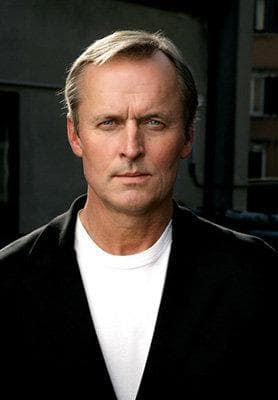
John Grisham (2017)
Genre
Thriller / Mystery
Reading Time
7-8 hours
Key Themes
See below
Sign in to track this book
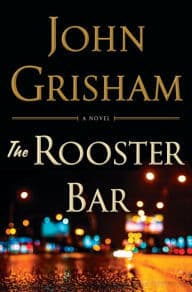
Three law students, burdened by predatory debt from a fraudulent institution, devise a plan to expose the corrupt system and escape financial ruin by quitting school just months before graduation.
Mark Frazier, Todd Lucero, and Zola Maal are third-year law students at the fictional Foggy Bottom Law School in Washington D.C. They carry immense student loan debt, hundreds of thousands of dollars each, and increasingly realize their school is a scam. Foggy Bottom, like other for-profit law schools, has terrible bar passage rates and job placement, making their degrees almost useless. The friends live together, sharing a small apartment and a growing sense of hopelessness about their financial futures. They often discuss their limited options, which seem to be bankruptcy or lifelong debt, and the understanding that they were tricked by the promise of a legal career.
A classmate, Gordy, a bright but troubled student, dies by suicide, jumping from a bridge. Before his death, Gordy had found a disturbing truth: the company that owns Foggy Bottom Law School also owns a bank, Saul Grube Holdings, which specializes in student loans. This means the same entity profits from both the tuition paid to the poor-quality school and the interest on the loans students take to attend it. Gordy had gathered much evidence and shared his findings with Mark and his friends. Gordy's death, caused by the despair of his overwhelming debt, motivates Mark, Todd, and Zola to act and expose the scam.
After Gordy's death and the discovery of the scheme, Mark, Todd, and Zola make a big decision: they will drop out of Foggy Bottom Law School just months before graduating. Their plan is bold and risky. They intend to pretend to be lawyers, working from a bar called The Rooster Bar, and target people exploited by predatory lenders and institutions, especially those connected to Saul Grube Holdings. Their goal is not just to expose the scam and make a difference, but also to earn enough money to pay off their own student loan debts. This decision changes them from passive victims to active, though unconventional, players.
Mark and Todd, without licenses, start their illegal practice from a back room at The Rooster Bar, a rundown place in a low-income neighborhood. They attract desperate clients who cannot afford real legal help, often taking on minor personal injury claims, landlord-tenant disputes, and small criminal cases. They use fake names and apply their law school knowledge, combined with street smarts, to navigate the legal system. Zola, because of her recent mental health issues and the need to stay hidden, first helps from a distance, researching cases and offering advice, while her own situation becomes more uncertain.
Zola Maal, already struggling with her debt and the scam, experiences a severe mental breakdown. Her family, worried by her behavior, has her involuntarily admitted to a psychiatric facility. This commitment becomes a legal battle itself, as Mark and Todd, despite not having licenses, try to help her. They suspect her family, especially her overbearing brothers, are more interested in controlling her and her potential future earnings than her well-being. Zola's case shows how vulnerable individuals are within the system and adds more complexity and urgency to the friends' illegal activities.
Mark and Todd take on a complex case involving an elderly woman, Edna, who suffered severe neglect and injuries at a local nursing home. This case is more significant than their usual work and requires them to do more legal research, depositions, and court procedures. They use their cleverness to gather evidence and prepare arguments, always fearing exposure as unlicensed practitioners. The nursing home case brings them into contact with real lawyers and judges, increasing the risk of their deception being found out, but also showing their abilities and commitment to justice for their clients.
As Mark and Todd continue their work, both through their Rooster Bar practice and their secret investigation into Foggy Bottom, they begin to connect the pieces of Saul Grube's financial empire. They discover that Grube owns not only a chain of predatory law schools and a student loan bank, but also many other for-profit educational institutions, real estate, and shell corporations designed to hide his true ownership and maximize his profits from vulnerable students. They access confidential documents and financial statements, confirming Gordy's initial suspicions and revealing the huge scale of the Grube scam.
The success and growing reputation of the 'Rooster Bar lawyers' eventually attract the attention of real legal authorities. A suspicious judge, a frustrated opposing counsel, and even a private investigator hired by Saul Grube begin to look into their unusual methods and lack of official credentials. The pressure grows as Mark and Todd face the constant threat of being exposed as imposters, which would lead to their arrest, criminal charges, and the ruin of their future, not to mention putting their clients' cases at risk. Their increasingly bold actions put them in constant danger.
With the evidence they have collected, Mark, Todd, and Zola (now out of the facility and more stable) decide to file a large class-action lawsuit against Saul Grube Holdings, targeting the entire predatory student loan and law school scheme. This is their main goal: to bring down Grube and help thousands of defrauded students. They work in secret, carefully building their case, knowing that this lawsuit will be their biggest risk. They find and work with a legitimate, experienced lawyer willing to take on the powerful Grube empire, providing legal cover for their efforts.
Despite their attempts to stay hidden, their cover is finally revealed. The authorities, having gathered enough evidence, are closing in on Mark and Todd. Facing immediate arrest for practicing law without a license, the friends are forced to make a desperate escape. They sell their assets, gather their evidence against Grube, and flee the country, leaving their lives in Washington D.C. This dramatic departure marks the end of their illegal Rooster Bar practice and the start of a new phase in their fight against Grube, now as fugitives.
Mark and Todd settle in an unknown location, likely in Europe, where they continue to work on the Grube lawsuit remotely. They stay in touch with Zola, who remains in the U.S. and helps coordinate with the legitimate lawyers handling the class action. From their exile, they provide important information, documents, and strategic advice, acting as the hidden architects of the case. Their new lives are defined by secrecy and the ongoing pursuit of justice, as they put all their energy into bringing down Saul Grube and his corrupt business.
The class-action lawsuit against Saul Grube Holdings gains significant attention, drawing national media coverage. The evidence gathered by Mark, Todd, and Zola, combined with the efforts of the legitimate legal team, paints a clear picture of Grube's predatory practices. Depositions reveal the systemic fraud, the deliberate targeting of vulnerable students, and the huge profits made from their despair. The lawsuit begins to dismantle Grube's entire network, forcing him to face the consequences of his actions and the possible collapse of his financial empire.
Facing overwhelming evidence and public pressure, Saul Grube's empire falls apart. He is forced to settle the class-action lawsuit for a huge amount, providing some relief to the defrauded students. Beyond the civil penalties, Grube also faces criminal charges for fraud and racketeering, leading to his arrest and eventual conviction. The legal system, though slow, eventually delivers justice, and the person behind 'The Great Law School Scam' is held responsible for his predatory actions. His downfall proves the value of Mark, Todd, and Zola's risky and unconventional quest for justice.
With Grube's downfall, Mark and Todd, still in exile, finally feel a sense of completion and success. They use the money from their successful whistleblowing and the settlement to pay off their student loans and build new, legitimate lives abroad. Zola, having recovered and now a licensed lawyer, dedicates her career to public interest law, fighting for consumer protection and against predatory practices. Though their paths separate, the trio remains connected by their shared experience and their successful, though illegal, fight for justice, each finding their own form of redemption.
The Protagonist
From a disillusioned law student, Mark transforms into an audacious, unlicensed lawyer and, ultimately, a successful, albeit exiled, advocate for justice.
The Protagonist
Todd evolves from a cynical law student into a convincing, if unlicensed, courtroom performer, eventually finding purpose in fighting for the exploited.
The Protagonist
Zola navigates mental health struggles caused by her debt, ultimately recovering to become a legitimate lawyer dedicated to consumer protection.
The Antagonist
Grube maintains his predatory empire until his fraudulent scheme is exposed, leading to his downfall and conviction.
The Supporting
Gordy's arc is tragically cut short, but his discovery and death serve as the crucial inciting incident for the main characters.
The Supporting
The Rooster Bar owner's arc is static; he remains a constant, if taciturn, presence, observing the unfolding drama.
The Supporting
Judge Calloway's role is to provide judicial scrutiny, forcing the protagonists to become more clever in their deception.
The Supporting
Edna's case provides a pivotal moment where the protagonists demonstrate their capacity for genuine legal advocacy.
The novel shows how unchecked greed, especially in education and finance, creates systemic exploitation. Saul Grube's empire, built on preying on the hopes of aspiring law students, exemplifies this. Foggy Bottom Law School is designed not to educate, but to push students into debt, enriching Grube and his associates. This theme is clear in Gordy's suicide, a direct result of the predatory loan system, and the protagonists' own huge debt. The story suggests that when profit is the only goal, ethics and human well-being are ignored, causing widespread suffering.
“They were trapped. Hundreds of thousands in debt, a degree that was worthless, and an entire industry designed to keep them enslaved.”
A main theme is that sometimes, to achieve real justice, one must operate outside the established legal system. Mark, Todd, and Zola, let down by a system that failed them and allowed Grube to succeed, resort to pretending to be lawyers. Their 'Rooster Bar' practice, though illegal, often provides real justice to clients who would otherwise have none. This highlights the flaws of the formal legal system, especially for the poor and disadvantaged. Their actions, while morally questionable, are presented as a necessary response to a corrupt system, raising questions about what 'justice' truly means.
“When the system is rigged, you have to find your own way to unrig it.”
The heavy burden of student loan debt is a constant and central theme. It is the main reason for Mark, Todd, and Zola's radical actions and the direct cause of Gordy's suicide. The story details the psychological and financial toll this debt takes, showing how it limits opportunities, strains relationships, and causes deep despair. The characters' desperation to escape their financial bondage drives the plot, illustrating how a person's life can be defined and restricted by economic obligations, especially those incurred through deceptive means.
“Debt was a disease, a cancer that ate away at your soul until there was nothing left but fear.”
The novel explores the effect of extreme stress and financial despair on mental health, especially through Zola's breakdown and Gordy's suicide. Zola's involuntary commitment to a psychiatric facility is a depiction of how systemic exploitation can push people to their limits. Her struggles highlight the often-ignored human cost of predatory schemes. This theme emphasizes the importance of mental well-being and criticizes a society that can drive its brightest young minds to such desperate states due to economic pressure.
“The debt was a monster, and it was eating Zola alive.”
Despite the pressure, moral ambiguity, and personal risks, the strong loyalty among Mark, Todd, and Zola is a clear theme. Their friendship is the foundation of their operation and their survival. They consistently support each other, whether financially, emotionally, or by helping in Zola's mental health crisis. This bond allows them to face challenges and succeed against a powerful opponent. Their shared purpose and mutual trust are essential, showing that collective action and strong personal connections can overcome seemingly impossible obstacles.
“They were in this together, for better or worse, until the very end.”
A classmate's tragic death acts as the catalyst for the protagonists' radical actions.
Gordy's suicide, driven by his insurmountable student loan debt and his discovery of Saul Grube's predatory scheme, serves as the pivotal inciting incident. It transforms the protagonists' passive despair into active rebellion. His death provides both the emotional impetus and the crucial initial information needed for Mark, Todd, and Zola to formulate their plan. Without Gordy's research and his tragic end, the friends might have continued their path to graduation and lifelong debt, never daring to challenge the system.
The narrative perspective, primarily following the protagonists, presents a subjective view of their illegal actions.
While not a first-person narrative, the story largely aligns with Mark, Todd, and Zola's perspective, implicitly framing their illegal actions (practicing law without a license) as justified and even heroic in the face of a greater injustice. This creates an 'unreliable' moral compass, where the reader is encouraged to root for the law-breakers. The narrative downplays the ethical breaches of their actions in favor of highlighting the systemic corruption they are fighting, making their story compelling despite their illicit methods.
The narrative positions the three indebted students against a powerful, corrupt financial titan.
The Rooster Bar employs a classic underdog narrative, pitting three disillusioned, debt-ridden law students against a wealthy, influential, and morally bankrupt hedge-fund operator, Saul Grube, who controls a vast, predatory educational and financial empire. This device generates natural sympathy for the protagonists and builds tension, as their chances of success against such a powerful adversary seem slim. The David vs. Goliath dynamic makes their eventual triumph all the more satisfying and impactful.
The evidence Gordy uncovered about Grube's scheme drives the plot and validates the protagonists' mission.
Gordy's meticulously compiled research, detailing the intricate connections between Foggy Bottom Law School, Saul Grube Holdings, and the broader predatory scheme, acts as a crucial MacGuffin. It is the initial piece of information that sets the protagonists on their path and validates their suspicions. Although the specific details of his research are revealed gradually, its existence and importance drive Mark, Todd, and Zola's investigations and fuel their determination to expose Grube, serving as a tangible goal they are constantly working towards.
“The law school was a scam, a predatory enterprise disguised as an institution of higher learning.”
— The protagonists' realization about their law school.
“They were drowning in debt, and the legal profession offered no life raft.”
— Discussing the crushing student loan debt faced by the characters.
“Sometimes, the only way to fight a rigged game is to cheat.”
— Lacy's internal justification for their illicit activities.
“There was a fine line between desperation and genius, and they were straddling it.”
— Reflecting on the risky schemes the group devises.
“The Rooster Bar was their last resort, their sanctuary, their base of operations.”
— Describing the significance of the bar to the main characters.
“They had learned enough law to know how broken the system was, and not enough to fix it legally.”
— Highlighting the irony of their legal education.
“The truth was a weapon, if you knew how to wield it.”
— Considering how to expose the fraudulent nature of the law school.
“No one cared about the poor, debt-ridden law students. They were just numbers.”
— The characters' feeling of being overlooked and exploited.
“Every lie they told was a brick in their new, illicit foundation.”
— As they build their fake law practice and identities.
“The best way to hide a secret was in plain sight, disguised as something else.”
— Discussing their strategy for operating their fake law firm.
“They weren't just fighting for themselves; they were fighting for every student trapped in the same nightmare.”
— Their motivation expands beyond personal gain.
“Money was the root of all evil, and also the only way out of their predicament.”
— The paradoxical role of money in their struggle.
“The irony was not lost on them: they were criminals because they wanted to be lawyers.”
— Reflecting on their descent into illegal activities.
“In the world of high finance and shady education, the lines between legal and illegal were often blurred.”
— Observing the operations of the wealthy investors in the law school.
Ready to see how well you understood this book? Take our interactive quiz with 10 questions.
Biography coming soon.







