“The mind, when long oppressed by a sense of its own misfortunes, too often seeks a sad indulgence in the contemplation of others' woes.”
— Adeline's reflections on human nature amidst her own suffering.

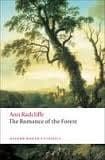
Ann Radcliffe (1791)
Genre
Historical Fiction / Mystery / Romance
Reading Time
10-12 hours
Key Themes
See below
Sign in to track this book
In a ruined 18th-century French abbey, an orphan named Adeline finds sinister relics and faces a Marquis's advances, making her flee a past and present filled with violence and philosophical questions.
The story starts with Adeline, a young woman, taken from a convent near Savoy by two strangers who will not say why or where they are going. Scared and confused, she is given to Monsieur and Madame La Motte, a Parisian couple running from their creditors. Monsieur La Motte, a weak man who makes quick decisions, had to leave his home and things because of gambling debts. They are hiding in the French countryside, and Adeline is put into their uncertain life without explanation. Her sudden arrival and the La Mottes' desperate situation create a feeling of uncertainty and danger for Adeline.
As the La Mottes and Adeline continue to flee Paris, their money problems worsen, and the risk of being found grows. Monsieur La Motte, desperate after a chance meeting, decides to hide in a remote, old, and mostly empty abbey in the Fontanville forest, in southeastern France. The abbey, a large and crumbling building covered in plants, immediately makes Adeline feel sad and worried. Its isolated spot and old, falling-apart architecture create a good setting for the mysteries and dangers Adeline and her reluctant protectors will soon face.
Adeline, curious and seeking comfort from her worries, starts to explore the large, winding abbey. She finds a hidden passage that leads to a secret room. In this hidden room, she finds several disturbing things: a rusty dagger, a torn manuscript, and a human skeleton on a bed. These finds deeply trouble Adeline, filling her mind with thoughts of past tragedies and making her want to learn the truth about these items. The manuscript, though incomplete, hints at a dark history of murder and unfairness, directly connected to the skeleton.
The quiet of the abbey ends with the unexpected arrival of the Marquis de Montalt, the estate's owner and a powerful, cruel nobleman. The Marquis, known for his harsh and immoral nature, immediately shows an unwanted interest in Adeline, drawn to her beauty and innocence. Monsieur La Motte, owing the Marquis for letting him stay and afraid of his power, feels more and more pressured to betray Adeline. The Marquis's presence increases the danger, making Adeline's situation in the abbey even more risky as he starts to make his intentions clear.
The Marquis de Montalt's pursuit of Adeline becomes more forceful. He tries many times to force his attention on her, using threats and promises, wanting her to be his mistress. Monsieur La Motte, at first a hesitant protector, gives in to the Marquis's tricks and bribes, finally agreeing to betray Adeline to save himself from ruin and possible jail. He even thinks about giving her directly to the Marquis. Adeline becomes more aware of how much danger she is in and the betrayal around her, realizing she is trapped with no one to trust in the abbey.
Driven to desperation by the Marquis's constant pursuit and Monsieur La Motte's help, Adeline decides to escape the abbey. She runs into the forest, where Theodore, a good and brave young man, finds and rescues her. Theodore, the son of a local nobleman, is immediately taken by Adeline's beauty and distress. He offers her protection and a place to stay, and they quickly develop a deep affection for each other. Their growing romance gives Adeline a rare moment of hope and happiness among her troubles, but it also puts Theodore in danger from the powerful Marquis.
The Marquis de Montalt, angry about Adeline's escape and Theodore's help, uses his power to have Theodore arrested and jailed on false charges. Adeline is heartbroken by Theodore's situation and, knowing she is still not safe, has to flee again. She finds shelter with a kind farmer's family, whom Theodore had introduced her to. While safe for a time, Adeline lives in constant fear, knowing the Marquis's influence is widespread and that Theodore's life is in danger because of her. She wants to find a way to clear Theodore's name and gain her own freedom.
Adeline, through a series of good events and the help of allies, finally gets the full manuscript she had partly found in the abbey. This document tells the complete, terrible truth: the skeleton in the secret room belonged to the previous Marquis de Montalt, the current Marquis's older brother, who was killed by his younger brother out of jealousy and a desire for his title and wealth. The manuscript also reveals a shocking personal truth for Adeline: she is the daughter of the murdered Marquis and the rightful heir to the Montalt estate. Her real identity is finally revealed, explaining her mysterious kidnapping at the start of the novel.
With the full manuscript and knowledge of her true family, Adeline, with the help of loyal friends and the law, exposes the current Marquis de Montalt's crimes. The evidence, including the manuscript and others' statements, leads to his arrest and conviction for his brother's murder. Justice is done, and the cruel Marquis gets his punishment. With the villain defeated, Theodore is finally released from prison, his name cleared. Adeline takes back her rightful inheritance and title as the true heir of the Montalt estate, ending her long time of trouble and mystery.
With the Marquis de Montalt's power ended and Adeline's true identity and inheritance secured, she is finally free to find happiness. Adeline and Theodore, whose love grew stronger through their shared difficulties, marry. Their marriage shows good, innocence, and true love winning over evil, betrayal, and oppression. They settle into a life of peace and contentment, leaving behind the dark horrors and dangers of the forest and the abbey. The novel ends with their happy marriage, ensuring a fair and fulfilling end for the good heroine and her brave protector.
The Protagonist
Adeline transforms from a helpless, abducted orphan into a self-aware, empowered woman who uncovers her true identity and secures her rightful place in society.
The Antagonist
The Marquis begins as an unchallenged figure of power and ends as a disgraced, convicted murderer, stripped of his title and freedom.
The Supporting
Theodore remains consistently virtuous and courageous, facing adversity to protect Adeline, and ultimately achieves happiness with her.
The Supporting
La Motte descends from a desperate but somewhat honorable man to a complicit betrayer, haunted by his actions.
The Supporting
Madame La Motte maintains her kind nature but remains largely a passive observer, unable to significantly alter Adeline's fate.
The Supporting
Louis consistently acts with integrity and loyalty, serving as a beacon of trustworthiness.
The Supporting
Peter remains a figure of consistent kindness and aid to Adeline.
The Mentioned
His actions, though historical within the narrative, lead to the ultimate revelation of truth.
Adeline's journey is about finding her true identity. Kidnapped without explanation, she spends much of the novel not knowing her parents, which makes her constantly search for belonging. The manuscript and skeleton in the abbey are key, as they slowly show her noble birth and her family's sad history. This revelation changes her from a helpless orphan into the rightful heir, giving her power and a sense of self. Understanding who she is helps her face her tormentor and reclaim her inheritance.
“"Oh, how delightful it is to reflect, that I am not a desolate, friendless orphan, but the daughter of a murdered father, whose memory I can now honour, and whose wrongs I can avenge!"”
This theme is central to the novel, comparing pure, innocent, and moral characters like Adeline and Theodore with the corrupt, immoral, and cruel Marquis de Montalt and the weak Monsieur La Motte. Adeline's strong goodness is tested by the Marquis's advances and the treacherous world around her. The novel consistently supports the victory of goodness, suggesting that despite great suffering, good will eventually win and be rewarded, while evil will be punished. The suffering of good people is shown as a test that ultimately makes them stronger.
“"Oh, virtue! how often dost thou prove a shield to the innocent, and a torment to the guilty!"”
The Marquis de Montalt shows how absolute power and money can corrupt. His noble status lets him commit murder, jail innocent people like Theodore, and constantly pursue Adeline without immediate punishment. He uses his influence to control Monsieur La Motte and avoid justice for a long time. The novel criticizes the uncontrolled power of the nobility, showing how it allows tyranny and moral decay. It suggests that such power, when used by the wicked, leads to widespread suffering and unfairness.
“"Power, when abused, is a two-edged sword; it wounds him who wields it, no less than him on whom it falls."”
Radcliffe often uses the ideas of the Sublime and the Beautiful. Adeline's experiences with vast, wild places, storms, and the ruined, impressive abbey create the Sublime—feelings of terror, wonder, and overwhelming power. These moments often show her inner fear and weakness. In contrast, the 'Beautiful' is found in calm natural scenes, peaceful home moments, and good characters like Theodore, offering comfort and hope amid the terror. This interaction makes the novel's emotional depth and atmosphere richer, immersing the reader in Adeline's personal experience.
“"The deep solitudes of the forest, the wild grandeur of the mountains, and the awful magnificence of the ruins, contributed to impress her mind with a solemnity that was not unpleasing."”
The novel creates a feeling of dread, especially in the abbey, with its secret passages, strange sounds, and the skeleton. Adeline's imagination often sees these things as ghostly. However, Radcliffe consistently gives rational explanations for these seemingly supernatural events by the story's end. The 'ghostly' sounds are revealed to be natural, and the 'supernatural' mystery of the skeleton is solved by the manuscript, showing human crime rather than ghost intervention. This method builds tension and terror while finally rooting the story in human action and reason.
“"The terrors she had suffered from the idea of supernatural agency, now yielded to the more certain evils of human wickedness."”
A gothic setting that functions as a character in itself, embodying mystery and decay.
The ruined abbey of Fontanville is more than just a setting; it is a central plot device. Its vast, decaying architecture, secret passages, hidden rooms, and isolated location create an oppressive, mysterious, and terrifying atmosphere. It serves as a prison for Adeline, a hiding place for evidence (the skeleton and manuscript), and a catalyst for the gothic elements of the plot. The abbey's antiquity and desolation reflect the moral decay of the aristocratic villain and the forgotten past that holds the key to Adeline's identity.
A fragmented document that gradually reveals the central mystery and Adeline's identity.
The fragmented manuscript discovered by Adeline in the secret apartment is a crucial plot device. It acts as a delayed exposition, slowly unveiling the truth about the murdered former Marquis de Montalt and, eventually, Adeline's true parentage. Its fragmented nature builds suspense, forcing Adeline (and the reader) to piece together the tragic history. This document is the key to solving the mystery of the skeleton, exposing the current Marquis's crimes, and ultimately empowering Adeline to claim her inheritance and clear Theodore's name.
Architectural features that facilitate mystery, escape, and the concealment of secrets.
The abbey's hidden rooms and secret passages are classic gothic devices. They allow for clandestine meetings, provide escape routes, and, most importantly, conceal the evidence of past crimes, such as the secret apartment where the skeleton and manuscript are found. These architectural elements heighten the sense of danger and claustrophobia, creating an environment where characters can be trapped or observed without their knowledge, and where the past literally remains hidden within the structure itself.
Precognitive visions and symbolic dreams that foreshadow events and heighten suspense.
Adeline frequently experiences vivid dreams and unsettling premonitions that foreshadow future dangers and revelations. These dreams, often filled with symbolic imagery like specters, shadows, or threatening figures, serve to heighten the gothic atmosphere and Adeline's psychological distress. While sometimes seeming supernatural, they are ultimately psychological manifestations of her anxieties and subconscious processing of the real dangers she faces. They build suspense and allow Radcliffe to explore Adeline's inner world and her sensitive, imaginative nature.
Macabre relics that symbolize past violence and provide tangible evidence of a crime.
The discovery of the rusty dagger and the human skeleton in the secret apartment are powerful symbols and tangible plot devices. They immediately establish a sense of past violence and unsolved mystery, acting as a physical link to the abbey's dark history. The skeleton represents the murdered former Marquis, and the dagger is the instrument of his death. These relics serve as concrete evidence of the crime, driving Adeline's investigation and ultimately providing the proof needed to convict the current Marquis, thus ensuring justice.
“The mind, when long oppressed by a sense of its own misfortunes, too often seeks a sad indulgence in the contemplation of others' woes.”
— Adeline's reflections on human nature amidst her own suffering.
“Solitude, which to the happy is a nurse of peace, is to the wretched a tormentor of despair.”
— Adeline's feelings about her isolated existence at the abbey.
“How many errors are committed by the wisest, and how many evils endured by the best, through the fatal influence of passion!”
— A general observation on the destructive power of uncontrolled emotions.
“The human heart is an enigma, and often a labyrinth, even to itself.”
— A reflection on the complexity and mystery of internal feelings.
“Conscience, that monitor within, which, though often lulled to sleep, never dies, but awakens at the hour of retribution.”
— A thought on the enduring power of conscience and its eventual reckoning.
“There are moments when the soul, overwhelmed with its own sensations, finds no language to express them.”
— Adeline's inexpressible feelings during particularly intense emotional experiences.
“The greatest evils are often those we bring upon ourselves by our own imprudence.”
— A moral reflection on personal responsibility for one's misfortunes.
“How vain are the schemes of man, when opposed by the decrees of Heaven!”
— A realization of human powerlessness against fate or divine will.
“Suspense is often more intolerable than certainty, however dreadful.”
— Adeline's experience of anxious waiting and uncertainty about her future.
“The forest, which had so often been to her a scene of terror, now assumed a character of picturesque sublimity.”
— Adeline's changing perception of the forest as her circumstances improve.
“It is not the place, but the mind, that makes us happy or miserable.”
— A philosophical observation on the source of contentment and suffering.
“The past, however painful, holds lessons for the future, if we but have the courage to learn them.”
— Adeline reflecting on her past trials and their potential for growth.
“Imagination, when left to its own wild wanderings, often creates phantoms more terrifying than reality.”
— A comment on the power of the mind to conjure fears and illusions.
“Truth, like the sun, though it may be obscured for a time, will at length break through every cloud.”
— A hopeful assertion about the eventual triumph of truth and justice.
Ready to see how well you understood this book? Take our interactive quiz with 10 questions.
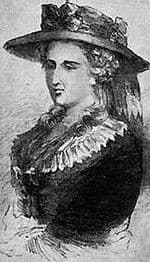
Ann Radcliffe was a pioneering English novelist of the Gothic genre. Her works, including the influential "The Romance of the Forest," are celebrated for their atmospheric settings, suspenseful plots, and the "explained supernatural," where mysterious events are ultimately given rational explanations. Radcliffe's "terror" versus "horror" distinction significantly shaped Gothic literature.







