“We were eighteen and had just begun to love the world and to exist; we had to mighty to be torn out of it.”
— Reflecting on the youth and hopes of the soldiers before the war.


Erich Maria Remarque (1931)
Genre
Historical Fiction / Romance
Reading Time
700 min
Key Themes
See below
Sign in to track this book
After the hell of the Western Front, a generation of German soldiers returns home to a shattered society, only to find their fight for peace has just begun in a world that no longer makes sense.
The story begins with Ernst Birkholz and his company, including friends like Ludwig, Albert, Willy, and Tjaden, still in the trenches on the Western Front in the final days of World War I. Despite news of an upcoming armistice, the fighting is intense and pointless. They see comrades die, feel the psychological toll of constant shelling, and endure the dehumanizing conditions of trench warfare. Ernst, a veteran despite his youth, thinks about losing his innocence and his deep separation from the civilian world they once knew. The constant threat of death and the friendship formed in shared suffering are the only realities they understand, making the idea of peace almost foreign.
With the armistice declared, Ernst and his surviving friends begin their long, disorganized journey back to their hometowns in Germany. The trip is not a celebration, but one of deep uncertainty and disappointment. They meet other returning soldiers, some wounded, some angry, all carrying the invisible scars of war. The chaos of post-war Germany is already clear, with shortages, political unrest, and a general sense of despair. The soldiers, still under military discipline, find themselves caught between the world they left and a new, unsettling reality they struggle to understand, their uniforms marking them as both heroes and outsiders.
Upon reaching their home district, Ernst and his company go through the official process of demobilization. The military bureaucracy, once their entire world, now dismisses them with a quick ceremony, a few papers, and meager supplies. The contrast between their immense sacrifices and the cold, impersonal farewell is sharp. They are given civilian clothes, symbolizing a return to normalcy, yet they feel completely foreign in them. The sense of belonging they found in the trenches is gone, replaced by deep isolation. They are veterans, but to civilians, they are just young men, expected to pick up where they left off, a task that feels impossible.
Ernst returns to his family home, where his parents, though relieved, cannot truly grasp the horrors he has endured. His interactions with old friends and former teachers are also strained. He finds their concerns trivial, their patriotism empty, and their understanding of the war superficial. Ludwig, Albert, and Willy experience similar alienation. The civilian world seems focused on everyday concerns, political arguments, and a denial of the war's true cost, leaving the soldiers feeling like ghosts in their own lives. They try to find work, but the shattered economy offers little opportunity, and their war skills are irrelevant.
Ernst tries to re-enter school, attending classes with his former teacher, Herr Raft. However, the academic environment, once a source of hope, now feels meaningless. The lessons on history, literature, and philosophy seem abstract and irrelevant compared to the harsh reality of life and death he experienced. He struggles to concentrate, haunted by memories of the front. His attempts to share his experiences are met with polite disinterest or a lack of understanding from his teachers and fellow students, further showing the gap between his past and present.
Ludwig, one of Ernst's closest friends, struggles more than the others to adapt. He becomes withdrawn, his sensitive nature overwhelmed by the trauma of war and the perceived indifference of the civilian world. He expresses a deep sense of betrayal and a loss of faith in humanity. Despite Ernst's efforts to support him, Ludwig's despair deepens. In a tragic turn, Ludwig takes his own life, unable to find a place for himself in the post-war world. His death reminds Ernst and the others of the invisible wounds that continue to claim lives long after the fighting has stopped.
Albert, another friend from the front, is gravely wounded during a post-war skirmish, losing a leg. His physical injury reflects the psychological damage all the soldiers endure. Confined to a hospital, Albert deals with the injustice of his sacrifice and the realization that his future has been changed forever. He struggles with depression and anger, feeling abandoned by the society he fought for. Ernst often visits him, seeing firsthand the ongoing suffering of his comrades and the inadequacy of the support systems available to them.
Germany is in political turmoil, with various groups competing for power and clashing in the streets. Ernst and his friends are often caught in, or drawn into, these conflicts. They see the rise of extreme ideologies and the use of returning soldiers for political gain. Some of their comrades, like Willy, find a new purpose in these movements, while others, like Ernst, remain cautious and disillusioned, seeing echoes of the same blind nationalism that led to the war. The violence and division further complicate their attempts to find peace.
Ernst tries to find comfort and understanding through various means. He tries to explain his experiences, sometimes through writing, sometimes through talks with the few who seem to listen. He reflects on the bonds formed in the trenches, realizing that this camaraderie, though born of suffering, was perhaps the most real connection he has ever known. He struggles with the emptiness left by the war, the loss of his youth, and the difficulty of finding any good purpose in the destruction he witnessed. The future remains uncertain and daunting.
The novel ends without a clear resolution for Ernst or his surviving comrades. They continue to carry the invisible scars of war, forever changed by their experiences. Ernst observes the world around him with deep sadness and a hard understanding of human nature. While some of his friends find brief moments of peace or new struggles, the main message is one of lasting trauma and the difficulty of true healing. The 'road back' is not a journey to a former self, but a painful path towards an uncertain future for a generation changed by the Great War.
The Protagonist
Ernst begins as an idealistic youth, is hardened and traumatized by war, and ends as a disillusioned but resilient survivor attempting to find meaning in a shattered world.
The Supporting
Ludwig begins as a thoughtful young man, is shattered by the war's brutality, and ultimately succumbs to his psychological wounds, unable to find a path back.
The Supporting
Albert survives the war physically intact but is then severely wounded, forcing him to confront a future of disability and societal indifference.
The Supporting
Willy navigates the post-war world by seeking engagement and purpose in political movements, rather than succumbing to despair.
The Supporting
Tjaden, a survivor of the trenches, continues to adapt with a raw, unrefined resilience in the face of post-war hardships.
The Supporting
Herr Raft remains largely static, unable to bridge the gap between his understanding of the world and the soldiers' lived experience.
The main theme is the lasting psychological trauma from World War I, and the disappointment felt by returning soldiers. Ernst and his comrades cannot connect their horrific experiences with the ordinary, often uncaring, civilian world. They feel betrayed by the ideals they fought for and isolated by a society that cannot understand their suffering. Ludwig's suicide, Albert's injury, and Ernst's sadness all show this deep trauma and the loss of innocence and faith. The war does not end when the fighting stops; it continues in the minds of the survivors.
““We are not youth any longer. We are old men. We are the dead. We are those who have been burnt out, who have lost their youth, their belief, their hope. We are those who have been robbed of all their future.””
The novel clearly shows the alienation of returning soldiers from civilian society. A fundamental gap exists between those who experienced the front and those who stayed home. Civilians, including family members and former teachers like Herr Raft, cannot understand the soldiers' changed views, their cynicism, or their inability to care about pre-war concerns. This leads to feelings of isolation and a deep sense of being 'other.' The soldiers find their wartime camaraderie, born of shared suffering, to be the only real connection they have, further showing their detachment from the 'normal' world.
““One is never alone when one is with one’s own kind. But when one is alone in a crowd, that is the most terrible loneliness.””
Stripped of their youth, ideals, and purpose by the war, Ernst and his friends struggle to find new meaning in their lives. The grand stories of patriotism and heroism have been shown to be empty, leaving a void. Ernst tries to find comfort in reflection and understanding, while others like Willy seek new purpose in political movements. Ludwig's inability to find any meaning ultimately leads to his tragic end. This theme explores the deep crisis faced by a generation that survived the physical war only to confront a spiritual and intellectual emptiness.
““What are we now? What shall we be? What is left of us?””
The soldiers return home feeling deeply betrayed by the promises and ideals that sent them to war. They were told they were fighting for king and country, for honor and glory, but they experienced only senseless slaughter and degradation. The post-war society's quick dismissal of their sacrifices, its political infighting, and its inability to care for its veterans deepen this sense of betrayal. The empty patriotism of their former teachers and the public's ignorance of the war's true cost highlight this theme, leaving the soldiers with a bitter cynicism towards authority and abstract ideals.
““We had gone to the war to save the fatherland, and now the fatherland seemed to have no use for us.””
Used to convey the soldiers' traumatic memories and internal struggles.
Remarque frequently employs flashbacks and extensive internal monologues, particularly for Ernst. These devices allow the reader direct access to the protagonist's traumatized mind, revealing the constant intrusion of wartime memories into his present life. This technique vividly portrays the psychological scars of war, showing how the past continues to haunt the present and making the reader intimately aware of the characters' inner turmoil and their inability to escape their experiences, even in peace.
Represents the forced and uncomfortable transition back to civilian life.
The moment the soldiers are issued civilian clothes upon demobilization is highly symbolic. Their uniforms had become their identity, their protection, and their last link to the camaraderie of the front. Donning civilian attire feels alien and uncomfortable, symbolizing their awkward and often painful reintegration into a world they no longer fit. It highlights the superficiality of merely changing clothes, as their inner selves remain irrevocably marked by the war, making the return to 'normalcy' feel like a disguise rather than a true transformation.
Serves as a recurring motif illustrating the diverse and tragic impacts of war.
The varied fates of Ernst's friends – Ludwig's suicide, Albert's crippling injury, Willy's political engagement, Tjaden's continued struggle for survival – serve as a powerful plot device. Each character's story illustrates a different facet of the war's lasting impact, both physical and psychological, and the diverse ways individuals attempt (or fail) to cope. Their individual struggles collectively underscore the pervasive and multifaceted trauma experienced by the entire 'lost generation,' preventing the narrative from becoming solely about Ernst's personal journey and broadening its scope.
“We were eighteen and had just begun to love the world and to exist; we had to mighty to be torn out of it.”
— Reflecting on the youth and hopes of the soldiers before the war.
“The war had ended, but its echo still reverberated within us, a ghostly shell of memory that would never quite fade.”
— Describing the lingering psychological effects of the war on the returning soldiers.
“It was as if we had stepped into a foreign country, though it was our own, and the language spoken was one we no longer understood.”
— The soldiers' alienation upon returning to civilian life.
“We were not heroes, nor were we cowards. We were simply men who had been through hell and had come back changed.”
— A soldier's self-assessment, rejecting simplistic labels.
“The peace we had fought for was a brittle thing, easily shattered by the ghosts of the past and the uncertainties of the future.”
— Contemplating the fragile nature of post-war peace.
“Love, too, seemed a distant country, a language we had forgotten how to speak, or perhaps never truly learned.”
— The difficulty of reconnecting with romance and intimacy after the war.
“The trenches had taught us to live for the moment, to snatch at every crumb of joy, for tomorrow might bring only oblivion.”
— Explaining the carpe diem mentality born from the constant threat of death.
“Our youth had been stolen, not by a thief in the night, but by the relentless, grinding machinery of war.”
— A poignant reflection on the lost years and innocence due to conflict.
“The world outside was a carnival of colors and sounds, but for us, it was muted, as if seen through a pane of dusty glass.”
— The soldiers' inability to fully engage with the vibrancy of the civilian world.
“We sought solace in each other, in the shared understanding of unspoken horrors, for only another veteran truly knew.”
— The camaraderie and mutual support among the returning soldiers.
“Books, once our companions, now seemed to speak of a world that no longer existed, a world of ordered beauty and simple truths.”
— The difficulty of finding relevance in pre-war literature after experiencing the chaos of war.
“Every handshake, every polite inquiry, felt like a judgment, a silent question about the unspeakable things we had done and seen.”
— The feeling of being scrutinized and misunderstood by civilians.
“The road back was not just a journey home, but a journey into ourselves, to find what fragments remained of who we once were.”
— Metaphorical reflection on the internal struggle of recovery and self-discovery.
“We learned to laugh again, sometimes bitterly, sometimes with genuine joy, but always with the knowledge of how easily it could be taken away.”
— The process of rediscovering joy and humor, tempered by past trauma.
“The future stretched before us like an unwritten page, daunting and full of shadows, yet holding the faint promise of a new beginning.”
— A hesitant look towards the future, acknowledging both fear and hope.
Ready to see how well you understood this book? Take our interactive quiz with 10 questions.
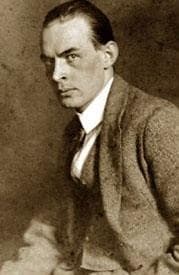
Erich Maria Remarque was a German-born novelist. His landmark novel All Quiet on the Western Front (1928), based on his experience in the Imperial German Army during World War I, was an international bestseller which created a new literary genre, and was adapted to film several times. Remarque's anti-war themes led to his condemnation by Nazi propaganda minister Joseph Goebbels as "unpatriotic". He was able to use his literary success to relocate to Switzerland and the United States, where he became a naturalized citizen.







