“There are some things you know, even if you don't know them.”
— August's internal thoughts about the unspoken truths in town.

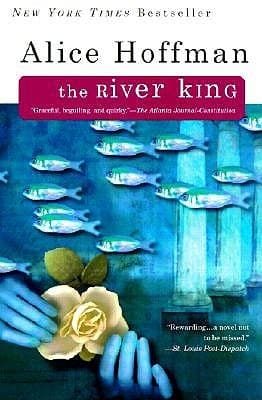
Genre
Literary Fiction / Fantasy / Mystery
Reading Time
450 min
Key Themes
See below
Sign in to track this book
In a town where social currents run deep and separate, the discovery of a student's body in the river forces a local detective to navigate the hidden truths beneath the polished surface of an elite prep school.
The story opens with the discovery of Augustus 'Gus' Pierce's body in the Haddan River. Gus was a student at the Haddan School. His death is initially ruled a suicide, but the circumstances are suspicious. Carlin Leander, a local police detective and Haddan native, is assigned to the case. Her investigation immediately brings her into conflict with the private world of Haddan School, a place where townspeople and students rarely interact. Carlin senses a deeper mystery, especially given the school's history and the uncooperative nature of many students and faculty, who are eager to dismiss Gus's death and maintain the school's reputation. Carlin's personal history with Haddan and her own sense of being an outsider strengthen her determination to uncover the truth.
As Carlin investigates, she learns that Gus was part of a small group of students who felt like outsiders at Haddan School. This group included Betsy Chase, a quiet and artistic girl; Annie, an independent spirit; and Gus’s roommate, Vincent Renard, who is deeply affected by Gus's death. Carlin discovers their secret meeting place, a hidden spot by the river known as the 'River King's domain,' where they would share their frustrations and dreams, away from the school's expectations. These students, particularly Betsy, seem to know more than they reveal, hinting at a dark side of Haddan School life beyond academic pressures. Carlin begins to suspect that Gus's death is connected to a secret shared among this group.
Betsy Chase, a new student at Haddan, experiences unsettling visions and a strong, almost supernatural connection to the river and the school grounds. She sees glimpses of the past, particularly images of a young girl named Evelyn, who drowned in the river many years ago. These visions are amplified after Gus's death, making her question the official story. Betsy's artistic nature and sensitivity make her susceptible to the lingering energies of the place. She begins to realize that the school itself holds secrets, and that Evelyn's past tragedy might be intertwined with Gus's present death. Her insights, though often dismissed as artistic imagination, become clues for Carlin as she struggles to understand the events.
Carlin's investigation is complicated by her own history in Haddan. She grew up on the 'wrong side of the tracks,' a townie who always felt the divide between her world and the privileged students of Haddan School. This personal experience allows her to empathize with the outcast students like Gus and Betsy, but also fuels her resentment towards the school's faculty and administration, who seem more concerned with reputation than truth. Carlin's memories of childhood, particularly her interactions with the school grounds and the river, begin to surface, making her feel a connection to the unfolding mystery. Her estranged relationship with her family and the town's gossip further isolate her, yet strengthen her resolve to seek justice.
Carlin's investigation expands to the faculty, revealing hidden relationships and unspoken rules. She becomes suspicious of Mr. Hill, the art teacher, who was close to Gus and the group of outcasts. Hill has a mysterious past and an unusual hold over many students, particularly the artistic and sensitive ones. His apartment is filled with unusual objects and a sense of otherworldliness. Carlin learns that Hill had a complicated, almost manipulative, relationship with Gus, encouraging his artistic pursuits while perhaps exploiting his vulnerabilities. The faculty, generally, are quiet and protective of their own, making it difficult for Carlin to extract information, but she senses that Hill holds a key piece of the puzzle, possibly connected to the school's darker traditions.
Vincent Renard, Gus's roommate and a member of the outcast group, struggles with guilt and eventually confides in Carlin. He reveals that Gus was struggling with his identity and felt pressure from his family and the school to conform. On the night of his death, Gus had an intense argument with a fellow student, and was later seen by Vincent in a distressed state by the river. Vincent admits to witnessing a confrontation involving Gus and another student, possibly involving a betrayal within their group. This revelation shatters the initial suicide theory and points towards a more sinister event, suggesting that Gus was pushed or fell into the river during a struggle, rather than taking his own life. Vincent's confession is a turning point in the investigation.
Through Betsy's visions and Carlin's questioning, they uncover a tradition among some Haddan students: a ritual involving the 'River King.' This ritual, often held by the river, was a way for students to confront their fears or make a symbolic sacrifice. Gus, feeling isolated and pressured, was drawn into this ritual, perhaps as a desperate plea for acceptance or escape. The 'River King' represents both a mythical figure and a manifestation of the river's dangerous allure. Betsy realizes that the ritual, intended to be symbolic, went wrong on the night Gus died, turning into a real-life tragedy. The line between myth and reality blurs as the truth of what happened by the river emerges.
The truth is finally revealed: Gus was accidentally pushed into the river during a confrontation with another student, Dale, who felt threatened by Gus and his group. The incident was not premeditated murder, but a tragic accident fueled by jealousy, fear, and the pressures of Haddan School. The faculty, particularly Mr. Hill and the headmaster, had been aware of the tensions and rivalries among the students but chose to protect the school's image. They encouraged the suicide narrative to avoid scandal, implicating themselves in a cover-up. Carlin confronts the headmaster and other faculty members, forcing them to acknowledge their complicity and the systemic issues within the school that contributed to Gus's death.
With the truth exposed, Dale is held accountable for his role in Gus's death, though the circumstances are complex. The Haddan School is forced to confront its failings, and the divide between town and gown begins to soften, though slightly. Carlin, having solved the case, finds peace and a renewed sense of purpose, having navigated her own past and the town's prejudices. Betsy, though affected by her visions, finds a way to channel her sensitivities into her art, using it as a form of understanding and expression. The river, once a place of tragedy, begins to represent a place of memory and eventual healing, as the community grapples with the aftermath of Gus's death and the secrets it unearthed.
The Protagonist
Carlin moves from being an alienated outsider to finding a sense of belonging and purpose through her pursuit of justice, confronting her own past in the process.
The Victim
Gus's arc is tragic; his search for identity and acceptance culminates in his untimely death, which then serves as a catalyst for revealing the school's secrets.
The Supporting
Betsy learns to trust her own unique perceptions and uses her artistic expression to process trauma and contribute to uncovering the truth.
The Supporting
Vincent moves from fearful silence and guilt to finding the courage to reveal the truth, contributing to justice for Gus.
The Supporting/Antagonist
Hill's arc reveals his complicity in maintaining the school's secrets and his flawed mentorship, highlighting the dangers of unchecked influence.
The Mentioned
Evelyn's story, though from the past, contributes to the unfolding of the present mystery, as her tragedy is mirrored and finally understood in relation to Gus's death.
The Antagonist
Dale's arc reveals the consequences of his actions and the destructive nature of conformity and fear, leading to his eventual accountability.
The Supporting
The Headmaster's arc involves a reluctant confrontation with the school's failings and his own complicity, forced by Carlin's investigation.
The novel explores the struggle for identity, particularly among the students of Haddan School. Gus, Betsy, and Vincent all feel like outsiders, grappling with the pressure to conform to the school's expectations versus their true selves. Gus's artistic nature and his feeling of being different contribute to his tragic fate. Carlin, too, struggles with her identity as a 'townie' in Haddan, constantly navigating the class divide. The 'River King' ritual itself is an attempt by the outcast students to forge a collective identity and find a sense of belonging outside the school's rigid hierarchy.
“What had happened to Gus was more than a death; it was a testament to the way some people could never find their place.”
The past is present in Haddan, influencing the present. The historical tragedy of Evelyn, the girl who drowned in the river, haunts Betsy's visions and foreshadows Gus's death. The Haddan School itself is steeped in tradition and secrets, with its history of privilege and unspoken rules. Carlin's own past in Haddan, her memories and her family history, intersect with her investigation. The novel suggests that unresolved events and lingering energies from the past can manifest in the present, shaping destinies and revealing hidden truths, particularly around the Haddan River.
“The river never forgot. It held onto everything, especially the things people tried to forget.”
A central theme is the contrast between the polished facade of Haddan School and the complex realities beneath. The school projects an image of excellence and order, but beneath this surface is a world of student rivalries, faculty secrets, and a culture of silence. Gus's 'suicide' is the initial appearance, which Carlin works to dismantle to reveal the true, more complicated reality of his death. Characters like Mr. Hill present a charming exterior that hides deeper, manipulative tendencies. The entire town of Haddan is built on a social hierarchy where appearances dictate status, making it difficult to uncover the truth.
“In Haddan, what you saw on the surface was rarely the whole truth. There were always things hidden, just below.”
The town of Haddan and, specifically, the Haddan River are almost characters in themselves, with a powerful, mystical presence. The river is a site of both beauty and danger, a place of solace for the outcast students but also a repository of tragedy and secrets. It represents the subconscious, the things submerged and hidden. Haddan, with its rigid social structure and historical divisions between 'townies' and 'schoolies,' creates the environment in which the tragedy unfolds. The geography and history of the place shape the characters' experiences and the plot, making it an element of the narrative.
“The river was a mirror, reflecting all that was good and all that was lost in Haddan.”
Carlin Leander's pursuit of truth and justice for Gus Pierce drives the narrative. She battles against institutional cover-ups, personal prejudices, and the desire of many to maintain the status quo. The theme explores the difficulty of uncovering truth when powerful forces seek to suppress it, and the moral imperative to seek justice even when it's inconvenient or painful. The novel suggests that true justice involves not only identifying the perpetrator but also understanding the systemic issues and emotional complexities that led to the tragedy, bringing a more complete form of healing and accountability.
“Some truths were like stones at the bottom of a river, heavy and hard to bring to light.”
Betsy's visions and the river's haunting presence add a layer of magical realism.
Alice Hoffman often weaves elements of magical realism into her stories, and 'The River King' is no exception. Betsy Chase's ability to experience visions of the past, particularly of Evelyn, and her strong, almost psychic connection to the Haddan River, serve as a key plot device. These mystical elements are not fully explained but are presented as an inherent part of the world, allowing for a deeper, more intuitive understanding of the underlying truths. They provide clues that rational investigation alone cannot uncover, blurring the lines between the tangible and the ethereal and enhancing the novel's mysterious atmosphere.
The river represents memory, secrets, and the boundary between life and death.
The Haddan River is far more than just a setting; it acts as a powerful, multifaceted symbol throughout the novel. It represents the subconscious, holding submerged truths and forgotten memories, much like the secrets of the school and the town. It is a boundary between life and death, innocence and experience. The river is a place of solace for the outcast students, but also a source of danger and tragedy, having claimed Evelyn in the past and Gus in the present. Its constant flow symbolizes the relentless passage of time and the enduring nature of history, making it a central figure in the narrative's emotional and thematic landscape.
A secret student ritual that foreshadows and directly relates to Gus's death.
The 'River King' myth, or the secret ritual observed by some Haddan students, functions as a crucial plot device. It provides a symbolic framework for the students' feelings of alienation and their desire for a shared identity outside the school's norms. The ritual, initially intended as a symbolic act of defiance or self-discovery, tragically becomes the direct context for Gus's death. It highlights the dangers of adolescent rituals, group dynamics, and the blurring of lines between play and peril. This device deepens the mystery and provides a cultural, almost folkloric, explanation for the events, connecting them to the inherent power of the river itself.
Alternating viewpoints provide both logical investigation and intuitive insight.
The narrative primarily follows two main perspectives: Carlin Leander's rational, investigative approach as a police detective, and Betsy Chase's intuitive, almost mystical, and artistic perspective. This dual perspective is a powerful plot device, allowing the reader to experience the mystery from both an external, logical standpoint and an internal, emotionally resonant one. Carlin uncovers facts, interrogates witnesses, and pieces together physical evidence, while Betsy provides a window into the emotional landscape, the lingering energies of the past, and the unspoken truths through her visions and artistic sensibilities. Together, their viewpoints offer a complete picture of the tragedy and its underlying causes.
“There are some things you know, even if you don't know them.”
— August's internal thoughts about the unspoken truths in town.
“The greatest mysteries are not those that are hidden, but those that are in plain sight.”
— The narrator reflecting on the nature of secrets in the town of Haven.
“Sometimes you have to break the rules to find out what's real.”
— Carlin's rebellious spirit driving her investigation.
“Love is not a place, it's a journey.”
— August reflecting on his feelings and relationships.
“The past is never really past. It's always with us, in our blood, in our bones.”
— The lingering effects of history on the town and its inhabitants.
“Everyone has a secret, whether they know it or not.”
— The pervasive nature of secrets within the small community.
“It's not what you see, but what you choose to believe, that matters.”
— One character's perspective on perception and reality.
“Some stories are meant to be told, even if they hurt.”
— The necessity of revealing painful truths.
“The heart has its own reasons, which reason knows nothing of.”
— August trying to understand the irrationality of emotions.
“We are all connected, like threads in a tapestry.”
— The interconnectedness of the characters and their fates.
“There's a kind of magic in knowing someone completely, even their darkness.”
— August's deep understanding of his brother's complexities.
“Sometimes the only way to find your way home is to get lost.”
— Carlin's journey of self-discovery through her investigation.
“The truth is a river, always flowing, always changing.”
— The elusive and evolving nature of the central mystery's truth.
“Even the strongest walls can crumble if you know where to push.”
— Carlin's persistence in uncovering hidden secrets.
Ready to see how well you understood this book? Take our interactive quiz with 10 questions.

Alice Hoffman is a celebrated American novelist known for her magical realism and explorations of family, love, and loss. Her notable works include the bestselling 'Practical Magic' series, 'The Museum of Extraordinary Things,' and 'The Rules of Magic.' Hoffman's poignant storytelling and vivid imagery have earned her widespread critical acclaim and a dedicated readership.







