“There are times when even the righteous must bend the rules, for the greater good.”
— Rina thinking about the complexities of law and faith.

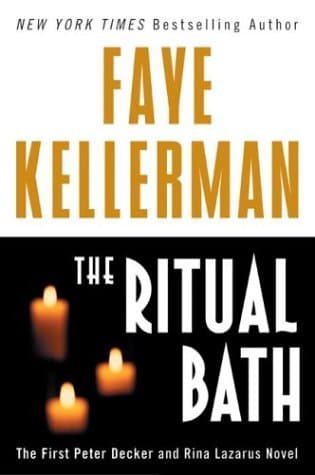
Faye Kellerman (1986)
Genre
Thriller / Mystery / Romance
Reading Time
7-8 hours
Key Themes
See below
Sign in to track this book
A brutal rape in a secluded yeshiva forces a cynical detective and a devout woman to confront faith and crime, uncovering truths that threaten their connection.
The story begins with Detective Peter Decker of the LAPD receiving a call about a brutal rape in a secluded Orthodox Jewish community. The victim, Sarah Mindel, was attacked after returning from the mikvah, the ritual bathhouse. The crime scene is clean, and the community initially resists outside investigation, seeing the incident as a desecration. Rina Lazarus, a young widow and teacher, called the police and acts as the main contact. She is calm and provides Decker with initial information while navigating the community's strict religious laws and desire for privacy.
Peter Decker, a divorced LAPD detective, arrives at the yeshiva community. He immediately notices how isolated the community is and how difficult it is to conduct a secular investigation within its religious framework. Rina Lazarus, a widowed mother of two boys, becomes his main contact. She explains customs and laws to him, including the mikvah's importance and 'niddah' (ritual impurity). Decker finds Rina intelligent, composed, and open. Their first interactions build a professional relationship that soon becomes personal, despite their different worlds.
Decker's investigation begins to focus on potential suspects within the yeshiva. He interviews Sarah Mindel's husband, Rabbi Mindel, who is distressed and uncooperative, more worried about the community's honor than finding the attacker. Other community members, including Rabbi Knopfler, the yeshiva head, are also reluctant to give information or allow full access. Decker finds a mix of fear, shame, and a strong desire to handle matters internally. He learns Sarah was pregnant, adding to the tragedy. The lack of evidence and the community's closed nature make progress difficult.
As the investigation continues, Decker looks beyond the immediate family. He learns about Jacob, a former student with a troubled past who was expelled from the yeshiva, making him a potential suspect. He also interviews Ben, a local handyman with access to the community who seems too interested in the investigation. Rina helps Decker by sharing details about the community's history and internal dynamics, helping him understand the various people and potential conflicts. Decker starts to feel a personal connection to the case, driven by both duty and his growing feelings for Rina.
Through investigation and Rina's insights, Decker uncovers a secret: Rabbi Mindel, Sarah's husband, was not her first husband. Sarah had been married and divorced before, a fact kept hidden. Also, Rabbi Mindel had a history of violence and abuse in his previous marriage, which ended with his first wife's death under suspicious circumstances, though it was called an accident. This information implicates Rabbi Mindel and suggests a darker motive for the attack on Sarah, possibly to silence her or prevent her from revealing his past.
As Decker looks into Rabbi Mindel's past, another woman in the community, Miriam, is attacked similarly to Sarah, also after returning from the mikvah. This second assault confirms a serial rapist is active, increasing the investigation's urgency and fear in the community. The attacks on both women after the mikvah suggest an attacker with specific knowledge of the community's customs and a twisted sense of symbolism. Rina becomes more worried for her safety and the safety of other women, and her bond with Decker grows as they face this threat together.
With two confirmed attacks, Rina Lazarus, as the main informant and a woman living alone with her children, becomes a potential target. Decker, now deeply concerned for her, takes steps to protect her. He arranges police surveillance and gives her a panic button. Their growing emotional connection becomes clear as Decker's concern for her goes beyond his professional duty. Rina trusts Decker completely, sharing her fears and insights, which are invaluable to the investigation. The danger increases the romantic tension between them.
Through careful detective work, including forensic evidence and witness interviews, Decker begins to focus on Ben, the handyman. Ben's unusual behavior, his knowledge of the community's layout, and a history of suspicious activity outside the yeshiva make him a prime suspect. However, Decker's instincts tell him there is more to the story. He realizes that Ben, while capable of the assaults, might be acting under someone else's influence or as part of a larger plan. The motive for the attacks seems to be more than just sexual violence.
Decker uncovers a conspiracy: Rabbi Knopfler, the respected head of the yeshiva, is involved. It is revealed that Rabbi Knopfler knew about Rabbi Mindel's violent past and had covered it up, fearing the scandal would ruin the yeshiva's reputation. The attacks on Sarah and Miriam were not random. Ben, the handyman, was coerced or manipulated by Knopfler to commit the assaults, possibly to intimidate Sarah and prevent her from revealing Mindel's past, or to punish women who might challenge community rules. The revelation of Knopfler's involvement shocks Rina, as she respected him deeply.
Decker confronts Rabbi Knopfler and Ben. The truth emerges: Rabbi Knopfler orchestrated the attacks to maintain the yeshiva's reputation and prevent a scandal involving Rabbi Mindel. Ben, pressured, carried out the rapes. The community is shattered by the revelations. Rabbi Mindel's past is exposed, and Rabbi Knopfler's authority collapses. Decker arrests both perpetrators, but the emotional impact on Rina and the community is immense. Decker and Rina must deal with the aftermath, their relationship strengthened by the shared experience but now facing the challenges of their different worlds.
The Protagonist
Decker begins as a detached professional but evolves into a man deeply emotionally invested in Rina and her community, challenging his own worldview and opening himself to a different way of life.
The Protagonist/Supporting
Rina navigates the trauma of the attacks and the unraveling of her community's secrets, challenging her faith and identity while opening herself to a forbidden love.
The Antagonist
Initially seen as a pillar of the community, Rabbi Knopfler's true character is revealed as a manipulative figure willing to sacrifice individuals for the sake of institutional image.
The Supporting
His past is gradually uncovered, revealing a history of violence that was meticulously hidden by the community, ultimately leading to his exposure.
The Mentioned/Victim
Her assault is the inciting incident, and the revelation of her past and her husband's history drives much of the investigation.
The Supporting/Antagonist
From a seemingly innocuous handyman, he is revealed to be the direct perpetrator of the assaults, acting under duress.
The Victim
Her attack confirms the pattern of the crimes and intensifies the investigation, directly impacting the community's sense of security.
The novel explores the tension between secular law enforcement and religious law. Detective Decker, representing secular justice, must navigate the yeshiva, where religious laws, community honor, and a desire for internal resolution often conflict with criminal investigation. The community's initial reluctance to cooperate, driven by a fear of 'chillul Hashem' (desecration of God's name) and a belief in divine justice, creates obstacles for Decker. Rina Lazarus acts as a bridge, understanding both worlds, highlighting the complexities when these two systems meet in matters of crime. The theme questions whether spiritual purity can be kept by hiding earthly wrongs.
“There were laws, and then there were laws. His laws were written in statutes, in books, in dry legal precedents. Their laws were written in the heart, in ancient scrolls, in the very fabric of their lives.”
The yeshiva community is a close, supportive, yet isolated world where privacy and reputation are important. This isolation, while offering comfort, also creates a dangerous culture of secrecy. The community's desire to protect its image and avoid scandal leads to hiding the truth, allowing people like Rabbi Knopfler to manipulate and conceal serious crimes. The theme explores how the pursuit of 'purity' and 'honor' can lead to corruption and injustice, showing the destructive power of secrets within a closed system. The revelation of these secrets ultimately shatters the community's illusion of sanctity.
“The community was a jewel, but sometimes jewels had flaws hidden deep within, flaws that could shatter the whole.”
A central theme is the growing relationship between Peter Decker, a secular, divorced LAPD detective, and Rina Lazarus, a devout Orthodox Jewish widow. Their connection overcomes their different backgrounds, showing the power of human connection over cultural and religious barriers. Their mutual respect, intelligence, and shared pursuit of justice bring them together. However, their love faces challenges from their respective worlds – Rina's religious commitments and community expectations, and Decker's secular life. The theme explores whether true love can bridge such divides and the sacrifices needed, asking questions about identity, belonging, and personal fulfillment.
“He was from another world, and she was rooted in hers, yet somehow, in this darkness, they found each other.”
The novel shows the harmful nature of power abuse and hypocrisy within seemingly good institutions. Rabbi Knopfler, the respected head of the yeshiva, uses his authority to manipulate and orchestrate crimes, claiming to protect the community's honor. His actions show a moral failure, where life is sacrificed for reputation. Rabbi Mindel's hidden history of violence, protected by the community, further illustrates this theme. The story critiques how religious authority can be misused when unchecked and how fear of scandal can lead to grave injustices, forcing characters like Rina to confront painful truths about their leaders.
“Sometimes, the greatest darkness resided not in the shadows, but in the hearts of those who claimed to bring the light.”
The ritual bathhouse serves as both the crime scene and a potent symbol of purity, vulnerability, and desecration.
The mikvah, the Jewish ritual bath, is the central setting for the assaults. It is a place of spiritual cleansing and rebirth, where women immerse themselves to achieve ritual purity. By making it the scene of the rapes, the author creates a powerful symbol of desecration and violation, not just of the individual women, but of the sacred space and the community's spiritual integrity. This choice amplifies the horror of the crimes and underscores the profound impact on a deeply religious community, making the attacks deeply personal and symbolic.
The insular nature of the yeshiva community creates a challenging environment for investigation and heightens internal tensions.
The Orthodox Jewish yeshiva community is presented as a closed, self-contained world with its own rules, customs, and strong emphasis on privacy. This insularity serves as a major plot device, creating obstacles for Detective Decker, who is an outsider. The community's reluctance to share information, its initial desire to handle matters internally, and its fear of outside judgment complicate the investigation. This device also heightens the suspense, as information is hard to come by, and allows for the development of internal corruption and secrets that might otherwise be exposed in a more open society.
The stark differences between secular and religious worlds drive conflict and character development.
The cultural and religious divide between Peter Decker and the yeshiva community, particularly Rina Lazarus, is a significant plot device. It generates inherent conflict and misunderstanding, requiring Rina to act as an interpreter of her world for Decker, and for Decker to learn patience and respect. This barrier fuels the romantic tension between them, as their connection must overcome immense societal and personal hurdles. It also allows for exposition of Jewish customs and laws, educating the reader while deepening the narrative's complexity and character motivations.
“There are times when even the righteous must bend the rules, for the greater good.”
— Rina thinking about the complexities of law and faith.
“The past is never truly buried; it always finds a way to resurface.”
— Peter contemplating the lingering effects of old crimes.
“Sometimes, the most dangerous secrets are those we keep from ourselves.”
— A general observation on human nature and denial.
“Love, like faith, requires a leap.”
— Rina reflecting on her feelings for Peter.
“The silence can be more terrifying than any scream.”
— Peter investigating a crime scene, sensing an unsettling quiet.
“Every person carries a world within them, a world of untold stories and hidden pains.”
— Rina's empathetic view of others.
“Justice isn't always about punishment; sometimes it's about understanding.”
— Peter pondering the motivations behind a crime.
“Tradition, like a river, can either nourish the land or carve it away.”
— Rina considering the double-edged nature of religious traditions.
“The truth is rarely simple, and often inconvenient.”
— Peter encountering complexities in his investigation.
“Even in darkness, there are glimmers of light, if you know where to look.”
— A hopeful sentiment amidst the grim events.
“A good detective doesn't just see what's there; he sees what's missing.”
— Peter's internal monologue on his investigative approach.
“Sometimes the greatest strength lies in vulnerability.”
— Rina's personal growth throughout the story.
“The heart has its own reasons, which reason knows nothing of.”
— A reflection on the irrationality of human emotions, particularly in love and fear.
Ready to see how well you understood this book? Take our interactive quiz with 10 questions.

Biography coming soon.







