
Biography coming soon.

Genre
Historical Fiction
Reading Time
12 Minutes
Key Themes
See below
Sign in to track this book
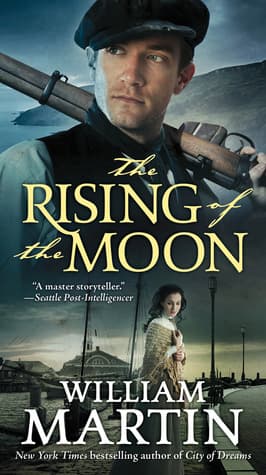
In 1916 Boston, a rising politician's life collapses when his rebel cousin sparks a dangerous love triangle and a deadly mission to Ireland, leading to a violent clash of personal desires and historical rebellion on Easter Sunday.
The story begins in Boston, 1916, with Tom Tracy, a successful Irish immigrant and political aide to Mayor James Michael Curley. Tom has adapted to American life, enjoying a comfortable existence and a relationship with Rachel Levka, a spirited Jewish woman and Zionist. Their lives are stable, with Tom nearing a political advancement. Rachel is involved in her community's efforts and dreams of a Jewish homeland. Their seemingly secure world is about to change with the arrival of someone from Tom's past and the distant cries of a homeland wanting freedom.
Tom's life changes with the arrival of his cousin, Padraic Starr, from Galway. Padraic is a fervent Irish republican, deeply involved in the cause for Irish independence. He has come to America on a mission to get arms and support for the coming rebellion. His presence immediately causes tension and contrasts with Tom's Americanized life. Padraic's passionate talk and commitment to the Irish cause begin to affect Tom's carefully built life, making him confront his heritage and the unresolved grief and anger over his father's death, which Padraic blames on British oppression.
Rachel Levka, at first unsure about Padraic's radicalism, finds herself drawn to his intensity and dedication to his cause. As a Zionist, she sees a similar spirit in Padraic's fight for national self-determination, finding parallels between the Irish struggle and her people's desire for a homeland. This connection to Padraic creates tension between Rachel and Tom. While Tom is hesitant to leave his comfortable American life for a dangerous rebellion, Rachel's admiration for Padraic's conviction grows, causing an emotional and ideological split in her relationship with Tom. Her loyalties begin to shift, drawn by the power of revolutionary zeal.
Under Padraic's influence and wanting to avenge his father's death, Tom reluctantly agrees to return to Ireland and join the rebellion. The decision is difficult for Tom; it means leaving his promising future in Boston and risking everything for a cause he had mostly left behind. Rachel, now inspired by Padraic, also commits to the journey, driven by her own purpose and a growing affection for Padraic. Together, the three embark on a dangerous voyage across the Atlantic, carrying secret guns and ammunition, headed for Ireland and the coming Easter Rising, where their fates will become part of history.
When they arrive in Ireland, Tom, Rachel, and Padraic find themselves in a world full of anticipation and secret activity. The air is thick with a sense of coming uprising, as Irish nationalists secretly organize and plan their rebellion against British rule. They meet various people involved in the cause, seeing firsthand the fervor and desperate hope of the revolutionaries. Tom faces the harsh realities of the struggle, a strong contrast to his protected life in Boston. Rachel, always observant, learns about the Irish fight, further solidifying her understanding of national liberation movements. Padraic, in his element, takes charge, making sure their illegal cargo reaches the right hands for the coming fight.
Easter Sunday, 1916, arrives, and with it, the rebellion erupts. The streets of Dublin become a battleground as Irish Volunteers and the Irish Citizen Army take key locations, including the General Post Office, and declare an Irish Republic. Tom, Padraic, and Rachel are in the middle of this violent uprising. Tom, despite his initial hesitation, fights alongside his countrymen, facing the brutal realities of combat. Rachel, seeing the chaos and courage, is deeply affected, her Zionist beliefs strengthened by the fierce determination of the Irish. The city descends into chaos, with gunfire, explosions, and the cries of rebels and civilians. Their personal struggles become tied to the larger historical conflict around them.
As the Easter Rising grows, Tom and Padraic are among the rebels defending the General Post Office (GPO), one of the main strongholds of the uprising. The GPO is a symbol of the rebellion, facing constant shelling and attacks from British forces. Inside, conditions are terrible, with dwindling supplies, many casualties, and the constant threat of collapse. Tom, now a soldier, experiences the terror and camaraderie of battle, fighting alongside Padraic. Their bond as cousins is tested and strengthened in war, even as their different views on the rebellion remain. Rachel, though not directly in the GPO, is nearby, seeing the devastation and the desperate fight for survival, her heart torn between the two men and the cause they represent.
Amidst the brutal fighting in Dublin, Rachel shows courage and compassion. Using her background and empathy, she helps the wounded, both rebels and civilians, caught in the crossfire. Navigating the dangerous streets, she sees the full horror of war, yet continues her efforts to ease suffering. Her actions show her deep humanity and her commitment to life even in the face of destruction. This experience shapes her, solidifying her resolve and giving her a clearer understanding of the costs and sacrifices in struggles for freedom. Her bravery offers a glimmer of hope and resilience.
Despite their efforts, the Easter Rising is crushed by the British forces. After days of fierce fighting and destruction, the rebels, including Tom and Padraic, surrender. The aftermath is grim, with widespread arrests, executions of leaders, and a sense of defeat and loss in the Irish nationalist movement. Tom and Padraic face an uncertain future, their revolutionary dreams shattered, for now. The surrender is a turning point, not only in Irish history but also in the personal lives of the characters, as they deal with the consequences of their actions and the devastating failure of their cause.
After the failed Easter Rising, Tom, Padraic, and Rachel confront the devastating consequences. Many of the rebellion's leaders are executed, and countless others are imprisoned. Tom and Padraic face their own trials, changed by their experiences. Rachel, having seen the brutal realities of the struggle, must reconcile her ideals with the violence she endured. The love triangle reaches a critical point, with the bonds of loyalty and affection changed by the war. The surviving characters are left to rebuild their lives, carrying the scars of the rebellion but also a renewed sense of purpose, whether continuing the fight for Irish independence or pursuing other paths toward self-determination.
The Protagonist
Tom transforms from an assimilated American with political ambitions into a reluctant but committed participant in the Irish rebellion, ultimately embracing his heritage and fighting for freedom.
The Protagonist
Rachel evolves from a passionate Zionist focused on her own people's cause to a woman deeply understanding the universal struggle for freedom, with her loyalties and affections tested by the events of the Rising.
The Antagonist/Supporting
Padraic remains steadfast in his revolutionary ideals throughout the narrative, serving as a constant, unwavering force that challenges and inspires those around him, ultimately facing the consequences of his actions with defiant resolve.
The Supporting
Curley remains a consistent figure of established power and influence, his role primarily to provide context and opportunity for Tom's initial path, rather than undergoing significant personal change.
The Supporting
Mac Diarmada remains a steadfast and principled leader of the rebellion, his arc culminating in his historical role and eventual execution, serving as a symbol of sacrifice for the cause.
The Supporting
Pearse's arc is tied to his historical role as a revolutionary leader and poet, culminating in his iconic declaration of the Republic and subsequent execution, solidifying his place as a martyr.
The Supporting
O'Farrell's role is primarily to demonstrate the unsung heroism and crucial support provided by women during the Rising, maintaining a steadfast commitment to the cause through her actions.
The Antagonist
General Maxwell remains a consistent antagonist, representing the unyielding British authority and ultimately overseeing the suppression of the Rising and the execution of its leaders.
The novel explores national identity, especially through Irish and Jewish experiences. It examines what it means to belong to a nation, by birth, choice, or shared struggle. Tom's journey from an American immigrant to a participant in the Irish rebellion shows the lasting pull of heritage and the call for his homeland's freedom. Rachel's Zionism offers a parallel, showing the universal desire for a homeland and the right of a people to govern themselves. The Easter Rising itself is the ultimate example of this theme, a violent assertion of a distinct Irish identity against colonial rule, reflecting global struggles for self-determination.
“There are some things, Tom, that a man must do for his country, no matter the cost, no matter how distant he's made himself seem.”
At its core, the story explores love and loyalty, and the potential for betrayal when these are tested against competing ideals. The romantic love between Tom and Rachel is central, but it is complicated by Rachel's growing admiration for Padraic and the different paths the rebellion forces them to take. Loyalty is examined on many levels: personal loyalty to loved ones, familial loyalty between cousins, and national loyalty to one's homeland. Padraic's arrival challenges Tom's loyalty to his American life and his relationship with Rachel. The high stakes of the rebellion force characters to make difficult choices, where loyalty to one cause or person can be seen as a betrayal of another, showing the personal cost of political upheaval.
“How could I choose between the man I loved and the cause that held my heart?”
The novel shows the brutal realities and human cost of revolutionary struggle. While it idealizes freedom and self-determination, it also grounds these hopes in the grim realities of violence, suffering, and loss. The Easter Rising, a moment in Irish history, is shown not just as a glorious rebellion but as a bloody, destructive event that brings death, injury, and imprisonment. Characters see firsthand the devastation of war, the sacrifice of lives, and the emotional toll it takes on individuals and families. This theme reminds us that while freedom is a noble pursuit, its attainment often comes at a high price, leaving lasting scars on those who fight for it.
“The streets of Dublin ran red that Easter, not just with the blood of heroes, but with the blood of innocents, caught in a tide they could not control.”
A main theme is the tension between assimilating into a new culture and keeping one's ancestral heritage. Tom Tracy initially represents successful assimilation, having built a comfortable life in America and distanced himself from Ireland's struggles. His American identity is challenged by Padraic, who embodies a strong commitment to Irish heritage and nationalism. The novel explores the internal conflict faced by immigrants who must balance their new identity with the traditions and calls of their past. This theme questions whether one can truly shed their heritage and highlights the lasting power of roots, even across oceans and generations, especially when a homeland is fighting for its existence.
“You can take the man out of Ireland, Tom, but you can't take Ireland out of the man, not when she's calling for her sons.”
A romantic entanglement that mirrors the ideological conflict.
The love triangle between Tom, Rachel, and Padraic serves as a powerful microcosm of the larger ideological and national conflicts in the novel. Rachel's attraction to Padraic's fervent revolutionary spirit mirrors her own Zionist convictions, creating a profound emotional and intellectual divide between her and Tom. This personal entanglement intensifies the stakes, making the political choices of the characters deeply personal. It forces them to confront not only their loyalties to their respective nations but also their loyalties to each other, highlighting how historical events can irrevocably alter the landscape of personal relationships and force difficult choices between love and conviction.
The literal cargo that drives the journey to Ireland.
The clandestine cargo of guns and ammunition that Tom, Rachel, and Padraic transport from Boston to Ireland acts as a crucial MacGuffin. While its intrinsic value is high for the rebellion, its primary function in the narrative is to provide a tangible goal and a driving force for the characters' journey and their involvement in the Easter Rising. The procurement and transport of these weapons underscore the perilous nature of their mission and serve as a constant reminder of the impending conflict. It is the catalyst that physically moves the characters from their American lives to the heart of the Irish rebellion, directly leading them into the historical events.
Subtle hints and references to the impending Easter Rising.
The novel skillfully employs historical foreshadowing, subtly building anticipation for the Easter Rising. This is achieved through dialogue about political tensions in Ireland, news reports, and Padraic's urgent mission to acquire arms. These elements create a growing sense of inevitability and impending conflict, constantly reminding the reader (and the characters) of the historical event that looms large. This device not only grounds the fictional narrative in historical reality but also heightens the dramatic tension, as the characters' personal stories draw closer to the real-life cataclysm of 1916. It ensures that the reader understands the historical context and the significance of the characters' actions within it.
The mirroring of Irish and Zionist struggles for self-determination.
The novel utilizes parallel journeys, particularly through Rachel's character, to draw thematic connections between the Irish struggle for independence and the Zionist movement for a Jewish homeland. Rachel's fervent Zionism provides an external framework for understanding the Irish cause; she sees in Padraic's fight a reflection of her own people's aspirations. This device enriches the theme of national identity and self-determination, suggesting that the yearning for freedom and a homeland is a universal human experience. It allows the narrative to explore broader implications of nationalistic movements, highlighting shared ideals and sacrifices across different cultural and historical contexts.
Ready to see how well you understood this book? Take our interactive quiz with 10 questions.
Biography coming soon.







