“Water, water, every where, And all the boards did shrink; Water, water, every where, Nor any drop to drink.”
— The Mariner's ship is becalmed in the middle of the ocean after the death of the Albatross.

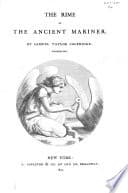
Samuel Taylor Coleridge (1858)
Genre
Fantasy
Reading Time
30 min
Key Themes
See below
Sign in to track this book
A cursed mariner, his shipmates dead and his soul haunted by an albatross's ghost, drifts through the supernatural, forever bound to recount his horrifying tale of hubris and penance.
An old, grey-bearded Mariner stops one of three Wedding-Guests on his way to a wedding feast. The Wedding-Guest is impatient and tries to leave, eager for the celebration. But the Mariner's intense gaze and presence make the Wedding-Guest sit and listen. The Mariner begins his story, detailing how he and his shipmates sailed south into the open ocean. The Wedding-Guest is held by the Mariner's 'glittering eye,' unable to resist the unfolding story of a fateful voyage.
The Mariner tells of their journey, describing a violent storm that drove their ship far south, past the Equator and into a desolate, ice-bound sea near the South Pole. The ship becomes trapped among tall icebergs, a 'mist and snow' landscape where nothing seems to live. The crew is surrounded by a terrifying, silent whiteness, their hope fading in the extreme cold and isolation. Their dire situation shows their vulnerability and nature's overwhelming power.
In this desolate icy place, an Albatross appears through the fog, a creature of 'good omen.' The shipmates welcome it joyfully, believing its presence means salvation from the frozen doom. They feed it, and the bird becomes a constant companion, flying around the ship daily. But, for reasons he cannot explain, the Mariner shoots the Albatross with his crossbow. This act, done without cause, marks the turning point of the story and the start of the Mariner's deep suffering.
At first, the crew is angry with the Mariner for killing the bird, blaming him for the bad weather and the ship's continued stagnation. They believe the Albatross brought good winds. However, when the fog lifts and the sun shines, they change their minds, praising the Mariner's act, thinking he 'shot the bird that made the breeze to blow.' This change in opinion makes them part of the crime, sharing the Mariner's guilt. This collective approval of the wrong act seals their fate with his.
The ship soon enters a terrible calm, with no wind. The sun beats down, and the sea becomes still and foul, described as 'rotting.' The crew suffers greatly from thirst, their tongues shriveling, unable to speak. They are surrounded by 'water, water, everywhere, nor any drop to drink.' As a symbol of his sin and their shared suffering, the other mariners hang the dead Albatross around the Mariner's neck, replacing the cross he might wear, a constant, heavy reminder of his wrongdoing.
As the crew suffers, a ghost ship appears on the horizon. Hope briefly rises in the parched crew, but their joy turns to horror as they realize it is a ghost ship. On its deck, two figures, Death and Life-in-Death, play dice for the souls of the crew. Life-in-Death, described as having 'lips all dry, and parched all her face,' wins the Mariner's soul, condemning him to a fate worse than physical death. Death claims the rest of the crew, sealing their coming demise.
One by one, the two hundred sailors die, their souls leaving their bodies. Each man curses the Mariner with his dying look, leaving him surrounded by their corpses. The Mariner is left alone on the ship, tormented by the sight of his dead shipmates, whose eyes seem to follow him. He tries to pray, but cannot, his heart 'dry as dust.' This isolation and inability to find comfort or redemption through prayer increase his suffering, making him a 'painted ship upon a painted ocean' in his despair.
For seven days and seven nights, the Mariner endures his terrible solitude, unable to die. He looks at the 'slimy things' of the ocean, the water-snakes, which he had previously disliked. He sees their beauty, their bright colors, and their joy in life, and a feeling of love and appreciation spontaneously grows within him. He blesses them 'unawares.' At that moment, the Albatross falls from his neck into the sea, marking the start of his penance and the lifting of the initial curse.
After blessing the water-snakes, the Mariner can finally sleep, and he dreams of rain. He wakes to find it raining, quenching his terrible thirst. Heavenly spirits descend and enter the bodies of the dead crew, who then rise and begin to work the ship, sailing it northward. The Mariner hears sweet music from these spirits as they guide the ship. This supernatural event signifies divine forgiveness and help, even as the Mariner's penance is far from complete.
The ship sails quickly back towards the Mariner's home country. As they near the port, the angelic spirits in the dead bodies leave them, appearing as 'forms of light' and making beautiful, harmonious sounds. The Mariner sees the familiar lighthouse, the hill, and the church, filled with immense relief and gratitude. The journey home, though helped by supernatural forces, shows the long and hard path of his redemption.
A small boat approaches the Mariner's ship, carrying a Pilot, a Hermit, and the Pilot's Boy. They are surprised by the sight of the Mariner's ship, which appears to be sinking. As they get near, the ship suddenly plunges beneath the waves with a 'loud sound,' leaving only the Mariner afloat. The Pilot, Hermit, and Boy rescue the Mariner, bringing him into their boat. This dramatic sinking symbolizes the end of his physical ordeal on the cursed vessel.
Once in the rescue boat, the Mariner is overcome by an intense pain, feeling an urgent need to confess his story. He asks the Hermit, a holy man known for his piety, to hear his confession. The Hermit, initially scared by the Mariner's wild look, listens as the Mariner tells his story of guilt and suffering. This confession is a key part of his ongoing penance, a release of the burden that has tormented him. The Hermit's presence provides a spiritual channel for his absolution.
The Mariner reveals that since that moment of confession, he is periodically seized by a pain that forces him to tell his story. He must wander from land to land, seeking out people like the Wedding-Guest who need to hear his tale. His story serves as a warning and a lesson, a 'ghastly tale' that teaches reverence for all God's creatures. This ongoing compulsion is his eternal penance, a living sermon he must preach until his death, ensuring his experience serves a greater moral purpose.
The Mariner ends his tale by emphasizing the moral: 'He prayeth well, who loveth well / Both man and bird and beast.' He warns the Wedding-Guest about the importance of reverence for all living things and the joy found in communal prayer and fellowship. The Wedding-Guest, deeply affected by the Mariner's story, leaves the wedding a 'sadder and a wiser man,' having learned a deep lesson about sin, penance, and the connection of all creation. The Mariner's mission is fulfilled for this listener.
The Protagonist
From a thoughtless sinner to a tormented wanderer, the Mariner undergoes a transformation from spiritual blindness to profound reverence for all life, becoming an unwilling prophet.
The Supporting
Initially dismissive and lighthearted, he becomes a deeply moved and wiser individual, transformed by the Mariner's story.
The Supporting/Symbolic
From a symbol of hope to a symbol of sin, its presence and death drive the narrative's central conflict.
The Antagonist/Allegorical
Serves as a force of inevitable consequence for the crew's complicity.
The Antagonist/Allegorical
Represents the Mariner's unique, unending curse, ensuring his suffering is protracted rather than ended by death.
The Supporting
Serves as a spiritual guide, facilitating the Mariner's understanding and acceptance of his penance.
The Supporting
Experiences a brief but impactful encounter with the supernatural, leaving him shaken.
The Supporting
Briefly encounters the supernatural, leading to a fit of terror, but his long-term arc is not developed.
The poem explores sin and its deep consequences. The Mariner's unprovoked killing of the Albatross is a 'hellish thing' that brings a curse not only on himself but also on his innocent shipmates. His guilt appears as an unbearable burden, both literally (the Albatross around his neck) and mentally, leading to intense isolation and suffering. The crew's involvement in first condemning, then approving, the act highlights the collective nature of moral responsibility. The Mariner's inability to pray or die for days shows the spiritual torment that comes with deep guilt, demonstrating that sin cuts off one's connection to grace.
“Ah! well a-day! what evil looks / Had I from old and young! / Instead of the cross, the Albatross / About my neck was hung.”
Redemption in the poem is a long, difficult process, not a quick forgiveness. The Mariner's penance begins with his subconscious blessing of the water-snakes, an act of spontaneous love for God's creatures. This signals a shift from spiritual death to a hint of grace. His later penance is a lifelong need to wander and tell his story, teaching others respect for all life. This ongoing storytelling is his way of atoning, a public confession and warning. The poem suggests that true redemption involves not only admitting sin but also actively working to prevent others from making similar mistakes, thus turning personal suffering into a source of universal wisdom.
“He prayeth well, who loveth well / Both man and bird and beast. / He prayeth best, who loveth best / All things both great and small; / For the dear God who loveth us, / He made and loveth all.”
Coleridge uses the supernatural to create a sense of the sublime—awe mixed with terror. The ghost ship, Death and Life-in-Death, the angelic spirits animating the dead crew, and the curse itself are all supernatural elements that go beyond normal reality. These elements are not just decoration; they are essential to the plot, acting as agents of divine judgment and mercy. The vast, icy landscapes and the calm, rotting sea also add to this sublime atmosphere, emphasizing humanity's smallness in the face of immense, terrifying natural and spiritual forces. The supernatural heightens the moral stakes and the emotional intensity of the Mariner's journey.
“The very deep did rot: O Christ! / That ever this should be! / Yea, slimy things did crawl with legs / Upon the slimy sea.”
A central moral lesson of the poem is the importance of respecting and loving all of God's creation. The Mariner's sin is his thoughtless act of violence against the Albatross, a creature of nature. His suffering, and that of his crew, is a direct result of this disrespect. His redemption begins when he spontaneously blesses the 'slimy things' of the sea, recognizing their inherent beauty and value. The concluding moral, 'He prayeth best, who loveth best / All things both great and small,' clearly states this theme. The poem criticizes human arrogance and indifference towards the natural world, advocating for a complete spiritual connection that includes all forms of life.
“A spring of love gushed from my heart, / And I blessed them unaware: / Sure my kind saint took pity on me, / And I blessed them unaware.”
The Mariner's tale is told to a Wedding-Guest, embedding one narrative within another.
The poem utilizes a frame story, where the main narrative of the Mariner's voyage is encased within a shorter narrative of him accosting a Wedding-Guest. This device serves several purposes: it provides a relatable entry point for the reader through the Wedding-Guest's initial skepticism and eventual transformation; it creates a sense of immediacy and oral tradition, as if the story is being told directly; and it allows for a clear moral lesson to be delivered and observed, as the Wedding-Guest's reaction illustrates the intended impact of the Mariner's tale on an audience.
Characters and events represent abstract ideas or moral qualities.
Coleridge uses allegory to imbue the narrative with deeper moral and spiritual meaning. Figures like Death and Life-in-Death are not merely characters but personifications of abstract concepts, representing different forms of demise and suffering. The Albatross itself functions allegorically, initially as a symbol of good omen and later as a symbol of the Mariner's sin and guilt. The entire voyage can be seen as an allegorical journey of the soul, traversing sin, suffering, and the path to penance and spiritual understanding. This device elevates the story beyond a simple adventure tale to a profound moral parable.
Unnatural forces and occurrences drive the plot and embody divine judgment/mercy.
The poem is saturated with supernatural elements: the storm that drives the ship south, the spectral ship, the figures of Death and Life-in-Death, the dead crew reanimated by spirits, and the Mariner's own curse of perpetual storytelling. These elements are not incidental but are the very fabric of the plot, acting as agents of divine justice and later, divine mercy. They instill a sense of awe and terror, blurring the lines between reality and the spiritual realm, and emphasize the profound cosmic consequences of the Mariner's actions, demonstrating a world where spiritual forces actively intervene in human affairs.
Objects and characters represent deeper meanings beyond their literal interpretations.
Symbolism is pervasive throughout the poem. The Albatross is the most prominent symbol, representing innocence, nature's sanctity, and later, the burden of guilt. The 'rotting' sea symbolizes the moral decay and spiritual stagnation that afflicts the Mariner and his crew. The sun and moon often carry symbolic weight, representing different aspects of divine presence or judgment. The Mariner's 'glittering eye' symbolizes his hypnotic power and the intensity of his suffering and wisdom. These symbols enrich the poem, allowing for multiple layers of interpretation and reinforcing its overarching themes of sin, penance, and reverence.
“Water, water, every where, And all the boards did shrink; Water, water, every where, Nor any drop to drink.”
— The Mariner's ship is becalmed in the middle of the ocean after the death of the Albatross.
“Ah! well a-day! what evil looks Had I from old and young! Instead of the cross, the Albatross About my neck was hung.”
— The crew's initial relief at the fog lifting turns to condemnation when they realize the Mariner's act was ill-omened.
“Alone, alone, all, all alone, Alone on a wide wide sea! And never a saint took pity on My soul in agony.”
— The Mariner is the sole survivor on the ship, surrounded by the dead crew.
“He prayeth best, who loveth best All things both great and small; For the dear God who loveth us, He made and loveth all.”
— The moral lesson the Mariner imparts to the Wedding-Guest at the end of his tale.
“A frightful fiend doth close behind him tread, For ever and for ever.”
— Describing the Mariner's ongoing penance and the unseen forces that compel him.
“The very deep did rot: O Christ! That ever this should be! Yea, slimy things did crawl with legs Upon the slimy sea.”
— Description of the decaying ocean and the repulsive creatures after the Albatross's death.
“Instead of the cross, the Albatross About my neck was hung.”
— The crew forces the Mariner to wear the dead bird as a symbol of his sin.
“I shot the Albatross.”
— The Mariner's simple, stark confession of his initial sin.
“And a thousand thousand slimy things Lived on; and so did I.”
— The Mariner's realization that even the 'slimy things' of the sea have a right to life, in contrast to the dead crew.
“The moving Moon went up the sky, And no where did abide: Softly she was going up, And a star or two beside.”
— The Mariner begins to appreciate the beauty of nature, a turning point in his redemption.
“A weary time it was, ere I had done This weary work to think.”
— The Mariner reflects on the long, arduous process of internalizing his penance and understanding his sin.
“With a frightful sound, a ghastly shriek – Like a fiend that yells with pain!”
— Description of the sound made by the spirits leaving the bodies of the dead crew.
“For the sky and the sea, and the sea and the sky Lay like a load on my weary eye, And the dead were at my feet.”
— The Mariner's overwhelming sense of desolation and the burden of his surroundings.
“Oh sleep! it is a gentle thing, Beloved from pole to pole!”
— The Mariner laments his inability to sleep, highlighting the torment of his waking state.
Ready to see how well you understood this book? Take our interactive quiz with 10 questions.

Samuel Taylor Coleridge was an English poet, literary critic, philosopher, and theologian who, with his friend William Wordsworth, was a founder of the Romantic Movement in England and a member of the Lake Poets. He also shared volumes and collaborated with Charles Lamb, Robert Southey, and Charles Lloyd.







