“There are two great things in life, the first is to want something, and the second is to get it.”
— Kitty thinks about the general pursuit of desire and fulfillment.


Rebecca West (2022)
Genre
Literary Fiction / Historical Fiction
Reading Time
90 min
Key Themes
See below
Sign in to track this book
When Captain Chris Baldry returns from the WWI trenches with amnesia, his family faces a painful choice between his forgotten past and the harsh present, offering a hopeful look at healing.
The novel opens with Jenny, the narrator, reflecting on Baldry Court, awaiting news of her cousin and owner, Captain Chris Baldry, who is fighting in World War I. One day, a shabby woman named Margaret Grey arrives, claiming to be Chris's true love and asking to see him. Jenny and Chris's elegant wife, Kitty, are dismissive of Margaret. However, a telegram confirms Chris's return, not as a hero, but suffering from shell shock. He believes he is in love with Margaret and has no memory of the past fifteen years, including his marriage to Kitty.
Distraught, Kitty tries to send Margaret away, but Jenny, sensing a deeper truth, allows Margaret to stay. Margaret, though plain, speaks with dignity about her past with Chris. She recounts their youthful romance from fifteen years prior, before Chris met Kitty, explaining their deep love and plans for a future. She describes their intimate relationship and connection, which Chris's amnesia has brought back, making her the only woman he recognizes as his beloved.
Chris arrives at Baldry Court, disoriented and with severe amnesia. He recognizes neither Kitty nor Jenny, but immediately gravitates towards Margaret, treating her with the affection of a long-lost lover. He believes they are still the young couple from fifteen years ago, living in their humble lodgings and planning their life together. This creates tension, as Kitty watches her husband's devotion to another woman, while Jenny observes the painful charade and the contrast between Chris's current mental state and his pre-war self.
With Chris's mind stuck in the past, Margaret becomes essential at Baldry Court. She is the only one who can comfort him, understand his disjointed memories, and bring him peace. Kitty, consumed by jealousy, struggles to maintain composure and her position as mistress of the house. Jenny, observing, begins to see the sincerity of Chris and Margaret's connection, and questions the superficiality of Chris's life with Kitty. The household is fractured, existing in a state of suspended reality, defined by Chris's selective memory.
Driven to understand Chris's condition and the woman who holds his heart, Jenny investigates Chris's past with Margaret. She visits their old lodging house, speaks to acquaintances, and pieces together the story of their profound and innocent love. Jenny discovers their relationship was pure, a contrast to Chris's more conventional marriage with Kitty. This research strengthens Jenny's respect for Margaret and her understanding of why Chris's traumatized mind reverted to this earlier, simpler time of happiness.
Kitty, deeply hurt by Chris's rejection and Margaret's presence, becomes desperate to restore Chris's memory of their life together. She fears losing her husband, her social standing, and her comfortable life. She consults doctors and explores every way to bring back the 'old Chris,' believing only his return to normalcy can restore her happiness and Baldry Court's integrity. Her desperation highlights her love for Chris, focused more on his social role and status than on his well-being.
Recognizing Chris's severe condition and the emotional toll on the household, a renowned psychoanalyst, Dr. Anderson, is called to Baldry Court. Dr. Anderson assesses Chris's amnesia as a psychological defense against the horrors of war and the complexities of his adult life. He explains that Chris retreated to a simpler, happier past to escape an unbearable present. The doctor's arrival brings hope for Kitty, but dread for Jenny and Margaret, who fear restoring Chris's memory might destroy the fragile peace he has found with Margaret.
As Dr. Anderson prepares treatment, the ethical dilemma becomes clear: should Chris be forced to remember a life that caused such trauma, or should he remain in blissful ignorance with Margaret? Kitty wants his return to 'normalcy,' but Jenny and Margaret are torn. Jenny questions if the 'real' Chris, burdened by expectations and a less passionate marriage, was truly happier. Margaret, despite her deep love for Chris, understands the potential pain his recovery would cause her, yet she prioritizes his well-being over her own desires.
Dr. Anderson suggests a strong emotional shock might trigger Chris's memory. After much thought, and with Jenny's subtle guidance and a shared understanding, Margaret makes the agonizing decision to help Chris return to his full memory. She understands that for Chris to be whole, he must confront his present. She decides to remind him of a specific, painful detail from their past that will jar him back to reality, even if it means losing him to his 'other' life. This is an act of immense self-sacrifice and love.
Margaret, with courage, points out a small scar on Chris's hand – a detail he had overlooked in his amnesia. This mundane, yet personal, detail shatters Chris's protective mental state. He slowly begins to recall the war, his marriage to Kitty, and his life at Baldry Court. The 'soldier' returns, but he is a changed man, burdened by war memories and the loss of his blissful ignorance. The cost of his recovery is clear in Margaret's quiet sorrow, Kitty's bittersweet relief, and Jenny's introspection.
Chris's memory is fully restored, and he returns to his expected role as master of Baldry Court and Kitty's husband. Margaret quietly departs, her purpose fulfilled, leaving a void only Jenny truly acknowledges. Chris is no longer the carefree, loving man Margaret remembered, nor the detached, elegant figure Kitty had married. He is now a man haunted by war and marked by his brief return to an idealized past. The novel ends with Jenny reflecting on the profound changes from Chris's ordeal, and Margaret's selfless love's impact on all their lives, particularly her own.
The Narrator/Supporting
Jenny evolves from a somewhat detached observer to a woman with deeper empathy and a critical understanding of societal expectations versus true human connection.
The Protagonist
Chris undergoes a forced regression to a past self, finds temporary peace, and is then painfully reintegrated into his present, leaving him profoundly changed.
The Antagonist/Supporting
Kitty struggles to accept Chris's condition, revealing her self-centered motivations, and is ultimately forced to confront the fragility of her constructed life.
The Supporting
Margaret moves from being an unexpected intruder to a central, compassionate figure, ultimately making a selfless sacrifice for Chris's well-being.
The Mentioned/Supporting
Dr. Anderson's character arc is limited, serving primarily as a catalyst for Chris's potential recovery and the subsequent moral conflict.
The novel explores different forms of love: the passionate, authentic love between Chris and Margaret, rooted in a simpler past, versus the conventional, socially-driven love between Chris and Kitty, which is more about status and comfort. Chris's amnesia forces a comparison, suggesting that 'true' love may not always align with societal expectations of marriage. Scenes where Chris only recognizes Margaret highlight their deep bond, while Kitty's desperation to restore his memory shows a love more concerned with possession and social propriety.
“For the truth was that Chris was not happy with us. He was not unhappy, certainly, but he was not happy. He was merely living.”
The novel portrays the lasting psychological impact of World War I through Chris's shell shock and amnesia. His regression to a happier past is a direct result of the horrors he witnessed, showing the mind's attempt to escape unbearable reality. The narrative emphasizes that not all war wounds are visible, and emotional scars can be just as debilitating. Chris's return to his 'normal' self, though changed, highlights the profound and irreversible nature of war trauma.
“By nights I saw Chris running across the brown rottenness of No-Man's-Land...”
The contrast between the upper-class world of Baldry Court (Kitty and Jenny) and Margaret Grey's working-class background is central to the novel. Chris's amnesia bridges this divide, forcing the upper-class characters to confront a reality outside their insulated world. Margaret's quiet dignity and genuine love challenge the superficial values of the upper class, suggesting that true worth and happiness are not tied to social standing or wealth. The initial condescension towards Margaret shows the rigid class structures of the time.
“She was not beautiful, nor was she young, but there was a profound and tranquil beauty in her face that had been put there by the years.”
Chris's amnesia raises questions about identity: if a man loses his memory of fifteen years, including his marriage and social role, is he still the same person? The novel suggests that memory is linked to who we are, but also that a deeper, more essential self might exist beneath layers of experience. Chris's return to his youthful self with Margaret reveals an identity perhaps truer to his core desires, challenging the idea that one's adult, socially constructed identity is the only valid one.
“He was not the Chris we had known, but a Chris who had never been.”
Margaret Grey's decision to help restore Chris's memory, despite the personal pain it will cause her, is an act of selflessness. She prioritizes Chris's wholeness and recovery over her own desire to remain with him in his idealized state. This act contrasts with Kitty's more self-serving motivations for wanting Chris's memory restored. Margaret's sacrifice elevates her character to a moral ideal, showing the purest form of love.
“She was not thinking of herself. She was thinking of him.”
A psychological loss of memory, specifically Chris's fifteen-year regression.
Chris Baldry's amnesia is the central plot device, driving the entire narrative. It serves multiple functions: it introduces the conflict by making him forget his wife and remember his first love, it allows for an exploration of his past and the nature of his relationships, and it creates an ethical dilemma regarding whether to restore his memory. The amnesia is not merely a plot contrivance but a manifestation of his shell shock, highlighting the psychological impact of war and forcing characters to confront deeper truths about love and identity.
The story is told from the perspective of Chris's cousin, Jenny.
Jenny's first-person narration provides an intimate, subjective, yet ultimately insightful lens through which the events unfold. As an insider to the Baldry household but also a keen observer of human nature, she offers both personal involvement and critical distance. Her perspective allows the reader to witness the emotional turmoil, the class dynamics, and the moral ambiguities without direct access to Chris's inner thoughts. Her evolving empathy for Margaret and her critical view of Kitty shape the reader's understanding of the characters and themes.
Two characters who highlight each other's contrasting qualities.
Kitty Baldry and Margaret Grey serve as powerful foil characters. Kitty represents the superficiality, social ambition, and possessiveness of upper-class love and marriage, while Margaret embodies authenticity, selfless devotion, and a simpler, more genuine connection. Their contrasting appearances, social standing, and reactions to Chris's amnesia illuminate the novel's central themes of love, class, and identity. Chris's amnesia forces him to choose between these two women, and in doing so, reveals the inherent values each represents.
The country estate as a symbol of upper-class life and illusion.
Baldry Court, Chris's ancestral home, symbolizes the ordered, beautiful, yet ultimately somewhat sterile and conventional upper-class life that Chris returns to. It represents the societal expectations and 'normalcy' that Kitty is desperate to maintain. When Chris's amnesia disrupts this order, the court itself becomes a stage for the clash between his forgotten past and his present. Its beauty, initially a source of comfort, becomes a backdrop for the emotional turmoil, highlighting the superficiality that can lie beneath a polished exterior.
“There are two great things in life, the first is to want something, and the second is to get it.”
— Kitty thinks about the general pursuit of desire and fulfillment.
“It is not beauty that wins love; it is love that sees beauty.”
— Jenny reflects on the nature of love and perception, particularly regarding Chris's feelings for Margaret.
“The past is not a package to be stored away. It is a living, breathing thing that shapes us.”
— Jenny contemplates the inescapable influence of Chris's past on his present condition and their lives.
“There are some people who seem to be born with a special gift for happiness.”
— Jenny observes Margaret's seemingly innate contentment and simple joy.
“War is a great simplifier. It strips away all the inessentials.”
— Jenny considers how Chris's war trauma has reduced his life to a more basic, fundamental state.
“It is strange how one can live with a person for years and yet never truly know them.”
— Kitty's realization about Chris after his memory loss, highlighting the superficiality of their marriage.
“The truth is often a very inconvenient thing.”
— Jenny muses on the difficulty of confronting the reality of Chris's condition and its implications.
“There are wounds that time can never heal, only cover over.”
— Jenny's reflection on the enduring impact of deep emotional pain, particularly Margaret's grief.
“One cannot build a new life on the ruins of the old without first acknowledging the ruins.”
— Jenny understands the necessity of facing Chris's past and present for any future to exist.
“The heart has its reasons which reason knows nothing of.”
— Jenny ponders the inexplicable nature of Chris's enduring love for Margaret.
“Sometimes the greatest kindness is to let someone live in their own delusion.”
— The moral dilemma faced by the women regarding whether to restore Chris's memory.
“Life is a perpetual discovery of the things one never knew about oneself.”
— Jenny's ongoing self-reflection as she navigates the complexities of her family's crisis.
“It is a terrible thing to be a woman, to be so utterly dependent on the whims of men.”
— Jenny's underlying frustration with the limited agency of women in her society, particularly in wartime.
“Memory is a queer thing; it can be a torment or a comfort.”
— Jenny reflects on the dual nature of memory, both for Chris and for those around him.
Ready to see how well you understood this book? Take our interactive quiz with 10 questions.
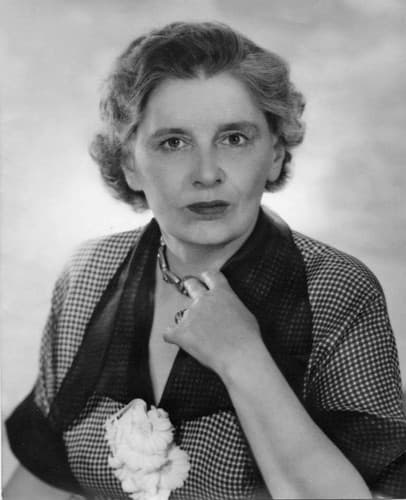
Dame Cicily Isabel Fairfield, known as Rebecca West, or Dame Rebecca West, was a British author, journalist, literary critic and travel writer. An author who wrote in many genres, West reviewed books for The Times, the New York Herald Tribune, The Sunday Telegraph and The New Republic, and she was a correspondent for The Bookman. Her major works include Black Lamb and Grey Falcon (1941), on the history and culture of Yugoslavia; A Train of Powder (1955), her coverage of the Nuremberg trials, published originally in The New Yorker; The Meaning of Treason, later The New Meaning of Treason (1964), a study of the trial of the British fascist William Joyce and others; The Return of the Soldier (1918), a modernist World War I novel; and the "Aubrey trilogy" of autobiographical novels, The Fountain Overflows (1956), This Real Night, and Cousin Rosamund (1985). Time called her "indisputably the world's number one woman writer" in 1947. She was made CBE in 1949, and DBE in 1959; in each case, the citation reads: "writer and literary critic". She took the pseudonym "Rebecca West" from the rebellious young heroine in Rosmersholm by Henrik Ibsen. She was a recipient of the Benson Medal.







