“To be loved to madness--such was her great desire.”
— Describing Eustacia Vye's deepest longing.

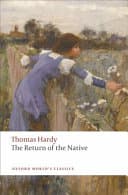
Thomas Hardy (1994)
Genre
Historical Fiction / Romance
Reading Time
450 min
Key Themes
See below
Sign in to track this book
On Egdon Heath, a son's return starts a tragic series of events involving doomed love, yearning, and fate among four people.
The novel opens on Egdon Heath, a large, old, and somewhat empty moor in Wessex. It is November, and dusk covers the heath. Diggory Venn, a reddleman (a traveling seller of red ochre), drives his van. He meets Thomasin Yeobright, who is returning from a failed attempt to marry Damon Wildeve, the local innkeeper. Wildeve, known for being changeable, had postponed the wedding, leaving Thomasin upset. Meanwhile, Eustacia Vye, a beautiful but restless young woman who dislikes the heath and wants a more exciting life, is introduced. She is seen on a barrow, watching a bonfire, a symbol of old pagan rituals, and showing her unhappiness with her surroundings.
Thomasin Yeobright returns home to her aunt, Mrs. Yeobright, after the failed wedding. The delay is said to be a mistake in the marriage license, but it is clear that Wildeve's changing feelings, especially his interest in Eustacia Vye, are the real reason. Diggory Venn, who loves Thomasin and has waited for her, tries to help, urging Wildeve to marry her. Wildeve, however, feels torn between his duty to Thomasin and his strong, often conflicted, feelings for Eustacia. His indecision upsets Thomasin and increases Eustacia's wish for a more dramatic life.
Clym Yeobright, Mrs. Yeobright's son and Thomasin's cousin, returns to Egdon Heath from Paris, where he worked as a diamond merchant. His arrival is met with anticipation, especially by Eustacia Vye, who sees him as a way to escape the heath and find a more sophisticated life. Clym, however, is tired of city life and plans to become a schoolmaster on the heath, educating its people. This difference in goals immediately creates tension between Clym and Eustacia, as her romantic view of him clashes with his practical aims. His return also complicates the existing romantic relationships.
Despite their different goals, Clym and Eustacia are drawn to each other. Eustacia likes Clym's intelligence and his Parisian past, while Clym is charmed by her beauty and passion. Their courtship continues, much to Mrs. Yeobright's disapproval. She thinks Eustacia is lazy and too eager to leave the heath. Mrs. Yeobright fears Eustacia will distract Clym from his goals and make him unhappy. Wildeve, still in love with Eustacia, watches their growing relationship with jealousy, further complicating the emotional situation on the heath.
Mrs. Yeobright strongly opposes Clym's marriage to Eustacia, believing Eustacia is a frivolous and unsuitable wife who will only bring him misery. She tells Clym her concerns, pointing out Eustacia's lack of work ethic and her desire for a life away from the heath. However, Clym, blinded by love, ignores his mother's warnings. He and Eustacia marry in secret to avoid Mrs. Yeobright's further objections. Their marriage separates Clym from his mother and sets the stage for future problems, as Eustacia's hopes for a grander life remain unfulfilled by Clym's simple ambitions.
Clym's plan to become a schoolmaster is interrupted when his eyesight fails due to his studies. Unable to read or teach, he is forced to become a furze-cutter on the heath, a manual job that ties him to the environment Eustacia hates. This change shatters Eustacia's view of Clym and their future. She had hoped his return would lead to an exciting life, but instead, she finds herself married to a laborer, stuck on the heath. Her unhappiness grows, leading to a sense of being trapped in her marriage.
Damon Wildeve suddenly inherits money, making him wealthy. This change revives Eustacia's hopes of escaping her life with Clym. She sees Wildeve's new wealth as a way to get the glamorous life she wants. Wildeve, still in love with Eustacia despite his marriage to Thomasin, is encouraged by his inheritance and starts pursuing Eustacia more actively, sending gifts and looking for chances to meet. This creates a dangerous temptation for Eustacia, who feels stifled by Clym's simple life and her confinement on the heath, leading her to consider an affair.
Mrs. Yeobright, still estranged from Clym, tries to reconcile by visiting their home while Clym is asleep and Eustacia is with Wildeve. Eustacia, afraid Clym will discover Wildeve, delays opening the door to Mrs. Yeobright. Tired and heartbroken by the perceived slight, Mrs. Yeobright collapses on the heath and is fatally bitten by an adder. Clym, waking later, finds his mother dying and learns of her visit. He wrongly believes Eustacia deliberately refused to let his mother in, causing a deep and bitter separation between them. This tragic misunderstanding, caused by poor communication and bad timing, damages their marriage.
Overwhelmed by grief and guilt over his mother's death, Clym learns the full details of her last moments, including her attempt to visit him and Eustacia's delay in opening the door. He concludes that Eustacia intentionally locked his mother out, believing she caused his mother's death. In his pain, Clym confronts Eustacia, accusing her of matricide. Eustacia, though she did delay, denies bad intent, but Clym's accusations are strong. This confrontation marks the end of their marriage, as Clym's love turns to resentment, and Eustacia feels condemned.
Unable to bear Clym's accusations and the heath's oppressive atmosphere, Eustacia decides to run away, hoping to escape her misery. She plans to meet Damon Wildeve, who has offered to take her to Budmouth, a coastal town, and perhaps to America. During a stormy night, as Eustacia tries to cross a weir to meet Wildeve, she slips and falls into the raging water. Wildeve, trying to save her, also drowns. Their bodies are found later, ending their intertwined and tragic lives, leaving Clym in deep despair and guilt.
After Eustacia and Wildeve's deaths, Thomasin is left a widow with a child. Diggory Venn, who has shown steady loyalty and love for Thomasin throughout the novel, continues to offer his quiet support. After a period of mourning, Thomasin, recognizing Diggory's reliable character and genuine affection, agrees to marry him. Their marriage, though not one of passionate romance like Eustacia and Clym's, represents a quieter, more stable happiness, built on mutual respect and deep affection. It offers a contrasting, more hopeful outcome amid the novel's sorrow.
After his mother and Eustacia's deaths, Clym is filled with guilt and regret. He thinks deeply about his actions and his role in the tragedies. He eventually finds peace by becoming an itinerant preacher on Egdon Heath. He travels from village to village, giving sermons that combine moral lessons with observations on human nature and life's hardships. Clym lives a solitary life, forever marked by his past, but dedicated to serving the community he once wanted to educate. He finds a quiet, reflective life, embodying a form of tragic redemption on the heath that shaped his destiny.
The Protagonist
Clym begins as an idealist seeking to improve his community, experiences profound personal tragedy and guilt, and ultimately finds a solitary, reflective purpose as an itinerant preacher.
The Protagonist
Eustacia begins as a restless dreamer longing for escape, briefly believes Clym is her ticket out, becomes disillusioned, and ultimately perishes in a desperate attempt to flee.
The Supporting/Antagonist
Wildeve begins as a wavering suitor, gains wealth, succumbs to his passions, and dies tragically while attempting to elope with Eustacia.
The Supporting/Protagonist
Thomasin endures heartbreak and uncertainty, demonstrating resilience and quiet strength, eventually finding stable happiness with Diggory Venn.
The Supporting
Mrs. Yeobright struggles to guide her son, becomes estranged due to his choices, and dies tragically in a misunderstanding, leaving a legacy of sorrow and guilt.
The Supporting
Diggory begins as a persistent, patient suitor, acts as a silent protector, and ultimately wins Thomasin's hand, achieving quiet contentment.
The Supporting/Mentioned
Remains largely static, serving as a representation of the simpler, superstitious heath-folk.
The Mentioned
A static character whose primary role is as an unwitting witness.
Hardy explores the idea that human lives are often subject to forces beyond their control, whether nature's indifference or fate's cruel hand. Egdon Heath acts as a strong, almost living character, often reflecting or influencing the characters' lives. The heath's size and age make human efforts seem small. For example, Mrs. Yeobright's death from an adder bite, a random accident on the heath, shows nature's indifference to human suffering. The constant interplay of chance events, like Wildeve's inheritance or Clym's failing eyesight, emphasizes that life's path is often decided by random, uncontrollable events, not just by individual will.
“A Saturday afternoon in November was approaching the time of twilight, and the vast tract of unenclosed wild known as Egdon Heath embrowned itself moment by moment. Overhead the hollow stretch of sky was colourless and severe.”
This theme is best shown by Eustacia Vye, whose constant desire for a more exciting life beyond Egdon Heath drives her actions. Her unhappiness with her surroundings and her marriage to Clym, who offers a simple, intellectual life instead of the dramatic romance she wants, leads to her disappointment and tragic end. Wildeve also feels restless, unable to be content with one person or path. Clym, too, feels a form of discontent when he tires of Paris's superficiality. The novel suggests that unfulfilled desires, especially when they clash with reality, can lead to unhappiness and destructive choices, showing how hard it is to find contentment when one's inner world conflicts with external circumstances.
“To be loved to madness—such was her great desire. A visit from a celebrity, a passing troop of soldiers, a strayed reveller from the outer world of pleasure—anything, in short, that might break the monotony of the heath.”
The novel examines different aspects of love and passion, and the responsibilities that come with them. The strong, almost obsessive love between Eustacia and Clym, and Eustacia and Wildeve, contrasts with the quieter, steady affection of Thomasin and Diggory Venn. Hardy explores how intense passion, without practicality or responsibility, can lead to ruin, as seen in Eustacia and Wildeve's tragic fates. Clym's love for Eustacia, though pure at first, blinds him to his mother's warnings and eventually turns to resentment. Diggory Venn's patient, steady love for Thomasin, however, shows that true devotion, with responsibility and selflessness, can lead to lasting happiness, even if it lacks the drama of more turbulent relationships.
“She was a woman who, if she had seen a man for the first time—and had been told that he was to be her husband—would have loved him in a month, and been happy in a year.”
The novel explores the strict social structures of rural Wessex and the difficulties of moving up socially or even keeping a desired social status. Clym's choice to leave his successful career in Paris to become a humble schoolmaster on the heath is seen by his mother as a step down, a waste of his potential. Eustacia's desire for a more refined, city life is directly linked to her wish to escape the perceived limits of her social position on the heath. Wildeve's sudden inheritance raises his status, making him more appealing to Eustacia, as it promises an escape from their current social circle. The characters' aspirations are often tied to their social standing, and the clash between these aspirations and their environment often leads to conflict and unhappiness.
“He was a native of the heath; but Clym Yeobright had by no means grown up in a heath-like mood. He had been to Paris, and was a diamond merchant.”
The vast, ancient moor acts as a powerful, almost sentient force in the narrative.
Egdon Heath is not merely a setting but a dominant, almost anthropomorphic character. Its vastness, ancientness, and often desolate beauty profoundly influence the moods and destinies of the human characters. It symbolizes fate, nature's indifference, and the unyielding power of the environment. The heath both confines and defines the characters, particularly Eustacia, who despises it, and Clym, who seeks to serve it. Its changing appearance reflects the emotional landscape of the story, and its untamed nature often dictates the tragic turns of events, such as Mrs. Yeobright's death, emphasizing humanity's smallness in the face of natural forces.
The audience is aware of information that the characters are not, leading to tragic misunderstandings.
Hardy frequently employs dramatic irony to heighten the sense of tragedy and inevitability. A prime example is the fatal misunderstanding surrounding Mrs. Yeobright's death. The reader knows that Eustacia's delay in opening the door was due to Wildeve's presence and her fear of Clym's reaction, not malicious intent. However, Clym, informed only by Johnny Nunsuch's partial testimony, believes Eustacia deliberately shut his mother out. This disparity in knowledge between the characters and the reader creates intense pathos and underscores the tragic consequences of miscommunication and unfortunate timing, driving the plot towards its sorrowful conclusion.
Bonfires, candles, and darkness symbolize passion, hope, knowledge, and despair.
Fire and light are recurring symbols throughout the novel. The opening scene features ancient bonfires on the heath, representing pagan rituals, passion, and a connection to an older, wilder past—a world Eustacia desperately clings to. Candles and artificial light often signify human attempts to create warmth, intimacy, or knowledge. Conversely, darkness and shadow represent despair, ignorance, and the unknown. Eustacia's association with fire and passion contrasts with Clym's desire for the 'light' of knowledge and education. The dwindling of fires, or their sudden extinguishment, often foreshadows impending doom or the loss of hope and vitality for the characters.
Random events frequently alter the course of characters' lives, highlighting the role of fate.
Hardy heavily relies on coincidence and chance to drive the plot and underscore the theme of fate. Events such as Wildeve's unexpected inheritance, Clym's failing eyesight, or the precise timing of Mrs. Yeobright's visit coinciding with Wildeve's presence at Clym and Eustacia's house are crucial turning points. These random occurrences often seem to conspire against the characters, leading to tragic outcomes that appear inevitable. This device emphasizes Hardy's philosophical view that human will is often powerless against the arbitrary forces of the universe, and that small, unforeseen events can have monumental and devastating consequences on individual lives, reinforcing the pervasive sense of fatalism.
“To be loved to madness--such was her great desire.”
— Describing Eustacia Vye's deepest longing.
“A loneliness became more and more apparent in her.”
— Referring to Eustacia Vye's increasing isolation on Egdon Heath.
“Happiness is but a half-dream.”
— A philosophical reflection on the nature of happiness.
“The place became full of a watchful silence.”
— Describing the atmosphere of Egdon Heath, often personified.
“He was a man who could love with all his might, and whose love was rather a doom than a blessing.”
— Characterizing Clym Yeobright's intense but often ill-fated love.
“She was the raw material of a divinity.”
— Describing the striking beauty and allure of Eustacia Vye.
“Human love, after all, is but a name; and the more we consider it, the more we find that it is but a delusion.”
— A cynical observation on the nature of human affection.
“To be loved by the man she loved: that was Eustacia's desire.”
— Clarifying Eustacia Vye's specific romantic aspiration.
“A blaze of love and a blaze of hate are heart-throbs of the same desire.”
— Reflecting on the thin line between intense emotions.
“The sea was to him a friend, and the land a foe.”
— Describing Diggory Venn's affinity for his wandering life over settlement.
“It was one of those terrible moments that are for ever burnt into the memory.”
— Referring to a particularly tragic or impactful event.
“The face of the heath by day had a certain dullness; but when the sun went down it became a wonderful place.”
— Illustrating the transformative power of twilight on Egdon Heath.
“She was a woman of moods, and her moods were often of the kind that lead to tragedy.”
— Characterizing Eustacia Vye's volatile and dramatic personality.
“There are some people who are never content with what they have, but are always striving for something beyond.”
— A general observation on human ambition and dissatisfaction.
Ready to see how well you understood this book? Take our interactive quiz with 10 questions.
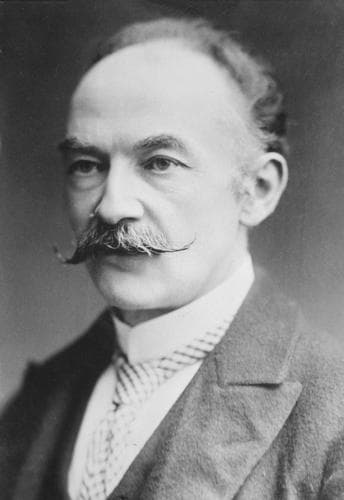
Thomas Hardy was an English novelist and poet. A Victorian realist in the tradition of George Eliot, he was influenced both in his novels and in his poetry by Romanticism, including the poetry of William Wordsworth. He was highly critical of much in Victorian society, especially on the declining status of rural people in Britain, such as those from his native South West England.







