“I am not going to do anything. I am just going to stand here and let it happen.”
— Pippin's thoughts as Minas Tirith is about to be attacked.

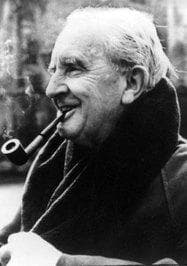
J.R.R. Tolkien (1955)
Genre
Fantasy
Reading Time
10-12 hours
Key Themes
See below
Sign in to track this book
As the Shadow covers Middle-earth, kings rise and fall, loyalties are tested, and an age ends to begin the rule of Men, leaving a bittersweet victory and unavoidable change.
The story begins with Gandalf and Pippin arriving in Minas Tirith, Gondor's capital, after their journey from Isengard. Pippin, still affected by seeing into the palantír, offers his service to Denethor, the Steward of Gondor. Pippin mistakenly believes Denethor's son, Boromir, died protecting him. Denethor, a proud and increasingly hopeless man, accepts Pippin, though he focuses on the threat from Mordor. The city's defenses are being prepared, but a sense of dread fills the air as the Nazgûl's presence grows and Sauron's armies gather on the Pelennor Fields, signaling the coming siege.
King Théoden of Rohan, with Merry Brandybuck secretly riding with Éowyn, leads his army to Minas Tirith. They travel through the Drúadan Forest, guided by the Wild Men, to avoid Sauron's spies. Théoden knows the odds are against them but is determined to honor his promise to Gondor. As they leave the forest at dawn, they see the horror of the siege, with the Pelennor Fields covered in Orcs and Easterlings, and Minas Tirith under attack. With a powerful cry, Théoden leads the charge, breaking the siege lines and bringing hope to the trapped defenders, though at a great cost.
The Battle of the Pelennor Fields rages fiercely. The Rohirrim, led by King Théoden, initially turn the battle against the Orcs and Easterlings. But the Witch-king of Angmar, Lord of the Nazgûl, comes to the battlefield. He badly wounds Théoden. Éowyn, disguised as a male warrior named Dernhelm, confronts him. With help from Merry Brandybuck's enchanted blade, Éowyn fulfills the prophecy that no 'man' will slay the Witch-king, defeating him. Despite this win, the battle remains grim, with many dead on both sides, and Mordor's forces seem endless. Aragorn's arrival with the Army of the Dead changes the battle's course.
While the battle is happening, Aragorn, Legolas, Gimli, and the Grey Company travel through the Paths of the Dead to summon the Oathbreakers. These ghost warriors, cursed to wander until they fulfilled their oath to fight for the King of Gondor, pledge loyalty to Aragorn, who is the true heir. They attack the Black Ships in the Anduin, which were bringing reinforcements for Mordor, defeating the Corsairs of Umbar and scaring the enemy. Aragorn then frees the Oathbreakers from their curse and leads his forces, now joined by men from southern Gondor, to the Pelennor Fields, arriving at a critical moment to complete the defeat of Sauron's armies.
Amid the chaos of the siege, Denethor, the Steward of Gondor, falls deeper into despair. This is made worse by his use of the palantír, through which Sauron has shown him false visions of hopelessness. Believing Faramir to be dying and Gondor doomed, he prepares a funeral pyre, planning to burn himself and his son alive. Pippin, horrified, alerts Gandalf, who intervenes. Gandalf rescues Faramir, who is gravely ill but not dead, but cannot stop Denethor from burning himself. Denethor's end shows the destructive power of despair and Sauron's psychological war, leaving Gondor without its Steward in its darkest hour.
After the win at the Pelennor Fields, Gandalf, Aragorn, and the other Captains of the West know that their victory is incomplete as long as Sauron focuses on the Ring-bearer. To give Frodo and Sam a chance to complete their quest, they decide to march on the Black Gate of Mordor with a small, defiant army. This desperate plan is meant to draw Sauron's attention away from the Ring and make him believe the Ring is being openly challenged. Though they know they face overwhelming odds, they choose to make a final stand, hoping to gain time for Frodo to destroy the One Ring in Mount Doom.
Meanwhile, Frodo and Sam continue their difficult journey across the desolate, ash-covered plains of Mordor towards Mount Doom. The landscape is a hellish wasteland, and their supplies quickly run out. Frodo is increasingly weakened by the Ring's influence, its weight and power becoming an unbearable burden. Sam remains his loyal companion, encouraging him, carrying him when needed, and enduring his own hardships with great strength. They meet Orcs, face constant watch from Sauron's Eye, and battle hunger and thirst, pushing their physical and mental limits in their mission to destroy the One Ring.
The Captains of the West, with their small army, arrive at the Black Gate. The Mouth of Sauron, a corrupted Black Númenórean, comes out to talk. He tries to break their spirit by showing Frodo's mithril shirt and claiming he is captured. Gandalf rejects his lies, and the battle begins. Sauron's vast armies pour from the gate, outnumbering the forces of the West many times over. The heroes fight with courage, knowing their stand is a diversion, a sacrifice to allow Frodo to complete his mission. Their defiance draws Sauron's full attention, just as planned.
Frodo and Sam finally reach the Cracks of Doom inside Mount Doom. At the very edge of the fiery chasm, Frodo gives in to the Ring's power, unable to destroy it, and claims it for himself, putting it on his finger. At this moment, Gollum, who has been following them, attacks Frodo. In a struggle, Gollum bites off Frodo's finger, getting the Ring back. In his joy, Gollum dances on the edge and accidentally falls into the fiery chasm, taking the One Ring with him. The Ring is destroyed, and with it, Sauron's power collapses, sending shockwaves across Middle-earth.
With the One Ring destroyed, Sauron's power is completely broken. The Black Gate crumbles, Barad-dûr collapses, and the Nazgûl are consumed by the fires of Mount Doom. The Orcs and other creatures of Sauron's army are left without a leader and scatter in fear, many dying in the chaos. At the Black Gate, the remaining forces of the West are surprised as Sauron's power disappears. Gandalf, realizing Frodo and Sam are still on Mount Doom, calls the Great Eagles. Led by Gwaihir, the Eagles rescue the two hobbits from the erupting volcano, bringing them back to safety and celebration.
After Sauron's defeat, the injured heroes recover in Minas Tirith. Aragorn, now known as the heir of Isildur, is crowned King Elessar of the Reunited Kingdom of Gondor and Arnor. His coronation marks the end of the Third Age and the start of the Age of Men. He marries Arwen Evenstar, daughter of Elrond, symbolizing the joining of Elves and Men and the renewal of the ancient line. The ceremony is a moment of great joy and hope, showing peace and the promise of a brighter future for Middle-earth under a just king.
The four hobbits—Frodo, Sam, Merry, and Pippin—return to the Shire, expecting peace. Instead, they find their home ruined and controlled by Saruman, now called 'Sharkey,' and his ruffians, who have industrialized and exploited the land. The hobbits, having gained courage and wisdom from their adventures, cannot stand by. Led by Merry and Pippin, who use their military training, and with Sam's determination, the hobbits gather their people and lead a rebellion against Saruman's forces in the Battle of Bywater. They successfully drive out the ruffians and restore order to the Shire.
After the Battle of Bywater, Saruman and Wormtongue are confronted. Saruman, stripped of his power, tries one last act of malice before Wormtongue fatally stabs him. Wormtongue is then killed by hobbit archers. With Saruman gone, the hobbits begin the long process of healing their Shire. Samwise Gamgee uses the magical earth given to him by Galadriel to restore the ravaged land, bringing new life to the trees and fields. The Shire slowly recovers, showing the strength of nature and its inhabitants, though the scars of Saruman's occupation remain.
Years after the war, Frodo, still bearing the deep spiritual and physical wounds from the Ring, finds little peace in the restored Shire. He, along with Bilbo, Gandalf, Elrond, and Galadriel, travels to the Grey Havens. From there, they take a ship to the Undying Lands, a realm beyond the world, where Frodo hopes to find healing for his suffering. This departure marks the final fading of the Elves' direct influence in Middle-earth and the end of the Third Age, leaving the world to Men and the other mortal races. Sam, Merry, and Pippin say goodbye, recognizing the end of an era.
The Protagonist
Frodo begins as a reluctant hero and ends as a profoundly wounded one, forever changed by his ordeal, ultimately seeking peace in the Undying Lands.
The Protagonist/Loyal Companion
Sam evolves from a simple gardener into a true hero, demonstrating profound courage and leadership, eventually becoming a respected figure in the Shire.
The Protagonist
Aragorn embraces his destiny as King of the Reunited Kingdom, moving from a wandering ranger to a wise and just monarch, ushering in a new age for Men.
The Supporting/Mentor
Gandalf transforms from Grey to White, symbolizing his increased power and authority, ultimately completing his mission and departing Middle-earth.
The Supporting
Pippin develops from a naive, mischievous hobbit into a courageous and responsible warrior and leader, earning respect and becoming Thain of the Shire.
The Supporting
Merry transforms from a clever but sheltered hobbit into a seasoned warrior and respected leader, earning the title Knight of the Mark and playing a pivotal role in the Scouring of the Shire.
The Supporting
Éowyn overcomes despair and societal constraints to achieve glory in battle, then finds true fulfillment in healing and love, rather than the warrior's path she once sought.
The Antagonist (of a sort)
Denethor descends from a proud and capable ruler into profound despair and madness, culminating in his suicide, a stark contrast to Aragorn's hopeful leadership.
The Antagonist
Sauron's power grows throughout the Third Age, culminating in his final, absolute defeat with the destruction of the One Ring, ending his reign permanently.
The Supporting/Antagonist
Gollum's long, wretched existence culminates in his accidental destruction of the One Ring, achieving his desire to possess it for a moment before his demise, fulfilling his fated role.
The Supporting
Faramir endures his father's disapproval to prove his worth and integrity, surviving near-death to become Prince of Ithilien and husband to Éowyn.
The One Ring is the main symbol of power's corrupting influence. It does not just tempt but changes the desires and wills of its bearers and those who want it. Frodo, the Ring-bearer, becomes weaker and more tormented by its presence, eventually giving in at the Cracks of Doom, unable to willingly destroy it. Denethor's despair is made worse by Sauron's manipulation through the palantír, a lesser form of the Ring's influence, driving him to madness and suicide. Even Saruman's fall is due to his desire for power, mirroring the Ring's appeal. The story shows that even good intentions can be twisted by the pursuit or possession of power, highlighting the danger of unchecked authority.
“Despair is for those who see the end beyond all doubt. We do not.”
This theme is a constant struggle, especially clear in the siege of Minas Tirith. Denethor's tragic fall into madness and suicide is a direct result of giving in to despair, fueled by Sauron's lies and his own pride. In contrast, characters like Gandalf, Aragorn, and Samwise Gamgee always show hope, even when facing overwhelming odds. Gandalf rallies the defenders of Minas Tirith, reminding them that 'Despair is for those who see the end beyond all doubt.' Sam's steady optimism and support for Frodo, even in Mordor, are key to keeping Frodo from giving up. The decision to march on the Black Gate, a seemingly suicidal act, comes from a desperate hope to gain time for Frodo.
“There's some good in this world, Mr. Frodo, and it's worth fighting for.”
The book explores different kinds of heroism, going beyond traditional warrior types. Frodo and Sam's quiet endurance and self-sacrifice on their lonely quest show a different kind of heroism, one focused on humility and persistence rather than glory. Aragorn is an example of the ideal king: one who serves his people, shows compassion, and uses authority with wisdom and justice, contrasting sharply with Denethor's autocratic and despairing rule. Merry and Pippin's growth from naive hobbits to courageous warriors and leaders also shows personal development as heroism. The story suggests that true leadership is about inspiring hope and uniting people, not just wielding power or military might.
“I am a servant of the Secret Fire, wielder of the flame of Anor. You cannot pass!”
The Return of the King clearly marks the end of the Third Age of Middle-earth and the start of the Age of Men. The departure of the Elves, Gandalf, and Frodo to the Undying Lands means magic and ancient races are leaving the world, leaving it to the rule of Men. Aragorn's coronation as King Elessar symbolizes this change, as he establishes the Reunited Kingdom, blending the past's legacy with the promise of a future shaped by mortals. The Scouring of the Shire further emphasizes this theme; even in their peaceful homeland, the hobbits must fight to reclaim their land and begin a new, self-reliant era free from outside threats, but also without the ancient protectors.
“The long-expected feast. The end of the journey.”
The strong bond between Frodo and Sam is a foundation of the entire story, especially in the difficult journey through Mordor. Sam's loyalty, selflessness, and steady support are repeatedly shown to be the only thing that keeps Frodo going when the Ring's burden becomes too great. Similarly, the friendships formed within the Fellowship—between Aragorn, Legolas, and Gimli; between Merry and Pippin; and the broader camaraderie among the free peoples—are crucial for their survival and victory. These relationships provide emotional strength, practical help, and a reason to fight, showing that even against great evil, unity and mutual devotion can win.
“I can't carry it for you, but I can carry you!”
A seeing-stone used for communication and surveillance, but also deception.
The palantír is an ancient, magical seeing-stone, one of several crafted by the Elves. In 'The Return of the King,' it is primarily used by Denethor, the Steward of Gondor. While it allows him to see distant events and communicate, Sauron has managed to master the palantír of Minas Tirith (or a related one) and uses it to feed Denethor distorted, despair-inducing visions of Sauron's overwhelming power. This manipulation directly contributes to Denethor's madness and ultimately his tragic suicide, making the palantír a device of psychological warfare and a symbol of unchecked curiosity and pride leading to ruin.
A perilous mountain pass leading to the Army of the Dead.
The Paths of the Dead is a haunted, underground passage beneath the White Mountains, forbidden to mortals. It serves as a crucial plot device for Aragorn to gather the Army of the Dead, the Oathbreakers, who are cursed to remain as spirits until they fulfill their ancient vow to fight for the King of Gondor. Aragorn's courage in traversing this terrifying path and his claim to the throne, which allows him to command the spectral army, is a pivotal moment in establishing his legitimacy and power. The Army of the Dead's intervention at the Battle of the Pelennor Fields is a decisive turning point, enabling the forces of good to overcome Sauron's reinforcements.
The port from which Elves and Ring-bearers depart Middle-earth.
The Grey Havens is a significant geographical and symbolic location at the westernmost edge of Middle-earth. It serves as the final departure point for the Elves who are leaving Middle-earth for the Undying Lands, and also for Frodo and Bilbo, who, as Ring-bearers, are granted passage there to find healing from their profound wounds. As a plot device, it signifies the 'fading' of magic and ancient races from Middle-earth, marking the definitive end of the Third Age and the transition to the Age of Men. It provides a poignant and bittersweet conclusion for many characters, offering a sense of peace and closure for those who have borne great burdens.
A small crystal phial containing the light of Eärendil's star.
The Phial of Galadriel is a magical artifact gifted to Frodo by the Lady of Lothlórien. It contains the captured light of Eärendil's star, which is actually a Silmaril. This phial serves as a beacon of hope and a weapon against darkness, particularly in the darkest parts of Mordor. Frodo uses it to ward off Shelob and to navigate the shadows. It provides physical light and also acts as a symbol of the enduring good in the world, bolstering Frodo's spirit when he is at his lowest. Its power is derived from its pure, ancient light, which is anathema to the creatures of darkness.
“I am not going to do anything. I am just going to stand here and let it happen.”
— Pippin's thoughts as Minas Tirith is about to be attacked.
“No, my lord, I am a man, and men are not easily daunted.”
— Éowyn confronts the Witch-king of Angmar on the Pelennor Fields.
“The board is set, and the pieces are moving.”
— Gandalf speaks of the escalating war and the forces at play.
“Forth, and fear no darkness! Arise! Arise, Riders of Théoden! Spears shall be shaken, shields shall be splintered, a sword-day, a red day, ere the sun rises! Ride now, ride now, ride! Ride to ruin and the world's ending!”
— King Théoden's inspiring speech before the charge of the Rohirrim.
“Despair, or folly? It is not despair, for despair is only for those who see the end beyond all doubt. We do not.”
— Aragorn discusses their plan to march on the Black Gate.
“I will not say, do not weep; for not all tears are an evil.”
— Gandalf comforts the Hobbits after the War of the Ring.
“But no, my Lord, not yet. Not yet. I have a task to do.”
— Samwise Gamgee's determination to continue carrying the Ring.
“It must be done, but it is a dreadful thing to do.”
— Frodo's reflection on the burden of the Ring.
“A day may come when the courage of men fails, when we forsake our friends and break all bonds of fellowship, but it is not this day.”
— Aragorn rallies his troops before the final battle at the Black Gate.
“The Ring has awoken; it stirs and it is eager to return to its Master.”
— Gandalf explains the Ring's increasing power and influence.
“But no, Sam, it is not a dream. This is happening.”
— Frodo reassures Sam as they approach Mount Doom.
“Small hands do them because they must.”
— Gandalf acknowledges the unexpected role of the Hobbits.
“And the Grey Ship, it came, and it bore them away, out into the West, to the Havens of the Elves, and beyond the circles of the world.”
— The departure of Frodo, Gandalf, and others from Middle-earth.
“I am glad that you are here with me. Here at the end of all things, Sam.”
— Frodo speaks to Sam near the Cracks of Doom.
Ready to see how well you understood this book? Take our interactive quiz with 10 questions.
Biography coming soon.







