“The dead, he knew, often had more to say than the living.”
— Gabriel contemplating his work as an anatomist.

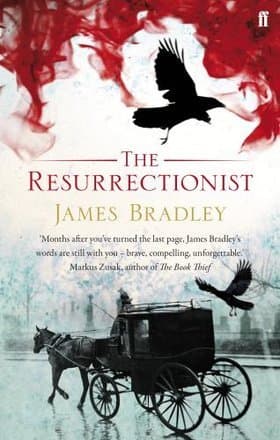
James Bradley (2008)
Genre
Thriller / Historical Fiction / Mystery
Reading Time
704 min
Key Themes
See below
Sign in to track this book
In 1826 London, a young anatomist's ambition to study cadavers pulls him into a corrupt world of body snatchers and murder, where the line between life and death blurs with every stolen corpse.
In 1826, Gabriel Swift, a young man burdened by his father's failures, travels to London to apprentice under the anatomist, Mr. Edwin Poll, at St. Bartholomew's Hospital. Gabriel hopes to escape his past and make a name for himself in medicine. His initial excitement is soon dampened by the harsh realities of anatomical study, especially the need for cadavers. He sees the brutal efficiency of the resurrectionists, men who dig up fresh graves to supply dissection tables. Gabriel is both intrigued and repulsed by Lucan, a powerful figure who controls the illegal body trade and rivals Mr. Poll's more 'respectable' but equally demanding methods of acquisition.
Gabriel struggles with the conflict between scientific pursuit and the moral issues of getting bodies. His growing interest in Lucan and the resurrectionists' methods leads him to question Mr. Poll's strict rules and the hypocrisy of the medical establishment. During a tense argument, Gabriel challenges Poll's methods and his dismissal of the resurrectionists, leading to his sudden dismissal from Poll's training. Cast out and alone in London, Gabriel has nowhere to go, his dreams of a medical career seemingly shattered. This dismissal pushes him deeper into the dark, criminal underworld he had only glimpsed.
With no other options, Gabriel reluctantly seeks out Lucan and, against his better judgment, joins his crew of resurrectionists. He quickly learns the brutal trade of grave robbing, participating in nightly raids on London's cemeteries. Gabriel faces the physical and moral squalor of this life, seeing firsthand the desperation and violence behind the illegal trade. He struggles with the ethics of desecrating graves, but also becomes skilled at the work, his initial disgust slowly turning into a practical understanding of survival in this harsh world. Lucan, in turn, seems to take a special interest in Gabriel, seeing more in him than just muscle.
As Gabriel becomes more involved in Lucan's world, a disturbing pattern appears: reports of missing women, especially those from poorer areas and prostitutes, begin to circulate. Authorities initially dismiss these disappearances as runaways or chance, but their increasing frequency alarms the underworld. Gabriel notices that some of the bodies Lucan's network acquires seem suspiciously fresh, almost too perfect, lacking the usual signs of decay found in exhumed bodies. This difference creates a growing unease in Gabriel, suggesting that the resurrectionists' activities might extend beyond grave robbing into something more sinister.
Driven by his unease, Gabriel begins to investigate the source of the suspiciously fresh cadavers. He watches Lucan's operations more closely, observing his secret dealings and the unusual methods used by certain crew members. Gabriel eventually finds clear evidence that some bodies supplied to anatomists, including possibly Mr. Poll, are not exhumed but are recent murder victims. This horrifying realization confirms his worst fears: Lucan's network, or at least a part of it, has moved from grave robbing to killing to meet the demand for fresh anatomical specimens, blurring the line between resurrectionist and murderer.
Armed with his discovery, Gabriel confronts Lucan, accusing him of arranging or allowing the murders. The confrontation is tense, showing Lucan's pragmatic ruthlessness and complex moral code. Lucan, without directly admitting guilt, does not deny the implications, instead challenging Gabriel's innocence about their trade and science's demands. This confrontation separates Gabriel from Lucan, making him a dangerous liability. Feeling betrayed and fearing for his life, Gabriel realizes he is in great danger within the organization he joined, as his knowledge threatens to expose a truth that could destroy Lucan's empire and involve the anatomists.
Realizing the danger, Gabriel, despite their earlier conflict, turns to Mr. Poll for help. He presents his evidence and suspicions about Lucan's involvement in the murders. Poll, initially doubtful, is forced to consider the possibility that his own pursuit of anatomical knowledge might have unintentionally fueled a murderous operation. The alliance is uneasy, strained by their past disagreements and Poll's own complex relationship with the resurrectionists, but the seriousness of the situation makes them work together. They begin to plan how to expose Lucan and bring the murderers to justice, knowing the immense risks.
Working secretly, Gabriel and Poll meticulously gather more evidence, using Gabriel's inside knowledge of Lucan's network and Poll's understanding of the anatomical trade. They investigate the identities of the missing women and trace the body supply chain, looking for patterns. Their investigation leads them to identify specific individuals within Lucan's crew who are directly involved in the murders, operating with Lucan's quiet approval or perhaps under his direct command. They create a dangerous plan to expose the murderers, setting a trap that requires Gabriel to put himself in great danger, using his position within the resurrectionist network.
The trap is set, drawing Lucan and his murderous associates into a decisive confrontation. The climax unfolds in a tense and violent sequence as Gabriel and Poll's plan comes to fruition. The truth about the murdered women is revealed, exposing the horrific extent of the body-snatching ring. A brutal struggle follows, where lives are lost and the moral lines become dangerously blurred. Gabriel must make difficult choices, facing not only Lucan but also the dark parts of his own character shaped by the London underworld. The events lead to the dramatic fall of Lucan's empire, though not without significant cost.
After the violent climax and the exposure of the murderous resurrectionists, London faces the shocking truth. The medical community comes under intense scrutiny, and the demand for anatomical specimens is forever tarnished. Gabriel, having survived, is deeply changed by his experiences. He reflects on the moral compromises he made, the horrors he saw, and the true cost of seeking knowledge at any price. While justice may have been served, Gabriel is left with a deep understanding of the darkness that can exist beneath progress and civility, forever marked by his descent into London's underworld and his part in its grim realities.
The Protagonist
Gabriel transforms from an idealistic, somewhat naive student into a hardened, morally complex individual who has witnessed and participated in the darkest aspects of humanity, ultimately choosing to fight for justice.
The Antagonist
Lucan's ambition and amoral pragmatism lead him from controlling the grave-robbing trade to orchestrating murders for profit, culminating in his downfall as his crimes are exposed.
The Supporting
Poll initially represents the hypocrisy of the scientific elite, but is eventually forced to acknowledge and confront the horrific consequences of his demands for anatomical specimens, becoming an uneasy ally to Gabriel.
The Supporting
Mary serves as a tragic symbol of the vulnerable victims of Lucan's murderous enterprise, her fate catalyzing Gabriel's investigation and moral awakening.
The Supporting
The Pikeman remains a consistently brutal and unrepentant character, serving as an instrument of violence for Lucan and a representation of the underworld's depravity.
The Mentioned
Remains a static background influence, representing Gabriel's familial pressure and past.
The Mentioned
Remains a static background influence, representing the past and a cautionary tale for Gabriel.
The novel explores the ethical compromises made for scientific advancement, especially in anatomy. The demand for fresh cadavers by anatomists like Mr. Poll drives the illegal trade of resurrectionists, pushing figures like Lucan to increasingly dark extremes. Gabriel's story shows how the pursuit of knowledge can blind people to moral atrocities, demonstrating that scientific 'progress' often comes at a horrifying human cost, especially to society's most vulnerable. The clean dissection tables are far removed from the brutal reality of the grave or murder scene.
“What price, knowledge? What price, the understanding of the human body, if it is bought with the desecration of the dead, or worse, the taking of the living?”
The story blurs the lines between good and evil, showing a London where almost everyone is compromised. Gabriel, initially idealistic, finds himself participating in grave robbing, blurring his own moral compass. Mr. Poll, the respected anatomist, is involved through his demand for bodies, while Lucan embodies the pragmatic, amoral nature of survival in the underworld. The novel suggests that corruption is not just an act, but a widespread atmosphere, where the desperation of the poor meets the detached ambition of the powerful, creating a system where life itself becomes a commodity. The pursuit of 'clean' science is shown to rely on 'dirty' methods.
“In London, everything was for sale, and the soul was often the cheapest commodity.”
The novel clearly shows the stark social divides of 19th-century London. The wealthy and educated, like Mr. Poll, benefit from exploiting the poor, whose bodies, even in death, are not safe. The murder victims are consistently the most vulnerable — prostitutes and the impoverished, whose disappearances society easily overlooks because it undervalues their lives. This theme highlights how those at the bottom of the social hierarchy are expendable, serving as raw material for the advancement and profit of others, exposing the brutal class system that underlies the city's grim realities.
“The poor, it seemed, had no claim even to their own graves.”
Gabriel's journey is an exploration of identity. He arrives in London wanting to define himself through scientific achievement, but his entry into the underworld forces him to confront darker aspects of his character. He changes from a naive student into someone hardened by violence and moral compromise. His initial disgust for the resurrectionists gives way to a practical understanding, and he must ultimately decide whether to embrace the darkness or fight against it. His experiences strip away his innocent idealism, leaving him with a complex, scarred understanding of himself and the world.
“He had come to London seeking a future, but had found instead a past he never knew he possessed, a darkness within himself that mirrored the city's own.”
The constant demand for fresh cadavers drives the entire plot and moral conflict.
The 'fresh cadaver' acts as the central MacGuffin, though it's less an object to be found and more a constant, driving force. The insatiable need for anatomical specimens by medical schools and anatomists like Mr. Poll creates the market that Lucan's resurrectionists exploit. This demand is what pushes the narrative forward, escalating from grave robbing to murder. It forces characters like Gabriel to make moral compromises and ultimately exposes the dark underbelly of scientific progress. Without this constant, desperate need, the entire criminal enterprise would not exist, and the plot would not unfold.
Gabriel's initial idealism and Lucan's hardened pragmatism highlight their contrasting worldviews.
Gabriel Swift and Lucan serve as effective foil characters. Gabriel begins as an idealistic, if somewhat naive, medical student, representing a desire for respectable scientific knowledge. Lucan, on the other hand, is the embodiment of ruthless pragmatism and amoral survival in the underworld, providing the 'means' for science through illicit methods. Their contrasting worldviews and moral codes highlight the central conflict of the novel: the tension between ethical conduct and the relentless pursuit of knowledge. Gabriel's journey sees him grapple with Lucan's worldview, forcing him to confront the darkness that exists within and around him.
The grim, oppressive, and socially stratified city of London shapes the characters and plot.
19th-century London is not merely a backdrop but functions as a character itself. Its dark, fog-laden streets, crowded slums, and stark social stratification create an oppressive and dangerous atmosphere that profoundly influences the characters' actions and fates. The city's immense wealth alongside its desperate poverty provides the perfect breeding ground for the resurrectionist trade and the exploitation of the vulnerable. The labyrinthine alleyways, hidden dissecting rooms, and desolate graveyards are integral to the plot, reflecting the moral decay and hidden horrors that the characters navigate. The city's anonymity allows for crimes to go unpunished and its vastness swallows its victims.
“The dead, he knew, often had more to say than the living.”
— Gabriel contemplating his work as an anatomist.
“There was a darkness in the world, a hunger, and it fed on the innocent.”
— Reflecting on the nature of evil and the crimes being investigated.
“The mind was a labyrinth, and memory a flickering lamp within it.”
— Gabriel struggling with his own past and fragmented recollections.
“Every secret had its price, and some were paid in blood.”
— Considering the dangerous implications of uncovering hidden truths.
“He understood then that the past was never truly dead, merely sleeping.”
— A realization about the enduring impact of historical events.
“Fear was a powerful surgeon, cutting away all but the rawest instinct.”
— Describing the primal effects of extreme fear on human behavior.
“The truth, like a scalpel, could be both a tool for healing and a weapon for harm.”
— Musing on the dual nature of truth and its potential impact.
“London was a city built on secrets, its foundations laid with forgotten lives.”
— An observation on the hidden aspects and history of the city.
“To truly know something, he thought, you had to take it apart.”
— Gabriel's anatomist philosophy applied to understanding complex situations.
“Sometimes, the most monstrous acts were committed by the most ordinary men.”
— Reflecting on the banality of evil in the context of the crimes.
“The living often feared the dead more than they feared God.”
— An insight into the superstitions and anxieties of the era.
“He carried the weight of the past, a burden as heavy as any corpse.”
— Gabriel's personal struggle with his family history and guilt.
“There were shadows in every life, and some were long enough to swallow a man whole.”
— A metaphorical reflection on the darker aspects and hidden dangers in life.
“The line between madness and genius, like that between life and death, was often imperceptibly thin.”
— Contemplating the fine distinctions in human states of being.
“Silence, he found, could be the loudest confession of all.”
— Interpreting unspoken cues and the power of absence of words.
Ready to see how well you understood this book? Take our interactive quiz with 10 questions.

Biography coming soon.







