“Sometimes the greatest gifts are the ones we don’t even know we want.”
— Sorya reflecting on her life in the landfill and the unexpected lessons.

Camron Wright (2012)
Genre
Historical Fiction
Reading Time
360 min
Key Themes
See below
Sign in to track this book
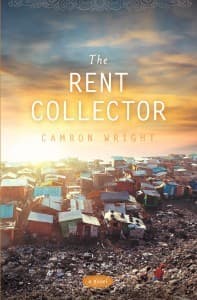
At a Cambodian trash dump, a mother's effort to save her sick son connects with a rent collector's past, opening a path to reading and new life.
Sang Ly and Ki Lim live a hard life at the Stung Meanchey dump in Phnom Penh, Cambodia. They collect recyclables to earn money for food and medicine for their infant son, Nisay, who has a mysterious illness. Their home is a small shack among mountains of trash, and their neighbors are other poor families doing the same. Each day is a fight against hunger, sickness, and the dump's bad smell. Sang Ly often thinks about how unfair their situation is, especially when she sees Nisay getting sicker. Their only hope is to earn enough for better medicine or a doctor, but there are few chances, and their income barely covers daily needs.
Sopeap, the strict rent collector, adds to Sang Ly's daily worries. Sopeap visits weekly and is known for her harsh manner and demands for payment for the small plots of land where the shacks stand. Sang Ly fears these meetings, especially when money is short, because Sopeap threatens to evict those who cannot pay. One week, Sang Ly struggles to get the rent, feeling the pressure of Sopeap's stern look and firm demands. The rent collector seems like another big problem in Sang Ly's already difficult life, offering no sympathy or understanding.
Nisay's health gets much worse, making Sang Ly feel more desperate. Their small earnings barely cover food and basic medicine, and the thought of losing her son pushes Sang Ly to take a big step. During Sopeap's next rent collection, Sang Ly, against her husband Ki Lim's advice, bravely approaches the woman. She asks not for rent, but for a loan to buy more effective medicine for Nisay. To Sang Ly's surprise, Sopeap does not refuse or scold her. Instead, Sopeap notices Sang Ly trying to read medicine labels. Sopeap then makes an offer: she will lend Sang Ly the money if Sang Ly agrees to learn to read.
Sang Ly, wanting to save Nisay, agrees to Sopeap's terms. Their lessons start in secret, often after the dump settles down for the day. Sopeap is a strict teacher, using an old, torn book. Sang Ly quickly realizes that Sopeap knows a lot about language and books, more than one would expect from a rent collector at Stung Meanchey. As Sang Ly struggles with the alphabet and simple words, Sopeap pushes her, often with harsh words, but there is a clear passion in Sopeap's teaching. Sang Ly's first reason to learn is for Nisay, but she slowly starts to enjoy learning itself.
As lessons continue, Sang Ly becomes more curious about Sopeap. Sopeap's refined speech, her knowledge of classic books, and her occasional hints of a different life all suggest a past far from the dump. Sang Ly starts to put together parts of Sopeap's history. She notices how Sopeap handles books with respect and how certain words bring out sadness in her. Sang Ly learns that Sopeap's real name is Srey Mom and that she was once a respected teacher and writer. The more Sang Ly learns to read, the more she can understand the clues Sopeap unintentionally leaves. This shows a woman who has experienced great loss and hardship, especially during the Khmer Rouge time.
Through personal talks, often prompted by what they read, Sang Ly eventually learns Sopeap's full sad story. Sopeap (Srey Mom) was separated from her son, Sarun, during the Khmer Rouge era. She has spent decades looking for him, believing he might still be alive. The dump, it turns out, is not just where she collects rent; it is where she looks for any sign of her son among the displaced. Her harsh manner is a defense, and her dedication to reading shows her own intellectual past and perhaps a way to connect with the memory of her son, whom she taught to read.
As Sang Ly's reading gets better and she learns more about Sopeap's story, their relationship changes a lot. The fear and dislike Sang Ly first felt for the rent collector turn into respect, understanding, and then a close friendship. Sopeap, in turn, starts to soften, showing more of her vulnerable side. They share dreams and fears. Sang Ly becomes not just a student, but a trusted friend and a source of comfort for Sopeap. Sang Ly's new ability to read helps her, not only in her own life but also in understanding Sopeap's pain, creating a strong bond between the two women.
Sang Ly's ability to read helps her understand Nisay's condition. She can now read medicine labels, research symptoms, and understand advice from a visiting medical volunteer. She learns that Nisay's illness is likely from the dump's dirty conditions and poor nutrition. With this knowledge, Sang Ly can make good choices about Nisay's care, using available resources with her new understanding. Slowly, Nisay starts to get better, growing stronger and healthier, showing Sang Ly's effort and the power of knowledge.
Because of Sopeap's strong hope, Sang Ly, Ki Lim, and Sopeap go to an orphanage outside the dump. They follow a small clue about a boy who might be Sarun. The visit is emotional. Sopeap looks closely at every child, searching for a familiar face. Sarun is not there, but Sopeap meets a boy named Lucky, who reminds her of her son. The experience is mixed, showing how hard her search is and the great loss she has carried. It also shows the many other children who suffered similar fates during that time.
Sopeap never finds her son Sarun, but she finds a different kind of peace and purpose. Inspired by Sang Ly's change and their friendship, Sopeap decides to teach the children of Stung Meanchey. She turns her small shack into a school, sharing her love of books and knowledge. Sang Ly becomes her assistant, helping to teach the next generation. The rent collector, once feared, becomes a source of hope and learning. Sang Ly, no longer defined by the dump, is a mother to a healthy Nisay and a teacher. Her life is changed by reading and an unexpected friendship.
The Protagonist
From an uneducated, desperate mother, Sang Ly evolves into a literate, empowered woman who finds hope and a new purpose in life.
The Supporting/Antagonist (initially)
Sopeap transforms from a bitter, isolated woman haunted by her past into a compassionate teacher who finds redemption and new purpose.
The Supporting
Remains a constant, supportive presence, adapting to the changes in Sang Ly's life and their family's prospects.
The Supporting
Begins as a sickly infant, whose improving health symbolizes the family's rising hope.
The Mentioned/Minor
A static character who serves as a symbol of lost children.
The Supporting
Remains a source of wisdom and stability in the dump community.
The Supporting/Collective
Their collective future improves with the establishment of the school.
The Mentioned
A static, unseen character whose memory fuels Sopeap's journey.
The main theme is how education can change lives. Sang Ly learns to read, which helps her save her son Nisay by letting her understand his medical needs. It also shows her a world beyond the dump. It helps her, gives her confidence, and leads to a new purpose as a teacher. Sopeap, a former teacher, finds healing and new meaning by sharing her knowledge. The book shows how reading can break cycles of poverty and lack of knowledge, offering hope and respect in difficult situations, as seen by the school at the dump.
“A book is a garden, an orchard, a storehouse, a party, a company by the way, a counselor, a multitude of counselors.”
Despite the harsh realities of life at the Stung Meanchey dump, the characters, especially Sang Ly, show great hope and strength. They face hunger, sickness, poverty, and loss, yet they keep working for a better future. Sang Ly's hope for Nisay's recovery drives her to learn. Sopeap's decades-long search for her son, even if it seems unlikely, shows her lasting hope. The community at the dump, though poor, finds ways to support each other and endure, showing how strong people can be even in desperate situations.
“Even in the dump, there is beauty. There is hope. There is a future.”
The idea of new beginnings is key to Sopeap's character. At first, she seems harsh. Her past as a respected teacher and mother is slowly revealed. Her choice to teach Sang Ly, and later the children of the dump, is an act of healing, letting her recover from her own pain and find new purpose. She changes from a person troubled by loss to a source of hope. Sang Ly's journey also offers a new beginning, as she rises above her circumstances and finds a life with meaning, showing that one's past does not have to decide one's future.
“Sometimes, the only way to find yourself is to get lost.”
The novel quietly but strongly explores the lasting effects of the Khmer Rouge time on Cambodia. Sopeap's past, especially losing her son Sarun and living as an educated person forced into hiding, is a direct result of this brutal period. The widespread poverty and the existence of places like the Stung Meanchey dump can be seen as continuing effects of the war, which destroyed infrastructure, education, and social structures. The search for lost family members and the shared trauma are constant themes, reminding readers of the history that shaped the characters' lives.
“The past is like a wound. You can try to ignore it, but it will fester.”
A significant theme is the unexpected friendship between Sang Ly and Sopeap. Despite their first difficult relationship and big differences, they form a close bond through shared vulnerability, mutual respect, and the act of teaching and learning. Their friendship goes beyond social barriers and personal histories, showing that connection can be found in surprising places and between different people. This bond becomes a source of strength, comfort, and change for both women.
“Some friendships are like that. Formed in fire. Forged in struggle.”
Stung Meanchey dump symbolizes the broader struggles of poverty and resilience.
The Stung Meanchey municipal waste dump serves as more than just a setting; it is a powerful symbol and a microcosm of the larger struggles faced by the Cambodian poor. It represents the harsh realities of extreme poverty, the cycle of scavenging for survival, and the constant threat of disease. Yet, within this grim environment, it also highlights human resilience, community, and the persistent search for hope. The dump's transformation, however slight, with the establishment of a school, mirrors the internal transformations of the characters and the potential for growth even in the most desolate places.
The act of learning to read drives the entire plot and character development.
Literacy is not merely a skill in 'The Rent Collector'; it is the central plot device that propels the narrative forward and enables the profound character development of Sang Ly. Sopeap's condition for the loan, that Sang Ly learns to read, sets the entire story in motion. Sang Ly's growing ability to read directly impacts Nisay's health, allows her to uncover Sopeap's past, and ultimately transforms her worldview. It is the key that unlocks secrets, fosters connections, and provides the means for a better future, making it the most significant catalyst for change in the book.
Sopeap guides Sang Ly, fostering mutual growth and transformation.
The dynamic between Sopeap as the mentor and Sang Ly as the protégé is a fundamental plot device. Sopeap's initial harshness slowly gives way to a nurturing, albeit strict, guidance, while Sang Ly's initial fear morphs into respect and affection. This relationship allows for the gradual revelation of Sopeap's past and the development of Sang Ly's character. Through their interactions, both women learn from each other, challenge each other, and ultimately transform. It is through this bond that the themes of education, redemption, and friendship are most powerfully explored.
Books represent knowledge, escape, and a connection to a lost past.
Books and stories hold significant symbolic weight in the novel. For Sang Ly, they initially represent the incomprehensible knowledge of the educated, then become a tool for survival, and finally, a source of profound joy and empowerment. For Sopeap, they are a tangible link to her past as a teacher and a way to keep the memory of her son, Sarun, alive. The stories within the books provide a means of escape from the harsh reality of the dump, offer universal truths, and facilitate a deeper understanding between the two women, symbolizing hope, wisdom, and enduring human culture.
“Sometimes the greatest gifts are the ones we don’t even know we want.”
— Sorya reflecting on her life in the landfill and the unexpected lessons.
“There are always two sides to every story, and sometimes, even more.”
— Grandmother speaking to Sorya about understanding people's motivations.
“Hope is a fragile thing, but it’s the only thing that keeps us going.”
— Sorya's internal thoughts during a particularly difficult time.
“A life without stories is like a sky without stars.”
— Ki Lim explaining the importance of storytelling.
“The greatest treasure isn’t what you find, but what you become.”
— Sorya's realization about her personal growth.
“Even in the darkest places, there can be light.”
— Sorya observing acts of kindness in the Stung Meanchey landfill.
“Learning is a treasure that will follow its owner everywhere.”
— Ki Lim encouraging Sorya to continue learning.
“Fear can be a powerful motivator, but love is stronger.”
— Sorya reflecting on her motivations to protect her child.
“Sometimes the most beautiful things grow in the most unexpected places.”
— Sorya observing a small flower amidst the refuse of the landfill.
“The past is a story we tell ourselves. The future is a story waiting to be written.”
— Ki Lim advising Sorya on moving forward from her past.
“It is not the place that defines the person, but the person who defines the place.”
— Sorya's internal monologue about her life in the landfill.
“Every person has a story worth hearing, if only we take the time to listen.”
— Ki Lim's philosophy on human connection.
“A good story can make you forget your hunger, your pain, even your fear.”
— Sorya experiencing the power of Ki Lim's storytelling.
“The greatest wealth is not in possessions, but in the love we share.”
— Sorya's ultimate realization about what truly matters.
Ready to see how well you understood this book? Take our interactive quiz with 10 questions.







