BookBrief
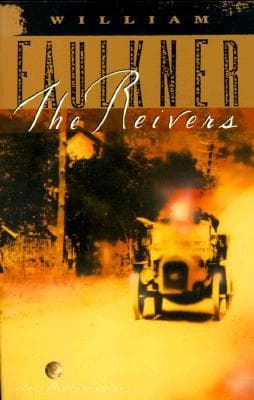
The Reivers cover
Archivist's Choice

The Reivers

William Faulkner (1962)

Genre

Literary Fiction / Historical Fiction

Reading Time

12 Minutes

Key Themes

See below

Track Your Reading

Sign in to track this book

Synopsis

In rural Mississippi in 1905, eleven-year-old Lucius Priest is convinced by his grandfather's hot-headed stableman, Boon Hogganbeck, to 'borrow' the family's prized yellow Winton Flyer automobile for a clandestine trip to Memphis. Unbeknownst to them, Ned McCaslin, the family's cunning Black coachman, stows away, transforming their joyride into a chaotic odyssey. Their destination: Miss Reba's infamous bordello, where Boon intends to visit his sweetheart, Corrie. What begins as a childish adventure quickly spirals into a series of comical misadventures involving horse trading, a stolen racehorse, a rigged race, and encounters with various eccentric characters, all while Lucius grapples with his burgeoning moral compass and the complexities of the adult world. The trio's escapade leads them through a series of escalating predicaments, including a swap of the Winton for a stolen racehorse named Coppermine, a bet on the horse's ability to win a local race, and various run-ins with the law and colorful locals. Lucius's innocence is challenged as he witnesses and participates in the schemes of Boon and Ned, forcing him to confront issues of honor, loyalty, and the blurry lines between right and wrong. The novel culminates in a frantic effort to return the car before Lucius's grandfather discovers its absence, leaving the boy with a profound, if sometimes bewildering, understanding of life's complexities.
Difficulty
Medium
Pacing
Moderate
Mood
Humorous, nostalgic, adventurous, reflective, poignant

Plot Summary

The Proposal

The story begins with an elderly Lucius Priest telling about a key event from his childhood. In 1905, eleven-year-old Lucius lives a sheltered life on his grandfather's Mississippi plantation. His grandfather, Boss Priest, has recently bought a new Winton Flyer automobile. Boon Hogganbeck, a temperamental but loyal family employee, is obsessed with the car and drives it often. When Boss Priest and Lucius's parents leave for a funeral, Boon sees a chance. He suggests to Lucius that they 'borrow' the car for a trip to Memphis, promising adventure and a visit to a woman named Miss Reba. Lucius, at first unsure, is swayed by Boon's charm and the appeal of the forbidden.

Ned's Intervention

As Boon and Lucius get ready for their secret trip, they find that Ned McCaslin, the Priests' clever black coachman, has hidden in the car. Ned, seeing the danger of their unsupervised adventure, insists on going with them, taking charge despite his lower position. His presence changes the dynamic, making Boon's reckless plan more controlled, though still risky. Ned's reasons are complex, driven by loyalty to the Priest family, a desire for personal gain, and a clear understanding of the world that Boon and Lucius lack. He quickly takes authority, annoying Boon and quietly relieving Lucius.

The Road to Memphis

The trip to Memphis has its problems. The Winton Flyer, new in rural Mississippi, draws attention, forcing the trio to navigate unfamiliar roads and social situations. They meet suspicious locals, deal with poor road conditions, and face the constant threat of being caught. Ned, with his street smarts, proves helpful, often outsmarting those who might stop them. Lucius, watching Ned's cleverness and Boon's impulsiveness, starts to lose his innocence, learning firsthand about the world's complexities beyond his upbringing. The car itself becomes a symbol of freedom and the modern age, but also a source of their trouble.

Arrival at Miss Reba's

In Memphis, Boon immediately takes them to Miss Reba's bordello, showing the real reason for his urgent trip. Lucius is introduced to a new world, full of the colorful characters who live there. Miss Reba, a strong but kind madam, looks after Lucius, providing some care amid the chaos. Boon reunites with his 'lady friend,' Miss Corrie, a prostitute with whom he has a difficult relationship. Ned, always practical, begins to check their money and the opportunities in this new place, already planning how to profit from their unusual situation.

The Horse Trade

Ned, realizing they are low on money and seeing an opportunity, makes a bold move: he trades the Winton Flyer for a run-down racehorse named Coppermine. This makes Boon furious and bewilders Lucius, as the car was their only way home and to avoid severe punishment. Ned, however, has a plan. He believes Coppermine, despite his looks, has hidden talent. Ned then arranges to enter Coppermine in a local horse race, betting their limited money and even the car's value (now the horse) against the odds. The stakes are high, as their future depends on Coppermine's performance.

The Race

The day of the race arrives, full of tension. Ned, using his knowledge of horses and people, uses tactics to give Coppermine the best chance to win. He manipulates the betting, distracts opponents, and even gets Lucius to ride Coppermine, believing the boy's innocence and small size will be an advantage. The race itself is exciting, with Coppermine, pushed by Ned's methods and Lucius's determined riding, performing better than expected. The race's outcome decides not only their money situation but also their ability to escape and return home.

Corrie's Honor

During the horse-racing drama, another conflict arises about Miss Corrie. A rival prostitute, Otis, tries to discredit Corrie, leading to a confrontation. Boon, protective of Corrie despite their difficult relationship, is provoked into a fight. Lucius, seeing the emotions and the defense of a woman's reputation, learns more about adult relationships and the code of honor that exists even in unconventional settings. The incident tests Boon's loyalty and shows the deep affection he has for Corrie, further complicating Lucius's simple view of morality.

The Deputy and the Jail

The actions of Boon, Ned, and Lucius, especially the horse-racing scheme and public fights, eventually get the attention of local police. A diligent deputy sheriff starts to investigate their unusual presence. Despite Ned's efforts to avoid being caught, the group is eventually arrested. They find themselves in a rural jail, a stark experience for Lucius, who has never faced the law directly. Their arrest forces them to confront the results of their actions and their difficult situation, far from the safety of Boss Priest.

Boss Priest's Arrival

Just when their situation seems worst, Boss Priest, informed of their location, arrives to get his grandson and the employees. His arrival marks the end of their adventure and the return to the plantation's structured world. Boss Priest, a man of firm principles, handles the situation with calm authority, negotiating their release and settling any debts. The reunion is a mix of relief and worry for Lucius, who knows he must face the consequences. Boon and Ned, though corrected, seem to have their own satisfaction from the escapade.

The Reckoning

Back at the plantation, Lucius is brought before his grandfather. Boss Priest, instead of simply punishing him, talks with Lucius about responsibility, morality, and the nature of good and bad. He explains that while Lucius broke a rule, he also learned valuable lessons about life, loyalty, and human nature. Boss Priest says that sometimes, breaking a rule is necessary to learn a deeper truth. Lucius thinks about his journey, the people he met, and the experiences that changed him from a sheltered boy into someone with a broader understanding of the world. The adventure, though forbidden, became a key part of his coming-of-age.

Principal Figures

Lucius Priest

The Protagonist

Lucius transforms from a sheltered, innocent boy into a more worldly, morally aware young man, gaining invaluable life experience.

Boon Hogganbeck

The Supporting

Boon remains largely static in his personality but demonstrates his capacity for loyalty and affection through his actions.

Ned McCaslin

The Supporting

Ned's actions drive much of the plot, consistently demonstrating his shrewdness and ability to adapt to complex situations.

Boss Priest

The Supporting

Boss Priest serves as the ultimate arbiter of morality and wisdom, providing the philosophical framework for Lucius's journey.

Miss Reba

The Supporting

Miss Reba provides a temporary, unconventional sanctuary for Lucius, demonstrating that kindness can be found in unexpected places.

Miss Corrie

The Supporting

Miss Corrie's character highlights themes of loyalty and the unexpected places where honor can be found.

Coppermine

The Supporting

Coppermine's journey from a discarded horse to a race winner symbolizes the unexpected turns of fate and the triumph of the underdog.

The Deputy

The Antagonist

The Deputy serves as an external force that brings the adventure to a halt, prompting the final reckoning.

Themes & Insights

Loss of Innocence and Coming of Age

A main theme is Lucius's change from an innocent boy to a young man who understands more about the world. His trip to Memphis exposes him to experiences beyond his privileged upbringing: bordellos, gambling, violence, and moral gray areas. He learns that the world is not simply black and white, and that good and bad can exist in unexpected places and people. This adventure, though illicit, is an unconventional education in the complexities of human nature and society.

A boy has to do what he has to do. And what he has to do, he does. And he learns from it.

Boss Priest

Freedom vs. Responsibility

The novel explores the conflict between wanting complete freedom and the unavoidable weight of responsibility. Boon's impulsive desire for freedom causes the initial act of stealing the car, but Ned's presence and later events constantly force the characters to face the results of their actions. Lucius, in particular, struggles with the responsibility of his involvement and the moral implications of their choices. The story suggests that true freedom is often tied to understanding and accepting one's duties.

There are some things a man must do for himself, else he ain't a man.

Ned McCaslin

The Nature of Morality and Honor

Faulkner examines the complex nature of morality, especially in a setting outside usual social norms. Characters like Miss Reba and Miss Corrie, though in 'immoral' professions, show their own codes of honor, loyalty, and kindness. Lucius sees how 'good' people can do questionable things, and 'bad' people can have admirable qualities. The story questions simple definitions of right and wrong, suggesting that true morality often comes from intent, loyalty, and the complex choices made in unclear situations.

There are things a man can do and be forgiven for, and there are things a man can do and not be forgiven for.

Boss Priest

Social Class and Race Relations in the Jim Crow South

Set in 1905, the novel shows the social classes and racial dynamics of the Jim Crow South. Ned McCaslin, as a black man, navigates a world of discrimination, yet he is often the most intelligent and capable of the group, subtly challenging racial expectations through his cleverness. While the white characters hold formal power, Ned often has practical control, showing the complex power dynamics that existed under the surface of Southern society.

They got the power, but we got the sense.

Ned McCaslin

The Allure and Perils of Modernity

The Winton Flyer automobile is a strong symbol of modernity entering a mostly farming society. It represents progress, freedom, and excitement, but also the potential for recklessness and disruption of traditional ways of life. The car's theft and subsequent adventures highlight both the liberating potential of new technologies and the dangers they pose when used by the irresponsible or the naive. It forces a clash between the old world (the plantation, horses) and the new (automobiles, urban life).

It was the only car in Yoknapatawpha County, and it was going to Memphis.

Narrator (Lucius)

Plot Devices & Literary Techniques

First-Person Retrospective Narration

An older Lucius reflects on his childhood adventure.

The story is narrated by an older, wiser Lucius Priest, looking back on his childhood adventure from the vantage point of many years. This allows for a blend of youthful innocence in the recounted events and mature reflection on their meaning and impact. The retrospective lens provides a layer of philosophical insight, as the narrator can comment on the lessons learned and the broader significance of his experiences, guiding the reader's understanding of the themes and character development. It also adds a nostalgic and somewhat elegiac tone to the narrative.

Picaresque Journey

A series of episodic adventures encountered during a road trip.

The novel employs a picaresque structure, where the plot unfolds as a series of loosely connected, often humorous, and adventurous episodes during the trio's journey. Each encounter—from the horse trade to the race, the bordello, and the jail—serves to expose Lucius to new facets of the world and challenge his understanding of morality and society. This episodic nature allows for a wide range of colorful characters and situations to be introduced, contributing to the comic and adventurous tone while collectively building towards Lucius's coming-of-age.

Symbolism of the Automobile

The Winton Flyer represents modernity, freedom, and temptation.

The Winton Flyer automobile is more than just a vehicle; it's a potent symbol. It represents the advent of modernity, the allure of the new, and the promise of freedom from the constraints of the old agrarian South. For Boon, it symbolizes personal liberty and a means to his desires. For Lucius, it is an object of forbidden temptation and a gateway to a world beyond his experience. Its theft and subsequent trade for a horse underscore the clash between tradition and progress, and the unexpected ways in which value and freedom can be redefined.

Foil Characters

Boon and Ned serve as contrasting guides for Lucius.

Boon Hogganbeck and Ned McCaslin act as foil characters, highlighting each other's traits and offering Lucius contrasting models of behavior and morality. Boon is impulsive, emotional, and driven by immediate gratification, representing a kind of childlike recklessness. Ned, in contrast, is shrewd, pragmatic, and resourceful, embodying a more mature, if ethically flexible, intelligence. Their differing approaches to problems and life itself provide Lucius with a comprehensive, if confusing, education in human nature, forcing him to discern his own moral compass amidst their conflicting influences.

Critical analysis

Notable Quotes

Quiz

Test Your Knowledge

Ready to see how well you understood this book? Take our interactive quiz with 10 questions.

10
Questions
~5
Minutes
?
Best Score

Key Questions (FAQ)

The Reivers is a picaresque novel by William Faulkner that follows the misadventures of three unlikely car thieves from rural Mississippi. An eleven-year-old boy, Lucius Priest, is persuaded by Boon Hogganbeck to steal his grandfather's car for a trip to Memphis, with the family's coachman, Ned McCaslin, joining them.

About the author

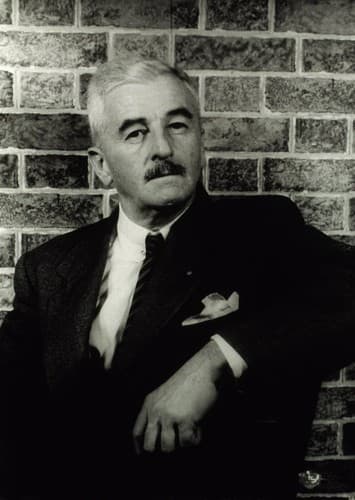
William Faulkner

William Cuthbert Faulkner was an American writer known for his novels and short stories set in the fictional Yoknapatawpha County, based on Lafayette County, Mississippi, where Faulkner spent most of his life. A Nobel laureate, Faulkner is one of the most celebrated writers of American literature and often is considered the greatest writer of Southern literature.