“Each of us is a world. Each of us is a universe.”
— Dinah reflecting on the individuality and depth of human experience, particularly women's.

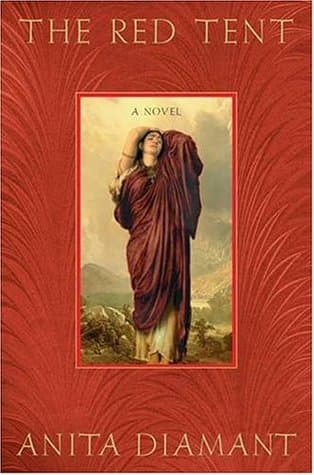
Anita Diamant (1997)
Genre
Historical Fiction / Spirituality
Reading Time
650 min
Key Themes
See below
Sign in to track this book
Through the voice of Dinah, Jacob's daughter, "The Red Tent" explores the intimate world of biblical women, revealing their sisterhood, spiritual traditions, and resilience in ancient Genesis.
Dinah, Jacob's only daughter, begins her story by introducing her four mothers: Leah, Rachel, Zilpah, and Bilhah. She describes their distinct personalities and the deep, complex love they share for Jacob, despite rivalries in their polygamous household. Dinah is born to Leah but is raised by all four women, spending her early years in their shared tent, learning their customs and stories. She recalls the sanctity of the 'red tent,' a special dwelling for women during menstruation and childbirth, where they share secrets, wisdom, and support, forming a strong bond. This environment shapes Dinah's understanding of womanhood and sisterhood.
As Dinah grows, she becomes part of the red tent, observing and participating in the rituals and daily life of her mothers and aunts. She learns about herbs, healing, and the sacredness of birth and death. Her mothers, especially Rachel, share wisdom about love, loss, and resilience. Dinah develops a special interest in midwifery, assisting her mothers and other clan women during labor. She witnesses the joy of new life and the sorrow of stillbirth, grounding her in the realities of ancient womanhood. These early years are filled with the warmth of female companionship, preparing her for a future she cannot yet foresee.
Jacob's family, including Dinah and her brothers, journeys to Shechem. There, they set up camp near the city, and Jacob begins to prosper. Dinah, now a young woman, ventures into the city and meets Shalem, the handsome prince of Shechem. Their connection is immediate and grows into deep love. Shalem, smitten with Dinah, proposes marriage, a union that promises to unite their two peoples. Dinah, happy and hopeful, accepts his proposal, imagining a future with him in Shechem, a future different from her family's nomadic life.
Prince Shalem's father, Hamor, the King of Shechem, approaches Jacob to formalize the marriage between Dinah and Shalem. Jacob's sons, especially Simeon and Levi, are deeply offended by what they see as dishonor to their sister. To their surprise, Jacob, swayed by the potential for peace and prosperity, agrees to the marriage. However, at his sons' urging, he sets a condition: all the men of Shechem must be circumcised as a sign of their commitment to Jacob's people. Hamor and Shalem, eager for the alliance and for Shalem's happiness, agree to this painful demand.
While the men of Shechem are recovering from their circumcisions, incapacitated by pain and fever, Simeon and Levi, driven by vengeance and a perceived insult to their family's honor, attack the unsuspecting city. They, along with their brothers, slaughter all the men of Shechem, including Hamor and Shalem, and plunder the city. Dinah, witnessing the bloodshed and the murder of her beloved husband, is devastated. Her world shatters, and she is left with deep grief and trauma, forever scarred by her brothers' violence.
After the massacre, Dinah is in shock and despair. Re-mose, Shalem's mother, rescues her and takes her away from her family. Despite her own grief, Re-mose sees Dinah as a victim and a beloved part of her son's life. Re-mose takes Dinah to Egypt, a place of refuge and new beginnings. In Egypt, Dinah is taken into Re-mose's household and slowly begins to heal from her trauma. This journey completely separates her from her birth family and the nomadic life she once knew, forcing her to adapt to a new culture and find a new purpose.
In Egypt, Dinah gradually finds her place. She dedicates herself to midwifery, a skill honed in the red tent of her youth. Her gentle touch, intuitive understanding of women's bodies, and knowledge of ancient remedies earn her respect among the women of Egypt. She forms deep friendships with other midwives and women, finding comfort and purpose in her work. She gives birth to a son, Bar-Shalem, the child of her beloved Shalem, and raises him in this new land, creating a new family and a new life for herself, far from the shadows of her past.
Years later in Egypt, Dinah is surprised to encounter Benia, a woman who was once a slave in her mother Rachel's household. Benia recognizes Dinah, and after initial hesitation, they rekindle their old bond. Benia becomes Dinah's loyal companion and assistant, sharing in her midwifery practice and offering a tangible link to her past. Their reunion gives Dinah a sense of connection to her origins and reinforces the lasting power of female relationships, even across vast distances and years of separation.
As Dinah continues her life in Egypt, she hears whispers of a powerful vizier, second only to Pharaoh, who speaks her people's language. To her astonishment, this vizier is her own brother, Joseph, whom her family believed to be dead. Their reunion is full of emotion. Joseph, unaware of the full horror of the Shechem massacre from Dinah's perspective, is surprised by her coldness. Dinah, however, confronts the memories of her past and the pain inflicted by her family, particularly her brothers, beginning the difficult process of coming to terms with her history.
When a famine brings her remaining brothers to Egypt seeking grain, Dinah, through Joseph, eventually confronts them. She recounts the trauma of Shechem, making them acknowledge the devastation they caused. While she never fully forgives Simeon and Levi for their direct actions, she finds some peace in their eventual remorse and the passage of time. She understands that her life in Egypt, though born from tragedy, has also been a blessing, allowing her to forge her own identity and purpose. Dinah ultimately finds solace in her son, her work, and the lasting strength of the red tent's legacy, choosing peace over bitterness.
The Protagonist
Dinah transforms from an innocent, beloved daughter into a traumatized survivor, eventually finding healing, independence, and a new sense of family and purpose in a foreign land.
The Supporting
Leah navigates the challenges of being a less-favored wife with quiet resilience, finding pride and purpose in her children.
The Supporting
Rachel endures the pain of infertility and rivalry, eventually finding joy in motherhood before her tragic death.
The Supporting
Zilpah maintains a quiet dignity and nurturing role within the family, providing steadfast support.
The Supporting
Bilhah maintains her spirited nature, contributing creativity and joy to the red tent while fulfilling her role as a mother.
The Supporting
Jacob remains largely consistent as a patriarchal figure, respected but ultimately flawed in his understanding and protection of Dinah.
The Supporting
Shalem's brief but impactful arc highlights the potential for love and inter-cultural understanding, tragically cut short by violence.
The Antagonist
Simeon remains largely unrepentant for his actions for many years, eventually showing a degree of remorse.
The Antagonist
Levi, like Simeon, endures the consequences of his violent actions, eventually showing some remorse.
The Supporting
Joseph undergoes a dramatic transformation from a naive, favored son to a powerful, forgiving leader, ultimately providing a bridge for Dinah to reconnect with her past.
The Supporting
Re-mose demonstrates profound compassion and resilience in the face of tragedy, becoming Dinah's steadfast guardian.
The novel explores sisterhood, especially through the 'red tent' where women gather during menstruation and childbirth. This space symbolizes shared wisdom, support, and strong bonds among women, overcoming rivalries. Dinah learns midwifery and the strength of female community from her mothers, aunts, and later, her fellow midwives in Egypt. The red tent provides emotional and practical support, contrasting sharply with the patriarchal world outside. It is a source of healing, knowledge, and identity for Dinah throughout her life, particularly after the trauma of Shechem.
“The red tent was the place where women were women, and not daughters or wives or mothers or sisters. We were simply ourselves, with our stories and our secrets, and the blood that bound us together.”
Dinah's life is marked by the trauma of the Shechem massacre, where her beloved husband, Shalem, is murdered by her own brothers. The novel details her grief, shock, and the long journey of healing. Her exile to Egypt, far from her family, provides the distance needed to process her pain. She finds solace and purpose in her work as a midwife, helping other women bring life into the world, which serves as a form of personal redemption. Her eventual, though partial, reconciliation with her past illustrates the complex nature of healing.
“Grief is a house that has no doors. You can walk through the walls, but you are still inside.”
Despite living in a patriarchal society where women's lives are often controlled by men, the novel highlights the power and resilience of its female characters. Dinah's mothers, though bound by Jacob, create their own world of strength and support in the red tent. Dinah herself, after suffering unimaginable loss, rebuilds her life and becomes a respected, independent midwife. The women's knowledge of herbs, healing, and birth gives them authority and agency within their sphere, showing that power can exist in many forms beyond overt political or military might. They adapt, survive, and thrive, often facing adversity.
“We are the daughters of the moon, and the moon is forever changing, but she is never diminished.”
A central theme is the reinterpretation of a brief, violent biblical account (Dinah's story in Genesis 34) from a female perspective. The novel gives voice to Dinah, who is largely silent in the Bible, and humanizes the women around Jacob. It challenges traditional, male-centric biblical narratives by focusing on the inner lives, relationships, and contributions of women, particularly their spiritual and practical roles. This re-framing offers a richer, more empathetic understanding of ancient life and the complexities of human experience often overlooked in historical texts.
“I will not be a footnote in a man's story. I will tell my own.”
The theme of motherhood and the continuity of female lineage is central. Dinah's identity is deeply connected to her four mothers, who collectively raise her and pass down their wisdom, stories, and skills, especially midwifery. The novel emphasizes the sacredness of birth and the strong bond between mother and child. Dinah's own journey to motherhood with Bar-Shalem, and her role in assisting countless other women, strengthens her connection to this ancient, powerful lineage of women who bring forth and nurture life. It highlights the lasting cycle of life and the transmission of knowledge through generations of women.
“The memory of my mothers, their hands on my belly, their songs in my ears, was a river that flowed through me.”
The entire story is told from Dinah's subjective perspective.
This device is crucial as it allows the reader to experience the story through the eyes of a character marginalized in the biblical account. By giving Dinah her own voice, the novel provides an intimate, emotional, and female-centric reinterpretation of historical events. It enables deep empathy for Dinah's joys, traumas, and reflections, making her experiences vivid and personal, and challenging traditional, male-dominated interpretations of biblical history.
A physical and symbolic space for women's rituals and community.
The red tent functions as a powerful symbol of female sanctuary, sisterhood, and shared wisdom. It is a physical place where women retreat during menstruation and childbirth, but also represents a spiritual and emotional haven from the patriarchal world. It symbolizes the sacredness of female cycles, the transmission of generational knowledge (especially midwifery), and the unbreakable bonds among women. Its presence or absence in Dinah's life reflects her connection to her female lineage and her own identity.
Subtle hints or warnings about future events, particularly the Shechem tragedy.
The novel uses subtle foreshadowing, often through the mothers' cautious warnings or Dinah's own intuitive feelings, to build tension towards the inevitable tragedy in Shechem. For instance, the mothers' initial reluctance for Dinah to venture into the city, or their unease about the proposed marriage, hints at the dangers that lie ahead. This device creates a sense of impending doom and heightens the emotional impact when the massacre finally occurs, making the reader acutely aware of the fragility of peace.
Dinah recounts past events from a later point in her life.
The entire narrative is a long reminiscence by an older Dinah, looking back on her life. This allows for a reflective tone, where the narrator can comment on past events with the wisdom of hindsight. It enables Dinah to process her trauma, understand the motivations of others (including her brothers), and articulate the lessons she learned. This narrative structure adds depth to her character and provides a framework for her journey of healing and reconciliation.
Direct engagement with and reinterpretation of biblical texts.
The novel is built upon the biblical story of Dinah and Jacob's family from the Book of Genesis. This device involves taking a known, albeit brief, biblical narrative and expanding upon it, filling in gaps, and offering a new perspective. Diamant uses intertextuality to challenge traditional interpretations, give voice to the voiceless characters, and explore the social and cultural contexts of biblical women, inviting readers to reconsider familiar stories through a fresh, feminist lens.
“Each of us is a world. Each of us is a universe.”
— Dinah reflecting on the individuality and depth of human experience, particularly women's.
“The world is not a place of all good or all bad. It is a place of both.”
— Dinah's understanding of the complexities and dualities of life, learned through experience.
“Every woman’s heart is a world, and every man’s too. There is no one way to love or to grieve.”
— Reflecting on the unique emotional landscapes of individuals, especially regarding love and loss.
“We are women, and we are not afraid. We are strong, and we are not alone.”
— A declaration of solidarity and strength among women, particularly within the red tent.
“A woman's blood is not a curse, but a blessing. It is the river of life.”
— A central theme of the book, re-framing menstruation as sacred and powerful, not impure.
“Memory is a way of holding onto the things you love, the things you are, the things you never want to lose.”
— Dinah contemplating the importance and power of memory in preserving one's identity and past.
“The truth is not a thing to be found, but a thing to be made.”
— A philosophical observation on the subjective and constructed nature of truth and narrative.
“The Red Tent was a place of stories, a place where the past was remembered and the future was dreamed.”
— Describing the significance of the red tent as a sanctuary for women's shared history and aspirations.
“Sometimes the only way to heal a wound is to open it again.”
— Reflecting on the painful but necessary process of confronting past traumas to achieve healing.
“Love is not a garment to be taken off and put on. It is a part of our skin.”
— Illustrating the deep, intrinsic, and enduring nature of true love.
“We learned to read the sky and the earth, the language of the wind and the moon.”
— Highlighting the deep connection to nature and the wisdom passed down through generations of women.
“There are many kinds of courage. Sometimes it is the courage to keep on living, to keep on breathing.”
— A nuanced understanding of courage, extending beyond heroic acts to include daily perseverance.
“The world is full of wonders, if only we have eyes to see them.”
— An encouragement to appreciate the beauty and marvels of existence, even in difficult times.
Ready to see how well you understood this book? Take our interactive quiz with 10 questions.

Anita Diamant is a bestselling author and storyteller, best known for her historical novel "The Red Tent." Her work often explores the lives of women in biblical times and their spiritual journeys. Diamant also writes non-fiction, offering practical guidance on Jewish rituals and life passages.







