“A novel is a mirror carried along a high road. At one moment it reflects to your view the azure skies, at another the mire of the puddles at your feet.”
— Narrator's reflection on the purpose and nature of the novel.


Stendhal (2017)
Genre
Historical Fiction / Romance
Reading Time
1200 min
Key Themes
See below
Sign in to track this book
Ambitious and deceitful, Julien Sorel schemes his way through post-Waterloo French society, seducing women and climbing the social ladder, until an impulsive act shatters his rise.
In the small town of Verrières, Julien Sorel, the intelligent and ambitious son of a carpenter, dreams of escaping his provincial life. He reads Napoleon's memoirs and dislikes his brutish family. M. de Rênal, the town's mayor, hires Julien as a tutor for his children, mainly to impress his rival, Valenod. Julien, despite his youth and background, quickly impresses with his Latin skills and strict manner. He is aware of his lower social standing and often feels a mix of pride and resentment. This leads him to adopt a calculated, often hypocritical, approach to social interactions, always observing and planning his ascent.
As Julien settles into the de Rênal household, a complex relationship develops between him and Madame de Rênal. She is charmed by his intelligence and sensitivity, a contrast to her husband. Julien, driven by ambition and a desire to prove himself, decides to seduce her, seeing it as a conquest. Despite his calculated start, a genuine affection begins to grow between them. Their affair happens in secret, filled with stolen moments and the fear of discovery. Madame de Rênal experiences an awakening, while Julien grapples with his true feelings versus his strategic pursuit of social advancement, often feeling a mix of tenderness and contempt for her vulnerability.
The secret affair between Julien and Madame de Rênal is exposed by an anonymous letter sent to M. de Rênal by a jealous maid, Elisa. M. de Rênal becomes suspicious, and town gossips spread the news. To avoid further scandal and protect Madame de Rênal's reputation, Julien leaves Verrières. He decides to enter the seminary in Besançon, a path he considered for social mobility, despite his lack of religious faith. His departure is bittersweet; he leaves the woman he has come to love, yet he sees this as another step on his ambitious journey, even if it means a life of hypocrisy.
At the seminary in Besançon, Julien finds himself in an environment alien to his intellectual and ambitious nature. He is surrounded by dull students and hypocritical, power-hungry priests. His intelligence and Latin knowledge are met with suspicion rather than admiration. He struggles to pretend piety and humility, disliking the mediocrity around him. Abbé Pirard, a kind but timid rector, recognizes Julien's intelligence and takes a liking to him, teaching him theology. However, the general atmosphere is one of stifling conformity, and Julien grows disillusioned with the church as a path to distinction, wanting a different kind of success.
Abbé Pirard, impressed by Julien's abilities and concerned for his future in the seminary, recommends him to the influential Marquis de la Mole, a prominent royalist nobleman in Paris. The Marquis needs a secretary proficient in Latin and with a sharp mind. Julien, seeing this unexpected opportunity, accepts, viewing it as his chance to enter higher society. He leaves the seminary, relieved to escape its confines, and heads to Paris with excitement and apprehension, determined to make the most of this new, prestigious position and navigate the capital's complex social world.
In Paris, Julien quickly adapts to his role as secretary to the Marquis de la Mole. He proves to be a capable and intelligent assistant, earning the Marquis's trust and respect. He observes Parisian aristocratic society, learning its unspoken rules, vanities, and hypocrisies. He meets the Marquis's social circle, including his haughty daughter, Mathilde de la Mole. Julien, though still feeling like an outsider, gains confidence, improving his social skills and carefully building his image, always aiming for further advancement, aware of the social gap he still needs to bridge.
Mathilde de la Mole, a proud and independent young woman bored by her class's conventional suitors, becomes fascinated by Julien. She sees him as a unique and Byronic figure, a man of spirit and ambition unlike anyone else in her aristocratic circle. She finds his humble origins and fierce pride intriguing, a refreshing change from the bland young noblemen who court her. Driven by a desire for excitement and a romanticized view of history, she pursues him, first with intellectual games and then with romantic overtures, seeing in him a hero worthy of her affections, despite his lower social standing.
Julien and Mathilde begin a passionate, volatile affair. Mathilde, influenced by her romantic ideals and historical heroes, demands declarations of love and dramatic gestures. Julien, though drawn to her beauty and status, struggles with genuine affection, often seeing the affair as another conquest and a way to elevate his social standing. Their relationship has intense emotional swings, jealousy, and power struggles. Mathilde's pride and Julien's ambition clash, creating a tumultuous dynamic where love, manipulation, and social calculation intertwine, pushing both characters to their emotional limits.
Mathilde discovers she is pregnant with Julien's child. This forces her to reveal the affair to her father, the Marquis de la Mole. Despite his initial anger and disappointment at the thought of his daughter marrying a man of Julien's low birth, the Marquis, pressured by Mathilde's determination and the impending scandal, reluctantly agrees to legitimize the union. He gives Julien a title, a commission in the hussars, and an income, believing he is securing his family's honor while elevating Julien beyond his dreams. Julien's social ascent seems complete, achieved through ambition and unexpected circumstances.
Just as Julien's future seems secure, a devastating letter arrives from Madame de Rênal. Encouraged by her confessor, she writes to the Marquis de la Mole, exposing Julien's true character as she sees it: a manipulative opportunist who preys on vulnerable women for his own advancement. The letter describes Julien as a calculating seducer, without genuine feeling, who exploited her and would do the same to Mathilde. The Marquis, reading this, is enraged and withdraws his consent for the marriage, feeling his suspicions about Julien's character confirmed. Julien's carefully built world crumbles, his dreams of aristocratic success suddenly gone.
Devastated and consumed by rage at Madame de Rênal for destroying his future, Julien immediately travels back to Verrières. He finds Madame de Rênal attending mass in the church. In a fit of uncontrolled passion and despair, he pulls out two pistols and shoots her twice, intending to kill her. He then flees, leaving her for dead. This impulsive act, born of wounded pride and betrayal, shatters his calculated ambition and leads to a criminal act, a dramatic and irreversible turning point in his life that contradicts his usual strategic self-control.
Julien is quickly apprehended and imprisoned. To his surprise, Madame de Rênal survives her wounds and, despite everything, visits him in prison, forgiving him and expressing her enduring love. Mathilde, too, remains devoted, using her family's influence to try and save him. During his trial, Julien, rather than seeking clemency, delivers a powerful speech denouncing society's hypocrisy and class prejudice, revealing his true self and his contempt for the aristocratic jury. He refuses to appeal his death sentence, choosing instead to embrace his fate with defiant pride and integrity, rejecting the system he once sought to conquer.
On the day of his execution, Julien Sorel walks to the guillotine with calm dignity. He reflects on his life, ambitions, and loves, especially his rediscovered love for Madame de Rênal. He rejects last-minute attempts to save him, including Mathilde's desperate pleas and escape plans. He faces death with a sense of peace, having found a form of integrity and authenticity that eluded him throughout his ambitious ascent. His execution marks the tragic end of a life consumed by the conflict between genuine emotion and the calculated pursuit of social advancement in a hypocritical society.
Three days after Julien's execution, Madame de Rênal dies, succumbing not to her wounds but to grief and a broken heart. Her death highlights the destructive impact of her affair with Julien. Mathilde de la Mole, in a dramatic and eccentric gesture mirroring her historical heroines, retrieves Julien's severed head and personally buries it in a secluded grotto, turning the site into a shrine. She dedicates herself to mourning him, showing the depth of her unconventional love and her lasting fascination with his unique spirit, even in death. The novel concludes with the lasting, tragic consequences of Julien's ambition and his entanglement with these two women.
The Protagonist
Julien's arc sees him rise through society using intellect and deceit, only to be undone by his own uncontrolled passion and ultimately find a form of integrity and peace in accepting his fate.
The Supporting
She awakens to passion through Julien, experiences profound love and betrayal, and ultimately dies of a broken heart.
The Supporting
Mathilde challenges societal norms by pursuing Julien, experiences a passionate but volatile love, and remains defiantly devoted to him even in death.
The Supporting
He serves as a symbol of the old aristocracy, initially a benefactor to Julien, then an obstacle, and ultimately a force of traditional order against Julien's ambition.
The Supporting
He remains static, representing the provincial gentry Julien seeks to transcend.
The Supporting
He acts as a moral compass and a crucial stepping stone in Julien's journey, embodying integrity.
The Supporting
He remains a steadfast moral alternative to Julien's ambitious path, a symbol of simpler virtues.
The Supporting
He personifies the corrupt and self-serving provincial elite, demonstrating the kind of mediocrity Julien strives to avoid.
The Mentioned
Represents the petty opposition Julien faces in the seminary.
The Mentioned
Her jealousy triggers a major turning point in the plot, forcing Julien's departure from Verrières.
The novel examines Julien Sorel's ambition to rise above his humble birth in a rigid, class-conscious society. In post-Napoleonic France, traditional paths like the military are closed, leaving the church as the main route for talented but low-born individuals. Julien's ambition drives his every action, from feigning piety in the seminary to seducing women of higher status. His journey shows the lengths people go to achieve social elevation, often sacrificing integrity and genuine feelings, as seen in his calculated seduction of Madame de Rênal and his manipulation of Mathilde for a title.
“A man of spirit, born poor, has only two paths: either to become a robber or to become a priest.”
Hypocrisy is a constant theme, affecting almost every interaction and institution in the novel. Julien Sorel is a master of deception, constantly faking emotions, beliefs, and allegiances to navigate society. He pretends piety in the seminary, affection for Madame de Rênal, and political loyalty to the royalists, all while secretly feeling contempt. This theme extends to society itself: the church is a place of political maneuvering, the aristocracy is vain and superficial, and provincial society is full of gossip and pretension. The novel suggests that hypocrisy is not just a personal flaw but a necessary survival tactic in the Restoration era.
“He saw nothing but hypocrisy in the world, and he swore to be as hypocritical as all the others.”
The conflict between genuine emotion and calculated ambition is central to Julien's character and the novel's tragic path. Julien struggles to balance his true feelings with his drive for social advancement. His affair with Madame de Rênal starts as a calculated conquest but grows into a deep, genuine love that he later betrays for Mathilde's status. His relationship with Mathilde mixes intellectual fascination, social climbing, and a more dramatic passion. Ultimately, his uncontrolled passion, from his love for Madame de Rênal, leads to his crime and downfall. This suggests that true emotion, however suppressed, cannot be fully controlled by ambition and can be destructive when unleashed.
“He was ambitious, but he was also a man; and it is difficult to be both at the same time.”
Stendhal uses Julien's story as a sharp critique of French society during the Bourbon Restoration (1815-1830). The novel exposes the moral failings of the aristocracy, the corruption and political scheming within the church, and the provincialism and petty rivalries of the bourgeoisie. It highlights the rigid class structure that limited talent from lower classes and the desire for the Napoleonic era's meritocracy. Through Julien's observations and thoughts, Stendhal paints a picture of a society stifled by a facade of order, full of boredom, and lacking true heroes or ideals. This forces individuals like Julien into deceptive roles to survive and succeed.
“The France of today is an immense salon where everyone is bored.”
Julien Sorel is an example of an individual in conflict with society's norms. As a talented and ambitious man from a humble background, he feels alienated from both his working-class family and the aristocratic circles he tries to enter. He rebels against the mediocrity and hypocrisy he sees everywhere, yet he also adapts to it, becoming a master of social mimicry. His final act of defiance at his trial, where he condemns the class prejudice of his judges, is his ultimate rejection of the society that shaped and condemned him, asserting his integrity even in death.
“I see in this room only men of wealth who condemn me. My crime is that I am a peasant who dared to rise above his birth.”
A letter exposing Julien's affair, serving as a catalyst for major plot shifts.
Two anonymous letters play crucial roles. The first, written by the jealous maid Elisa, exposes Julien's affair with Madame de Rênal to M. de Rênal, forcing Julien to leave Verrières and enter the seminary. The second, written by Madame de Rênal under duress, exposes Julien's manipulative character to the Marquis de la Mole, leading to the cancellation of his marriage to Mathilde and ultimately, to his desperate act of violence. These letters act as external forces that disrupt Julien's carefully constructed plans, demonstrating how fate and the actions of others can dramatically alter a character's trajectory, even one as calculating as Julien.
A symbolic text representing a lost era of meritocracy and ambition.
Julien's passionate study of Napoleon's memoirs is a recurring motif and a significant plot device. It symbolizes his yearning for a bygone era when talent and ambition, regardless of birth, could lead to military glory and social ascent. In the Restoration period, such a path is closed, forcing Julien to pursue the church or courtly intrigue. The memoirs fuel his dreams and provide a blueprint for strategic thinking, but they also highlight the limitations of his own time, where such heroic ambition must be channeled through hypocrisy rather than direct action. His reverence for Napoleon underscores his rejection of the present social order.
Symbolic colors representing the two dominant paths to ambition.
The title itself, 'The Red and the Black,' is a powerful symbolic device. 'Red' typically represents the military, a path of glory and direct action that was open during the Napoleonic era but largely closed to Julien. 'Black' represents the church, the primary avenue for social advancement available to talented commoners in the Restoration period. Julien, initially drawn to the 'red' of military heroism, is forced by circumstances to pursue the 'black' of the seminary and later, the 'black' of the Marquis's household (suggesting a civilian, less heroic path). The colors encapsulate the central dilemma of Julien's ambition and the limited choices available to him in his society.
A physical representation of clandestine affairs and social transgression.
The secret passageway or ladder Julien uses to reach Madame de Rênal's bedroom, and later Mathilde's, is a recurring physical plot device. It literally embodies the clandestine nature of his affairs and his transgression of social boundaries. It represents the secretive, often dangerous, means by which he pursues his desires and ambitions. The act of climbing signifies his ascent, both literally into the women's chambers and metaphorically in his social climb. The risk associated with its use underscores the precariousness of his position and the constant threat of discovery that hangs over his illicit relationships.
“A novel is a mirror carried along a high road. At one moment it reflects to your view the azure skies, at another the mire of the puddles at your feet.”
— Narrator's reflection on the purpose and nature of the novel.
“The only happiness for a man of heart, a man of intellect, is to be in love with a woman of intellect.”
— Julien Sorel's internal thoughts on ideal relationships.
“To conquer, one must risk. The greater the risk, the greater the glory.”
— Julien's ambitious mindset and philosophy for advancement.
“He foresaw that he would have to make his way in the world, not by his merits, but by his hypocrisy.”
— Julien's early realization about the corrupt nature of society.
“Love is a delightful flower, but it needs courage to pluck it on the verge of a precipice.”
— A general reflection on the dangers and rewards of love, particularly in forbidden circumstances.
“The more a man has in him, the more he is tormented by the need to show it.”
— Julien's internal struggle with his hidden talents and desire for recognition.
“Happiness is not a station you arrive at, but a manner of traveling.”
— A philosophical observation on the nature of happiness, often attributed to the narrator.
“I see a man who has not made up his mind what he wants, and who for that reason will never get it.”
— Observations by others about Julien's sometimes indecisive nature despite his ambition.
“Hypocrisy, in the upper classes, is no longer a vice, it is a necessity.”
— The narrator's sharp critique of the French aristocracy and its values.
“He who fears to suffer, suffers from fear.”
— A general maxim about overcoming fear, applicable to Julien's struggles.
“The great misfortune of the times is that there is no more energy left for anything but money.”
— A lament about the materialistic focus of society, particularly in the post-Napoleonic era.
“He loved Madame de Rênal, but it was a love full of ambition.”
— Describing the complex and often conflicting motives behind Julien's first major affair.
“The greatest happiness for a man of heart is to be able to make himself respected by those he despises.”
— Julien's cynical view of respect and power dynamics.
“There are some men whose lives are so dull that they must invent adventures.”
— A reflection on the human need for excitement and meaning, sometimes leading to self-deception.
Ready to see how well you understood this book? Take our interactive quiz with 10 questions.
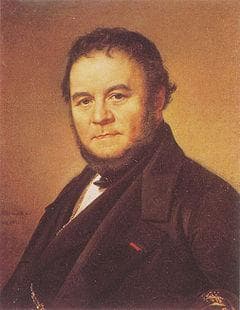
Marie-Henri Beyle, better known by his pen name Stendhal, was a 19th-century French writer. Best known for the novels Le Rouge et le Noir and La Chartreuse de Parme, he is highly regarded for the acute analysis of his characters' psychology and considered one of the early and foremost practitioners of realism. A self-proclaimed egotist, he coined the same characteristic in his characters' "Beylism".







