BookBrief
The Real Life of Sebastian Knight cover
Archivist's Choice

The Real Life of Sebastian Knight

Vladimir Nabokov (1941)

Genre

Literary Fiction

Reading Time

12 Minutes

Key Themes

See below

Track Your Reading

Sign in to track this book

After his famous brother's death, a man tries to write his biography, uncovering hidden loves and elusive truths, while reflecting the intricate plots of the novels he seeks to understand.

Synopsis

Following the death of his enigmatic and celebrated half-brother, Sebastian Knight, the narrator, V., embarks on a quest to write a definitive biography. His investigation, however, quickly devolves into a labyrinthine and often frustrating journey through conflicting accounts, unreliable memories, and deceptive appearances. As V. attempts to reconstruct Sebastian's life, particularly focusing on two pivotal love affairs, he finds himself grappling with the elusive nature of truth, identity, and the very act of biographical creation. Ultimately, V.'s search for the 'real' Sebastian Knight becomes a meta-narrative on the impossibility of truly knowing another person, especially an artist, and the biographer's own subjective influence on the subject. The novel blurs the lines between reality and fiction, leaving the reader to question not only Sebastian's life but also the narrator's motives and the veracity of his account.
Difficulty
Medium
Pacing
Moderate
Mood
Introspective, mysterious, intellectual, subtly melancholic

Plot Summary

The Quest Begins

After his famous half-brother, Sebastian Knight, dies, V. decides to write his 'real life.' He feels he must correct the misinterpretations and shallow accounts already published, especially one by Mr. Goodman. V. admits he didn't know Sebastian well, as they spent most of their lives apart, and he sees the difficulty in capturing someone's true self from a distance. He starts with Sebastian's letters, some personal papers, and scattered memories from acquaintances. This opening establishes a story about biography itself, showing how memory and truth are subjective.

Early Life and Education

V. explores Sebastian's early life, describing their shared mother's death and Sebastian's childhood in various European schools. He reconstructs Sebastian's time at Cambridge, where he began to write, and his first attempts at literature. V. struggles to find solid details, often relying on anecdotes from former classmates and teachers, which are often contradictory. This section shows how hard it is to pin down the past and separate fact from myth, even for a brother. V. notes Sebastian's early detachment and his unique view of the world, hinting at the complex person who would become a writer.

First Love: Clare Forest

V. investigates Sebastian's first major romantic relationship, with Clare Forest. He learns Clare was an unconventional woman who greatly influenced Sebastian when he was starting as a writer. Their relationship is shown as intense but fragile, ending in separation. V. gathers information from mutual friends and Sebastian's vague hints in his writings, finding conflicting stories about why they broke up. This search shows V. acting like a literary detective, sifting through memories to reconstruct a key time in Sebastian's emotional and creative development. The uncertainty around Clare and the breakup adds to the mystery.

The Russian Period and Literary Beginnings

V. describes Sebastian's time living in Russia, which shaped his artistic senses. He details Sebastian's immersion in Russian culture and language, which later influenced his writing style and themes. During this period, Sebastian began publishing his first works, gradually gaining literary recognition. V. examines Sebastian's early novels, analyzing their themes and style, and tries to link them to his life. This section shows Sebastian's unique voice and his effort to create his own identity as an author, often challenging common literary norms. V. considers the close link between an artist's life and work, while acknowledging the challenges of interpreting it.

Encountering Mr. Goodman

V. seeks out Mr. Goodman, Sebastian Knight's first biographer, whose work V. finds inadequate. He hopes to gain new insights or understand Goodman's flaws. However, the meeting is disappointing. Goodman comes across as superficial and dull, more interested in sensationalism than real understanding. His account of Sebastian's life is full of errors, confirming V.'s belief that a more accurate biography is needed. This interaction validates V.'s project and shows the difficulties of objective biographical writing, especially when the subject is complex.

The Search for the Second Love: Helen von Graun

V. finds clues about a second, more serious and tragic love affair in Sebastian's life. Hints point to a woman named Helen von Graun, or a similar name. This relationship is more mysterious than the first, with Sebastian's private papers offering only vague hints and a sense of deep personal trouble. V. learns this affair badly affected Sebastian, influencing his later work and contributing to his declining health. The search for Helen becomes V.'s central, almost obsessive, goal, as he believes understanding this relationship is key to understanding his brother's 'real life.' He follows every lead, no matter how small, across Europe.

The Case of the Misidentified Woman

In his intense search for Helen von Graun, V. travels through Europe, following faint clues. He eventually finds a woman he believes was Sebastian's second lover. She is a Russian émigrée, living a quiet life. V. approaches her, convinced he has found the missing piece, and she shares stories that seem to confirm his suspicions. However, as they talk, V. slowly realizes his mistake. The woman, while having known Sebastian, was not the intense, destructive figure he sought. This misidentification shows the dangers of biographical interpretation and how easily one can project desires onto incomplete evidence.

A Clue in a Hotel Register

After the misidentification, V. feels discouraged but tries harder. A small detail from Sebastian's papers—a date and a specific hotel in France—gives him a new, promising lead. V. travels to the hotel and carefully checks old guest registers. There, he finds an entry confirming Sebastian's stay and, importantly, a woman registered with him: a Miss L. van Veen. This name, while similar to Helen von Graun, is different and points his investigation in a new direction. This discovery energizes V.'s search, offering concrete evidence after much guesswork, and sharply focusing his efforts.

The Revelation of L. van Veen

V. tracks down L. van Veen, learning her true identity and the full extent of her relationship with Sebastian. He discovers she was a complex, enigmatic woman, possibly manipulative or deeply troubled, who severely damaged Sebastian's emotional life and health. This relationship, unlike the first, was marked by intense passion, jealousy, and despair, leading to Sebastian's eventual breakdown. V. pieces together their story, realizing the depth of Sebastian's suffering and the destructive nature of this final affair. The truth about L. van Veen reveals the tragic core of Sebastian's 'real life.'

Sebastian's Final Days

The story moves to Sebastian's final illness and death. V. describes Sebastian's worsening health, made worse by the emotional turmoil of his relationship with L. van Veen. He recounts his desperate attempt to reach Sebastian's hospital bedside, traveling across Europe in a race against time. The journey is full of delays and paperwork, creating a sense of urgency and impending loss. V. arrives at the hospital, only to be told Sebastian died moments earlier. This moment of near-connection, followed by ultimate separation, is deeply sad and shows V.'s lasting love and regret.

The Hospital Visit and the Nurse

Upon arriving at the hospital and learning of Sebastian's death, V. talks with a nurse who cared for his brother. The nurse, a kind and observant woman, gives V. a final, unexpected look into Sebastian's last hours. She describes Sebastian's peaceful demeanor in death, and through her words, V. feels a deep connection to his brother. There is a subtle hint, a brief, almost supernatural moment of understanding, where V. feels he has truly, if belatedly, understood Sebastian's essence. This meeting provides closure, suggesting that while he missed Sebastian's last breath, he has, in a way, finally 'met' him.

The Nature of Identity and Biography

After Sebastian's death and finishing his biography, V. thinks deeply about identity, memory, and the limits of biography. He admits that despite all his efforts, interviews, and investigations, Sebastian Knight's 'real life' remains elusive, a complex mix of perceptions. V. comes to understand that any attempt to capture a person in words is a subjective creation, reflecting the biographer as much as the subject. He recognizes that Sebastian lives on not just in his books, but in the minds of those who knew him, and in V.'s own changing understanding. The book ends with V. suggesting that perhaps he, the narrator, is Sebastian Knight, blurring the lines between author and subject, life and art.


Principal Figures

V.

The Protagonist

V. transforms from a detached, fact-gathering biographer into a character deeply intertwined with his subject, ultimately realizing the impossibility of objective truth and hinting at a shared identity with Sebastian.

Sebastian Knight

The Antagonist/Supporting

Sebastian's character is revealed retrospectively as an artist who grappled with the interplay of life and art, experiencing profound love and loss that shaped his unique literary voice.

Clare Forest

The Supporting

Her character is static, serving as a past influence on Sebastian's development, providing V. with initial insights into Sebastian's emotional life.

L. van Veen

The Supporting

Her character is static, serving as the catalyst for Sebastian's tragic decline, embodying the destructive power of love.

Mr. Goodman

The Antagonist

Goodman remains static, representing the antithesis of V.'s biographical approach and reinforcing the need for a deeper, more truthful account.

The Nurse

The Supporting

Her character is static, serving to provide V. with a final, poignant moment of connection and understanding regarding Sebastian's death.

Themes & Insights

The Elusiveness of Truth and Identity

The novel explores how impossible it is to truly capture a person's 'real life' or objective truth. V.'s search for Sebastian's biography is constantly hindered by conflicting accounts, subjective memories, and the limits of language. Sebastian, as a writer, often made characters who were extensions of himself, further blurring the lines between life and art. The story suggests that identity is not fixed but fluid, seen differently by various observers and ultimately unknowable, making the reader question what 'real' even means.

The only real truth of a man is the truth of his dreams.

Narrator (V.)

The Nature of Biography and Art

Nabokov uses V.'s biographical project as a commentary on writing and interpretation. The novel breaks down traditional biography, showing how a biographer always filters their subject through their own experiences and biases. V.'s struggles, mistakes, and eventual realization that his 'real life' of Sebastian is as much about himself as his brother, highlight how subjective all art and storytelling are. It questions whether a life can ever be truly represented in words, suggesting that every narrative is a construction, a fiction in itself.

All novels are biographies, and all biographies are novels.

Narrator (V.)

Love, Loss, and Memory

The emotional heart of the novel centers on Sebastian's two important love affairs and V.'s own feelings of loss and brotherly affection. The destructive nature of Sebastian's second love with L. van Veen is central to his decline, showing how deeply romantic relationships can affect someone. V.'s journey is driven by his love for his brother and his wish to preserve his memory accurately, yet he constantly faces the unreliability of memory, both his own and others'. The novel suggests that while love and loss shape a life, their exact details often remain just out of reach, existing in fragmented, subjective memories.

Every memory is a ghost, and every ghost is a story.

Narrator (V.)

The Mirroring of Lives

A subtle but important theme is the mirroring of V.'s and Sebastian's lives. As V. delves into Sebastian's past, he starts to see reflections of himself, or perhaps even becomes Sebastian. This is clear in V.'s emotional involvement, his adoption of Sebastian's writing style in his narration, and the final, ambiguous hint that V. might, in fact, be Sebastian. This mirroring blurs the lines between author and subject, life and art, suggesting a deep, almost mystical connection that goes beyond family ties and hints at a shared consciousness or artistic spirit.

And I am Sebastian, or Sebastian is I, or perhaps we are both someone whom neither of us knows.

Narrator (V.)

Plot Devices & Literary Techniques

Unreliable Narrator

V.'s subjective and often mistaken perspective.

V., Sebastian Knight's half-brother and biographer, serves as a classic unreliable narrator. While earnest in his quest, his lack of direct knowledge, his emotional biases, and his frequent misinterpretations of clues lead him (and the reader) down false paths. He openly admits his own speculation and confesses to fabricating details when memory fails. This device directly supports the novel's themes of the elusiveness of truth and the subjective nature of biography, making the reader constantly question the veracity of the 'facts' presented and forcing them to actively participate in the interpretive process.

Metafiction

A novel about writing a novel/biography.

The entire novel is a metafictional exploration of the process of writing a biography and the nature of fiction itself. V. is writing a 'real life' of Sebastian Knight, and the narrative constantly comments on the challenges, pitfalls, and subjective nature of this endeavor. The text self-referentially examines its own construction, discussing Sebastian's novels, V.'s biographical methods, and the inherent limitations of language in capturing reality. This device blurs the line between the story being told and the act of telling it, inviting the reader to consider the artifice of literature.

Literary Detective Story

V.'s quest as a mystery investigation.

The novel employs the structure and tropes of a detective story, with V. acting as a literary sleuth attempting to solve the mystery of Sebastian Knight's life. He follows clues, interviews witnesses, sifts through documents, and even makes mistaken arrests (like his misidentification of the second lover). This framework provides a compelling narrative drive, engaging the reader in the intellectual puzzle of piecing together a life. However, unlike a conventional detective story, the 'solution' is not a definitive answer but a deeper understanding of the complexity and unknowability of human identity, subverting the genre's expectations.

Doubles and Mirrors

Reflections between V. and Sebastian.

The concept of doubles and mirrors is a pervasive plot device, subtly suggesting a deep, almost interchangeable connection between V. and Sebastian. V. not only investigates Sebastian's life but begins to inhabit his thoughts, style, and even identity, culminating in the ambiguous final line. Sebastian's own novels often featured characters who mirrored aspects of himself. This device creates a sense of uncanny resonance and blurs the boundaries of individual identity, reinforcing the idea that the biographer inevitably projects themselves onto their subject, and perhaps, in doing so, becomes them.

Critical analysis

Notable Quotes

Quiz

Test Your Knowledge

Ready to see how well you understood this book? Take our interactive quiz with 10 questions.

10
Questions
~5
Minutes
?
Best Score

Key Questions (FAQ)

This literary detective story follows a man's investigation into the life of his deceased half-brother, the celebrated novelist Sebastian Knight. The protagonist uncovers hidden love affairs and profound influences that shaped Knight's career, leading to a mysterious and rewarding climax.

About the author

Vladimir Nabokov

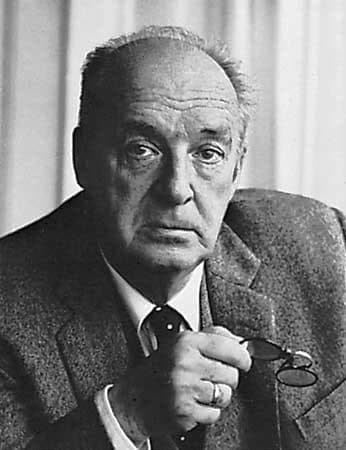
Vladimir Vladimirovich Nabokov, also known by the pen name Vladimir Sirin, was an expatriate Russian and Russian-American novelist, poet, translator, and entomologist. Born in Imperial Russia in 1899, Nabokov wrote his first nine novels in Russian (1926–1938) while living in Berlin, where he met his wife. He achieved international acclaim and prominence after moving to the United States, where he began writing in English. Nabokov became an American citizen in 1945 and lived mostly on the East Coast before returning to Europe in 1961, where he settled in Montreux, Switzerland.