The Midnight Study
The narrator, a scholar reading "forgotten lore," is in his room late on a dreary December night. He is tired, almost asleep, trying to forget his deep sadness over the loss of his beloved Lenore. The flickering firelight casts shadows, adding to the sad mood. Suddenly, he hears a gentle tap at his door, which he first thinks is a visitor, a hopeful thought that briefly breaks through his grief.
A Visitor at the Door
Woken by the persistent tapping, the narrator tries to calm his heart. He murmurs an apology to the supposed visitor, saying he was nearly asleep. But when he opens the door, he finds only darkness. He looks out into the night, his spirit growing stronger as he stares into the blackness. In a moment of deep longing, he whispers "Lenore?" and an echo, seemingly from the emptiness, whispers back, "Lenore!" This moment increases his sense of loss and the haunting presence of his dead love.
Tapping at the Window
Back in his room, his spirit now restless, the narrator is disturbed again. This time, the tapping is louder and seems to come from his window. He tells himself it is just the wind and decides to check, hoping to find an explanation to quiet his agitated mind. He tells himself it's nothing more than the wind, trying to keep some control over his growing fear and grief. He throws open the shutter.
Entry of the Raven
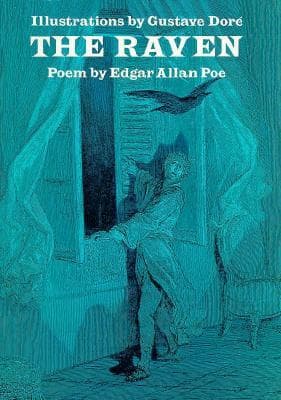
As the narrator opens the shutter, a large raven, a creature from "saintly days of yore," flies into his room without hesitation. The bird, with its dark feathers and dignified manner, ignores the narrator. Instead, it lands grandly on a bust of Pallas Athena, which is above his door. This unexpected entrance briefly amuses the narrator, giving him a short break from his despair as he watches the bird's serious look.
The First Word
Despite his grief, the raven's appearance and serious face make the narrator smile for a moment. He asks the bird its name on the "Night's Plutonian shore," a poetic reference to the underworld. To his surprise, the raven answers with one clear word: "Nevermore." The narrator is shocked, having never heard a bird speak so clearly. He thinks the bird must have learned this word from some unhappy owner, whose troubles taught it this solitary, sad phrase.
A Glimmer of Hope
The narrator, curious and increasingly troubled by the raven's repeated word, pulls his chair directly in front of the bird. He starts to think about what the raven means by its grim reply, trying to understand the deeper meaning of "Nevermore." He sees the bird as a prophet, a messenger. His thoughts turn back to Lenore. He asks the raven about his future, specifically if he will ever find comfort for his sorrow, or if he will ever again hold his lost Lenore in "Aidenn" (Eden or paradise).
Despair Deepens
As the narrator continues to question the raven, his questions become more desperate. He asks if there is any hope of forgetting his sorrow, any "nepenthe" to ease his pain. The raven, with its steady voice, consistently replies, "Nevermore." Each time the word is repeated, it chips away at the narrator's fragile hope. He then directly asks if he will ever meet Lenore in the afterlife, a question that holds the last bit of his spiritual comfort. The bird's answer is, as always, a crushing "Nevermore."
The Prophet of Evil
Driven to madness by the raven's constant words, the narrator lashes out at the bird. He calls it a "fiend" and a "thing of evil," demanding that it return to the "Night's Plutonian shore" and leave him alone. He begs the bird to remove its shadow from his room and its beak from his heart, symbolizing the emotional pain it causes. He desperately wants the bird and its ominous message to leave, to free him from the crushing weight of its prophecy.
The Raven's Immobility
Despite the narrator's pleas, the raven stays still. It sits on the bust of Pallas, its gaze fixed on him. The bird's shadow, cast by the lamplight, becomes a permanent part of the floor, symbolizing the inescapable nature of his grief. The narrator then understands that the raven will never leave, that its presence is eternal, just as his sorrow for Lenore is eternal. The poem ends with the narrator stating that his soul, trapped beneath that shadow, shall be lifted "Nevermore."