“The Rainbow Fish shared his scales and left only one shining scale for himself.”
— The Rainbow Fish finally decides to share his beautiful scales with the other fish.

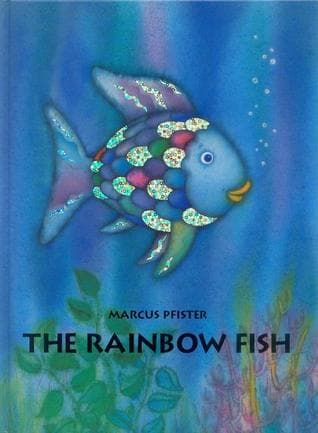
Marcus Pfister (1992)
Genre
Fantasy / Children's
Reading Time
5 min
Key Themes
See below
Sign in to track this book
A shimmering fish learns that true beauty and happiness come not from glittering scales, but from the joy of sharing them with others.
The Rainbow Fish is the most beautiful fish in the ocean, with magnificent, glittering scales of every color. Other fish admire him, but his beauty makes him proud and distant. He spends his days swimming gracefully, enjoying his own splendor, and does not interact with the other, plainer fish. His scales are unique and dazzling, catching the light in an extraordinary way that makes him stand out from other sea creatures. This introduction shows his physical beauty but also his isolation, hinting at a character flaw that will drive the story's problem.
One day, a small blue fish asks if he could have just one of the beautiful, shimmering scales. The little blue fish wants one because of their beauty. However, the Rainbow Fish reacts with disdain and arrogance, scoffing at the idea of giving away any of his prized possessions. He rudely dismisses the small fish, telling him to go away and that his scales are too precious to share. This harsh rejection leaves the small blue fish feeling hurt and sad, and he quickly swims away to tell his friends about the Rainbow Fish's unkindness.
After the incident with the small blue fish, all the other fish in the ocean start to avoid the Rainbow Fish. They no longer admire him; instead, they turn their backs on him whenever he swims near. The Rainbow Fish, despite his beauty, finds himself completely alone. He tries to initiate play and conversation, but no one responds. He is confused and saddened by this sudden isolation, realizing that his beauty, which he thought would bring him admiration, has instead driven everyone away. He feels a deep sense of loneliness, unable to understand why he is now an outcast.
Distraught and lonely, the Rainbow Fish decides to ask for advice from the wise old octopus, Octopu, who lives in a deep cave. He swims to the deepest part of the ocean, where Octopu resides, and explains his problem: he is the most beautiful fish, yet no one wants to play with him. Octopu, with her many arms and ancient wisdom, listens patiently to his story. She is a source of guidance for the confused Rainbow Fish, offering a way to resolve his unhappiness.
Octopu tells the Rainbow Fish that true happiness comes not from having beautiful things, but from sharing them. She advises him to give away one shimmering scale to each of the other fish. She warns him that he may no longer be the most beautiful fish in the sea after doing so, but he will discover a new kind of joy and make friends. This advice is a turning point, offering a direct solution to his problem and challenging his belief that beauty alone brings happiness. The Rainbow Fish is hesitant, as the thought of parting with his precious scales is difficult for him.
Soon after Octopu's advice, the small blue fish reappears. He approaches the Rainbow Fish cautiously, still admiring the shimmering scales. Recalling Octopu's words, the Rainbow Fish feels a moment of hesitation, but then, with a little effort, he plucks one of his smallest, most beautiful shimmering scales and offers it to the small blue fish. The blue fish is overjoyed, thanking the Rainbow Fish as he attaches the scale to his own body. The sight of the blue fish's happiness sparks a new, unfamiliar feeling in the Rainbow Fish.
As the small blue fish swims away, proudly displaying his new shimmering scale, excitement spreads through the other fish. They all begin to approach the Rainbow Fish, each asking for a shimmering scale. With each scale he gives away, the Rainbow Fish feels a growing sense of happiness and belonging. He gives his scales one by one, until he has only one left for himself. Though he is no longer the most beautiful fish in the sea in terms of outward appearance, he is surrounded by friends, each carrying a piece of his former glory. He discovers that sharing has brought him the greatest joy of all.
With only one shimmering scale remaining, the Rainbow Fish is no longer the unique, dazzling creature he once was. However, he is now surrounded by many friends, each bearing a glittering scale that reflects his generosity. He feels happier than he ever did when he had all his scales. The other fish, now adorned with a piece of the Rainbow Fish's beauty, welcome him into their games and companionship. He swims and plays with them, experiencing the warmth of friendship and the joy of being accepted for who he is, rather than for what he possesses. He realizes that true beauty is kindness and sharing.
The Protagonist
Transforms from an isolated, vain fish to a beloved, generous friend by learning to share his most prized possessions.
The Supporting
From being rejected and sad, he becomes the first recipient of the Rainbow Fish's kindness, symbolizing the start of new friendships.
The Supporting
Serves as a static, wise figure who imparts crucial life lessons, enabling the protagonist's arc.
The Supporting
Shift from admiring to shunning the Rainbow Fish, then welcoming him into their community once he changes.
The main theme of the book is sharing. The Rainbow Fish initially keeps his beautiful scales to himself, which makes him isolated. He finds true happiness and friendship only when he starts to give them away to others. This theme is clear when Octopu tells him, 'You will no longer be the most beautiful fish in the sea, but you will discover how to be happy.' His act of giving away his scales, even the smallest ones, changes his life.
“You will no longer be the most beautiful fish in the sea, but you will discover how to be happy.”
The story shows that true happiness is not found in possessions or outward beauty, but in meaningful connections with others. The Rainbow Fish, despite being the 'most beautiful,' is unhappy when he is alone. His joy comes only after he sacrifices his unique beauty to build friendships. The shared shimmering scales show their collective happiness and connection, illustrating that companionship brings greater fulfillment than individual splendor.
“He felt happier than he had ever felt before among all his shimmering friends.”
Initially, the Rainbow Fish's extreme vanity and pride in his shimmering scales cause him to treat other fish poorly. This arrogance makes him an outcast, as the other fish refuse to play with someone so unkind. His loneliness is a direct result of his self-centeredness, showing how too much pride and a focus on outward beauty can lead to isolation and unhappiness. His journey teaches him humility and the problems of being self-absorbed.
“He was the most beautiful fish in the entire ocean, but he was lonely. No one wanted to play with him.”
The Rainbow Fish learns to feel for others. His initial rejection of the Small Blue Fish shows a lack of understanding and kindness. However, after feeling lonely himself, and after Octopu's advice, he begins to understand the joy his scales could bring to others. His act of giving a scale, and seeing the happiness it brings, teaches him the value of kindness and how it creates good relationships and a sense of community.
“The more he gave away, the more delighted he became.”
Symbol of beauty, pride, and later, generosity and connection.
The shimmering scales are the central symbolic element of the story. Initially, they represent the Rainbow Fish's unique beauty and his vanity, setting him apart and making him proud. As the plot progresses, they transform into symbols of generosity and shared happiness. By giving away his scales, the Rainbow Fish distributes his beauty, literally sharing himself with others. Each scale given becomes a token of friendship and a piece of shared joy, visually representing the theme that true beauty lies in giving rather versa hoarding.
A narrative device providing moral guidance and a turning point.
Octopu serves as the wise old mentor, a classic archetypal character found in many stories. Her role is to provide the Rainbow Fish with the crucial advice he needs to overcome his character flaw. She doesn't solve his problem for him but offers the wisdom that guides him to his own solution. Her counsel marks the turning point in the narrative, shifting the Rainbow Fish's perspective from self-interest to selflessness, and directly setting him on the path to finding happiness and friendship.
A narrative technique to demonstrate the negative impact of selfishness.
The Rainbow Fish's isolation is a direct consequence of his vanity and unkindness. This plot device effectively illustrates the negative repercussions of selfish behavior. By experiencing profound loneliness, the Rainbow Fish is motivated to seek change. This period of isolation serves as a powerful lesson, making him realize that his beauty is meaningless without companionship, thus paving the way for him to embrace sharing and generosity. It highlights the social cost of arrogance.
“The Rainbow Fish shared his scales and left only one shining scale for himself.”
— The Rainbow Fish finally decides to share his beautiful scales with the other fish.
“Come on, play with us!”
— The other fish invite the Rainbow Fish to join them, but he ignores them.
“He was the most beautiful fish in the entire ocean.”
— Introduction of the Rainbow Fish's unique appearance.
“Why doesn't anybody like me?”
— The Rainbow Fish feels lonely despite his beauty.
“Give away my scales? My beautiful shining scales? Never!”
— The Rainbow Fish's initial refusal to share his scales.
“The more he gave away, the more delighted he became.”
— The Rainbow Fish discovers joy in sharing.
“Finally the Rainbow Fish had only one shining scale left.”
— After sharing, the Rainbow Fish is left with just one scale.
“The little blue fish was so pleased, it sparkled like a star.”
— A fish receives a scale and becomes happy.
“Come and play with us, Rainbow Fish!”
— The other fish invite him again after he shares.
“He felt a strange sensation.”
— The Rainbow Fish experiences a new feeling when he shares.
“The Rainbow Fish swam off happily with his new friends.”
— The story concludes with the Rainbow Fish finding happiness.
“His scales were every shade of blue and green and purple.”
— Description of the Rainbow Fish's colorful scales.
“You will no longer be the most beautiful fish in the sea.”
— The Rainbow Fish worries about losing his beauty by sharing.
“But what good were they if they were not shared?”
— The Rainbow Fish reflects on the value of his scales.
Ready to see how well you understood this book? Take our interactive quiz with 10 questions.

Biography coming soon.







