“She was a woman, and how was she to know the great unknown that lay beyond her, in the world of men?”
— Reflecting on Ursula's youthful naivety and the limitations of her experience.

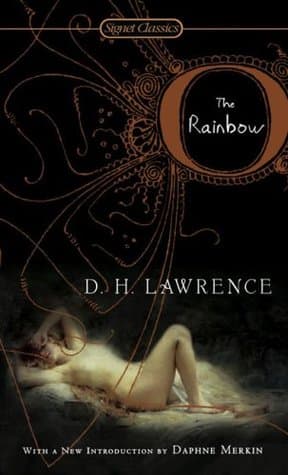
D.H. Lawrence (1915)
Genre
Historical Fiction / Romance
Reading Time
15-20 hours
Key Themes
See below
Sign in to track this book
Three generations of the Brangwen family struggle with their rural roots and a deep need for personal freedom, leading to Ursula's rebellion against Edwardian society.
The novel introduces the Brangwen family, who have farmed Marsh Farm in Cossethay, Nottinghamshire, for generations. Their lives are tied to the land and agricultural work. The men are strong and sensual, content with their physical existence, while the women desire a connection to the wider world, like the church or town. This contrast sets up the family's future struggles. The story highlights the Brangwen men's interactions with the land and the women's longing for intellectual and spiritual growth beyond their rural life, showing the core values and limits of their world.
Tom Brangwen, a strong and somewhat sad young farmer, feels a desire for something more than his family's traditional life. He meets Lydia Lensky, a Polish immigrant and widow of a Polish doctor, who lives in the nearby vicarage with her young daughter, Anna. Lydia is unusual and quiet, carrying a deep sadness and a calm intensity that fascinates Tom. Their courtship is marked by a strong, almost primal attraction, despite language differences and their varied backgrounds. Tom is drawn to her otherness and her deep experiences, seeing her as a way to a richer, more complex life. He proposes, and they marry, bringing Lydia and Anna to Marsh Farm.
After their marriage, Tom and Lydia struggle to truly understand each other. Lydia is withdrawn, still burdened by her past, while Tom is passionate but unrefined in his attempts to reach her. Their initial connection, though strong, does not immediately lead to domestic peace. They live in isolated intimacy, each dealing with their own inner thoughts. Anna, Lydia's daughter, watches this dynamic, often feeling like an outsider in their intense, silent drama. Over time, a deep, often unspoken, bond of shared experience and mutual respect forms between Tom and Lydia, based on their physical and emotional commitment and their growing family.
Anna Lensky, now grown, is a spirited and sensual young woman who has her mother's intensity and her stepfather Tom's earthy energy. She falls in love with Will Brangwen, Tom's nephew, a skilled craftsman and religious man with a fervent, almost mystical sensibility. Their courtship is marked by a powerful, often stormy passion, a clash of their strong wills and different desires. Anna seeks a complete, all-encompassing union, while Will is drawn to a more spiritual, almost ascetic love. Their marriage is a battleground of wills and desires, with intense physical love but also deep misunderstandings and periods of separation as they both seek dominance and fulfillment. Their life together centers on their growing family.
Anna and Will Brangwen's marriage is marked by a fierce struggle for power and understanding. Anna, deeply sensual and grounded in the physical world, dislikes Will's spiritual idealism and his need for a higher, more abstract connection, especially his devotion to the church. She tries to dismantle his spiritual world, challenging his beliefs and pulling him back to the physical reality of their shared life and children. Will, in turn, finds Anna's overwhelming physicality and her refusal to acknowledge anything beyond the immediate oppressive. Their arguments are often silent but deeply felt, appearing as emotional coldness and intense, reconciling passion. This constant push and pull defines their bond as they navigate their desires and conflicting views of love and life.
Amidst Anna and Will's intense, often turbulent relationship, their first child, Ursula Brangwen, is born. Ursula is a character of great spirit and intelligence, inheriting the strong will of both parents and the deep desire for a meaningful existence common to the Brangwen women. From a young age, she is sensitive and observant, absorbing the unspoken tensions and passionate undercurrents of her parents' marriage. Her birth shifts the narrative's focus, as the story gradually moves to her experiences and developing consciousness. Ursula represents a new generation, one that will actively try to break free from traditional limits and inherited struggles, striving for a more expansive and self-determined life.
Ursula's childhood is marked by a strong will and often rebellious spirit, frequently clashing with her parents, especially her mother, Anna. She is independent and curious, seeking meaning beyond the home. As she grows, she attends secondary school, where she excels academically and begins to form her own intellectual identity. Her schooling exposes her to new ideas and social circles, broadening her world beyond the Brangwen farm. She forms intense friendships and experiences her first crushes, beginning to explore her developing sexuality and emotions. These early experiences set the stage for her later search for self-fulfillment and her questioning of social norms, as she deals with the expectations placed on young women of her time.
As a young woman, Ursula enters a passionate and complicated relationship with Anton Skrebensky, an officer in the Reserves and a distant cousin. Their love affair is intense and physically charged, but Ursula finds Skrebensky's conventionality and his inability to match her spiritual and intellectual aspirations unsatisfying. He represents the established order and an emotional limit that Ursula, in her quest for complete fulfillment, cannot accept. At the same time, Ursula takes a teaching position in a working-class school, an experience that proves deeply disappointing. The harsh realities of the classroom, the unruly children, and the restrictive environment challenge her idealism and force her to confront her own power and influence, leading to a period of deep thought and frustration.
While teaching, Ursula develops a close and intensely emotional relationship with Winifred Inger, a fellow teacher who embodies a more modern, independent spirit. Their bond is intellectually stimulating and physically charged, exploring themes of female companionship, passion, and the search for identity outside traditional heterosexual relationships. Winifred, with her strong, almost masculine presence and her socialist ideals, offers Ursula an alternative view of womanhood and a different kind of love. This relationship is important in Ursula's self-discovery, allowing her to explore parts of her sexuality and emotional needs that Skrebensky could not fulfill. However, this relationship also proves ultimately unsatisfying for Ursula, as she continues to search for a more complete union.
Ursula later reunites with Anton Skrebensky, who has returned from South Africa. Their passion reignites, leading to a period of intense physical intimacy and renewed hope for a shared future. They travel to Europe together. However, their basic differences remain. Ursula's desire for an absolute, transcendent union clashes with Skrebensky's more conventional and grounded desires. She finds him unable to match her spiritual intensity and her demand for complete fusion. Their relationship ends in a powerful, almost violent breakup, as Ursula realizes that Skrebensky cannot provide the deep fulfillment she seeks, leaving her feeling alienated and searching for a new path.
Following her final separation from Skrebensky, Ursula discovers she is pregnant. This unwanted pregnancy causes a deep personal crisis, forcing her to confront her future and her desire for independence. She is torn between the social expectations of marriage and motherhood and her strong longing for self-realization. During this time, she has a traumatic encounter with a herd of horses in a field, an event that deeply shakes her and leaves her scarred. This experience, an almost symbolic attack by raw nature, leads to a miscarriage. The loss of the child, while devastating, also marks a turning point for Ursula, as she is freed from the immediate constraints of motherhood and can re-evaluate her life's direction.
After her miscarriage and deep emotional turmoil, Ursula experiences a powerful and symbolic vision. She sees a rainbow arching over the landscape, a vivid and intensely personal symbol of hope, promise, and a new beginning. This vision represents a deep spiritual awakening and a renewed sense of purpose. It signifies her rejection of old, fragmented ways of living and her desire for a more complete, integrated existence, where the physical and spiritual, the individual and the universal, can be harmonized. The rainbow becomes a symbol for a new, holistic way of being, a future where she can achieve self-fulfillment and contribute to a more authentic society, marking the end of her long journey of self-discovery.
The Protagonist (first generation)
Tom evolves from a man seeking external fulfillment to one who finds a profound, if often silent, connection with his wife, Lydia, through shared experience and mutual respect.
The Protagonist (first generation)
Lydia gradually opens herself to love and connection with Tom, finding a grounded existence and a quiet fulfillment within the Brangwen family, while retaining her unique inner landscape.
The Protagonist (second generation)
Anna comes to terms with the limitations of absolute union, finding fulfillment in her family and the physical world, but often at the expense of her husband's spiritual aspirations.
The Supporting (second generation)
Will struggles to reconcile his spiritual needs with his wife's sensuality, ultimately finding a fragile balance within their tumultuous marriage, often by sacrificing some of his spiritual ideals.
The Protagonist (third generation)
Ursula embarks on a tumultuous journey of self-discovery, rejecting conventional roles and relationships, ultimately achieving a transformative vision of a new, integrated existence.
The Supporting (third generation)
Skrebensky remains largely static, unable to evolve beyond his conventional desires, thus failing to meet Ursula's profound need for a transcendent connection.
The Supporting (third generation)
Winifred serves as a catalyst for Ursula's exploration of identity and sexuality, but her own path leads her away from Ursula.
The Mentioned (first generation)
Remains a consistent figure representing the traditional Brangwen way of life.
This theme is key to all three generations of Brangwen women, especially Ursula. The early Brangwen women desire something beyond farm life, looking to the church or town. Lydia Lensky brings intellectual and spiritual depth, but Anna and Ursula actively seek self-knowledge. Anna finds fulfillment in her intense, physical marriage and children, but Ursula rejects these as ultimate goals. Her journey through education, teaching, and various relationships (with Skrebensky, Winifred) is a constant search to define herself and find a complete existence, ending in her symbolic vision of the rainbow, which represents a new promise of self-realization.
“She wanted to learn, to know, to be herself. She wanted to know what it was to be a woman, and what it was to be a man.”
The novel explores the complexities of love and marriage across three generations, moving from the primal, often unspoken bond of Tom and Lydia, to the passionate yet conflict-ridden union of Anna and Will, and finally to Ursula's radical re-evaluation. Tom and Lydia's love is rooted in a deep, almost instinctual connection. Anna and Will's marriage is a constant battle between physical desire and spiritual yearning, showing how love can be both fulfilling and destructive. Ursula, however, challenges traditional marital structures, seeking a love that includes both physical and spiritual fusion, but ultimately finding conventional relationships (like with Skrebensky) inadequate for her desires, pushing her to redefine true partnership.
“And the rainbow stood on the earth. She knew that the rainbow was the sign of the covenant. The old, ideal world was gone.”
This theme creates tension throughout the novel, especially in the Brangwen women's desire for something beyond their physical, farm life. Tom Brangwen, though sensual, is drawn to Lydia's intellect. The most clear conflict appears in Anna and Will's marriage: Anna is deeply rooted in the physical and material world, finding fulfillment in her body and children, while Will is drawn to abstract spirituality and the church. Ursula, in her own development, struggles to reconcile these two aspects within herself and in her relationships. She deals with the limits of purely physical love (Skrebensky) and seeks a fusion where the sensual and spiritual are integrated, symbolized by her ultimate vision of the rainbow, bridging heaven and earth.
“She wanted to be a pure, a white flame of the spirit, a gem; and she was a strange, dark, wild creature of the earth.”
The novel subtly but significantly tracks the impact of industrialization and societal changes on the rural Brangwen family. Initially, the family is deeply tied to the land, their lives dictated by agricultural cycles. As generations pass, the growing industrial towns, mines, and factories represent a new, often alienating, world. Ursula's experiences teaching in a working-class school expose her to the harsh realities of industrial society and its effect on people. This societal change contributes to the characters' sense of displacement and their search for meaning beyond traditional roles and communities, highlighting the tension between the lasting natural world and England's rapidly changing modern landscape.
“It was the town that called, the church that called, the world that called.”
The novel looks closely at the changing role of women in society. The early Brangwen women, while strong, are mostly confined to domestic life and desire external connection. Lydia Lensky, a widow, brings a different model of female experience. Anna Brangwen, though powerful in her home, still operates within traditional marital structures. However, Ursula most clearly challenges the conventional role of womanhood. She pursues education, a career, and explores various forms of love and sexuality, actively rejecting the limits placed on women. Her journey is one of strong independence, as she seeks to define her own identity and purpose outside marriage and motherhood, paving the way for a new kind of female autonomy.
“She wanted to be a whole, independent human being, not a part of a man.”
The narrative spans three generations of the Brangwen family, tracing their evolution.
The novel employs a generational saga structure, beginning with Tom Brangwen and Lydia Lensky, moving to their daughter Anna Brangwen, and culminating with Anna's daughter, Ursula Brangwen. This device allows Lawrence to explore the gradual shifts in societal values, family dynamics, and individual consciousness over time. Each generation builds upon, reacts against, or reinterprets the experiences of the preceding one, highlighting themes of tradition vs. modernity, the evolving nature of love, and the persistent search for self-fulfillment as the world around them changes from a rural, agrarian society to an increasingly industrialized one.
The rainbow serves as a central, multifaceted symbol of hope, covenant, and new beginnings.
The rainbow is the most prominent symbol in the novel, appearing explicitly at its climax. Initially, it represents a covenant and a promise, linking the individual to the divine and the natural world. For Ursula, the final vision of the rainbow signifies a profound spiritual awakening and a rejection of the fragmented, unsatisfying existence she has known. It symbolizes a new covenant of self-realization, a bridge between the physical and spiritual, and a promise of a more integrated and vital future, where she can achieve wholeness and contribute to a new, more authentic society. It encapsulates the novel's overarching theme of striving for a richer, more profound existence.
Extensive use of natural landscapes and animal interactions reflects characters' inner states and primal forces.
Lawrence frequently uses vivid and often visceral nature imagery to reflect the characters' emotional and psychological states. The Brangwens' deep connection to the land at Marsh Farm, the changing seasons, and specific natural phenomena (like the moon, the stars, or the horses) are not merely settings but active participants in the narrative. The encounter with the horses, for instance, is a pivotal moment for Ursula, symbolizing raw, untamed forces and her own subconscious struggles. This device emphasizes the primal, instinctual aspects of human experience and highlights the characters' profound, often unspoken, relationship with the natural world, contrasting it with the encroaching industrial age.
The narrative voice often blends with the characters' thoughts and feelings, creating deep psychological insight.
Lawrence frequently employs free indirect discourse, where the narrator's voice merges with a character's internal thoughts, feelings, and perceptions without explicit markers like 'she thought' or 'he felt.' This technique allows for deep psychological penetration into the characters' inner lives, particularly for the Brangwen women. It blurs the line between objective narration and subjective experience, giving the reader immediate and intimate access to their desires, frustrations, and evolving consciousness. This device is crucial for portraying the complex, often inarticulate emotional landscapes of characters like Lydia, Anna, and especially Ursula, making their internal struggles palpable and immediate.
“She was a woman, and how was she to know the great unknown that lay beyond her, in the world of men?”
— Reflecting on Ursula's youthful naivety and the limitations of her experience.
“The child was like a flower, opening its petals to the sun, and the sun was her father.”
— Describing Anna's early relationship with her father, Tom Brangwen.
“It was as if the Brangwens had been born into a world of light, and they were trying to find their way out of it.”
— A metaphor for the family's struggle with tradition and their yearning for a different existence.
“She was a strange, wild thing, with a spirit that would not be tamed.”
— Referring to Ursula's independent and rebellious nature.
“The world was a great, dark forest, and she was a tiny, lost creature within it.”
— Ursula's feeling of insignificance and isolation in the wider world.
“He wanted to be rid of his own limitations, to be free, to be utterly himself.”
— Tom Brangwen's internal desire for self-actualization and breaking free from constraints.
“They were like two separate stars, revolving around each other, yet never quite touching.”
— Describing the emotional distance and unspoken understanding between two characters.
“The rainbow stood on the land, a arch of colours, a bridge of promise.”
— The symbolic image of the rainbow, representing hope and a new covenant.
“She felt herself a tree, rooted in the earth, drawing strength from it.”
— Ursula's connection to nature and her sense of belonging.
“He felt as if he were standing on the edge of a precipice, looking down into a vast, unknown abyss.”
— Tom Brangwen's sense of facing the unknown and the future.
“The world was opening out to her, like a great flower, revealing its hidden depths.”
— Ursula's growing awareness and understanding of life's complexities.
“They were always seeking, always striving, never quite finding what they sought.”
— A general observation about the human condition and the Brangwens' continuous quest.
“She wanted to be herself, utterly and magnificently herself, beyond any man.”
— Ursula's ultimate desire for self-sufficiency and identity apart from societal expectations.
Ready to see how well you understood this book? Take our interactive quiz with 10 questions.

D.H. Lawrence was a prominent English novelist, poet, playwright, and essayist whose works explored themes of sexuality, industrialization, and the human condition. His most controversial and famous novel, "Lady Chatterley's Lover," challenged societal norms and censorship. Other notable works include "The Rainbow," "Women in Love," and "Sons and Lovers," solidifying his place as a significant figure in modernist literature.







