“The greatest gift you can give someone is your time, because when you give your time, you are giving a portion of your life that you will never get back.”
— A reflection on the value of personal connection and presence.

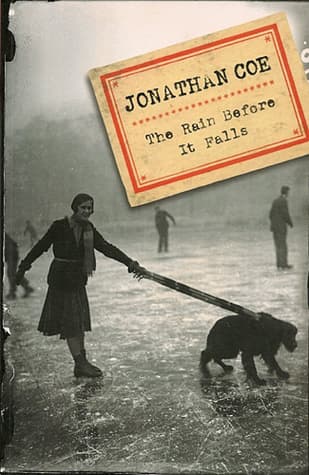
Jonathan Coe (2007)
Genre
Historical Fiction
Reading Time
360 min
Key Themes
See below
Sign in to track this book
A dying woman's cassette tapes unravel a sixty-year saga of family secrets, betrayal, and the enduring, often tragic, legacy of motherhood across three generations of English women.
The novel begins with the death of Rosamond, an elderly woman who has left a peculiar will. Instead of leaving her estate to her niece, Gill, Rosamond bequeaths all her possessions, including a collection of cassette tapes, to an unknown woman named Imogen. Gill, curious, begins listening to the tapes, hoping to understand her aunt's final wishes and find this enigmatic Imogen. The tapes, recorded by Rosamond in the final months of her life, are meant as a detailed account of her memories, particularly those concerning a photograph album. Rosamond's voice, frail yet clear, introduces the listener to her past, starting with her childhood during World War II.
Rosamond recounts her experiences as an eight-year-old evacuated from London during the Blitz to the safety of Shropshire. There, she lives with her Aunt Sarah and Uncle Reg, and their daughter, Beatrix, who is a few years older than Rosamond. Beatrix, initially distant and seemingly cold, forms a close and intense bond with Rosamond. Rosamond idolizes Beatrix, who is beautiful and enigmatic. Their shared experiences during the war, including the fear of air raids and the disruption of family life, solidify their connection. This period marks the beginning of a lifelong, complicated relationship between the two cousins.
Rosamond's tapes discuss Beatrix's adolescence and young adulthood, revealing an unhappy home life. Beatrix's mother, Aunt Sarah, is portrayed as cold and critical, withholding affection and creating insecurity in her daughter. This lack of maternal love impacts Beatrix, shaping her future relationships. Rosamond describes Beatrix's first serious romance with a young man named Derek, a relationship that ends in heartbreak. Beatrix's yearning for affection and her tendency to make impulsive decisions are highlighted, showing how her early experiences with her mother, and the subsequent emotional void, influence her choices in love and life.
As the tapes progress, Rosamond begins to tell the story of Beatrix's daughter, Alison, who is the mother of the mysterious beneficiary, Imogen. Rosamond describes how Beatrix, after Derek, falls for a married man named Hugh, a relationship that leads to Alison's conception. Beatrix's decision to keep the baby, despite societal pressures and Hugh's absence, is a key moment. Rosamond paints a picture of Beatrix as an independent woman, determined to make her own path, even if it means facing significant challenges and social disapproval. This section establishes the theme of unconventional motherhood and its consequences.
Rosamond recounts Alison's childhood, which, despite Beatrix's efforts, is characterized by a certain emotional detachment from her mother. Beatrix, still dealing with her own unfulfilled desires and the scars of her past, struggles to provide Alison with the warmth and unconditional love she herself lacked. Alison grows up knowing her father is absent, leading to a quiet longing for connection and a sense of otherness. Rosamond observes the subtle ways in which Beatrix's own history of maternal neglect is inadvertently passed down to Alison, creating a cycle of emotional distance within the family. This narrative highlights the lasting impact of early childhood experiences.
The tapes move to Alison's adult life, her marriage to a kind and steady man, and the birth of her own daughter, Imogen. Rosamond describes Alison as a devoted mother, determined to give Imogen the love and stability she felt she missed. However, their happiness is short-lived. Rosamond recounts the car accident that claims the lives of both Alison and her husband, leaving Imogen orphaned at a young age. This heartbreaking event explains why Imogen grew up without her parents and why Rosamond feels such a profound connection to her and a duty to share her story.
Following the death of Alison and her husband, Imogen is raised by her paternal grandparents. Rosamond, feeling a responsibility and a deep love for her great-niece, steps in to play a significant role in Imogen's life, becoming a surrogate grandmother figure. She visits Imogen frequently, shares stories, and tries to fill the void left by her parents. Rosamond's tapes reveal her deep affection for Imogen and her desire to connect Imogen to her maternal lineage, ensuring she understands her family history. This period solidifies Rosamond's motivation for recording the tapes, as she aims to preserve the past for Imogen.
A recurring element throughout the tapes is a specific photograph album, which Rosamond uses to structure her narrative. She describes how each photograph triggers memories, often revealing details that were previously unspoken or misunderstood. As Gill listens, she realizes the album is not just a collection of images but a carefully curated history, designed to convey specific truths. Rosamond uses these visual cues to explain complex family dynamics, hidden relationships, and the unspoken emotional currents that shaped the lives of Beatrix, Alison, and ultimately, Imogen. The album becomes a key to unlocking the family's secrets.
As Gill continues to listen to Rosamond's tapes, she experiences a shift in her understanding of her family. Initially just a listener, she becomes an active participant in unraveling the past, feeling a growing empathy for the women whose lives are detailed. She realizes that her own memories, and the love she feels for her two grown daughters who sometimes listen alongside her, are deeply intertwined with the experiences of these preceding generations. Gill starts to see patterns of resilience, heartbreak, and enduring love, recognizing how the past shapes the present and future of her own family.
In the concluding sections of the tapes, Rosamond explicitly states her purpose: to ensure that Imogen, who has grown up without her parents, understands her family's complex history, the love that existed, and the tragedies that occurred. She wants Imogen to know the women who came before her, particularly Beatrix and Alison, not just as names but as individuals with their own struggles and triumphs. The tapes are a gift, a narrative legacy designed to connect Imogen to her roots and provide context for her identity. Rosamond hopes this intimate account will offer Imogen a sense of belonging and a deeper appreciation of where she comes from.
As Gill reaches the final tapes, the full picture comes into focus. Rosamond's detailed accounts of Beatrix's emotional struggles, Alison's tragic death, and her own deep bond with the orphaned Imogen explain the seemingly odd will. Rosamond felt an immense responsibility and love for Imogen, seeing her as the culmination of the family line and the one most in need of understanding her heritage. The bequest of her possessions, particularly the photograph album and the tapes themselves, is not merely financial but a transfer of narrative and identity. Gill realizes Rosamond wanted Imogen to inherit the story, not just the material wealth, to truly know her roots.
The novel concludes with Gill's understanding of her family's past. The tapes have revealed a lineage of women marked by both strength and vulnerability, love and loss. Gill, listening with her own daughters, recognizes the power of family narratives and how historical events and personal choices resonate across generations. The story is about the quiet heroism of ordinary lives, the weight of secrets, and the human need for connection and understanding. The rain, a recurring motif, symbolizes both sorrow and renewal, washing away the old while nourishing new growth.
The Narrator/Supporting
Rosamond evolves from a quiet observer to the designated keeper and storyteller of her family's history, finding purpose in ensuring its legacy is understood.
The Central Figure
Beatrix's arc is one of unfulfilled emotional needs and a struggle for independence, ultimately leading to a legacy of both strength and quiet sorrow.
The Central Figure
Alison's arc is one of seeking and ultimately providing the maternal love she missed, only for her efforts to be tragically interrupted.
The Recipient/Catalyst
Imogen's arc is implied; she is destined to receive and integrate her complex family history, shaping her identity.
The Protagonist/Listener
Gill transforms from a curious relative to an enlightened inheritor of her family's narrative, gaining profound insight into her own life and lineage.
The Supporting
Aunt Sarah remains a static character, her emotional limitations serving as a catalyst for Beatrix's struggles.
The Mentioned
Derek's role is a catalyst for Beatrix's emotional development, particularly her experience with heartbreak.
The Mentioned
Hugh's role is primarily functional, initiating a key event in Beatrix's life.
This theme is central to the novel, exploring how the presence or absence of maternal affection shapes a child's life and subsequent relationships. Beatrix's emotional coldness stems directly from her mother, Aunt Sarah's, lack of warmth and criticism. This emotional void impacts Beatrix's ability to fully connect with her own daughter, Alison, creating a generational cycle of emotional distance. Alison, in turn, consciously strives to be a loving mother to Imogen, attempting to break this cycle. Rosamond's narrative highlights the yearning for maternal love and the lasting scars left by its absence, showing how these dynamics ripple through generations, influencing choices and destinies.
““It was as if some vital part of her had simply been left unwatered, and had withered for good.””
The entire novel is structured around Rosamond's act of storytelling through her cassette tapes. This theme emphasizes how memory is subjective and reconstructive, as Rosamond curates her recollections, often using a photograph album as a guide, to create a specific narrative for Imogen. The tapes are a deliberate attempt to preserve and transmit a family's history, not just facts, but emotional truths and connections. Gill's act of listening underscores how stories connect generations, allowing the past to inform the present and shape future identities. It suggests that memory, even fragmented, holds power in defining who we are.
““I am trying to put together a story for you, Imogen, to explain where you came from, and who these women were.””
The novel has many family secrets, particularly surrounding Alison's paternity and the unspoken emotional struggles of Beatrix. Rosamond's tapes gradually reveal these hidden truths, showing the complexities and sometimes painful realities beneath the surface of family life. The secrets are not malicious but often stem from societal pressures, personal shame, or an inability to articulate deep emotions. The act of revealing these secrets, even posthumously through the tapes, is a necessary step towards understanding, healing, and providing a complete picture for the next generation. It highlights how unspoken histories can shape lives as much as spoken ones.
““There were so many things we never spoke about, so many silences that stretched between us.””
The novel shows how patterns of behavior, particularly in relationships and motherhood, can repeat across generations. Beatrix's emotional detachment from Alison mirrors her own mother's coldness, creating a cycle. However, Alison's conscious effort to be a loving and present mother to Imogen represents an attempt to break this cycle. Rosamond's narrative emphasizes that while the past shapes the present, individuals can make choices that alter future trajectories. The story suggests that understanding these generational patterns, through storytelling and reflection, is the first step towards fostering change and promoting emotional well-being.
““Each generation, it seemed, was trying to mend something that the previous one had broken.””
Love and loss are interwoven throughout the narrative, from Rosamond's deep affection for Beatrix and Imogen, to Beatrix's unfulfilled search for love, and Alison's tragic early death. The novel explores various forms of love—familial, romantic, and platonic—and the impact of losing loved ones. It highlights the enduring nature of grief and how individuals cope with absence. Rosamond's tapes are an act of love, an attempt to bridge the gap created by loss and ensure that the memory of those gone is preserved, offering solace and connection to those who remain. The 'rain' in the title often symbolizes this dual nature of sorrow and renewal.
““The rain was always there, it seemed, washing away the old, but also nourishing what was new.””
Rosamond's recorded memories provide the entire narrative structure.
The cassette tapes are the primary plot device, serving as the novel's framing mechanism. They allow for a first-person, intimate, and retrospective narration from Rosamond's perspective. This device enables the gradual unfolding of secrets and memories, creating suspense for the listener (Gill and the reader) as they piece together the family history. The tapes also provide a tangible link between generations, as Rosamond's voice literally carries her story to Imogen. The imperfections of recordings (pauses, reflections) lend authenticity and intimacy to the storytelling, making the reader feel like an eavesdropper on a private confession.
A physical object used to trigger and organize memories.
The photograph album acts as a crucial mnemonic device for Rosamond. She uses specific photographs to prompt her recollections and structure her narrative on the tapes. Each image serves as a gateway to a particular period, person, or event, allowing her to systematically recount the family's history. This device adds a visual layer to the oral storytelling, emphasizing the tangible links to the past and how physical artifacts can hold immense emotional and historical weight. It also highlights the subjective nature of memory, as Rosamond chooses which stories each photo will tell.
A mysterious character whose identity and connection drive the plot's central mystery.
Imogen, the unknown beneficiary of Rosamond's will, functions as a powerful plot device. Her enigmatic presence at the story's outset creates immediate intrigue and motivates Gill to listen to the tapes. As the narrative unfolds, the reasons for Rosamond's choice of Imogen become the central mystery to be solved. Imogen represents the future generation for whom the story is ultimately intended, giving Rosamond's detailed recollections a profound purpose. Her unseen presence underscores the themes of legacy, inheritance (both material and narrative), and the desire to connect across generations.
The story is told primarily through Rosamond's recollections of past events.
The novel employs a continuous flashback narrative, with Rosamond recounting events from decades past, starting from her childhood during World War II and progressing through the lives of Beatrix, Alison, and Imogen. This structure allows for a comprehensive exploration of the family's history, revealing the origins of their complexities and the long-term consequences of past actions. The non-linear approach, as Rosamond jumps between time periods, mimics the natural flow of memory and allows for the gradual revelation of information, building suspense and depth.
“The greatest gift you can give someone is your time, because when you give your time, you are giving a portion of your life that you will never get back.”
— A reflection on the value of personal connection and presence.
“Memory, I’m discovering, isn’t a single, solid thing, but a collection of fragments, held together by the flimsiest of threads.”
— Rosamond reflects on the nature of memory as she reviews old photographs and tapes.
“We spend our lives trying to make sense of things, and then, just as we think we’re getting somewhere, the rug is pulled out from under us.”
— A general observation on life's unpredictability and the search for meaning.
“Sometimes the things we think we know best are the things we understand the least.”
— Rosamond's realization about her family history and the hidden truths within it.
“Photographs are strange things. They capture a moment, freeze it, but they can never tell the whole story. They lie, in a way, by omission.”
— Rosamond contemplates the limitations and deceptive nature of photographs.
“The past isn't a foreign country; it's a room in your own house, and sometimes, if you're not careful, it can swallow you whole.”
— A powerful metaphor for the inescapable influence of the past on the present.
“Love isn't always about grand gestures. Sometimes it's just about being there, quietly, steadfastly.”
— A quiet reflection on the enduring and subtle nature of true affection.
“Every family has its secrets, like stones hidden beneath the surface of a seemingly calm lake.”
— Rosamond's growing awareness of the unspoken truths within her own family.
“We invent stories to make sense of the chaos, to give shape to the formless. But sometimes the stories we invent are more dangerous than the truth.”
— A commentary on narrative construction and the potential for self-deception.
“The rain before it falls. It's a beautiful thought, isn't it? The idea of something existing, even before it's visible.”
— The titular phrase, discussed as a metaphor for hidden events or premonitions.
“You can never truly know another person, not completely, not even the people you love most.”
— A somber realization about the inherent unknowability of human beings.
“Grief is a strange companion. It walks beside you, sometimes silently, sometimes screaming, but it never truly leaves.”
— A poignant description of the lasting impact of loss.
“The way we remember things changes them. Each recollection is a new version, a slightly altered truth.”
— Further exploration of the subjective and fluid nature of memory.
“Silence can be louder than any scream, if you know how to listen.”
— A subtle observation on unspoken communication and hidden emotions.
“Life isn't a straight line. It's a tangled mess of detours and dead ends, and sometimes, if you're lucky, a few moments of unexpected clarity.”
— A realistic view of life's unpredictable journey and occasional insights.
Ready to see how well you understood this book? Take our interactive quiz with 10 questions.

Jonathan Coe is an English novelist and writer. His work has an underlying preoccupation with political issues, although this serious engagement is often expressed comically in the form of satire. For example, What a Carve Up! (1994) reworks the plot of an old 1960s spoof horror film of the same name. It is set within the "carve up" of the UK's resources that was carried out by Margaret Thatcher's Conservative governments of the 1980s.







