“The raft was my world now. It was all I had.”
— Robie reflects on her dire situation after the plane crash.

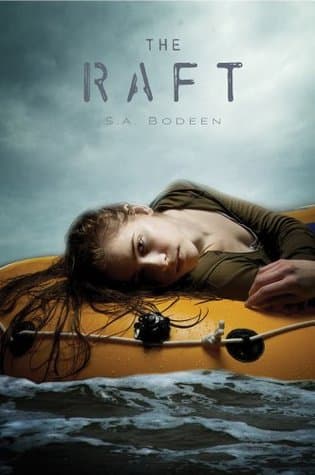
S.A. Bodeen (2012)
Genre
Thriller / Children's / Young Adult
Reading Time
240 min
Key Themes
See below
Sign in to track this book
Stranded in the vast Pacific after a cargo plane crash, experienced traveler Robie must battle dehydration, sharks, and her own dwindling hope alongside a mysterious co-pilot, Max, with only a bag of Skittles and a life raft between them and the crushing ocean.
Robie, a seasoned traveler at 15, is called to return to Midway Atoll, where her scientist parents live, after a visit with her Aunt Tita in Honolulu. Her parents, who study albatrosses, are worried about her and want her back immediately. Robie gets a last-minute spot on a cargo plane, which is familiar to her. She knows the pilot, Captain Wyman, but there's a new co-pilot, Max. The flight begins normally, but a massive storm quickly hits the aircraft. Despite Captain Wyman's reassurances, the plane is violently shaken. Suddenly, an engine fails, and Max yells at Robie to put on a life jacket. She sees him struggling with a life raft before everything goes dark, as the plane crashes.
Robie wakes up in the churning, cold ocean, disoriented and terrified. She's wearing a life jacket, but the plane is gone. After a desperate struggle, she spots a life raft and, to her relief, sees Max, the co-pilot, already on it. He pulls her aboard, saving her from drowning. Max explains that Captain Wyman did not survive, and the plane went down quickly. Robie is injured, with a gash on her leg, but otherwise okay. They find the raft is barely stocked: a small bag of Skittles, a few emergency items, and no fresh water. The vast, empty ocean stretches around them, and their ordeal has just begun.
The first days on the raft are a grueling test of survival. Thirst quickly becomes their main problem, made worse by the sun. Max tries to ration their small supply of Skittles, but hunger affects them. Robie, still in shock and injured, starts to hallucinate and have vivid dreams. She sees her dead grandmother, her parents, and even imagines a giant squid. Max, though injured, stays more grounded, trying to keep track of time and maintain hope. They spot sharks circling the raft, adding more terror to their already bad situation.
After days of drifting, battered by sun and waves, they spot land – a small, uninhabited island. With renewed hope, they paddle to shore. Robie, though weak, feels relief. However, Max's condition has been getting worse; he's becoming delirious and unresponsive. As Robie tries to care for him, she notices a strange smell and a wound on his arm. She realizes the wound is not from the crash but appears to be an old, infected injury. More chillingly, she finds a tattoo on his arm that she doesn't remember seeing before, and his behavior becomes erratic and frightening.
As Max's delirium gets worse, he begins to mutter. Robie pieces together parts of his words. She realizes that Max was not just the co-pilot; he was involved in something illegal. He reveals that he tampered with the plane, planning to crash it and steal its cargo – a shipment of rare, valuable birds. Captain Wyman had discovered Max's plan, leading to a struggle and the plane's crash. Max's wound, Robie now understands, is from Captain Wyman's resistance, not the crash. The truth is devastating: the plane crash was not an accident, and Max is a murderer, not a fellow survivor.
Max's condition rapidly declines, and he eventually dies on the island, leaving Robie completely alone. His death, while a relief from his terrifying presence and his confessions, leaves Robie in deep solitude and despair. She is now the sole survivor, responsible for her own survival in a desolate environment. The island offers little in the way of immediate resources – no fresh water, no easily accessible food. Robie must face the full horror of her situation, dealing with physical hardship and the psychological trauma of her ordeal and the shocking revelations about Max.
Now alone, Robie's struggle gets harder. Dehydration and hunger push her to her limits. She starts to hallucinate again, seeing her grandmother and other comforting figures, but these visions are mixed with terrifying images of Max and the plane crash. Despite her weakened state, Robie's instinct for survival takes over. She digs in the sand, hoping to find freshwater, and searches for any edible plants or creatures. She finds a few small birds' eggs, a vital but small source of sustenance. The harsh reality of her isolation is constant, but hope remains as she clings to the possibility of rescue.
Robie's hallucinations become more vivid and last longer. She has a powerful, extended vision of a rescue ship approaching, signaling, and people calling her name. She waves frantically, convinced salvation is near, only to wake up to the crushing reality that she is still alone on the island. The disappointment is almost unbearable. However, in her despair, she discovers a newly hatched albatross chick. Naming it 'Baby,' Robie forms a deep bond with the bird. Caring for Baby gives her a renewed purpose and companionship, helping her fight the overwhelming loneliness and giving her a reason to keep fighting for survival.
A fierce storm hits the island, threatening to wash away Robie and Baby. She huddles with the chick, protecting it as best she can. The storm is terrifying, but after it passes, it leaves a crucial piece of debris: a large, brightly colored plastic buoy. Robie recognizes it as a potential signal. With new determination, she struggles to drag the buoy to a visible spot on the beach. Exhausted but determined, she lights a small fire using scavenged materials, hoping the smoke combined with the buoy will attract attention. Her efforts are a desperate, final push for survival, fueled by her bond with Baby and the slim hope of being seen.
Robie's signal, combined with a search party that has been looking for her, finally works. A rescue plane spots the buoy and her small fire. She is found, weak and thin, but alive, with Baby the albatross chick in her arms. The rescuers are astonished by her resilience. She is airlifted to safety and, after initial medical attention, is reunited with her distraught but overjoyed parents. The reunion is emotional and overwhelming, showing her incredible will to survive. Robie's journey, though physically over, leaves her with deep psychological scars and a profound change in her perspective on life and the world.
The Protagonist
From a seemingly ordinary teenager, Robie evolves into a hardened survivor, finding inner strength and resilience she never knew she possessed.
The Antagonist/Supporting
Starts as a seemingly helpful survivor, but his true, villainous nature is revealed as his health deteriorates, culminating in his death.
The Supporting
From a helpless chick, Baby becomes a crucial emotional anchor for Robie, symbolizing her will to survive.
The Mentioned
Dies at the beginning of the story, serving as an initial mystery and later a key piece of information in understanding Max's villainy.
The Supporting
Their love for Robie drives her journey home and serves as a powerful motivation for her to survive.
The Mentioned
Provides a starting point for Robie's journey, representing her last connection to normalcy.
The Supporting
Serves as a recurring, comforting presence in Robie's hallucinations, aiding her psychological survival.
The central theme of 'The Raft' is the human will to survive against overwhelming odds. Robie, a seemingly ordinary teenager, faces extreme challenges: a plane crash, dehydration, starvation, sharks, and isolation. Her journey shows her natural resilience, adaptability, and determination. She learns to find water, scavenge for food, and protect herself, demonstrating the raw power of the survival instinct. Her ability to endure unimaginable physical and psychological torment shows the strength of the human spirit when faced with the ultimate test.
“I was alive. That was all that mattered.”
Robie's ordeal is defined by profound isolation. After the crash, she is adrift on a vast, empty ocean, then stranded on an uninhabited island. The death of Max, her only human companion, makes this loneliness worse, pushing her to the brink of despair. The theme explores the psychological impact of being utterly alone, leading to hallucinations and a desperate need for connection. The arrival of the albatross chick, Baby, becomes important in fighting this isolation, showing the fundamental human need for companionship, even if non-human.
“The silence was the worst. It pressed in on me, heavy and suffocating.”
Due to extreme dehydration, starvation, and psychological trauma, Robie often experiences vivid hallucinations. These illusions, often featuring comforting figures like her grandmother or terrifying ones like Max, blur the line between what is real and what is imagined. This theme explores how the mind copes with unimaginable stress and how perception can be distorted under pressure. It forces both Robie and the reader to question her senses and the reality of her experiences, especially regarding Max's true nature.
“My mind was playing tricks on me, or maybe it wasn't. Maybe the line between real and not real had just dissolved.”
The novel initially presents Max as a fellow survivor, but this perception is gradually shattered by his deteriorating health and Robie's discoveries. The revelation that Max deliberately crashed the plane and murdered Captain Wyman is a profound act of betrayal. This theme explores the shock and horror of realizing someone you trusted, or at least relied upon, is a dangerous criminal. It adds a layer of psychological terror to Robie's physical ordeal, as she must not only survive the elements but also confront the evil within another human being.
“He wasn't just a co-pilot. He was a murderer. The plane crash wasn't an accident.”
The bond Robie forms with Baby, the albatross chick, is a powerful example of this theme. In her extreme isolation, caring for the vulnerable chick gives Robie a vital sense of purpose, companionship, and hope. This connection shows the profound comfort and psychological support that animals can offer, especially in times of crisis. Baby becomes a symbol of life and a reason for Robie to keep fighting, showing the deep, instinctual connection humans can have with the natural world.
“He was my reason. My reason for holding on. My reason for staying alive.”
Immerses the reader directly into Robie's harrowing experience.
The story is told entirely from Robie's perspective, placing the reader directly inside her thoughts, fears, and perceptions. This narrative choice intensifies the sense of isolation and uncertainty, as readers only know what Robie knows. It also makes her hallucinations more impactful and disorienting, as her unreliable narration mirrors her deteriorating mental state. This technique fosters a strong sense of empathy and suspense, making Robie's struggle feel incredibly personal and immediate.
Blurs reality and reflects Robie's physical and psychological decline.
Robie's frequent hallucinations serve as a key plot device. Initially, they are a coping mechanism, bringing comforting figures like her grandmother. Later, they become more disturbing, reflecting her trauma and the blurring line between sanity and delirium. These visions manipulate the reader's perception, making it difficult to discern what is truly happening, especially regarding Max's actions and confessions. They heighten the psychological suspense and emphasize the extreme stress Robie is under, showcasing the mind's response to profound deprivation and fear.
A confined, symbolic setting for survival and revelation.
The life raft itself functions as a critical plot device. It is a tiny, fragile vessel in a vast, hostile ocean, symbolizing Robie's extreme vulnerability and isolation. Its limited space forces close proximity between Robie and Max, intensifying their interactions and making the eventual reveal of Max's true nature more terrifying due to the inescapable confinement. The raft is both a temporary sanctuary and a prison, a symbol of desperate hope and crushing despair, reflecting the precariousness of their survival.
A symbol of hope, innocence, and a reason to survive.
Baby, the albatross chick, acts as a powerful symbol and plot device. Its appearance after Max's death provides Robie with a crucial emotional anchor and a renewed purpose for survival. It represents innocence, vulnerability, and the natural world Robie's parents study, connecting her back to her life before the crash. Baby's presence helps combat Robie's profound loneliness and gives her a tangible reason to fight, showcasing the power of companionship and responsibility in the face of overwhelming despair.
The catalyst for the plane crash and Max's villainy.
The cargo of rare birds, though never explicitly seen by Robie, is the central inciting incident for the entire plot. It is Max's motive for sabotaging the plane and murdering Captain Wyman. This unseen cargo drives the antagonist's actions and sets in motion Robie's harrowing ordeal. It serves as a narrative device to introduce the element of human malice and crime into what initially appears to be a natural disaster, adding a layer of psychological thriller to the survival narrative.
“The raft was my world now. It was all I had.”
— Robie reflects on her dire situation after the plane crash.
“I had to keep moving, keep thinking. If I stopped, I would die.”
— Robie pushes herself to stay active and alert on the raft.
“Water was life. Without it, I was nothing.”
— Robie emphasizes the critical importance of water in her survival.
“The ocean was beautiful, but it was also a monster.”
— Robie describes the dual nature of the ocean surrounding her.
“I wasn't just fighting the ocean; I was fighting myself.”
— Robie realizes the internal struggle is as challenging as the external one.
“Hope was a fragile thing, but I clung to it.”
— Robie talks about maintaining hope despite overwhelming odds.
“Every sunrise was a victory.”
— Robie finds small triumphs in surviving another day.
“I had to be smarter than the sharks.”
— Robie strategizes to avoid predators in the water.
“Loneliness was a weight heavier than the ocean.”
— Robie expresses the emotional toll of being alone.
“My mind was my greatest weapon.”
— Robie relies on her mental strength to survive.
“The stars were my only map.”
— Robie uses the night sky to navigate and find comfort.
“I had to remember who I was, or I would lose myself.”
— Robie fights to maintain her identity in the face of adversity.
“Fear could paralyze, but it could also fuel.”
— Robie reflects on how fear can be both a hindrance and a motivator.
“Survival wasn't just about staying alive; it was about staying human.”
— Robie contemplates the deeper meaning of survival.
Ready to see how well you understood this book? Take our interactive quiz with 10 questions.

Biography coming soon.







