“The world was still in order when the Emperor Franz Joseph was still young.”
— Opening line of the novel, setting the nostalgic tone for the Austro-Hungarian Empire's decline.

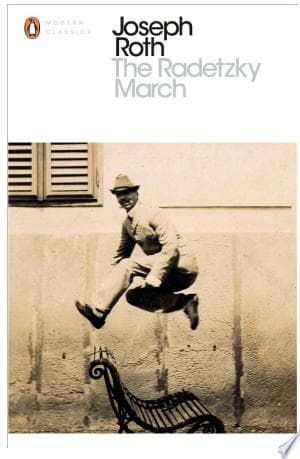
Joseph Roth (2000)
Genre
Historical Fiction
Reading Time
700 min
Key Themes
See below
Sign in to track this book
Joseph Roth's 'The Radetzky March' shows the Trotta family's fading life, a sad story of an empire about to fall, where duty and tradition are as strong as the coming war.
The story starts with Lieutenant Joseph Trotta's brave act at the Battle of Solferino in 1859. During the battle, Trotta quickly pushes Emperor Franz Joseph I out of the way of a bullet, saving his life. This act of bravery brings him immediate notice and a promotion to captain. The Emperor also gives him the hereditary title 'von Trotta' and the 'Order of Maria Theresa,' making his family minor nobility. This event, though, makes the modest Trotta uncomfortable, as he feels his act was more instinct than planned heroism. His fame grows, and his picture, showing him as a great hero, is even put in schools, much to his annoyance.
Joseph von Trotta, now an old man, struggles with the overstated legend around his Solferino deed. His son, Franz von Trotta, becomes a careful District Commissioner in a small town. Franz values order and routine, and is loyal to the Emperor and the Austro-Hungarian Empire. He tries to teach his son, Carl Joseph, the same values, but Carl Joseph is less willing. Franz is upset when he finds out that official school history books have an embellished, almost mythical story of his father's heroism. He tries to correct the mistakes, even asking the Emperor directly, believing in the importance of truth and the empire's story, a quest that shows his strict following of rules and honesty.
Carl Joseph von Trotta, the grandson, is a sensitive and somewhat sad young man, not suited for the military path his family's name pushes him towards. His father, Franz, expects him to follow the family tradition of serving the Emperor, though not necessarily as a soldier. Carl Joseph, however, ends up in the cavalry, where he feels out of place and alone. He often thinks deeply and feels a growing sense of disappointment with the strict, old-fashioned world of the Austro-Hungarian army. His early military life shows a lack of real ambition and a desire for something more meaningful, which he cannot explain or find within his expected life.
Stationed in a distant garrison town, Carl Joseph deals with boredom and loneliness. He becomes friends with his officer, Dr. Max Demant, a Jewish doctor who shares his interest in ideas and offers a different view of life than other military men. Demant introduces Carl Joseph to a world outside the army, including talks about philosophy and a shared sadness. Carl Joseph also starts an affair with Baroness von Taussig, his commander's wife. This relationship comes more from shared boredom and a need for connection than real passion, showing Carl Joseph's aimless life and his inability to find true happiness.
The affair between Carl Joseph and Baroness von Taussig leads to a tragic end. When a young lieutenant, Chojnicki, insults the Baroness publicly, Carl Joseph feels he must defend her honor. This leads to a duel, a common but dangerous practice in the Austro-Hungarian military. Dr. Demant, acting as Carl Joseph's second, is killed during the duel when he tries to step in and is accidentally shot. This event deeply affects Carl Joseph, who feels great guilt and responsibility for Demant's death. The duel shows how random military honor can be and the terrible results of the era's strict social rules, further separating Carl Joseph from his military life.
After Dr. Demant's death, Carl Joseph's already weak mental state worsens. Filled with guilt and a deep feeling of pointlessness, he turns to alcohol and gambling. He gets into large debts, making his financial and emotional problems worse. His once orderly life falls apart, showing his inner confusion and his growing distance from the military and the expectations placed on him. He becomes more alone, unable to talk to his father, who remains distant and busy with his own duties. This time is a turning point for Carl Joseph, as he loses his remaining support and falls deeper into despair.
In his despair, Carl Joseph becomes friends with Jacques, a Jewish peddler and former circus strongman. Jacques becomes a confidant and gives Carl Joseph money for his gambling. Through Jacques, Carl Joseph goes to a local brothel, owned by Frau Slama. He finds a strange comfort and temporary escape from his worries in the brothel, forming a platonic, almost family-like, relationship with Frau Slama and the women there. This place, far from military rules, gives him a brief feeling of freedom and acceptance, but it ultimately makes him feel worse about himself and his life's futility.
Meanwhile, Carl Joseph's father, Franz von Trotta, continues his careful work as District Commissioner. However, he becomes more aware of the growing problems in the Austro-Hungarian Empire. He sees the rise of nationalism, the weakening of imperial power, and the general decay of the values he holds dear. The world he has known and served so loyally is slowly breaking down around him. Overwhelmed by these changes and unable to understand the coming collapse, Franz has a stroke and dies, representing the old order's inability to change or survive. His death marks the end of an era for the Trotta family and the Empire.
After his father's death, Carl Joseph has a brief moment of clarity and tries to fix his life. He tries to pay his gambling debts, selling some of his belongings. However, his past actions catch up to him, and he is moved to a distant, empty border post in Galicia, a punishment for his behavior and a way for the army to quietly remove a problematic officer. This transfer is seen as a final exile, a place where the Empire's power is weak and the future uncertain. Despite the difficult conditions, Carl Joseph finds a strange peace and purpose in this isolated post, far from his family's suffocating expectations and the capital's decaying grandeur.
As Europe is on the edge of war, Carl Joseph sees the growing tensions from his distant post. When Archduke Franz Ferdinand is killed, starting World War I, Carl Joseph's regiment is called to action. During a fight, his men are very thirsty. Carl Joseph, with a sudden burst of purpose and selflessness, offers to get water from a nearby well, despite the clear danger. As he nears the well, he is shot and killed by a sniper. His death, though seemingly pointless, mirrors his grandfather's accidental heroism at Solferino, but this time it is a conscious act for his men, a final, meaningful act in a life mostly without direction. He dies just as the old Empire begins its final, massive collapse.
The Grandfather and foundational figure
From an ordinary soldier to an accidental hero, he spends his later life subtly resisting the myth he inadvertently created.
The Protagonist's father and Imperial servant
He rises as a dedicated servant of the Empire, only to witness its decline and die with it, unable to comprehend its dissolution.
The Protagonist and last of the Trottas
From aimless melancholic to a man finding a brief, selfless purpose in his final moments, embodying the Empire's last gasp.
The Supporting character
A supportive friend whose tragic, accidental death pushes Carl Joseph deeper into despair.
The Supporting character
A figure of temptation and tragic consequence, whose affair with Carl Joseph leads to Demant's death and deepens Carl Joseph's guilt.
The Supporting character
Provides a glimpse into a different social stratum, acting as a temporary enabler and confidant for Carl Joseph.
The Supporting character
Serves as a maternal, non-judgmental figure, offering Carl Joseph temporary solace and a sense of belonging outside his societal role.
The Mentioned character and symbolic figure
Remains a constant, symbolic presence, representing the declining yet steadfast imperial authority.
The Supporting character
A catalyst for tragedy, his actions directly lead to the duel and Demant's death.
The novel shows the slow decay and final fall of the Austro-Hungarian Empire. This idea is seen through the Trotta family's experiences, whose lives are tied to the Empire's fate. Franz von Trotta's strict following of imperial rules and his inability to understand the rising nationalism and social unrest show the Empire's own outdatedness. Carl Joseph's aimlessness and disappointment show the spiritual emptiness that fills the dying imperial order, showing how individual lives break down as the larger political structure falls apart. The constant feeling of sadness and coming disaster shows that the Empire's end was bound to happen.
“The Emperor was old, and he knew it; he was also the last of his kind, and he knew that too.”
Lieutenant Joseph Trotta's 'heroic' act at Solferino affects later generations of the family. The legend, exaggerated, creates high expectations for Franz and Carl Joseph, who try to live up to a made-up ideal. Joseph himself is uncomfortable with his fame, while Franz tries to correct the history, yet still expects his son to show the family's 'heroic' spirit. Carl Joseph feels weighed down by this history, finding himself not suited for any 'heroism' or even meaningful service. The theme shows how one defining moment can become a curse for generations, twisting identity and stopping people from finding themselves.
“His grandfather's deed was a heavy burden on him, a burden of which he was perhaps not even fully aware, but which he carried all the more heavily.”
The characters, especially Carl Joseph, deal with questions of who they are and their place in a fast-changing world. Carl Joseph struggles to fit his sensitive nature with the military path his family's history and society's expectations push him towards. He feels separate from his comrades, his family, and himself, seeking comfort in short-lived relationships and destructive behaviors. The novel also touches on the identity of minority groups in the Empire, like Dr. Demant's Jewish identity, showing how fragile the feeling of belonging is for those not at the center of the main culture. As the Empire falls, the idea of a shared Austrian identity starts to break apart, leaving people lost.
“He felt like a stranger in his own uniform, in his own skin.”
A deep feeling of longing for a past that is disappearing and a sad acceptance of loss fills the novel. The characters, especially Franz von Trotta, hold on to the traditions and certainties of the old Empire, even as they see it breaking apart. There is a desire for a simpler time when values were clear, and serving the Emperor gave clear meaning. The story itself often looks back, telling about past events and regretting the loss of an era. This theme is not just sentimental but shows a deep worry about modern times and the loss of a clear social and political order, ending in the complete breakdown of the world the Trottas knew.
“The world was slowly dying, and with it the Emperor, and with him all who were faithful to him.”
The novel looks at how much characters control their own lives versus being carried along by bigger historical forces or the weight of inherited situations. Lieutenant Trotta's 'heroic' act is shown as an accident, starting a chain of events that largely decides his descendants' lives. Carl Joseph, especially, feels a deep lack of control, drifting into a military career he does not want and giving in to gambling and despair. While Carl Joseph's final act of self-sacrifice might seem like a choice, it is set within the inevitable start of war, suggesting that even personal choices are limited by historical fate. The characters are often victims of their time and strict social structures.
“He knew that the world was stronger than he was, and that he was merely a plaything in its hands.”
Traces the decline of a family mirroring the decline of an empire.
The novel employs a generational saga structure, following three generations of the Trotta family: the grandfather (Joseph), the father (Franz), and the grandson (Carl Joseph). Each generation represents a different stage in the life and decline of the Austro-Hungarian Empire, from its peak (Joseph's heroism) to its stable, bureaucratic phase (Franz's service) to its final, fragmented years (Carl Joseph's disillusionment). This device allows Roth to illustrate the gradual erosion of imperial values and the profound impact of historical change on individual lives and family identity over time.
A foundational, yet false, myth that dictates the family's destiny.
The exaggerated and officially sanctioned legend of Lieutenant Joseph Trotta's heroism at the Battle of Solferino serves as a central plot device. This myth, which the original hero himself finds uncomfortable, creates an inescapable burden of expectation for his descendants. It forces Franz to meticulously uphold imperial honor and compels Carl Joseph into a military life he detests. The legend highlights the disconnect between official narratives and personal truth, and how historical accounts can shape, and often distort, individual and family identity, ultimately contributing to the Trotta family's tragic fate.
A recurring musical motif symbolizing the Empire's grandeur and its eventual decline.
Johann Strauss Sr.'s 'Radetzky March' functions as a powerful symbolic motif throughout the novel. It is the signature tune of the Austro-Hungarian Empire, evoking its military pomp, grandeur, and the patriotic fervor it once inspired. Its presence in various scenes, from formal military events to Carl Joseph's melancholic recollections, underscores the pervasive influence of the Empire. As the story progresses and the Empire declines, the march's symbolic power shifts from one of strength and unity to one of poignant nostalgia for a fading past, marking the rhythm of an empire's slow death.
A visual symbol of imperial authority and the family's unwavering loyalty.
The portrait of Emperor Franz Joseph I, particularly the one depicting Lieutenant Trotta's heroic deed, serves as a recurring visual symbol. It is present in schools, in Franz von Trotta's office, and in the minds of the characters. It represents the ultimate authority and the object of the Trotta family's unwavering loyalty. However, as the Empire weakens, the portrait also becomes a symbol of a fading era, an outdated ideal that no longer resonates with the younger generation. Its static, unchanging image contrasts sharply with the dynamic and disintegrating world around it, highlighting the disconnect between imperial illusion and reality.
A setting that isolates and reflects the periphery of the decaying empire.
The remote garrison town and later the desolate border post in Galicia serve as significant settings. These isolated locations symbolize the periphery of the Austro-Hungarian Empire, where its authority is tenuous and its glory faded. They isolate Carl Joseph, forcing him into introspection and highlighting his alienation. The desolation and lack of purpose in these outposts mirror Carl Joseph's inner state and the overall decline of the Empire, which is fraying at its edges. These settings emphasize the sense of being forgotten and the slow, inevitable creep of dissolution.
“The world was still in order when the Emperor Franz Joseph was still young.”
— Opening line of the novel, setting the nostalgic tone for the Austro-Hungarian Empire's decline.
“He had saved the Emperor's life, and for that he was given a barony and a certain immortality.”
— Describing the heroic act of Lieutenant Trotta's grandfather, which elevates the family's status.
“The uniform was the fatherland.”
— Reflecting on the symbolic importance of military attire in representing loyalty to the empire.
“He died as he had lived: in the service of His Majesty.”
— Epitaph for District Commissioner Franz von Trotta, emphasizing his lifelong devotion.
“The world was no longer in order. It was falling apart.”
— Later in the novel, contrasting the opening to highlight the empire's disintegration.
“He felt as if he were living in a borrowed time, in a borrowed world.”
— Carl Joseph von Trotta's sense of alienation as the old order crumbles.
“The Radetzky March was played, and everyone stood up, as if obeying an invisible command.”
— Describing a social gathering where the march evokes automatic respect for tradition.
“He had inherited nothing from his father but the uniform and the melancholy.”
— Carl Joseph reflecting on his burdensome legacy and emotional inheritance.
“The empire was like an old man who had outlived his time.”
— Metaphor for the Austro-Hungarian Empire's prolonged and feeble existence.
“In the end, all that remained was the memory of a lost world.”
— Closing reflection on the ephemeral nature of the empire and its culture.
“He was a soldier without a war, a hero without a deed.”
— Describing Carl Joseph's aimless existence in peacetime military service.
“The flags were faded, but the loyalty was bright.”
— Observing the contrast between decaying symbols and enduring devotion.
“Every generation must atone for the sins of the previous one.”
— Philosophical musing on the cyclical burdens within the Trotta family.
“The march was a ghost, haunting the living with the echoes of the dead.”
— Personifying the Radetzky March as a remnant of a bygone era.
Ready to see how well you understood this book? Take our interactive quiz with 10 questions.
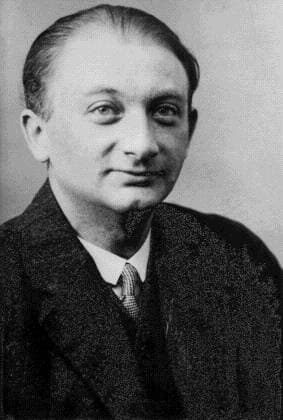
Moses Joseph Roth was an Austrian-Jewish journalist and novelist, best known for his family saga Radetzky March (1932), about the decline and fall of the Austro-Hungarian Empire, his novel of Jewish life Job (1930) and his seminal essay "Juden auf Wanderschaft", a fragmented account of the Jewish migrations from eastern to western Europe in the aftermath of World War I and the Russian Revolution. In the 21st century, publications in English of Radetzky March and of collections of his journalism from Berlin and Paris created a revival of interest in Roth.