“Innocence is a kind of insanity.”
— Fowler reflects on Pyle's naive idealism and its dangerous consequences.

Graham Greene (2021)
Genre
Literary Fiction / Historical Fiction
Reading Time
240 min
Key Themes
See below
Sign in to track this book
In the final days of French rule in Vietnam, a British journalist, an American aid worker, and a Vietnamese woman find themselves in a dangerous love triangle that reflects the political and moral problems of 1950s Saigon.
The novel begins with Thomas Fowler, a British journalist in Saigon, learning from Inspector Vigot of the Vietnamese police that Alden Pyle's body was found in a canal. Pyle, a young American aid worker, was murdered. Fowler pretends not to care, saying Pyle was just a colleague, even though his mistress, Phuong, recently left him for Pyle. Vigot suspects Fowler knows more. This immediately sets up a mystery about Pyle's death and Fowler's complicated relationship with both Pyle and Phuong. Fowler's first thoughts are of relief that Pyle is gone, hoping to get Phuong back, which shows his self-interest and emotional distance.
The story goes back to when Pyle arrived in Saigon and met Fowler at the '300' bar. Pyle is a young, earnest man, full of American ideals and theories about a 'Third Force' in Vietnam, separate from both the French colonizers and the communist Viet Minh. Fowler, an experienced journalist who prides himself on being uninvolved, at first tolerates Pyle and even finds his innocence amusing. Fowler's life with Phuong, his young Vietnamese mistress, is a comfortable routine, and he thinks he is safe from the political and emotional problems around him. Pyle, however, soon challenges Fowler's world, both politically and personally, by showing interest in Phuong.
Pyle, with his direct American way, openly starts to pursue Phuong. He learns Vietnamese, takes her dancing, and offers her a stable future that Fowler, who is still married to a wife in England, cannot. Fowler, despite saying he is detached, feels very possessive of Phuong and is annoyed by Pyle. He dismisses Pyle's intentions as naive, believing Pyle cannot truly understand Phuong or Vietnamese culture. Fowler's attempts to discourage Pyle do not work, as Pyle's sincere belief in his love for Phuong, along with his offer of marriage and security, begins to convince Phuong and her sister, Miss Hei, who looks out for Phuong's interests.
The love triangle grows as Phuong, influenced by her sister, eventually chooses Pyle. Miss Hei sees Pyle as a better match because of his youth, wealth, and the promise of a legal marriage. Fowler's inability to divorce his wife, Helen, because of her religion, is a big problem. Fowler's efforts to get a divorce are difficult and fail, leaving him unable to compete with Pyle's offer of legitimacy. Phuong moves in with Pyle, leaving Fowler upset and more bitter. This personal loss starts to break down Fowler's journalistic distance, pulling him further into the emotional and political situation he once only watched.
Fowler, looking for a story, travels to Phat Diem, a Catholic area under attack, and gets caught in a dangerous French military operation. He barely escapes death when a tower he is hiding in is shelled. Pyle, who went there to deliver aid, finds Fowler and, using his American skills and medical training, helps save Fowler's life after he is hurt and suffering from opium withdrawal. This event creates a complex situation between the two men; Fowler has to admit he owes Pyle, despite his dislike. Pyle, true to his nature, acts out of real concern and duty, further showing his idealism against Fowler's cynicism.
During their time together, Fowler starts to understand Pyle's deeper involvement in Vietnamese politics. He learns that Pyle is not just an aid worker but is secretly giving weapons and money to General The, a Vietnamese general Pyle believes represents his 'Third Force' — a nationalist choice separate from the French and the communists. Pyle acts out of a naive belief that he can help shape Vietnam's future through this 'Third Force,' unaware of the destructive results. Fowler, at first doubtful, becomes more worried by Pyle's dangerous idealism and the potential harm caused by his interference, which is very different from Fowler's policy of not getting involved.
The story reaches a turning point with a series of bombings in Saigon, especially a large explosion in the public square, which kills many civilians, including women and children. Fowler realizes these bombs, delivered by bicycles, are linked to General The and, through him, to Pyle's secret work. The horror of innocent lives lost makes Fowler abandon his journalistic distance. He confronts Pyle, who, despite the evidence, still naively believes the deaths are a necessary evil for his 'Third Force' idea. This event confirms Fowler's belief that Pyle's idealism is dangerously wrong and directly causes real suffering.
Seeing the terrible aftermath of the bombings, Fowler has to face his own part in things through his inaction. His long-held belief in not getting involved breaks down as he realizes Pyle's 'innocence' is more dangerous than any clear evil. He decides to act, believing Pyle must be stopped. He contacts Mr. Heng, a communist agent, and subtly gives information that connects Pyle to the bombings, knowing this will lead to Pyle's death. This decision is a big change for Fowler; he consciously gives up his journalistic distance and actively takes part in the political schemes he once scorned. His reasons are a mix of moral anger, personal revenge, and a desire to protect Vietnam from Pyle's destructive ideals.
Pyle is led to a meeting, supposedly with General The, but is instead ambushed and killed. The first scene of Pyle's body in the canal comes back here. Inspector Vigot continues his investigation, subtly questioning Fowler, who keeps up his pretense of not knowing. Fowler knows he is responsible for Pyle's death, having given the information that led to the ambush. Despite his initial relief that Pyle is gone, Fowler is not entirely free of guilt. He thinks about the irony of Pyle's 'innocence' causing such destruction and his own cynical role in a murder. The story suggests that Fowler's actions, while perhaps right in his eyes, have marked him, blurring the lines between observer and participant.
After Pyle's death, Phuong, practical and seeking security, returns to Fowler. Miss Hei, seeing Pyle's death as a clear sign he was unsuitable, encourages Phuong to get back with Fowler, especially after Fowler's wife, Helen, finally grants him a divorce. Fowler gets what he wanted: Phuong back and the freedom to marry her. However, this 'win' feels empty. He is burdened by his part in Pyle's death and the realization that his distance is broken forever. He has become involved, both personally and politically, and his cynicism now carries the weight of direct action. The novel ends with Fowler thinking about the emptiness of his triumph; his quiet American is gone, but the complex reality of Vietnam and his own soul remain.
The Protagonist
Fowler's arc moves from a detached, cynical observer to an active participant in political intrigue and murder, ultimately questioning the cost of his own 'involvement.'
The Antagonist/Catalyst
Pyle remains largely static in his idealism, unwavering even when confronted with the devastating consequences of his actions, ultimately leading to his demise.
The Supporting
Phuong's arc is less about internal change and more about her movement between the two men, driven by her desire for security and a stable future.
The Supporting
Vigot remains a steadfast and observant figure, representing the persistent, if often frustrated, pursuit of truth amidst political obfuscation.
The Supporting
Miss Hei's actions are consistently driven by her desire to secure the best possible future for Phuong, remaining a pragmatic and influential figure.
The Mentioned
General The's actions serve as a catalyst for the plot, demonstrating the real-world consequences of Pyle's idealism.
The Supporting
Mr. Heng acts as a means to an end for Fowler, embodying the darker, more decisive side of political maneuvering.
The Mentioned
Helen's character remains off-stage, serving as a static barrier to Fowler's desired future with Phuong until her eventual, convenient agreement to a divorce.
The novel contrasts Alden Pyle's 'innocence' with Thomas Fowler's 'experience.' Pyle's innocence is shown as a dangerous blindness, leading him to believe in abstract ideas ('Third Force') without understanding the real problems and human cost of his actions. His idealism causes civilian deaths. Fowler, on the other hand, shows cynical experience, at first believing in not getting involved. But even his experience turns out to be a kind of self-deception, as he has to get 'involved' to stop Pyle's destructive innocence. The theme looks at how both extremes can lead to moral compromises and destructive results in a complex world.
“I never knew a man who had better motives for all the trouble he caused.”
The novel is set during the French Indochina War and explores Western involvement in Eastern countries. Fowler, representing old British colonialism, believes in watching without acting, while Pyle shows a new, American way of intervening, driven by a mistaken sense of mission to 'save' Vietnam. The book criticizes both approaches: the French's failing control and the Americans' naive attempts to force Western ideas, which cause unexpected and violent problems. It shows the arrogance of foreign powers trying to understand and control a culture they do not truly grasp, leading to chaos and suffering for the local people.
“God save us always from the innocent and the good.”
The love triangle between Fowler, Pyle, and Phuong reflects the larger political themes. Fowler's love for Phuong is possessive and based on habit, while Pyle's love is idealistic and earnest, offering her a future with Western ideas of marriage and stability. Phuong herself is mostly passive, an object desired by both men, symbolizing Vietnam — a country fought over and defined by outside forces. The men's struggle for Phuong reflects their struggle for control and influence, blurring the lines between personal desire and political ambition, showing how love can be spoiled by self-interest and a desire to own.
“I was in love with Phuong, and I wanted to keep her.”
Fowler's main belief is journalistic distance, thinking a reporter should observe without getting involved. He initially scorns Pyle's active intervention. However, the novel slowly dismantles this belief, first through Pyle's personal intrusion into Fowler's life, and then through the terrible results of Pyle's political actions (the bombings). Fowler eventually realizes that true distance is not possible, and that doing nothing can be a form of complicity. He has to give up his neutrality and actively get 'involved' in Pyle's downfall, showing that moral responsibility often requires action, even if it leads to morally unclear results.
“I had been around too long to believe in that kind of innocent evil.”
As a first-person story from Fowler's view, the novel questions truth and the reliability of a single story. Fowler, a journalist, claims to deal in facts, yet his account is colored by his personal biases, jealousy, and self-justifications. Inspector Vigot's skeptical questions challenge Fowler's version of events, making him face uncomfortable truths. The change of historical events, as Greene notes in his dedication, further emphasizes that the story is a created narrative, not a factual history. The novel suggests that 'truth' is often subjective, influenced by personal interests and the desire to control one's own story, especially during war and political upheaval.
“What does it matter, a few more dead, a few less, when you're making history?”
The story is told exclusively from the perspective of Thomas Fowler, whose biases color the narrative.
The novel is narrated entirely by Thomas Fowler, a jaded British journalist. This first-person perspective allows for deep insight into Fowler's cynical worldview, his personal struggles, and his evolving moral compass. However, Fowler is an unreliable narrator; his jealousy of Pyle, his possessiveness over Phuong, and his initial attempts to justify his detachment all influence his portrayal of events and characters. The reader is encouraged to question Fowler's interpretations, especially regarding Pyle's character and Fowler's own role in the political and personal dramas, making the reader an active participant in discerning the 'truth' behind his account.
The narrative begins with Pyle's death and then recounts the events leading up to it.
The novel employs a non-linear, flashback structure. It opens with the discovery of Alden Pyle's body and Inspector Vigot's initial interrogation of Fowler. The bulk of the story then unfolds as Fowler recounts the events that led to Pyle's murder, detailing Pyle's arrival, the love triangle with Phuong, and Pyle's political activities. This structure immediately establishes a sense of mystery and suspense, allowing the reader to understand the 'what' of Pyle's death before gradually revealing the 'how' and 'why' from Fowler's perspective. It also highlights Fowler's complicity from the outset, framing the entire narrative as his confession and justification.
Phuong represents Vietnam itself, desired and fought over by external powers.
Phuong, Fowler's beautiful Vietnamese mistress, serves as a powerful symbol throughout the novel. She is largely passive and enigmatic, often described as an object of desire rather than an active agent. Her beauty and quiet nature make her desirable to both Fowler and Pyle, and their competition for her love mirrors the larger political struggle for control over Vietnam. Just as Vietnam is a land caught between French colonialism and American intervention, Phuong is caught between the two Western men, each with their own vision for her future. Her ultimate choice, guided by pragmatism and a desire for security, reflects the difficult choices faced by the Vietnamese people.
Pyle embodies the archetype of the well-meaning but destructive foreign idealist.
Alden Pyle represents the titular 'Quiet American' archetype. He is not overtly malicious but dangerously naive, believing firmly in his abstract theories and 'good intentions' for Vietnam. This archetype critiques a specific brand of American idealism that, in its ignorance of local complexities and history, can cause more harm than overt hostility. Pyle's quiet, earnest demeanor masks a profound capacity for destruction, making him more insidious than a clear enemy. The device highlights how 'innocence' can be a greater threat than cynicism when coupled with unchecked power and a lack of understanding.
A symbol of Fowler's detachment, escapism, and the allure of the East.
Fowler's regular use of an opium pipe is a recurring motif and a significant symbol. It represents his desire for detachment, his escape from the harsh realities of war and his personal anxieties. The ritual of preparing and smoking opium reinforces his perceived role as a passive observer, removed from the active engagement of Pyle. It also symbolizes a certain exotic allure of the East, a comfort he finds in Saigon that he cannot find in his Western life. The pipe, however, also signifies his dependency and his emotional numbness, a barrier to true connection and responsibility. His withdrawal from opium during his time in Phat Diem marks a turning point towards his eventual 'involvement.'
“Innocence is a kind of insanity.”
— Fowler reflects on Pyle's naive idealism and its dangerous consequences.
“I never knew a man who had better motives for all the trouble he caused.”
— Fowler describes Pyle's well-intentioned but destructive actions in Vietnam.
“They killed him because he was too innocent to live.”
— Fowler comments on Pyle's death and his inability to understand the complexities of war.
“I was to see many times that look of pain and disappointment on his face when the evidence of his senses conflicted with his faith.”
— Fowler observes Pyle's struggle between his beliefs and reality in Vietnam.
“One has to take sides. If one is to remain human.”
— Fowler argues for the necessity of engagement in political and moral conflicts.
“I'm not involved. Not involved, I repeat. I'm a reporter. I'm not engagé.”
— Fowler initially claims neutrality in the Vietnam conflict, contrasting with Pyle's involvement.
“God save us always from the innocent and the good.”
— Fowler expresses cynicism towards well-meaning but dangerous individuals like Pyle.
“The human condition being what it is, let them fight, let them love, let them murder, I would not be involved.”
— Fowler's earlier stance of detachment from the struggles around him.
“You can't blame the innocent, they are always guiltless. All you can do is control them or eliminate them.”
— A cynical view on how innocence can be more dangerous than malice.
“Sooner or later, one has to take sides if one is to remain human.”
— Fowler's realization that neutrality is dehumanizing in the face of injustice.
“I was determined to report what I saw, not what I was expected to see.”
— Fowler's commitment to journalistic integrity amidst political pressures.
“They want enough rice. They don't want to be shot at. They want one day to be much the same as another.”
— Fowler describes the simple desires of the Vietnamese people, overlooked by foreign powers.
“Death is the only absolute value in the world. Kill a man and you are responsible for his death.”
— A reflection on the finality and moral weight of taking a life.
“I hate the whole damned business, but I'm in it now.”
— Fowler acknowledges his reluctant involvement in the political turmoil.
Ready to see how well you understood this book? Take our interactive quiz with 10 questions.
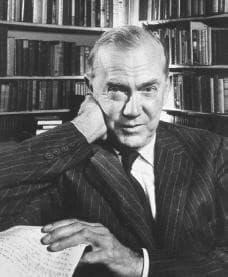
Henry Graham Greene was an English writer and journalist regarded by many as one of the leading English novelists of the 20th century.







