“Oh, what a world it is, and how small a part of it I have seen!”
— Akasha reflecting on her limited understanding of the world before becoming a vampire.


Anne Rice (1988)
Genre
Fantasy
Reading Time
10-12 hours
Key Themes
See below
Sign in to track this book
Ancient vampire queen Akasha awakens from a 6,000-year slumber to unleash a terrifying plan for humanity, drawing rock star Lestat and a host of haunted dreamers into a sensual, globe-spanning conflict that will decide the fate of all.
Lestat de Lioncourt, now a famous rock star, gets ready for a huge concert in San Francisco. His music, a mix of rock and his vampire life, is popular worldwide. Without his knowing, his powerful music and the many vampires drawn to the concert wake Akasha, the first vampire queen, from her long sleep. She has been dormant for thousands of years, inside a statue. But Lestat's bold public vampirism and his music's raw power stir her. Elsewhere, several powerful vampires, including Marius, Jesse Reeves, and Pandora, have vivid, troubling dreams of twin red-haired girls and an old tragedy. This is a psychic event linked to Akasha waking up.
Akasha, fully awake, starts a brutal rampage across the world, killing most male vampires and taking their hearts. She believes men cause all conflict and suffering and that by removing them, she can create a matriarchal utopia. She also looks for Lestat, drawn to his boldness and strength. She appears to him, makes him her new consort, and begins to share her ancient powers and her twisted plan for humanity. Lestat is at first overwhelmed and charmed by her power and old wisdom, becoming a reluctant part of her plan to kill many.
Marius, one of the oldest and most knowledgeable vampires, sees the great danger Akasha poses. He starts gathering other ancient vampires, including Pandora, Maharet, Mekare, Khayman, and the twins' descendant, Jesse Reeves, who has been having the prophetic dreams. They meet in a remote place, sharing their experiences and knowledge about Akasha's origins and her new bloodlust. Marius tells his long history with Akasha and Enkil, her inert king, revealing the true source of their vampirism and the delicate balance that kept them dormant for so long. They put together the history of the First Brood and the twins.
At the gathering of ancient vampires, Maharet, one of the red-haired twins from the dreams, finally tells the full, terrible story of her and Mekare's past. She reveals they were powerful tribal witches in ancient Kemet (Egypt) when Akasha and Enkil were human rulers. Akasha, wanting to understand Maharet's magic, captured them. During a violent attack on Akasha and Enkil by spirits, a malicious spirit entered Akasha's body, turning her into the first vampire. Mekare, in revenge for the torture and murder of her sister, later ate Akasha's human brain, linking their fates and making Mekare the true channel of the original vampiric spirit, though Akasha keeps the power.
Akasha continues her destructive path, wiping out male populations and gathering a new, female-led court. She explains her radical idea to Lestat: to get rid of war, crime, and suffering by removing what she sees as the cause—men. She plans to create a new world order where women rule, and she and Lestat will be the divine parents of a new race. Lestat is increasingly horrified by her genocide, despite his initial interest. He struggles with his conscience, torn between his admiration for power and his growing disgust at her cruelty. Akasha's actions show a deep disconnect from human morality.
The gathered ancient vampires, including Marius, Maharet, Mekare, Khayman, Pandora, and Daniel Molloy, meet Akasha and Lestat in the desert. They confront Akasha, trying to reason with her and warn her of the results of her actions. They argue against her extreme ideas, pointing out the flaws in her plan and the destruction she is causing. However, Akasha remains unmoved, sure of her divine purpose. She ignores their pleas and shows her great power, further cementing her tyrannical control and revealing the depth of her madness and detachment from the world she claims to want to save.
As Akasha continues her killing spree, Lestat's moral compass finally takes over. He openly defies her, refusing to take part in her genocidal plan any longer. This defiance enrages Akasha, who sees his rebellion as a deep betrayal. She uses her immense power on him, almost destroying him. His body is shattered, and he is left for dead. This act strengthens the other vampires' resolve that Akasha must be stopped, and Lestat, though badly hurt, becomes a symbol of resistance against her tyranny.
The surviving ancient vampires, now joined by a recovering Lestat, prepare for a desperate final fight with Akasha. They know she must be stopped at any cost, even if it means their own destruction. The battle is fierce, with Akasha showing terrifying power. However, the combined strength and ancient knowledge of the others, especially Maharet and Mekare, are key. In a dramatic moment, Mekare, the silent twin who has carried the weight of their ancient trauma, finally gets her chance. She fulfills her ancient desire for revenge by eating Akasha's brain, thus transferring the core vampiric spirit to herself and ending Akasha's reign.
With Akasha's destruction, the vampiric spirit passes to Mekare, making her the new Queen of the Damned. She falls into a deep, catatonic state, becoming the inert, living source of all vampiric life, much like Akasha and Enkil before her. The surviving vampires, including Lestat, Marius, Maharet, and Pandora, are left to deal with their shattered world. They gather around Mekare, understanding their new responsibility to protect her. The world is safe from Akasha's immediate threat, but Mekare's new role and the trauma of Akasha's reign leave a lasting mark on the ancient blood-drinkers, making them rethink their place in the world.
After Akasha's defeat, the surviving vampires form a fragile, new community. They promise to protect Mekare, understanding that her existence is now vital for all of them. Lestat, deeply changed by his experience with Akasha, grapples with his own identity and purpose. He finds comfort and a sense of belonging among these ancient beings, recognizing the true power and responsibility of his vampiric nature. The novel ends with an uneasy peace, as the vampires, having faced the biggest threat to their existence, must now navigate a future where their old secrets have been revealed and their world changed forever. They are united, for now, by their shared ordeal and their new Queen.
The Protagonist
From a self-absorbed rock star, Lestat transforms into a reluctant hero who confronts ultimate evil and finds a deeper sense of purpose and belonging among the ancient vampires.
The Antagonist
Awakens from a dormant state to attempt a global purge and establish a new world order, only to be ultimately defeated and replaced.
The Supporting
From a solitary guardian of ancient secrets, Marius becomes a leader in the fight against Akasha, sharing his knowledge to protect their species.
The Supporting
After centuries of guarding her sister and the truth, Maharet finally reveals the full history of vampirism, playing a pivotal role in Akasha's defeat.
The Supporting
From a silent, vengeful victim, Mekare finally achieves her ancient revenge and becomes the new, inert Queen of the Damned.
The Supporting
From a curious Talamasca scholar, Jesse is drawn into the heart of the vampire world, learns her true lineage, and ultimately becomes a vampire herself.
The Supporting
Reunites with Marius and other ancients to confront Akasha, reaffirming her place among the oldest vampires.
The Supporting
From a guilt-ridden ancient, Khayman finds a measure of peace by participating in Akasha's downfall and protecting Mekare.
The novel looks at the origins and forms of evil, especially through Akasha. Her 'evil' comes from a twisted wish for a perfect world, leading to genocide. The other vampires, despite being predators, struggle with morality, with Lestat's journey to redemption being important. His first interest in Akasha's power turns into horror and defiance, showing that even immortal beings can choose good over evil. The theme asks if true evil is natural or a result of extreme ideas, and if redemption is possible for those who have done terrible things, or if it means stopping more harm.
““Evil is a point of view. We are immortal. And what you consider evil, we consider survival.””
Immortality in 'The Queen of the Damned' is not a gift but a heavy burden. The ancient vampires, like Marius, Maharet, and Mekare, carry thousands of years of memories, trauma, and secrets. Their pasts haunt them, especially the events around Akasha's creation and the suffering of the red-haired twins. This huge weight of history shapes their actions and views, making them both wise and tired. The novel emphasizes that the past never truly ends for immortals; it always affects and often controls their present, showing the mental cost of endless life.
““To be a vampire is to be a slave to the past, to carry the memory of every breath you've taken, every life you've touched.””
The fight for power and control is central to the story, especially Akasha's attempt to completely control humanity and the vampire species. Her belief that she knows what is best for the world leads her to take away the free will of both mortals and vampires. The conflict happens when other vampires, particularly Lestat, assert their own free will against her tyrannical plan. This theme questions the ethics of having immense power, the dangers of perfect world ideas enforced through violence, and the natural human (and vampire) desire for independence. The final confrontation is a battle for the right to choose one's own future.
““I am the fulfillment and I shall from this moment be the cause.””
Despite their immortality and power, many vampires feel deep loneliness and isolation. Lestat's rock star persona is a desperate attempt to connect with humanity, while Marius and Pandora struggle with their old, often solitary lives. The prophetic dreams are a strong force of connection, bringing different vampires together and making them face their shared origins. The formation of a new, though fragile, community at the novel's end highlights the vital need for connection, even among beings who often live outside human society. It suggests that true strength comes not from being alone but from shared experience and mutual support.
““We are the Children of the Millennia, and we are alone.””
A shared dream sequence that links various vampires and mortals.
The psychic dreams are a crucial plot device that connects various characters across the globe, drawing them into the central conflict. These vivid, recurring dreams of the red-haired twins and their ancient suffering serve as a premonition of Akasha's awakening and a call to action for the ancient vampires. They provide exposition about the origins of vampirism and create a sense of urgency, compelling characters like Jesse Reeves, Marius, and Maharet to seek each other out and eventually confront Akasha. The dreams function as a supernatural communication network, building suspense and revealing key historical details gradually.
The rock star vampire's music acts as a catalyst for Akasha's awakening.
Lestat's rock music is more than just entertainment; it's a powerful narrative device. Its raw energy and his public embrace of his vampiric identity resonate across the supernatural world, acting as a catalyst that awakens Akasha. The music symbolizes Lestat's audacious spirit and his desire for connection, but also his unwitting role in unleashing ancient evil. It draws both devoted fans and vengeful vampires to his concert, setting the stage for the unfolding drama and demonstrating the far-reaching impact of his actions. It's a modern expression of ancient power, bridging the gap between the old world and the new.
The detailed backstory of Akasha, Enkil, and the red-haired twins.
The extensive historical narrative of the First Brood, particularly the story of Akasha, Enkil, Maharet, and Mekare, serves as a foundational plot device. Revealed primarily through Maharet's storytelling and Marius's recollections, this backstory provides the essential context for Akasha's motivations and the nature of vampirism itself. It explains the interconnectedness of all vampires, the source of their power, and the ancient grievance that drives Mekare's vengeance. This device grounds the fantastical elements in a rich, detailed mythology, making the conflict more meaningful and the characters' actions more understandable.
The core of vampirism, residing within the Queen of the Damned.
The 'Mother Spirit' or 'Heart' of vampirism is a crucial conceptual plot device. It refers to the original spirit that entered Akasha, making her the first vampire and the source of all vampiric life. This spirit is transferable, and its destruction means the end of all vampires. Its existence explains why Akasha (and later Mekare) possesses such immense power and why her survival is intrinsically linked to the entire species. The concept creates high stakes for the final confrontation, as destroying Akasha risks destroying all vampires, forcing the ancients to find a way to transfer, rather than eradicate, the spirit.
“Oh, what a world it is, and how small a part of it I have seen!”
— Akasha reflecting on her limited understanding of the world before becoming a vampire.
“And I knew then what I had to do. I had to go to her. I had to find her. I had to kill her.”
— Lestat's realization of his mission to confront Akasha after she starts her rampage.
“We are the Children of Darkness, and we have our own laws, our own morality.”
— Marius explaining the vampire code and their separation from human ethics.
“The greatest evil is not done in the shadows, but in the light, by those who believe themselves to be righteous.”
— Maharet's observation on the nature of evil, particularly in reference to Akasha's actions.
“To be a god is to be lonely, to be an observer, to be a judge without appeal.”
— Akasha musing on the isolation and burden of her immense power.
“There is no death for us, only change. But change can be a form of living death.”
— Pandora reflecting on the eternal existence of vampires and its potential for stagnation.
“The music... it calls to us. It always has. It is the voice of the living, and we are its echoes.”
— Lestat's connection to human music and its powerful effect on vampires.
“Every legend has a grain of truth, a seed planted in the human heart that blossoms into myth.”
— Maharet discussing the origins and evolution of vampire legends among mortals.
“Love, true love, is the most dangerous thing in the world. It makes you vulnerable. It makes you weak.”
— Akasha's cynical view on love, contrasting with the bonds between other vampires.
“We are all merely footnotes in a much larger, darker history.”
— Maharet reflecting on the vast, ancient history of vampires and their place within it.
“The past is a living thing. It breathes. It remembers. And sometimes, it demands to be heard.”
— Jesse's fascination with the history of the Talamasca and the ancient vampires.
“To be truly free, one must first be truly lost.”
— Akasha's philosophy on achieving ultimate freedom through shedding all earthly ties.
“There is no more beautiful sound than the human heart breaking, for it is then that it is most open to change.”
— Akasha's chilling perspective on human suffering and its potential for transformation.
“Even a god can fall. Especially a god.”
— Marius contemplating Akasha's vulnerability despite her immense power.
“We are the guardians of what was, what is, and what will be. And we are tired.”
— The ancient vampires expressing their weariness after millennia of existence and observation.
Ready to see how well you understood this book? Take our interactive quiz with 10 questions.
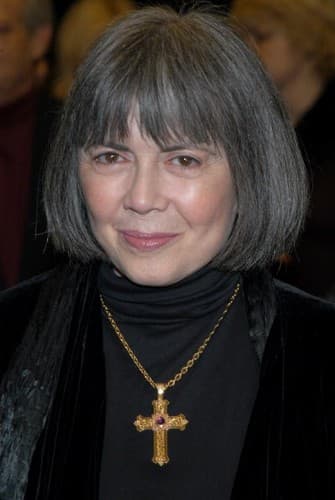
Anne Rice was an American author of gothic fiction, erotic literature, and Christian literature. She was best known for her series of novels The Vampire Chronicles. The first book became the subject of a film adaptation—Interview with the Vampire (1994).







