“The Queen had her own way of dealing with things, and it usually involved a cup of tea and a good sit down.”
— Reflecting on the Queen's demeanor amidst chaos.

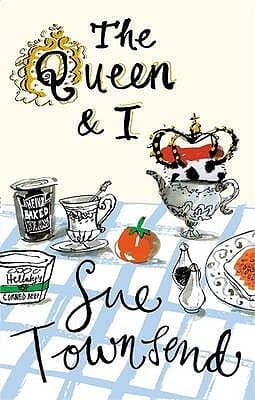
Sue Townsend (1999)
Genre
Historical Fiction / Young Adult
Reading Time
270 min
Key Themes
See below
Sign in to track this book
When a republican government exiles the British royal family to a housing estate, Queen Elizabeth II must navigate poverty, public transport, and self-sufficiency, forcing her to confront whether royalty is a birthright or just a facade.
The novel opens with the news that the People's Republican Party, led by Prime Minister Jack Barker, has won a landslide election in Britain. Their first act is to dismantle the monarchy. Queen Elizabeth II and her entire family, including Prince Philip, Prince Charles, Princess Anne, Prince Andrew, Prince Edward, and their spouses and children, are stripped of their titles, wealth, and privileges. They are given only a small allowance and informed they will be relocated. The Queen initially believes it is a joke or a temporary measure, but the reality quickly sets in as they are evicted from Buckingham Palace and flown by helicopter to a dreary, rundown council estate in the Midlands, specifically to a street the locals call 'Hell Close'.
Upon arrival at their designated semi-detached house in Hell Close, the Royal Family is met by their new social worker, Trish. The Queen, used to luxury, is horrified by the small, dirty house, the lack of staff, and the unfamiliar, often hostile, environment. Prince Philip tries to maintain some dignity, while Prince Charles struggles with having to do manual labor. The younger royals, particularly Princess Anne and Prince Edward, are openly resentful and find it difficult to adjust to sharing a bathroom and cooking their own meals. The neighbors, initially curious, soon become either indifferent or openly critical of their new, 'posh' residents.
The Queen, with Trish's help, attempts her first grocery shopping trip, a bewildering experience involving trolleys and unfamiliar brands. She finds herself constantly short of money and unable to purchase her usual luxuries. Back at the house, she tries to cook, with disastrous results, showing her complete lack of domestic skills. Prince Philip attempts DIY, causing more damage than repair. The children struggle with attending local schools, facing bullying. The family dynamic shifts as they must rely on each other and confront their individual inadequacies in this new, mundane existence. Boredom is a challenge, particularly for the Queen.
Prince Philip, unable to tolerate idleness, tries to escape the estate by climbing over a wall, only to be caught and reprimanded. He channels his frustration into gardening, though with mixed results. Prince Charles, meanwhile, tries to find a job, applying for various positions, including a part-time role at a garden center. His aristocratic demeanor and lack of practical skills make him unsuitable for most roles, leading to further humiliation. He eventually finds some solace in tending a small allotment, reflecting his long-held interest in organic farming, though it is far from his previous royal duties.
Despite her initial despair, the Queen gradually adapts. She learns to cook basic meals, though with varying success, and even takes pride in small household tasks. She strikes up an unlikely friendship with her neighbor, Mrs. Spud, a working-class woman who offers practical advice and reality. The Queen starts visiting the local library and finds enjoyment in simple pleasures, like watching television and walking her corgis. She begins to observe the lives of her neighbors, gaining a new perspective on ordinary people and their struggles, something her royal life had shielded her from.
The close quarters and loss of privilege affect the royal family. Princess Anne struggles with the lack of equestrian pursuits and her children's difficulties at school. Prince Andrew becomes withdrawn and resentful. Prince Edward, initially the most adaptable, eventually succumbs to the general malaise. Marriages, such as Charles and Camilla's, are strained by the constant pressure and lack of privacy. The children, particularly William and Harry, face bullying at school and struggle to comprehend their new, different lives, often acting out in frustration.
The Royal Family's unfamiliarity with everyday life leads to several minor run-ins with the law. Prince Philip is caught trying to steal a garden gnome, a desperate act born of boredom and frustration, resulting in a public reprimand. Prince Charles is stopped for cycling without lights. These incidents, while small, show their complete detachment from the rules and consequences that govern ordinary citizens, further emphasizing their fish-out-of-water status and providing moments of both humor and pathos as they navigate the justice system.
Through her interactions with Mrs. Spud, Trish, and other residents of Hell Close, the Queen's perspective widens. She witnesses poverty, domestic disputes, and the daily grind of working-class life. She begins to understand the struggles of single mothers, unemployed youth, and the elderly. This exposure slowly erodes her ingrained sense of entitlement, replacing it with a nascent empathy. She starts to genuinely care about her neighbors' well-being, offering small acts of kindness and advice, showing a growth in character previously impossible within her royal bubble.
As the Republican government implements more unpopular policies and the novelty of a 'royal-free' Britain wears off, public sentiment begins to shift. The media, initially supportive of the Republican cause, starts to portray the exiled royals in a more sympathetic light, showing their struggles and the perceived cruelty of their treatment. The economy falters, and the promises of the People's Republican Party seem hollow. The public, disillusioned with the new regime, starts to feel nostalgia for the monarchy, or at least a realization that their removal did not solve Britain's problems.
Eventually, the People's Republican Party faces a vote of no confidence and collapses. There is a snap election, and a new, more moderate government comes to power. Public demand for the return of the monarchy is overwhelming. The Royal Family is reinstated and returns to Buckingham Palace. However, the experience has fundamentally changed the Queen. While she resumes her duties, she carries with her a newfound understanding of her subjects' lives. She is less detached, more observant, and perhaps a little wiser, having personally experienced the realities of ordinary British life. The novel ends with the Queen, forever altered, back on the throne.
The Protagonist
From a bewildered, helpless monarch, she transforms into a more independent, empathetic woman with a newfound understanding of ordinary life.
The Supporting
He remains largely resistant to change, finding outlets for his frustration rather than adapting significantly, though he grudgingly accepts his new reality.
The Supporting
He tries to maintain his dignity and find a new purpose, though his efforts are often met with failure and humiliation, highlighting his inherent unsuitability for common life.
The Supporting
She remains largely resistant to the changes, focusing on her children and expressing her resentment at the injustice of their situation.
The Supporting
She serves as a constant, practical anchor for the royals, her initial bewilderment evolving into a form of weary understanding and even friendship with the Queen.
The Supporting
She remains a constant, grounding presence, providing a realistic perspective that helps the Queen navigate her new world.
The Antagonist
He rises to power, abolishes the monarchy, but ultimately fails to deliver on his promises, leading to his downfall.
The Supporting
He begins with an open mind but eventually becomes disheartened by the limitations of his new life.
The Supporting
She remains largely focused on her personal discomfort and the strain on her relationship with Charles.
The novel explores how deeply identity is tied to social class and status. The Royal Family, stripped of their titles and wealth, struggle to define themselves without their inherited roles. The Queen, in particular, grapples with who she is without her crown. The contrast between their former lives and their new existence on a council estate shows the chasm between the upper and working classes in Britain, forcing the royals to confront the realities of ordinary life and the prejudices that come with it.
“What was she, if not Queen? She was just… Elizabeth. And what did Elizabeth do? Nothing. Absolutely nothing.”
A central theme is the human capacity for adaptation, even in extreme circumstances. While initially resistant and bewildered, the Queen and, to a lesser extent, some other family members, slowly learn to navigate their new reality. The Queen learns to cook, shop, and even finds unexpected joys in mundane tasks. This theme shows the resilience of the human spirit and the ability to find dignity and purpose even when stripped of everything familiar.
“It was amazing, she thought, what one could get used to. Even poverty. Even boiled eggs for supper.”
Townsend uses the hypothetical scenario to satirize and question the relevance and function of the monarchy in modern society. By removing the royals from their gilded cage, the book exposes their impracticality and detachment from everyday life, while also subtly suggesting their symbolic importance to the British public. The eventual return of the monarchy, driven by public demand, implies that while flawed, it serves a deeper need for tradition and national identity.
“The people had voted for change, but they hadn't voted for this. They hadn't voted for a Britain without a Queen.”
As the Queen interacts with her working-class neighbors and experiences their struggles firsthand, she develops empathy. Her sheltered life had prevented her from truly understanding the lives of her subjects. Her friendships with Trish and Mrs. Spud break down class barriers, allowing her to see the humanity in ordinary people. This newfound understanding transforms her character, making her a more compassionate and observant leader upon her return to the throne.
“She had presided over millions, but known none. Now, she knew Mrs. Spud, and it was a revelation.”
The Royal Family experiences significant loss — not just of wealth and status, but of their entire way of life, their privacy, and their purpose. This loss is a form of grief, with different family members reacting in various stages of denial, anger, and eventual acceptance. The novel explores the emotional toll of such a drastic change, showing the psychological impact of being forcibly removed from one's inherited identity and comfort zone.
“It was not just the palaces, but the very air they breathed, the deference, the unquestioning loyalty, that had vanished.”
Uses humor to critique British class structure and the absurdity of privilege.
Townsend employs sharp satire to highlight the absurdity of the Royal Family's previous existence and the deep-seated class divisions in Britain. The humor arises from the stark contrast between their former lives and their ineptitude in mundane tasks (e.g., the Queen trying to cook, Philip attempting DIY). This device serves as social commentary, subtly critiquing both the excesses of the monarchy and the often-unrealistic expectations placed upon them, while also exposing the struggles of the working class.
Places characters in an unfamiliar environment to expose their true nature and the environment's realities.
The entire premise of the novel relies on the 'fish-out-of-water' device, transplanting the highly privileged Royal Family into a working-class council estate. This narrative choice immediately creates conflict, humor, and opportunities for character development. It forces the royals to confront realities they were previously shielded from, revealing their individual strengths, weaknesses, and prejudices, while simultaneously exposing the everyday struggles and resilience of ordinary people in a way that mere observation never could.
Uses situational and dramatic irony to underscore the characters' predicament.
Irony is prevalent throughout the novel. Situational irony is evident in the Queen, who once ruled millions, now struggling to boil an egg or use a washing machine. Dramatic irony occurs as the reader understands the absurdity of the royals' situation and their complete lack of practical skills, while the characters themselves are often bewildered. This device enhances the comedic elements and underscores the profound disconnect between the Royal Family's former life and their new reality, making their struggles both humorous and poignant.
The name of the street symbolizes the Royal Family's perceived descent into a miserable existence.
The street name 'Hell Close,' (dubbed by the locals, its official name being 'Hellebore Close'), is a powerful symbol. For the Royal Family, it represents their perceived descent into a miserable, hellish existence, a stark contrast to their former palaces. For the working-class residents, it might simply be a descriptive, if bleak, name for their challenging lives. The Queen's eventual adaptation to life on Hell Close, and even finding some unexpected contentment there, symbolizes her acceptance of her new reality and her growing connection to ordinary people.
“The Queen had her own way of dealing with things, and it usually involved a cup of tea and a good sit down.”
— Reflecting on the Queen's demeanor amidst chaos.
“Being royal wasn't all tiaras and waving. Sometimes it was just cold and damp and smelling of cabbage.”
— The royal family experiences life on a council estate.
“One never knows what one is capable of until one is asked to do it, preferably without a choice.”
— The Queen adapting to her new, less privileged circumstances.
“The common people, she observed, were remarkably resilient. And they had very loud televisions.”
— The Queen's observations of her new neighbours.
“There was a certain dignity in scrubbing one's own lavatory, a dignity that was entirely absent when someone else did it.”
— The Queen's surprising take on domestic chores.
“One's identity, she was discovering, was not entirely dependent on one's position or one's possessions.”
— The Queen's internal reflections on her changing status.
“It was a strange feeling, to be anonymous. Like being a ghost, but with a shopping trolley.”
— The Queen experiences life without public recognition.
“The greatest freedom, she decided, was the freedom to make one's own mistakes and learn from them, without the whole world watching.”
— The Queen appreciating the privacy of her new life.
“She had always thought of herself as a symbol, but now she was just... a person. A person who needed to buy milk.”
— The Queen's mundane reality on the estate.
“Poverty, she realised, was not just about lacking money. It was about lacking choice.”
— The Queen's deeper understanding of poverty.
“The most important thing, she concluded, was to keep one's chin up, even when one's knickers were falling down.”
— The Queen's pragmatic attitude in difficult circumstances.
“There was a lot to be said for a good cup of tea and a bit of a natter, even with people one wouldn't normally invite to a garden party.”
— The Queen finding unexpected camaraderie with her neighbours.
“One's past, she mused, was like a rather heavy, gilded cage. Beautiful, but ultimately confining.”
— The Queen reflecting on her former life and its constraints.
“Sometimes, the most revolutionary act was simply to carry on, to put one foot in front of the other, especially when one felt like lying down and giving up.”
— The Queen's internal struggle and determination.
Ready to see how well you understood this book? Take our interactive quiz with 10 questions.

Susan Lillian Townsend, was an English writer and humorist whose work encompasses novels, plays and works of journalism. She was best known for creating the character Adrian Mole.







