“Oh, God, I'm so bored. I'm so bored I could scream.”
— Linda Radlett's frequent lament about her privileged but unstimulating country life.

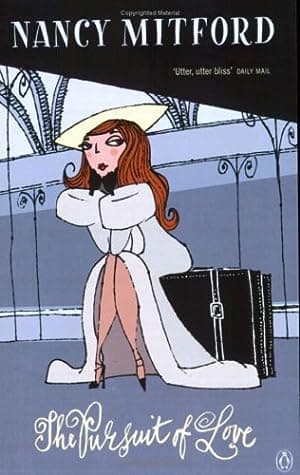
Nancy Mitford (1945)
Genre
Historical Fiction / Romance
Reading Time
240 min
Key Themes
See below
Sign in to track this book
Amidst their eccentric aristocratic English family, the spirited Radlett sisters navigate misguided romances and dramatic love affairs, as their privileged world nears World War II.
Fanny Logan, the narrator, is the oldest child of 'The Bolter,' a woman who often leaves her children for new husbands. Fanny spends her childhood at Alconleigh, the Radlett family home. She lives with her Uncle Matthew, a terrifying and unpredictable patriarch obsessed with hunting and his children's education, and Aunt Sadie, a kind and often overwhelmed mother of seven. Fanny is close to her cousin Linda Radlett, who, even as a child, is full of romantic fantasies. The children's upbringing is unusual, marked by their father's rages, little formal schooling, and a close family life where they invent games and read a lot, especially adventure and romance novels, which feed Linda's imagination.
As the Radlett children become young adults, their world expands beyond Alconleigh. Linda, still driven by her romantic ideas, falls in love with Tony Kroesig, a wealthy and traditional young man from a prominent banking family. Despite Fanny's doubts and Tony's obvious dullness, Linda is set on marrying him, seeing it as her escape and the fulfillment of her romantic hopes. The marriage, however, quickly proves uninspiring. Tony focuses on his career and social standing, and Linda finds herself bored and unfulfilled by the expectations of a society wife. She has a daughter, Moira, but motherhood does not provide the emotional satisfaction she wants, and she remains restless.
Linda's unhappiness with her marriage to Tony makes her look for excitement elsewhere. She becomes involved with Christian Talbot, a passionate communist. This affair marks a big change in Linda's life, as she adopts Christian's political views and bohemian lifestyle. She leaves Tony, causing scandal and disapproval from both families, and moves into a small, simple flat with Christian. For a time, Linda is deeply involved in left-wing politics, attending meetings and advocating for social change. This period is marked by intellectual energy and a sense of purpose, a sharp contrast to her previous life of aristocratic leisure, but she still seeks genuine love and connection.
Linda's new life with Christian Talbot, though exciting at first, soon presents its own challenges. Living on a limited income and the constant demands of political activism begin to wear on her. She finds that the intellectual discussions and strong beliefs do not always lead to the deep emotional connection she wants. Christian, while intelligent and committed, is often distant and more dedicated to his cause than to their personal relationship. Linda, always looking for love and fulfillment, starts to feel restless and disappointed again. Her initial enthusiasm for communism fades as the daily realities of her situation fail to satisfy her romantic ideals.
After her disappointment with Christian and the communist lifestyle, Linda meets and marries again, this time to an American named Fabrice. Fabrice is wealthy, charming, and offers Linda a life of luxury and travel. For a while, Linda enjoys the comforts and excitement of her new life, believing she has finally found happiness. They travel widely, living a glamorous life in various European cities. However, even this marriage eventually proves unfulfilling. Linda realizes that material comforts and social events do not equal the deep emotional connection she constantly seeks. Fabrice, though kind, is not the passionate, all-consuming love she desires, leading to their eventual divorce.
As World War II approaches Europe, Linda, now divorced from Fabrice and feeling lost, returns to England. The war brings a sense of urgency and a new kind of purpose to her life. She volunteers for various war efforts, including working with refugees, and finds a temporary sense of fulfillment in contributing to a cause bigger than herself. This period marks Linda's growth, as she moves beyond her purely self-centered romantic pursuits to engage with the world's pressing realities. She reconnects with her family, including Fanny, and finds a temporary break from her relentless search for love, though the underlying desire remains.
While working with refugees in France during the war, Linda experiences what she believes is true love when she meets Fabrice de Sauveterre, a charming French duke. Their connection is immediate and deep, marked by mutual understanding and passionate devotion. Fabrice is everything Linda has ever dreamed of: cultured, romantic, and completely devoted to her. Their love story unfolds against the backdrop of war-torn Europe, adding a poignant intensity to their relationship. Linda believes she has finally found her ultimate love, one that goes beyond her previous failed attempts and brings her genuine happiness and fulfillment.
Linda and Fabrice de Sauveterre make a life together in Paris, their love growing even as the war rages around them. Their life is a delicate balance of domestic happiness and the constant threat of conflict. Linda is completely content, having found the deep, all-consuming love she had always sought. They share a beautiful home, filled with art and culture, and enjoy a deep intellectual and emotional connection. Despite the external chaos, Linda experiences a time of great happiness and stability, believing she has finally achieved her life's purpose with Fabrice. Their love becomes a sanctuary amidst the darkness of the war.
The happy life Linda and Fabrice built is tragically cut short by the war. Fabrice is killed during an air raid, leaving Linda heartbroken and pregnant with their child. Devastated but determined to carry on his legacy, Linda plans for the birth. However, she dies during childbirth, leaving behind their infant son, who is named Fabrice. Fanny, Linda's steadfast cousin and the narrator, takes on the responsibility of raising the orphaned child. This devastating end highlights the fleeting nature of happiness and the lasting impact of war, while also showing the strength of family bonds as Fanny steps in to care for her beloved cousin's son.
After Linda's death, Fanny reflects on her cousin's life and her lifelong search for love. Fanny, who has always been more grounded and conventional, sees the clear contrast between her own stable marriage to Charles and Linda's series of passionate, yet ultimately doomed, romantic ventures. She understands that Linda's quest for an all-consuming, perfect love was both her greatest strength and her greatest weakness. Fanny acknowledges the beauty and tragedy of Linda's relentless romanticism, concluding that while Linda never truly found the lasting, stable happiness she sought, she lived a life driven by extraordinary passion and an unyielding belief in love, even if it led to heartbreak.
The Protagonist
Linda evolves from a naive, self-absorbed romantic into a more mature woman capable of deeper love and sacrifice, though her fundamental romanticism remains.
The Narrator and Supporting Character
Fanny develops from a quiet observer into a stable, married woman, providing a contrast to Linda's tumultuous life.
The Supporting Character
Uncle Matthew remains largely unchanged, a steadfast and unchanging figure representing the old aristocratic order.
The Supporting Character
Aunt Sadie remains a constant, loving presence, adapting to her family's changing lives.
The Mentioned Character
The Bolter remains a static, distant figure, symbolizing a life of perpetual escape.
The Supporting Character
Tony remains a static character, representing the conventional life Linda rejects.
The Supporting Character
Christian remains committed to his political ideals, providing a temporary intellectual awakening for Linda.
The Supporting Character
Fabrice represents the culmination of Linda's romantic quest, tragically cut short.
This is the main theme, seen in Linda Radlett's relentless, often misguided, search for an all-consuming, perfect romantic love. Linda's journey through multiple marriages and affairs, from the conventional Tony Kroesig to the idealistic Christian Talbot and finally the passionate Fabrice de Sauveterre, shows the varied forms this pursuit can take. The novel suggests that while this quest can lead to great joy, it also carries the risk of disappointment and heartbreak. Fanny's more practical path to love provides a contrast, highlighting different ways to find happiness in relationships. Linda's final, tragic love with Fabrice represents the ultimate, yet brief, fulfillment of her lifelong quest.
“What Linda wanted was love. Not just the physical side of it, but the whole thing – the complete surrender, the absolute devotion.”
The novel makes fun of the quirks and traditions of the British aristocracy in the interwar period. The Radletts of Alconleigh, with their old-fashioned views and peculiar habits, represent a dying class, holding onto tradition in a changing world. Linda's marriages to Tony Kroesig (old money, traditional society) and later Fabrice (wealthy American) highlight the societal pressures and expectations on aristocratic women. Her rejection of these norms for Christian Talbot's communist ideals, and later her embrace of a bohemian life in Paris, shows a struggle against her class's limitations. The novel subtly mourns the fading of this way of life as World War II approaches.
“All Radletts were mad, of course, but Linda was the maddest of them all.”
This theme explores the tension between seeking personal freedom and wanting the security of a conventional life. Linda repeatedly chooses freedom, leaving stable but unfulfilling marriages in search of passionate love and a more authentic existence. Her decision to leave Tony for Christian, and later to live an unconventional life in Paris, shows this. Fanny, in contrast, chooses a path of security and domestic stability with Charles. The novel doesn't openly favor one path over the other, but explores the results of each. Linda's ultimate happiness with Fabrice, though tragically cut short, suggests that true freedom might mean finding a love that allows for complete self-expression.
“She wanted to be free, free as a bird, to fly away to some distant land where love was the only law.”
While mainly a novel about love and society, the approaching World War II significantly affects the characters' lives and the story's mood. The war interrupts Linda's final search for love, taking away Fabrice and ultimately her own life. It forces characters like Linda to deal with realities beyond their personal romantic dramas, finding purpose in volunteering and facing widespread suffering. The war is a powerful external force that shows how fragile happiness is and marks the end of an era, a sharp contrast to the carefree, though eccentric, pre-war life of the Radletts. It adds sadness and tragedy to Linda's story, highlighting how brief her ultimate happiness was.
“The war, like a great curtain, had fallen between us and our past.”
Provides an intimate, yet often detached, perspective on Linda's life.
Fanny Loge serves as the narrator, offering a unique blend of insider knowledge and objective observation. As Linda's cousin and closest confidante, Fanny has access to Linda's inner thoughts and the intimate details of the Radlett family. However, her more grounded and sensible nature allows her to comment on Linda's romantic excesses with a degree of critical distance and humor. This narrative choice enables the author to satirize the aristocratic world through Fanny's slightly removed perspective, while still conveying the emotional depth of Linda's journey. Fanny's voice shapes the reader's understanding of Linda, allowing for both empathy and gentle judgment.
Uses humor to critique the eccentricities and conventions of the British aristocracy.
Nancy Mitford employs sharp wit and satire to lampoon the British upper class, particularly through the exaggerated characters and anachronistic lifestyle of the Radletts. Uncle Matthew's fierce prejudices, the children's unconventional upbringing, and the often frivolous pursuits of the aristocratic set are presented with affectionate but pointed humor. This device allows the novel to offer social commentary on the changing times, the fading of the old order, and the often absurd priorities of a privileged class, without losing its lighthearted and engaging tone. The satire highlights the disconnect between the Radletts' world and the emerging modern era.
Contrasting characters highlight different approaches to love and life.
The dynamic between Fanny Loge and Linda Radlett is a prime example of foil characters. Linda embodies unbridled romanticism, impulsiveness, and a relentless pursuit of an idealized love, often leading to instability and heartbreak. Fanny, by contrast, represents practicality, stability, and a more conventional path to happiness through a steady marriage and family life. Their contrasting personalities and life choices serve to illuminate the novel's central theme of 'the pursuit of love' from different angles, allowing the reader to consider the merits and drawbacks of each approach. This contrast enriches the thematic exploration of love, freedom, and security.
“Oh, God, I'm so bored. I'm so bored I could scream.”
— Linda Radlett's frequent lament about her privileged but unstimulating country life.
“The great thing about the English is that they have no imagination.”
— An observation made by Fabrice, a French duke, about the English character.
“Love is a very terrible thing, and, of course, it is the only thing that matters.”
— A reflection on the nature of love, often expressed or implied by the characters, particularly Linda.
“I wish I were a man. I'd go out and do something instead of just sitting around here.”
— Linda's longing for agency and a more active life, typical for women of her era.
“There are two sorts of people in the world, the Rich and the Poor, and the Rich are the ones who have money.”
— A simplistic but telling observation about class distinctions from a child's perspective.
“I have always felt that the best way to deal with a man is to treat him as a child.”
— A cynical but often effective strategy employed by some female characters in their relationships.
“The English are not a musical race. They never have been, and they never will be.”
— Another cultural generalization, highlighting perceived national characteristics.
“The trouble with love is that it's so frightfully inconvenient.”
— A humorous take on the disruptive nature of passion, especially for those seeking order.
“It is a great mistake to think that you can make people happy by giving them what they want.”
— A philosophical insight into the complexities of happiness and desire.
“Most people are not fit to be in love. They are only fit to be loved.”
— A cynical but perhaps realistic view on the capacity for true love versus the desire to be loved.
“You can't expect to be happy if you don't make an effort.”
— A pragmatic piece of advice, contrasting with some characters' more passive approaches to life.
“It is impossible to be a lady if you are always thinking of yourself.”
— An observation on the societal expectations for women, particularly regarding selflessness.
“One should always be a little in love with someone. That is the way to be happy.”
— A lighthearted but insightful take on the importance of romantic interest for personal contentment.
“The English are so terribly sentimental. They cry at the drop of a hat.”
— Another cultural generalization, poking fun at the perceived emotionality of the English.
Ready to see how well you understood this book? Take our interactive quiz with 10 questions.
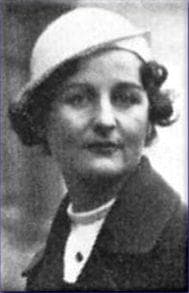
Nancy Freeman-Mitford, known as Nancy Mitford, was an English novelist, biographer, and journalist. The eldest of the Mitford sisters, she was regarded as one of the "bright young things" on the London social scene in the inter-war period. She wrote several novels about upper-class life in England and France, and is considered a sharp and often provocative wit. She also has a reputation as a writer of popular historical biographies.







