“The past is a foreign country; they do things differently there.”
— A reflection on the changes over time and the alien nature of past events.

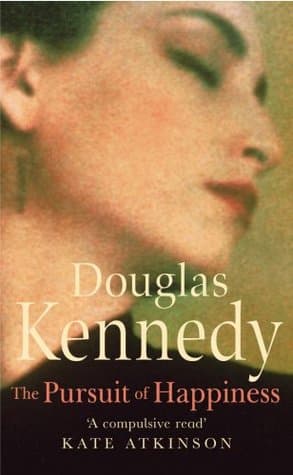
Douglas Kennedy (2001)
Genre
Historical Fiction / Romance
Reading Time
16 hours 24 minutes
Key Themes
See below
Sign in to track this book
In postwar Manhattan, a chance meeting between an independent young woman and a disillusioned war journalist sparks a passionate love affair. Their relationship faces the escalating paranoia of the McCarthy era, forcing them to confront divided loyalties and make impossible moral choices.
On Thanksgiving Eve, 1945, in Manhattan, Sara Smythe, an ambitious young woman working at a publishing house, attends a party hosted by her older brother, Eric Smythe, a playwright. The gathering, full of Eric's Greenwich Village friends, is interrupted by the arrival of Jack Malone, a recently demobilized U.S. Army journalist just back from Germany. Jack's cynical view clashes with the optimistic, left-leaning intellectuals. Despite initial tension and different views, an attraction sparks between Sara and Jack, setting the stage for their complicated relationship. This first meeting establishes the ideological divides that will affect their future.
After their first meeting, Sara Smythe and Jack Malone begin a passionate romance. Sara is fascinated by Jack's honesty and war experiences, while Jack is drawn to Sara's intelligence, independence, and spirit. Their love grows quickly, but their different political ideas remain. Jack, disillusioned by war and skeptical of the American dream, often disagrees with Sara's more idealistic, liberal views, influenced by her brother Eric and his friends. These early disagreements, often from their contrasting views on post-war America and global politics, hint at deeper conflicts to come as the Cold War begins.
Sara and Jack decide to marry, committing to their love despite ideological differences. Sara continues to advance in publishing, showing her business skill and determination. Jack struggles to find work as a civilian journalist; his wartime experiences make him wary of mainstream media, and he writes critical, often controversial, pieces. Their early married life balances their career ambitions with growing political tension. As the Cold War escalates, fear of communism spreads, and Jack's outspoken nature and past associations start to draw unwanted attention, straining their relationship.
As the 1950s progress, Senator Joseph McCarthy's anti-communist campaign gains strength, darkening American society. Jack Malone's independent and critical journalism, along with his pre-war associations and unconventional views, makes him a target. He is blacklisted from major publications, and his career prospects shrink. Sara sees Jack's growing frustration and despair as he is marginalized. The pressure on their marriage increases as Jack faces professional ruin and the threat of public denouncement. The era's fear and paranoia erode their security, forcing them to confront the real consequences of political dissent.
Under great pressure from the House Un-American Activities Committee (HUAC) and facing career destruction and potential imprisonment, Jack Malone must make a painful decision. He is offered a way out: name his left-leaning associates, or face severe consequences. This moral choice tests his integrity and his relationship with Sara. Sara loves Jack deeply but struggles with the implications of such a compromise, understanding its devastating impact on others, including her brother Eric and his friends, also under scrutiny. The weight of this choice highlights the brutal nature of the McCarthy era, forcing betrayals for survival.
Jack Malone, desperate to protect Sara and himself from McCarthy-era persecution, makes a decision that shatters their trust. Whether he testifies and names names, or withdraws into cynicism and self-preservation, his actions create an irreparable gap between him and Sara. Sara, who values integrity, finds it hard to reconcile the man she married with the choices he is forced to make. Political pressure transforms their intimate relationship into one full of suspicion and unspoken resentments. This period marks a shift, signaling the beginning of the end for their passionate union.
Unable to bear the emotional toll of Jack's choices and the fear that has consumed their lives, Sara Smythe makes the painful decision to leave him. She seeks to reclaim her independence and build a life free from McCarthyism's suffocating grip. Sara dedicates herself to her publishing career, showing remarkable resilience and ambition. She thrives professionally, finding success and purpose. This separation, though heartbreaking, allows Sara to rediscover her strength and autonomy, moving forward in a world slowly emerging from the Red Scare's shadow, though with lasting scars.
Years pass, and Sara Smythe builds a successful publishing career, becoming a respected figure in her field. She achieves the professional independence she always wanted. Despite her accomplishments and new relationships, the memory of Jack Malone and their deep love lingers. She often thinks about their past, the joy, passion, and tragic circumstances that tore them apart. Jack remains a peripheral, enigmatic figure, his life path obscured by his choices. Their separate lives show the lasting impact of the McCarthy era on individual destinies and the enduring nature of lost love.
Many years after their separation, Sara Smythe and Jack Malone have a chance, unexpected meeting. The circumstances are ordinary, but the emotional impact is deep. Seeing each other again brings back memories—the intensity of their initial attraction, the depth of their love, and the pain of their separation caused by the political climate. This meeting forces them to confront their past and the 'what ifs' that have haunted them. The encounter is bittersweet, revealing their enduring connection despite time and distance, and the irreversible changes brought by their individual journeys.
After their re-encounter, Sara Smythe reflects deeply on her relationship with Jack Malone. She thinks about their love—passionate, complex, and ultimately tragic. She understands that their fate was not just personal failings but was shaped by historical forces, specifically the McCarthy witch-hunts. Sara acknowledges the beauty and intensity of what they shared, but also the impossibility of sustaining it under such pressure. This reflection brings closure, allowing her to recognize their love as a powerful, defining experience in her life, even if it ended in heartbreak.
The Protagonist
From an idealistic young woman, Sara evolves into a strong, independent professional, profoundly shaped by love and loss, ultimately finding resilience and self-reliance.
The Love Interest, Secondary Protagonist
Initially a charismatic idealist, Jack devolves into a man broken by political persecution, making compromises that alienate him from his love and his principles.
The Supporting
Remains largely consistent in his ideals, experiencing the threat of McCarthyism firsthand.
The Antagonist (indirect)
His influence rises and falls, shaping the historical backdrop against which the personal drama unfolds.
The Mentioned/Supporting (as a collective)
Function as an oppressive force, demonstrating the relentless nature of political persecution.
The Supporting
Contribute to Sara's professional growth and provide a stable environment amidst personal turmoil.
The novel shows how political extremism, specifically McCarthyism, can destroy personal lives and relationships. The anti-communist witch-hunts force individuals like Jack Malone to choose between integrity and survival, leading to betrayal and broken trust. The fear and suspicion created by this ideology make it impossible for Sara and Jack's love to last; their personal struggles are made worse by national paranoia. The book shows how collective political fervor leads to tragic individual consequences, as Jack's career is ruined and his marriage collapses because of his perceived associations and independent thought.
““The paranoia, once unleashed, devoured everything in its path, leaving only suspicion and a trail of broken lives.””
This theme explores the tension between personal happiness and maintaining moral principles, especially under pressure. Jack Malone's pursuit of happiness, rooted in his love for Sara and his journalistic ideals, is challenged by the McCarthy era. He must compromise his integrity to protect himself and Sara, a decision that leads to the loss of both his happiness and his sense of self. Sara, in contrast, finds her own happiness through independence and professional success, but it comes at the cost of her great love. This highlights the difficult choices individuals make in impossible situations.
““What good was happiness, Sara wondered, if it came at the cost of everything you believed in?””
Despite heartbreak and political persecution, the novel highlights the resilience of the human spirit, especially through Sara Smythe's journey. After her marriage collapses and the trauma of the McCarthy era, Sara does not give up. Instead, she channels her energy into building a successful publishing career, showing her strength, ambition, and ability to adapt. Her ability to build a new, fulfilling life, even with lingering memories of her past love, shows how individuals can overcome adversity and find new purpose, quietly defying the forces that tried to crush her.
““She had learned that life, however cruel, always presented a path forward, if only one had the courage to take it.””
The central love story between Sara and Jack shows the power of attraction that goes beyond initial ideological and personality differences. Despite Jack's cynicism and Sara's idealism, they are drawn to each other. Their love grows even as their political views differ, suggesting that deep personal bonds can form regardless of, or even because of, contrasting perspectives. However, the novel ultimately shows the limits of this when outside political pressures become too great, indicating that while love can bridge many divides, it may not be strong enough to withstand the systematic destruction of trust and freedom.
““Their love was a fragile bridge, built over a chasm of differing worlds, and it held, until the ground beneath them began to shake.””
Early ideological clashes hint at future conflicts.
The novel employs foreshadowing through the initial ideological debates between Jack Malone and Eric Smythe's Greenwich Village friends, and even between Jack and Sara themselves. These early, seemingly minor disagreements about post-war politics and American society subtly hint at the deeper, more dangerous conflicts that will arise during the McCarthy era. Jack's cynical worldview and Sara's burgeoning idealism, while initially attractive contrasts, are presented as fundamental differences that will be exacerbated by the external pressures of the Red Scare, preparing the reader for the eventual tragic outcome of their relationship.
The McCarthy era serves as the primary external force driving the plot's tragedy.
Instead of a single human antagonist, the historical context of the McCarthy witch-hunts acts as the primary antagonist in 'The Pursuit of Happiness.' The political climate of fear, paranoia, and persecution directly drives the plot's central conflicts and tragic events. It is this external force that pressures Jack Malone into moral compromises, destroys his career, and ultimately unravels his marriage to Sara. The novel masterfully uses this historical period to demonstrate how broad political movements can have devastatingly personal consequences, shaping individual destinies far beyond personal choices.
Contrasting optimism and cynicism, and love against political terror.
The novel effectively uses juxtaposition to highlight its central themes. It contrasts the initial post-war optimism and bohemian idealism of Eric's circle (and initially, Sara) with Jack Malone's war-hardened cynicism and skepticism. This creates immediate tension and defines their differing worldviews. More significantly, it juxtaposes the passionate, tender love story between Sara and Jack with the escalating political terror and paranoia of the McCarthy era. This stark contrast underscores the vulnerability of personal happiness and integrity in the face of overwhelming external forces, amplifying the tragedy of their separation.
The story is primarily filtered through Sara's experiences and reflections.
While not strictly a first-person narrative, the story is largely experienced and interpreted through Sara Smythe's perspective. Her thoughts, feelings, and observations are central to understanding the emotional depth of the narrative and the impact of events on the characters. The reader experiences the initial sparks of love, the growing anxieties, the heartbreak, and the eventual resilience predominantly through Sara's eyes. This allows for a deeply empathetic connection with her journey and provides an intimate view of the historical events as they unfold and affect individual lives.
“The past is a foreign country; they do things differently there.”
— A reflection on the changes over time and the alien nature of past events.
“It was one of those rare New York mornings when the air was crisp and clear, and the city seemed to hum with a quiet energy.”
— Describing the setting of New York City in the early part of the story.
“Love, she was learning, wasn't about grand gestures but about the quiet, everyday acts of kindness and understanding.”
— Kate's evolving understanding of love in her relationship with Peter.
“Sometimes, the hardest thing to do is to forgive yourself for mistakes you didn't even know you were making.”
— A character grappling with past decisions and their unforeseen consequences.
“The pursuit of happiness, she realized, was less a destination and more a continuous journey, fraught with detours and unexpected turns.”
— Kate's central realization about the meaning of happiness throughout her life.
“History, after all, is just a story told by the victors. But the real stories, the human stories, are often found in the margins.”
— A commentary on the nature of historical narratives and individual experiences.
“There's a certain kind of loneliness that only exists in a crowded room, when you feel utterly disconnected from everyone around you.”
— Kate experiencing alienation despite being surrounded by people.
“Memory is a tricky thing. It can be a comfort, a curse, and a constant reminder of what once was and can never be again.”
— Reflecting on the power and pain of memory.
“He had the kind of charm that could make you forget your own name, and then make you feel like it was the most important name in the world.”
— Describing a charismatic character's magnetic personality.
“To truly live, she understood, meant to embrace the chaos, the uncertainty, and the beautiful mess of it all.”
— Kate's acceptance of life's unpredictable nature.
“The city never slept, and neither did its secrets. They just waited, patiently, for the right moment to surface.”
— A metaphorical description of New York City and its hidden truths.
“Sometimes, the greatest acts of courage aren't about fighting dragons, but about facing the truth about yourself.”
— A character's internal struggle and moment of self-realization.
“A photograph can capture a moment, but it can never truly capture the feeling, the emotion, the entire world that existed within that single frame.”
— Reflecting on the limitations of photographs in conveying full emotional truth.
“Happiness, like a fragile butterfly, often eluded those who chased it too fiercely, only to land gently on the shoulders of those who simply lived.”
— A poetic reflection on the elusive nature of happiness.
Ready to see how well you understood this book? Take our interactive quiz with 10 questions.

Douglas Kennedy is an American-born French novelist and journalist, celebrated for his incisive explorations of contemporary American society and the human condition. His notable works, including 'The Big Picture,' 'State of the Union,' and 'The Pursuit of Happiness,' often delve into themes of ambition, love, and disillusionment with a sharp, accessible style. Kennedy's writing has garnered international acclaim, solidifying his reputation as a keen observer of modern life.







