“There are some things in life that you cannot explain, only accept.”
— Reflecting on the mysterious abilities of the prophetess.

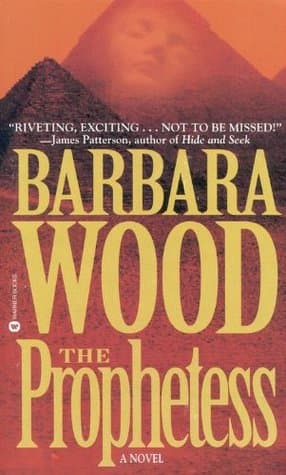
Barbara Wood (1996)
Genre
Thriller / Historical Fiction / Mystery
Reading Time
1240 min
Key Themes
See below
Sign in to track this book
An archaeologist unearths ancient scrolls in the Sinai as the millennium nears, pulling her into a global race against powerful groups to find a missing seventh parchment before Armageddon.
In December 1999, Dr. Catherine Alexander, a brilliant but somewhat quiet archaeologist, leads a dig in the Sinai Desert. Her team, funded by the rich and mysterious Julian Rome, makes a major discovery: six ancient papyrus scrolls. These scrolls are written in a unique, old script and contain prophecies that are very detailed and accurate, seeming to predict events far into the future, including those of modern times. There is much excitement, but Catherine soon feels uneasy as she realizes how important her find is. The scrolls mention a seventh, missing scroll, said to hold the key to ultimate power or knowledge. Its absence immediately becomes a main concern.
News of Catherine's discovery quickly reaches powerful organizations. The Vatican is one of the first to react, sending Father Michael D'Angelo, a seemingly kind but very smart and determined priest, to the dig site. Michael presents himself as a scholar interested in old religious texts, but his real goal is to find out what is in the scrolls for the Holy See. He is especially worried about any texts that might challenge church beliefs or be misunderstood by the public. Catherine, though careful at first, is drawn to Michael's interest in learning and shared love for history, even as she senses he has a hidden agenda.
Julian Rome, the millionaire who funds Catherine's dig, first appears as a kind supporter of archaeology. However, his interest in the scrolls goes beyond academics. Rome is part of a secret, old society that has tracked these prophecies for centuries. He believes the scrolls, especially the missing seventh, hold the key to controlling humanity's future and perhaps even gaining immortality or ultimate power. Rome is manipulative and ruthless; he sees the scrolls as tools for his own grand ambitions and will get rid of anyone who gets in his way, including Catherine.
The United States government, specifically the FBI, also learns about the Sinai discovery. Fearing global consequences and the potential for panic or exploitation, a team of federal agents, led by the strict Agent Miller, arrives at the dig site. They immediately take the six discovered scrolls, citing national security, and put Catherine and her team under house arrest and watch. The FBI wants to analyze the prophecies and stop them from falling into the wrong hands, but their methods are harsh, making Catherine feel like a prisoner instead of a leading scientist.
Realizing that the various groups care more about controlling or hiding the scrolls than understanding them, Catherine decides to act on her own. Convinced that the missing seventh scroll has vital information, perhaps even the key to stopping a global disaster, she plans a daring escape from FBI watch. With help from a trusted local contact, she flees the Sinai, now a fugitive. Her journey changes from an academic pursuit to a desperate race against time. She uses her archaeological knowledge and intuition to follow the clues left by the ancient prophetess, believing the seventh scroll is crucial for humanity's future.
As Catherine explores the mysteries of the scrolls, she starts to piece together the story of the ancient prophetess who wrote them. By decoding hidden messages and studying history, Catherine learns that the prophetess was not just a seer but also a guardian, meant to protect humanity from its own destructive tendencies. The prophetess foresaw a critical moment in history – December 31, 1999 – when humanity would face a major choice. The seventh scroll, Catherine realizes, is not just a prophecy but a guide, a warning, and possibly a way to prevent a global disaster, meant to be found at this exact time.
On her dangerous journey, Catherine finds herself in a complex web of alliances and betrayals. She forms a cautious partnership with Father Michael D'Angelo, who, despite his Vatican loyalties, seems truly worried about the scrolls' misuse and the potential for a terrible end. Their shared academic interest and moral compass often align, building a fragile trust. However, Catherine also faces betrayals, sometimes from people she first trusted or those who seemed to be on her side. Julian Rome's network of spies is widespread, and he constantly manipulates events, turning allies against Catherine and forcing her to always be careful.
The search for the seventh scroll takes Catherine across continents, from the deserts of the Middle East to old European cities and hidden archives. The FBI, the Vatican, and Julian Rome's agents are all after her, each with their own goals. Catherine must use her intelligence, archaeological skills, and growing understanding of the prophetess's cryptic messages to stay ahead. Each place she visits reveals another piece of the puzzle, guiding her closer to the seventh scroll's final location, but also increasing the danger as time runs out before the millennium.
After a difficult chase full of close calls and intellectual challenges, Catherine finally finds the seventh scroll's location. It is not hidden in a grand tomb or a heavily guarded vault, but in a place with symbolic meaning, requiring both historical knowledge and spiritual insight to find. When she unearths it, Catherine discovers that the seventh scroll is not a prophecy of doom, but a message of hope and a call to action. It reveals that humanity has the power to choose its own future, emphasizing free will over a fixed fate. It states that the 'end of the world' is a turning point for human consciousness, not actual destruction.
With the seventh scroll, Catherine faces a final, major confrontation. Julian Rome, having expected her success, corners her, planning to take the scroll and use its message for his own ends. The FBI and Vatican agents also gather, each wanting to control the story. Catherine, however, refuses to let the scroll's message be twisted. She reveals its true contents, explaining that real power is not in controlling the future, but in humanity's shared choice for peace and understanding. She exposes Rome's evil intentions and challenges the other groups to consider the deep meaning of true free will.
In the tense standoff, Catherine, supported by Father Michael D'Angelo who now believes her interpretation, manages to share the seventh scroll's message with the world. The scroll's focus on humanity's capacity for good and its power to choose its destiny is deeply felt. Julian Rome's attempts to manipulate the situation fail, and he is exposed and defeated. While not all global leaders immediately accept the message, a major shift in public awareness begins. The coming 'Armageddon' of December 31, 1999, passes without the expected disaster, largely because of Catherine's efforts and the scroll's influence. This begins a new era of thought and potential for global unity.
After these events, Catherine Alexander, no longer a fugitive but a celebrated figure, finds new purpose. She continues her archaeological work, now with a deeper understanding of how history, spirituality, and human destiny connect. Her relationship with Father Michael D'Angelo grows into one of mutual respect and intellectual partnership, possibly hinting at more. The world has changed forever by the prophetess's message, and Catherine, having delivered it, works to ensure its continued understanding and use. The events of December 1999 mark not an end, but a strong new beginning for humanity, guided by old wisdom.
The Protagonist
Catherine transforms from an academic researcher into a global guardian of ancient wisdom, embracing her role in shaping humanity's future.
The Supporting
Michael's loyalty shifts from strict adherence to Vatican protocol to an alliance with Catherine, driven by his evolving understanding of the scrolls' spiritual truth.
The Antagonist
Julian Rome's pursuit of ultimate power leads to his eventual downfall and exposure.
The Supporting
Agent Miller remains largely static, representing the unchanging force of governmental authority, though he is ultimately outmaneuvered.
The Mentioned
Her influence, though ancient, reaches across time to guide humanity to a new understanding.
The Supporting
Elias supports Catherine throughout the initial discovery and understands the gravity of their find.
The Mentioned
He provides critical, timely aid to Catherine, allowing her to escape and continue her mission.
The novel explores whether humanity's future is set by old prophecies or if people have the free will to shape their destiny. The scrolls at first suggest a fixed future, causing panic and attempts to control the outcome. But the seventh scroll shows that the prophetess's real message is about empowerment, stressing humanity's ability to choose and to avoid disaster through shared conscious action. This idea is central to Catherine's fight against those who want to use or hide the prophecies. She argues that the 'end of the world' is a turning point for human consciousness, not an unavoidable fate.
““The future is not written in stone, but in the hearts and minds of humanity. The choice, always, rests with us.””
The novel shows how various powerful groups—governments, religious bodies, and rich individuals—try to control or use the scrolls for their own goals. Julian Rome is an example of this, wanting ultimate power over humanity. The FBI and the Vatican, though with different reasons, also try to control the story and hide information they see as dangerous. This highlights how power can corrupt and the danger of letting a few people decide the fate of many. Catherine's goal is to free knowledge for everyone, not to let it be hoarded or misused.
““Knowledge, like fire, can either illuminate or incinerate, depending on the hand that wields it.””
Catherine, a scientist, and Michael, a man of faith, show how scientific study and spiritual understanding can come together. While Catherine approaches the scrolls through archaeology and language, she gradually understands their deeper spiritual meanings. Michael, initially focused on religious control, opens his mind to the wider truths the prophetess reveals. The novel suggests that true understanding requires both rational investigation and intuitive, spiritual insight. It shows that ancient wisdom can bridge the gap between science and religion, especially when facing major questions about existence.
““The greatest truths often lie at the crossroads of what we can prove and what we instinctively know.””
Finding the scrolls puts a huge responsibility on Catherine. She struggles with how to present such world-changing information to a public that can easily panic and be manipulated. The various groups' attempts to seize and control the scrolls highlight the ethical problems that come with profound knowledge. Catherine ultimately chooses to share the truth, believing that humanity deserves to know and make its own choices, even if it is difficult. This theme explores the moral duty to share knowledge responsibly and to trust in humanity's capacity to grow.
““To hide the truth is to deny humanity its right to choose its own path, however perilous that path may seem.””
A crucial MacGuffin driving the entire plot and representing ultimate knowledge.
The absence of the seventh scroll serves as the primary MacGuffin, propelling Catherine's journey and creating urgency. Its implied 'unfathomable power' motivates all factions – Julian Rome for control, the Vatican for theological preservation, the FBI for national security. The mystery surrounding its contents and location fuels the narrative, leading Catherine across continents and through various dangers. Ultimately, its discovery subverts expectations, revealing a message of free will rather than a literal tool of power, thus redefining the nature of the quest itself.
Ancient texts that predict future events, creating suspense and guiding the plot.
The scrolls themselves function as a significant plot device, providing both prophecy and subtle foreshadowing. The ancient predictions of past and modern events establish the scrolls' credibility and the prophetess's foresight, immediately raising the stakes. The cryptic nature of some prophecies, coupled with the imminent date of December 31, 1999, builds intense suspense. The prophecies guide Catherine's interpretation and quest, while also foreshadowing the global implications and the ultimate message of the seventh scroll, often misdirecting characters about its true nature until the climax.
A real-world historical context that amplifies the story's themes of impending doom.
The story is set in December 1999, leveraging the real-world anxiety surrounding the 'Millennium Bug' or Y2K scare. This historical context amplifies the novel's themes of impending global catastrophe and the fear of an 'end of the world' scenario. The widespread societal unease about technology failing provides a believable backdrop for the intense reactions to the prophecies. It makes the idea of ancient prophecies foretelling a specific modern 'apocalypse' feel incredibly potent and immediately relevant, heightening the tension and the perceived stakes for all characters involved.
Catherine's archaeological and linguistic skills are vital to deciphering the scrolls.
Catherine's expertise in ancient languages and archaeology is not just a character trait but a crucial plot device. The scrolls are written in a unique, archaic script, requiring her specialized knowledge to decipher. The prophetess also embedded linguistic puzzles and hidden messages within the texts, essentially creating a treasure hunt for the seventh scroll. This device allows Catherine to actively engage with the mystery, showcasing her intelligence and providing legitimate reasons for her to be the one to solve the puzzle, rather than merely being a passive recipient of information.
“There are some things in life that you cannot explain, only accept.”
— Reflecting on the mysterious abilities of the prophetess.
“The past is never truly dead; it merely sleeps, waiting for the right moment to awaken.”
— A character contemplates ancient secrets resurfacing.
“Sometimes the greatest truths are hidden in plain sight, if only we are willing to see them.”
— An observation about overlooked clues in the mystery.
“Fear is a powerful master, but hope is an even more potent weapon.”
— During a moment of peril, a character finds inner strength.
“The desert holds its secrets close, whispering them only to those who truly listen.”
— Describing the enigmatic nature of the desert setting.
“Faith is not about seeing to believe, but believing to see.”
— A discussion about the nature of prophecy and belief.
“Every choice we make echoes through time, shaping not only our present but our future.”
— Considering the long-term consequences of a pivotal decision.
“Even in the darkest times, there is always a flicker of light, if you know where to look.”
— A moment of encouragement amidst despair.
“Power is a dangerous thing, especially when wielded by those who do not understand its true cost.”
— Reflecting on the misuse of influence and ancient artifacts.
“Sometimes the most extraordinary events occur in the most ordinary places.”
— An observation about the unexpected turns of the plot.
“The heart has its own language, one that often speaks louder than words.”
— A character's emotional connection to the prophetess's visions.
“History is not just a collection of facts, but a living tapestry woven with human desires and destinies.”
— Exploring the deeply personal stakes within historical events.
“To truly see the future, one must first understand the echoes of the past.”
— A key insight into the prophetess's abilities and the unfolding mystery.
“The greatest battles are often fought not with swords, but within the soul.”
— A character grappling with internal conflicts and moral dilemmas.
Ready to see how well you understood this book? Take our interactive quiz with 10 questions.
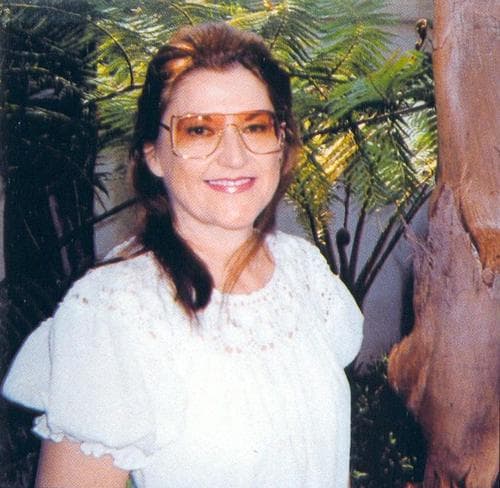
Barbara Wood is a historical fiction author known for her captivating storytelling, often set in ancient times. Her most notable work, 'The Prophetess,' immerses readers in the dramatic world of ancient Egypt, showcasing her meticulous research and engaging narrative style. Wood's fiction appeals to those who enjoy immersive historical settings and strong character development.







