“The world is full of hopeful analogies and handsome, dubious eggs, called possibilities.”
— Professor St. Peter reflecting on life's uncertainties and potential.

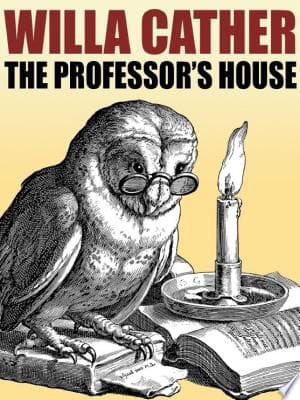
Willa Cather (2018)
Genre
Literary Fiction
Reading Time
240 min
Key Themes
See below
Sign in to track this book
A middle-aged professor, adrift in the quiet comforts of his new, too-large house, finds himself haunted by the vivid memory of a brilliant, ill-fated student and the untamed beauty of the American Southwest.
Professor Godfrey St. Peter, a historian at a Midwestern university, recently won the Oxford prize for his multi-volume work, 'Spanish Adventurers in North America.' Despite his new wealth and his family's move to a grand, modern house designed by his daughter Rosamond's husband, Louie Marsellus, the Professor cannot leave his old, rundown home. He keeps his study in the attic of the old house, where he works in peace, away from the luxury and social demands of the new residence. His wife, Lillian, and daughters, Rosamond and Kathleen, are annoyed by his attachment to the past, seeing it as odd and a barrier to their new, elevated lifestyle. The Professor, however, feels a deep distance from his current life, finding comfort only in his old study and the memories it brings.
The prize money and royalties from the Professor's major work brought unexpected wealth, mainly benefiting his daughter Rosamond and her ambitious husband, Louie Marsellus. Louie, a successful businessman, invested Rosamond's inheritance in profitable ventures, leading to an extravagant lifestyle that contrasts sharply with the Professor's quiet academic life. This wealth creates a division in the family; Kathleen, the Professor's other daughter, feels overlooked and resentful of Rosamond's prosperity. Lillian, the Professor's wife, embraces their new social standing, further isolating the Professor. He feels increasingly separated from his family's materialism and the constant talk about money, feeling deeply disappointed by the changes wealth has brought to his loved ones and his own life.
Among his family's social events and his academic work, the Professor thinks more and more about Tom Outland, his former student and Rosamond's first fiancé. Tom, an orphan from the West, had been a source of intellectual and personal joy for the Professor. He recalls how Tom, after time among ancient cliff dwellings, came to the Professor's house, bringing a unique view and a connection to the land and history. The Professor thinks about Tom's true character, his curiosity, and his influence on everyone he met. Tom's memory contrasts with the superficiality the Professor now sees in his family's life, showing a lost sense of authenticity and purpose.
The novel shifts to a long flashback, 'Tom Outland's Story,' where the Professor tells Tom's own story of his early life. Tom, a young orphan, worked as a cowboy in the remote American Southwest, near the Blue Mesa. There, he and his friend Roddy Blake found an ancient, preserved cliff city, a record of a forgotten civilization. Tom's description is clear, detailing the well-preserved homes, pottery, and mummified remains, all untouched for centuries. This discovery sparked Tom's passion for history and archeology, and a respect for the people who had lived there. He felt a deep spiritual connection to the mesa and its silent inhabitants, seeing it as a sacred place that needed protection and understanding.
Tom's story continues with his earnest but naive attempts to get recognition and protection for the cliff city. He travels to Washington D.C., hoping to convince officials and academics of the site's historical value. However, he meets indifference, bureaucracy, and even ridicule. His pleas for preservation are ignored, and he returns to the mesa completely disheartened. While he was away, his friend Roddy, thinking he was doing the right thing, sold many artifacts from the cliff city to a German collector for a small amount. This betrayal devastates Tom, who sees the artifacts as sacred and the sale as a desecration. The loss of the city's integrity and Roddy's misunderstanding of its spiritual meaning leaves Tom deeply hurt and disappointed with the world.
After the loss of the cliff city's artifacts and his separation from Roddy, Tom Outland arrives at the Professor's university, looking for intellectual refuge. He enrolls as a student, quickly standing out with his sharp mind and original ideas. He forms a deep and meaningful bond with Professor St. Peter, who sees Tom's potential and his unique view on history and culture. Tom becomes like a son to the Professor, joining the family and falling in love with Rosamond. Their relationship is one of mutual respect and intellectual friendship, with Tom bringing a refreshing earnestness and idealism into the Professor's life, and the Professor providing guidance and a stable intellectual home for Tom's growing genius.
After his studies, Tom Outland works on scientific research, inventing a gas important for aviation during World War I. This invention brings him great wealth. Tom dies in the war, leaving his fortune and the patents for his invention to his fiancée, Rosamond. This inheritance is the source of the Marsellus's current wealth and their extravagant lifestyle. The Professor thinks about the irony that Tom's idealism and genius ended up fueling the very materialism that now separates him from his family. Tom's legacy, while financially good, has become a symbol of the Professor's growing disappointment with his household's values.
As summer goes on, the Professor's feeling of distance from his family and their new life grows. He finds their conversations trivial, their interests superficial, and their constant social events tiring. He longs for the simplicity and intellectual rigor that Tom Outland represented. His wife, Lillian, and daughters, Rosamond and Kathleen, are increasingly caught up in their own lives, leaving the Professor feeling overlooked and emotionally alone. He retreats further into his old study, finding comfort in solitude and memories of a time when his life felt more authentic and purposeful. The material comforts of his new life bring him no joy, only a deep sense of emptiness and a longing for a lost spiritual connection.
One hot summer evening, while working alone in his old study, the Professor falls asleep with a faulty gas stove running. A gas leak fills the room, slowly suffocating him. Augusta, the family seamstress, finds him just in time and saves his life. This near-fatal incident brings the Professor to a realization. He feels absolute peace and release during his unconsciousness, wanting to simply let go. He recognizes that he has lost the 'bloom' of life, the youthful enthusiasm and engagement with the world. The experience, though frightening, gives him a strange clarity and a quiet acceptance of his diminishing vitality, leading him to rethink his life and his place in the world.
After his near-death experience, Professor St. Peter feels a basic change within himself. He recognizes that the passionate, engaged man he once was has faded, replaced by a quieter, more resigned self. He understands that he will continue to live, but without the intense emotional and intellectual attachments that once defined him. His relationship with Augusta, the practical seamstress, becomes a quiet source of comfort, representing a simpler, less demanding human connection. He accepts his new, stripped-down existence, finding a certain peace in this detachment. The novel ends with the Professor preparing for a future that, while lacking the energy of his past, has a stoic acceptance and a quiet, almost indifferent, continuation of life.
The Protagonist
He transitions from a man deeply engaged with his work and family to one profoundly detached and disillusioned, eventually finding a quiet, resigned peace in his altered state.
The Supporting
She moves from a supportive, if sometimes critical, wife to a figure largely absorbed in her own social world, further isolating her husband.
The Supporting
She begins as a young woman in love with Tom and evolves into a wealthy socialite, embodying the materialistic values her father despises.
The Supporting
She navigates her resentment towards her sister and her understanding of her father's disillusionment, ultimately finding her own quiet path.
The Supporting/Catalyst
From an earnest young explorer, he becomes a brilliant student and inventor, leaving behind a legacy that both elevates and corrupts the lives of those he left behind.
The Supporting
He remains a consistently ambitious and financially successful character, driving the family's material ascent.
The Supporting
She remains a consistent, grounding force in the Professor's life, providing quiet support and practicality.
The Mentioned
His actions lead to the destruction of the cliff city's integrity and his estrangement from Tom.
The Supporting
He remains a supportive husband to Kathleen, observing the family dynamics.
The main theme is Professor St. Peter's deep disappointment with his life, family, and the modern world. He feels alienated by his family's materialism and social climbing, finding no joy in their new wealth. His emotional and intellectual isolation grows because of the contrast between his present and the idealized memory of Tom Outland's authenticity and idealism. This theme shows in his retreat to the old house, his inability to connect with his wife and daughters, and his eventual acceptance of a stripped-down existence, without passion.
“He knew that he had been trying to escape from the new house, and from the people in it. He wanted to get back to the old one, to his own study, where he could be alone with the things that were his own, and not bought by Rosamond.”
The novel contrasts the Professor's intellectual and spiritual idealism with his family's materialism. Tom Outland, a figure of pure idealism and intellectual pursuit, accidentally becomes the source of the family's wealth, which then fuels their superficiality. Rosamond and Louie Marsellus show this materialism, prioritizing possessions and social status. The Professor, conversely, finds comfort in intangible things: history, knowledge, and the authentic human spirit, seen in Tom's reverence for the cliff city. This conflict highlights how wealth can corrupt human values and relationships.
“His career, his wife, his children, were like a dream he was having, and the only reality was the mesa, and Tom Outland, and the beautiful things they knew.”
The Professor's attachment to his old house and his constant thoughts of Tom Outland show a longing for the past and a regret for the loss of his own youth and energy. The old study is a sanctuary where he can escape the present and immerse himself in memories of intellectual passion and real connection. Tom Outland's story, set against the ancient cliff city, further emphasizes the power of the past and the beauty of unspoiled beginnings. The Professor feels that the 'bloom' of life has left him, suggesting an irreversible decline from a more engaged existence.
“He found himself living in the past, in the days when he had been young, and the world was full of promise, and Tom Outland was alive.”
The novel explores the tension between a true self and the roles people play for social acceptance or personal gain. Tom Outland represents pure authenticity, driven by curiosity and respect for the ancient world, not concerned with outside approval. In contrast, Lillian and Rosamond often play their roles as wealthy socialites, their lives shaped by appearances and conventions. The Professor struggles with this, feeling his own life has become a performance, especially with his family, leading him to retreat into his private, authentic self in the old study.
“He had never realized how much of a pose such a life was. He felt as if he were wearing a mask, and the mask was growing heavier.”
The novel looks at creative genius through Professor St. Peter's historical work and Tom Outland's scientific invention and archeological discoveries. Both men have deep intellectual curiosity and a desire to understand and create. However, their legacies have different outcomes: the Professor's work brings academic praise but personal disappointment, while Tom's invention brings great wealth but also fuels the materialism that separates the Professor. The story questions whether true genius can survive the commercialization and social pressures of the modern world, and what makes a lasting, meaningful legacy.
“What was any art but a way of making a great fuss about life, when the thing itself was so simple?”
A physical and symbolic refuge for Professor St. Peter.
The Professor's old study in the attic of his former house serves as a crucial plot device and symbol. Physically, it is where he works, thinks, and eventually has his near-fatal accident. Symbolically, it represents his inner world, a sanctuary from the new, materialistic house and his estranged family. It is a place of memory, authenticity, and intellectual pursuit, contrasting sharply with the superficiality he perceives in his new life. His refusal to leave it highlights his deep-seated resistance to change and his longing for a lost past, making it a central anchor for his character's internal conflict.
A lengthy flashback that provides backstory and thematic contrast.
The entire middle section of the novel is a long, embedded flashback titled 'Tom Outland's Story,' narrated by the Professor. This literary device allows Cather to introduce a completely different setting, time, and emotional tone, providing a stark contrast to the Professor's present disillusionment. It serves to idealize Tom, establishing him as a symbol of purity, idealism, and a connection to the American past. This narrative shift is crucial for understanding the Professor's despair, as Tom's authentic life and tragic death become the yardstick against which the Professor measures, and finds wanting, his own life and the lives of his family.
A symbolic landscape representing unspoiled history and authentic experience.
The Blue Mesa and the ancient cliff city discovered by Tom Outland function as powerful symbols within the narrative. The mesa represents a pristine, untouched American past, a source of spiritual and historical authenticity. The cliff city, with its perfectly preserved artifacts and dwellings, symbolizes a harmonious, self-sufficient way of life, untainted by modern materialism. Its eventual desecration and the sale of its artifacts by Roddy Blake symbolize the destructive forces of greed and misunderstanding. For Tom, and through him, for the Professor, the mesa embodies an ideal of pure experience and connection to a profound, lost heritage.
A near-death experience that catalyzes the Professor's ultimate resignation.
The gas leak in the Professor's study, which nearly kills him, is a pivotal plot device. It acts as a literal and metaphorical 'stripping away' of his life, leading to a moment of profound clarity and a desire for non-existence. This near-death experience forces the Professor to confront his own mortality and his deep-seated weariness. Instead of a dramatic realization leading to renewed vigor, it results in a quiet, almost indifferent acceptance of his diminished vitality and a detachment from the passions that once defined him. It marks his final transition from active disillusionment to passive resignation.
“The world is full of hopeful analogies and handsome, dubious eggs, called possibilities.”
— Professor St. Peter reflecting on life's uncertainties and potential.
“He had never learned to live without delight.”
— Describing Professor St. Peter's enduring capacity for joy despite hardships.
“The heart of another is a dark forest, always, no matter how close it has been to one's own.”
— St. Peter contemplating the inherent mystery in human relationships.
“Art and religion (they are the same thing, in the end, of course) have given man the only happiness he has ever had.”
— St. Peter musing on the sources of human fulfillment.
“A man can do anything if he wishes to enough.”
— St. Peter expressing a belief in determination and willpower.
“The dead might as well try to speak to the living as the old to the young.”
— Reflecting on the generational divide and communication barriers.
“He was not afraid of solitude, indeed, he loved it.”
— Describing St. Peter's comfort with being alone.
“Success is never so interesting as struggle—not even to the successful.”
— Commenting on the human fascination with challenges over achievements.
“The things we have to have are the things we have to do without.”
— A paradoxical observation on desire and deprivation.
“He had reached the age when a man likes to feel that he has done his work and may rest.”
— St. Peter considering his later years and desire for peace.
“There are some things you learn best in calm, and some in storm.”
— Reflecting on different life experiences and their lessons.
“The only thing that really matters is the thing you can't get.”
— A cynical view on human longing and unattainable desires.
“He had always been a man of simple tastes, and he found that as he grew older they became simpler.”
— Describing St. Peter's evolving preferences with age.
“The past is never where you think you left it.”
— Musing on the elusive and persistent nature of memories.
Ready to see how well you understood this book? Take our interactive quiz with 10 questions.
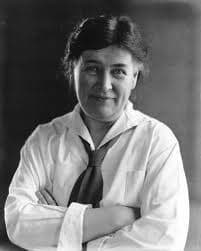
Willa Sibert Cather was an American writer known for her novels of life on the Great Plains, including O Pioneers!, The Song of the Lark, and My Ántonia. In 1923, she was awarded the Pulitzer Prize for One of Ours, a novel set during World War I.







