“Some things are worth fighting for. No matter how much it hurts.”
— Mallory reflecting on her past and present struggles.

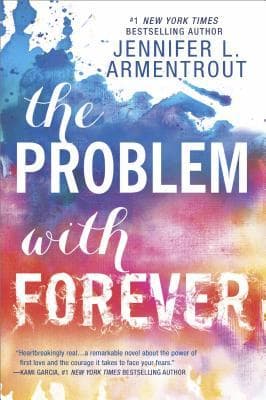
Jennifer L. Armentrout (2016)
Genre
Young Adult / Romance
Reading Time
9-10 hours
Key Themes
See below
Sign in to track this book
Four years after escaping a traumatic past, a selectively mute girl must find her voice to save the childhood protector she reconnects with, who is now spiraling into danger, while navigating public high school and their undeniable, reawakened bond.
Mallory Dodge, after years of homeschooling due to a traumatic past, begins her senior year at a public high school, a daunting prospect for someone who struggles to speak. Her anxiety is immediately heightened by the overwhelming environment. However, a shocking encounter occurs when she spots Rider Stark, her former best friend and protector from the abusive foster home they shared as children. Rider, now a popular and seemingly troubled student, initially acts as if he doesn't know her, leaving Mallory hurt and confused. Despite his initial coldness, the unspoken connection between them is palpable, and Mallory finds herself drawn to him, while also being terrified of the exposure and attention their shared history might bring.
Rider eventually acknowledges Mallory, and their reunion is a mix of relief and trepidation. They begin to spend time together, often at Rider's house, where Mallory meets his foster family, including his kind foster mother, Diane. Their interactions are filled with a mix of shared understanding and unspoken pain from their time in the foster system, particularly their experiences with their abusive foster father, Henry. Mallory, still largely mute around others, finds an ease in speaking to Rider. As they reconnect, flashbacks to their traumatic childhood begin to surface for Mallory, reminding her of Rider's protectiveness and the horrors they endured.
Despite her struggles with speaking, Mallory slowly starts to adapt to high school life. She forms a friendship with Paige, a kind and outgoing girl who accepts Mallory's quiet nature. Through Paige, Mallory also meets Jayden, Paige's boyfriend, and other classmates. This new social circle provides a sense of normalcy and belonging that Mallory hasn't experienced before. She finds herself observing the typical high school drama and dynamics, a stark contrast to her isolated existence. However, her primary focus remains on Rider and understanding the changes he's undergone, while also trying to protect their shared past from being exposed.
As Mallory spends more time with Rider, she becomes aware of his involvement in questionable activities. He frequently gets into fights, associates with a dangerous crowd, and seems to be on a path of self-destruction. Mallory notices his injuries, his evasiveness, and the underlying anger that simmers beneath his cool exterior. She learns that he's involved in illegal street fighting to earn money, a revelation that deeply concerns her. Her childhood memories of him protecting her resurface, making her desperate to protect him now, even as he pushes her away with his reckless choices.
The past continues to haunt both Mallory and Rider. Through Mallory's vivid flashbacks, the reader learns about the abuse they suffered at the hands of Henry. Rider's protection of Mallory during those years is highlighted, revealing the depth of his sacrifice. These shared, traumatic memories, though painful, also strengthen their bond. They are the only two people who truly understand what the other went through, creating an unbreakable connection that transcends their current circumstances. Mallory realizes that Rider's current behavior is a direct consequence of his unresolved trauma.
Mallory, unable to stand by and watch Rider destroy himself, finally confronts him about his involvement in street fighting and his dangerous friends. This leads to an emotional conversation where Rider reveals the extent of his struggles, his guilt over not being able to protect her more in the past, and his desire to earn money to escape his current situation. He admits that he feels responsible for their past and that he's still fighting the demons from their childhood. This raw honesty brings them closer, but also highlights the deep-seated pain they both carry.
Inspired by her love for Rider and her desire to help him, Mallory starts to challenge her own silence. She begins speaking more frequently, first to her close friends and then to others, slowly overcoming her selective mutism. This newfound voice is not just for herself, but also becomes a tool to advocate for Rider. She tries to convince him to stop fighting and to seek help, demonstrating a strength and assertiveness she never knew she possessed. Her journey of finding her voice becomes intertwined with her efforts to save Rider from his destructive path.
Rider's street fighting escalates, leading to more severe injuries and increasing concern from Mallory. She learns about the dangerous individuals he's involved with and the high stakes of his fights. When Rider is severely beaten after a fight, Mallory realizes the gravity of the situation. She can no longer remain silent. Driven by fear for his life and her deep love for him, she makes the decision to seek help, even if it means exposing their past and potentially jeopardizing their carefully constructed lives.
Mallory, with the support of her foster parents and her newfound voice, decides to report Henry, their abusive former foster father, to the authorities. This decision forces a confrontation with Henry, who reappears in their lives, attempting to intimidate them. During this intense encounter, a shocking truth is revealed: Henry was not only abusive but also involved in illegal activities, and he had been using Rider to run drugs. This revelation explains much of Rider's self-destructive behavior and his need to earn money. The confrontation brings their traumatic past to a head, demanding justice.
With Henry finally exposed and facing legal consequences, Mallory and Rider can begin the long process of healing. Rider, relieved of the burden of his secrets and his involvement with Henry, starts to accept help and focus on his recovery. Mallory continues to embrace her voice, finding strength in her ability to speak out. Their bond, forged in trauma, transforms into a relationship built on love, trust, and mutual support. They acknowledge their feelings for each other and embark on a new chapter, facing the future together, no longer defined by their past but by their resilience and hope.
The Protagonist
Mallory transforms from a silent, fearful girl into a courageous young woman who finds her voice, stands up for herself and others, and embraces her past to build a future.
The Love Interest / Supporting Protagonist
Rider evolves from a self-destructive, guilt-ridden young man to one who confronts his past, accepts help, and allows himself to be loved and supported.
The Supporting
They remain constant figures of unconditional love and support, providing the foundation for Mallory's healing and growth.
The Supporting
Paige remains a consistent and positive force in Mallory's life, demonstrating the power of true friendship.
The Antagonist
Henry's actions are the catalyst for much of the plot, and his eventual exposure and arrest represent the triumph of justice and the first step towards true healing for the protagonists.
The Supporting
Diane consistently offers Rider a safe and loving environment, representing hope and stability.
The Supporting
Jayden remains a supportive and friendly character, representing the positive aspects of Mallory's new social life.
This theme explores the impact of selective mutism on Mallory and her journey to reclaim her voice. Her silence is initially a coping mechanism born from trauma, a way to survive by being invisible. However, as the story progresses, her voice becomes a symbol of her healing and empowerment. Her inability to speak makes her vulnerable, but her eventual decision to speak out, first for herself and then for Rider, demonstrates courage. The narrative highlights how silence can both protect and imprison, and how finding one's voice is essential for self-actualization and fighting injustice, particularly evident when she finally reports Henry and confronts Rider.
“Silence was my shield. It was how I survived. But it was also the cage that kept me locked away.”
The novel explores the lasting effects of childhood trauma and the complex process of healing. Both Mallory and Rider carry scars from their abuse in the foster system. Mallory's selective mutism and flashbacks are direct manifestations of her trauma, while Rider's self-destructive behavior, anger, and protectiveness are his own coping mechanisms. The story emphasizes that healing is not linear and requires confronting the past, seeking support, and finding healthy outlets. Their journey together illustrates how shared trauma can forge an unbreakable bond, but also how individual work is necessary for recovery and moving forward.
“The past was a monster that never truly stayed in its cage. It always found a way to claw its way out.”
This theme explores the nature of love and protection, particularly within the context of Mallory and Rider's relationship. From a young age, Rider acted as Mallory's protector, shielding her from Henry's abuse, a role he struggles to shed even in adulthood. This protective instinct, while born of love, also leads him down a dangerous path as he tries to 'fix' things on his own. Mallory, in turn, learns to protect Rider, finding her voice to save him from his self-destructive choices. The story examines how love can be a powerful force for healing and salvation, but also how misguided protection can be detrimental if not balanced with open communication and self-care.
“He had always been my protector. Now, it was my turn to protect him.”
The concept of family extends beyond blood ties in the novel, highlighting the importance of chosen families and finding a place where one feels safe and loved. Mallory finds her true family in Rosa and Carl, who provide a nurturing and stable environment after her traumatic experiences. Rider, though in a foster home with Diane, initially struggles to accept his place. Their bond with each other, forged in shared trauma, also forms a unique kind of family. The narrative suggests that belonging is not just about a physical home, but about finding people who understand, accept, and love you unconditionally, fostering a sense of security and identity.
“Family wasn't always about blood. It was about the people who held your hand when you were afraid and loved you even when you were silent.”
Sudden, vivid memories of past trauma experienced by Mallory.
Flashbacks are used extensively to reveal the horrific details of Mallory and Rider's childhood abuse in Henry's foster home. These brief, often jarring, scenes are triggered by current events, sounds, or emotions, providing crucial backstory and explaining the characters' present-day behaviors and struggles. They effectively build suspense and emotional depth, allowing the reader to understand the profound impact of their past without an immediate, full exposition, gradually piecing together the trauma they endured.
Mallory's psychological inability to speak in certain situations, a direct result of her trauma.
Selective mutism serves as a central plot device, highlighting Mallory's profound trauma and her journey towards healing. It creates internal and external conflict, making communication challenging for her and isolating her from others. Her gradual ability to speak, particularly to Rider and later to her friends and authorities, marks her progress and empowerment. The device emphasizes the theme of finding one's voice and overcoming the psychological barriers created by abuse, making her eventual verbal confrontations incredibly impactful.
Rider's ingrained role as Mallory's guardian, deeply influencing his actions.
Rider embodies the 'protector' archetype, a role he adopted as a child to shield Mallory from abuse. This device shapes his entire character and actions, from his street fighting (to earn money and 'protect' her from poverty) to his initial aloofness (to 'protect' her from his own perceived danger). It creates conflict as Mallory tries to break free from being solely the 'protected' and instead becomes Rider's protector, urging him to heal. This dynamic underscores themes of love, sacrifice, and the burden of responsibility.
Mallory's primary means of expression and coping mechanism.
Mallory's drawing serves as a powerful symbolic device. Unable to articulate her thoughts and feelings verbally, she expresses her inner world, fears, and memories through her art. It's her voice, her escape, and a way for others, particularly Rider, to understand her. Her drawings often depict her trauma or her feelings for Rider, providing visual clues to her emotional state. As she begins to speak, her reliance on drawing as her sole outlet lessens, symbolizing her healing and the integration of her verbal and artistic expressions.
“Some things are worth fighting for. No matter how much it hurts.”
— Mallory reflecting on her past and present struggles.
“He was the boy who had taught me how to live again. How to breathe. How to feel.”
— Mallory describing Rider's impact on her life.
“The past, it was always there. Like a shadow, lurking.”
— Mallory acknowledging the persistent influence of her traumatic past.
“Sometimes the strongest people are the ones who love beyond all faults and see the invisible things.”
— A general observation about true strength and perception.
“We were two broken pieces, but maybe, just maybe, we fit together.”
— Mallory contemplating her relationship with Rider.
“Fear was a powerful thing. It could keep you locked away, even when the door was open.”
— Mallory's internal struggle with her agoraphobia and selective mutism.
“Home wasn’t a place. It was a person.”
— Mallory realizing where she truly belongs and feels safe.
“Silence could be louder than any scream.”
— Mallory's experience with selective mutism and its impact.
“You don't just stop loving someone. You either always will, or you never did.”
— A character reflecting on the enduring nature of love.
“The world was a scary place, but it was also beautiful. And I wanted to see all of it.”
— Mallory's growing desire to overcome her fears and experience life.
“Sometimes the hardest battles are fought within ourselves.”
— Mallory's internal struggle with her past and present.
“He saw me. Not the broken girl, not the mute, but just… me.”
— Mallory feeling truly seen and accepted by Rider.
“Forever wasn’t a curse. It was a promise.”
— Mallory's shift in perspective on the concept of 'forever' by the end of the book.
“There are some people you just can't walk away from, no matter how hard you try.”
— A reflection on deep, unbreakable bonds.
Ready to see how well you understood this book? Take our interactive quiz with 10 questions.

Biography coming soon.