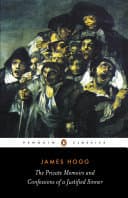
The Editor's Narrative Begins
The novel begins with an unnamed editor's preface, setting the stage for the 'memoirs' that follow. The editor claims to have found an old manuscript detailing the life of a man driven to extreme religious fanaticism and crime. He presents this document, along with his own introduction, to the reader. This editorial frame creates a sense of historical authenticity and distance, prompting the reader to consider the truth of the events and the protagonist's confessions. The editor describes the historical context of early 18th-century Scotland, including the intense religious divisions and the rise of Antinomianism, a doctrine central to the sinner's justification.
The Laird's Family and the Minister's Influence
The editor tells the story of George Colwan, the Laird of Dalcastle, a cheerful but somewhat reckless man, and his religious wife, Rabina, who dislikes him. Rabina comes under the influence of the extreme Calvinist minister, Mr. Wringhim, a man of rigid beliefs. After a period of separation, Rabina gives birth to a second son, Robert, whose father is strongly implied to be Mr. Wringhim, though he is publicly acknowledged as George Colwan's son. This birth, surrounded by religious fervor and marital conflict, sets the stage for Robert's upbringing and the deep resentments that will drive his future actions.
Robert's Fanatical Upbringing
Robert is raised by Mr. Wringhim, not Laird Dalcastle, in an environment filled with extreme Calvinist teachings, especially the doctrine of 'justification by faith alone' to the point of Antinomianism. He is taught that he is one of God's elect, destined for salvation, and thus incapable of true sin. This belief system fosters in Robert intense spiritual pride and a chilling disregard for conventional morality. His adoptive father, Mr. Wringhim, strengthens these convictions, shaping Robert into a rigid, self-righteous, and increasingly isolated young man, convinced of his divine favor and the damnation of others.
The Encounter with Gil-Martin
As Robert grows up, he meets a mysterious figure named Gil-Martin, who appears to him in different forms and at opportune times. Gil-Martin is an enigmatic, almost supernatural being who quickly gains Robert's trust and becomes his constant companion and confidant. Gil-Martin reinforces Robert's belief in his own election and subtly, then openly, encourages him to act on his most extreme interpretations of religious doctrine. He suggests that those who oppose Robert's 'righteous' path are agents of the devil and that removing them would serve God. This partnership is a turning point, moving Robert towards violence.
The Murder of George Colwan
Robert's elder brother, George Colwan, is the rightful heir to Dalcastle and a popular, kind young man. Robert, driven by jealousy, a religious conviction that George is damned, and Gil-Martin's subtle suggestions, begins to see George as an barrier to God's will and his own destiny. Gil-Martin arranges circumstances that lead Robert to believe he must eliminate George. During a wrestling match, George is found dead, seemingly from a fall, but the story strongly implies Robert's direct involvement, possibly with Gil-Martin's supernatural help. This act of fratricide is Robert's first major crime, which he believes is divinely sanctioned.
The Minister's Demise and the Pursuit of Purity
After George's death, Robert's actions become more erratic and violent. He murders a minister who preaches against Antinomianism, seeing him as a false prophet. Later, he turns against his adoptive father, Mr. Wringhim, believing him to be an obstacle to his spiritual purity and perhaps resenting his true parentage. Gil-Martin continues to manipulate Robert, making him believe these murders are righteous acts of purification, removing obstacles to the spread of God's true doctrine. Robert's paranoia and self-deception deepen, as he interprets every event through his distorted faith.
Robert's Descent into Madness and Isolation
As his crimes increase, Robert becomes a fugitive, constantly on the run and increasingly isolated. He is troubled by visions and hallucinations, often involving Gil-Martin, who now appears in more terrifying, demonic forms. Robert's mental state quickly worsens, blurring the lines between reality and his tormented imagination. He starts to question Gil-Martin's true nature, suspecting him to be the Devil, but remains under his influence. His confessions show a man torn between his belief in his own justification and the growing horror of his deeds, leading to deep psychological distress and despair.
The Editor's Investigation and Doubts
After presenting Robert's memoirs, the editor returns to offer his own comments and investigation. He tries to confirm Robert's account with historical records and local testimonies. While some events match, many details are fantastical or defy rational explanation, especially regarding Gil-Martin's appearances and disappearances. The editor struggles to reconcile Robert's unwavering belief in his divine justification with the undeniable evidence of his terrible crimes. He considers the possibility of demonic possession, extreme psychological delusion, or even a clever literary deception, leaving the reader to ponder the true nature of Robert's experiences.
The Discovery of Robert's Body
The editor describes how, many years after the events of the memoirs, Robert's mummified body is found buried upright on a remote hill, along with the very manuscript the editor has been presenting. The discovery is surrounded by a supernatural aura, with local legends and superstitions about the site. The body's preserved state and the strange way it was buried add another layer of mystery and horror to Robert's story, suggesting an unnatural end. This discovery confirms the editor's belief in the 'justified sinner' and the authenticity, however strange, of his confessions.
The Editor's Concluding Reflections
In his concluding remarks, the editor offers a final, detailed analysis of Robert Wringhim's life and confessions. He discusses the dangers of religious fanaticism, particularly the Antinomian doctrine that led Robert to believe he was above moral law. The editor reflects on the nature of evil, whether it comes from human depravity, psychological illness, or genuine demonic influence. He lets the reader draw their own conclusions about Robert's sanity, the reality of Gil-Martin, and the moral implications of the story. The editor emphasizes the historical context and the lasting mystery of Robert's tormented soul.