“I looked at myself in the glass, and I was, to a hair, the living image of the King.”
— Rudolf Rassendyll's first realization of his uncanny resemblance to King Rudolf V.

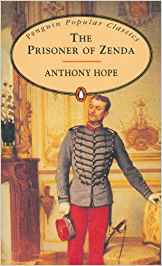
Anthony Hope (1800)
Genre
Fantasy / Historical Fiction / Romance
Reading Time
180 min
Key Themes
See below
Sign in to track this book
An English gentleman, a dead ringer for Ruritania's king, must impersonate him to save the throne and win the princess's heart, all while battling dangerous rivals.
Rudolf Rassendyll, a rich English gentleman, decides to vacation in Ruritania, a small European kingdom. His family jokes about his strong resemblance to the Ruritanian royal family, especially King Rudolf Elphberg, who is about to be crowned. Rassendyll's brother, Robert, encourages him to do something with his life, and his sister-in-law, Rose, is interested in the family history. Curious for adventure, Rassendyll travels to Ruritania. He plans to see the coronation and explore the capital, Strelsau. He meets Colonel Sapt and Fritz von Tarlenheim, loyal subjects of the King, who are shocked by his likeness to Rudolf Elphberg, including a shared birthmark.
The night before the coronation, Rassendyll, Sapt, and Fritz find King Rudolf Elphberg at a hunting lodge. He had a farewell supper and was drugged by Black Michael, the King's half-brother and rival, who bribed the cook. The King is unconscious and cannot wake for the coronation. Facing a political disaster if the King is absent, Sapt creates a bold plan: Rassendyll, because of his resemblance and shared birthmark, must impersonate the King. Rassendyll, at first unsure, agrees to the dangerous deception, understanding the seriousness of the situation and the threat to Ruritanian stability. The real King is hidden in the lodge while Rassendyll prepares to take his place.
Rudolf Rassendyll, pretending to be King Rudolf Elphberg, successfully completes the coronation ceremony in Strelsau. His charm and intelligence win over the Ruritanian public, who do not know the truth. He also meets Princess Flavia, the King's cousin and intended bride. Flavia is drawn to this 'new' Rudolf, finding him more engaging and responsible than the King she knew. The deception continues, but Rassendyll gets more involved in Ruritanian court politics. Colonel Sapt and Fritz von Tarlenheim remain his loyal allies, guiding him and keeping the secret, while the real King's fate is still unknown.
After the coronation, Rassendyll, Sapt, and Fritz return to the hunting lodge for the real King. To their dismay, they find that Black Michael's men, led by Rupert of Hentzau, have kidnapped the unconscious King and taken him to Castle of Zenda, Michael's fortress. This confirms Michael's full intention to take the throne. Rassendyll realizes his temporary impersonation must continue to prevent civil war and keep order in Ruritania. The immediate goal becomes rescuing the true King, but the task is dangerous. Michael has loyal henchmen, 'the Six,' guarding his secret and the King.
Rassendyll fully takes on the role of King Rudolf, living in the palace and handling state affairs. He impresses the court with his new diligence and wisdom, especially Princess Flavia, who falls deeply in love with this changed man. Rassendyll, in turn, develops strong feelings for Flavia, creating a moral problem. He knows he is living a lie and that his love for Flavia is based on deceit. Despite the danger, he enjoys the power and adoration. However, the weight of the secret and the true King's situation constantly remind him of his temporary status and the impossible nature of his growing romance.
Rassendyll and his allies, Sapt and Fritz, start trying to find and rescue the true King. They go on dangerous scouting missions around Castle of Zenda. During one trip, Rassendyll has a close call with Rupert of Hentzau and his men, showing his courage and sword skills. He learns the King is held in the castle dungeon, likely in poor health from the conditions and Michael's cruel treatment. Michael's mistress, Antoinette de Mauban, a French noblewoman who feels betrayed by Michael, becomes an unwilling informant. She provides important details about the King's imprisonment and Michael's plans.
Black Michael, increasingly annoyed by Rassendyll's successful impersonation and public acceptance, plans to expose the fraud. He lures Rassendyll to a remote part of Strelsau, intending to ambush and kill him. Then he plans to show the real King's weakened body to the public, claiming Rassendyll was a usurper. However, Rassendyll, warned by Antoinette de Mauban, is ready. A fierce street fight breaks out between Rassendyll's small group and Michael's men. Rassendyll shows great bravery and fighting skill, barely escaping with his life and further strengthening his reputation among loyalists.
Antoinette de Mauban, disgusted by Michael's cruelty and his plans to marry Flavia, decides to fully help Rassendyll. She sends a letter to Rassendyll, luring Rupert of Hentzau to her residence outside the castle walls, pretending it is a romantic meeting. This gives Rassendyll and his men a short chance to enter the castle. During the fight, Antoinette is killed by Rupert, but her distraction is vital. Her sacrifice gives Rassendyll a chance to get closer to the King, showing the dangerous world of political intrigue and its personal costs.
With the information gathered and Antoinette's sacrifice, Rassendyll, Sapt, Fritz, and a small group of loyal men launch a full attack on Zenda Castle. They face strong resistance from Michael's 'Six.' During the chaotic battle, several of Michael's men are killed. Rassendyll confronts Black Michael in a dramatic duel, ultimately killing him. Rupert of Hentzau, always a survivor, escapes the castle, but not before severely wounding the real King and injuring Rassendyll. The castle is secured, and the true King Rudolf Elphberg is finally freed, though very ill.
The true King Rudolf Elphberg is found in terrible condition, weakened by imprisonment and Rupert's wound. He is carefully moved to a more comfortable spot in the castle and slowly nursed back to health. Rassendyll, also wounded, makes sure the King gets the best care. Rupert of Hentzau, having escaped, is now a dangerous fugitive. His escape adds a lingering threat and shows his cunning and ruthless nature. The immediate crisis of the King's rescue is over, but the long-term effects of the deception and remaining dangers are still present.
As the true King slowly recovers, Rassendyll must give up his royal role. He has one final, sad talk with Princess Flavia. They admit their deep love for each other, but both know their union is impossible. Flavia, as future Queen, must marry the true King to ensure Ruritanian stability. Rassendyll accepts his duty to step aside and return to his own life. Their farewell is full of sorrow and sacrifice. They choose duty and honor over personal happiness, solidifying Flavia's commitment to her kingdom and Rassendyll's integrity.
Rudolf Rassendyll makes his final departure from Ruritania, leaving the crown, the country, and the woman he loves. The true King Rudolf Elphberg eventually recovers completely and takes his rightful place on the throne, marrying Princess Flavia. The secret of Rassendyll's impersonation is kept by Sapt, Fritz, and a few others, becoming a legendary tale for those involved. Rassendyll returns to England, a changed man. He receives a rose from Flavia each year, a symbol of their lasting, unfulfilled love. The adventure gave his life purpose but also left him with a sense of loss and a deep understanding of duty and sacrifice.
The Protagonist
Rassendyll transforms from an idle gentleman into a selfless hero, discovering purpose and experiencing profound love and loss through his extraordinary impersonation.
The Supporting
From a careless monarch, he is purified through suffering, emerging with a renewed sense of duty, though his personal character remains somewhat underdeveloped.
The Supporting
Flavia evolves from a hopeful but disillusioned fiancée to a woman who chooses duty and sacrifice for her kingdom over personal love.
The Supporting
Sapt remains a steadfast and pragmatic guardian of the throne, ensuring the succession and stability of Ruritania.
The Supporting
Fritz matures through the ordeal, becoming a more resilient and dedicated servant of the crown.
The Antagonist
Michael's arc is one of escalating villainy, culminating in his violent death as he attempts to usurp the throne.
The Antagonist
Rupert remains a chaotic and dangerous force, surviving the initial conflict to become a persistent threat, showcasing his enduring villainy.
The Supporting
Antoinette transitions from a scorned mistress to a tragic figure who sacrifices herself for justice and revenge against Michael.
This theme is central to Rassendyll's inner struggle and Flavia's final choice. Rassendyll, despite falling in love with Flavia and enjoying kingship, understands his duty to restore the true King and keep Ruritania stable. He must put aside his personal desires for love and power. Similarly, Flavia, though she loves Rassendyll deeply, chooses her duty to her country and marries the true King. This theme highlights that true nobility means sacrificing for the greater good, even if it costs personal happiness. This is clear in Rassendyll's sad farewell and his yearly rose from Flavia.
“"I must go. It is my duty. And yours is here."”
The novel's entire plot relies on the physical resemblance between Rudolf Rassendyll and King Rudolf Elphberg. This allows Rassendyll to impersonate the King, fooling the whole nation, including Princess Flavia. The theme explores how easily appearances can be manipulated and how hard it is to know the truth. Rassendyll's 'performance' as King is so good that he is seen as a better monarch than the real one. This questions whether leadership is about substance or outward show. The deception shows how superficial public perception can be and the hidden truths beneath the surface.
“"He was the King, and I was but a shadow; yet the shadow had for a moment usurped the substance."”
Rassendyll's journey explores heroism. He starts on an adventure but quickly takes on huge responsibility. His decision to impersonate the King, his repeated acts of courage against Black Michael and Rupert of Hentzau, and his ultimate surrender of the crown and the woman he loves, all show his deep capacity for self-sacrifice. He risks his life not for personal gain, but for a foreign kingdom's stability and its true monarch's honor. This theme also appears in loyal characters like Colonel Sapt, Fritz, and even Antoinette de Mauban, who gives her life.
“"God save the King! No, God save Ruritania!"”
The novel subtly questions what makes a good king. The real King Rudolf Elphberg is irresponsible, while Rassendyll, an outsider, proves to be a capable, courageous, and loved leader during his impersonation. Rassendyll's actions and decisions, driven by duty and genuine care for the people, contrast sharply with the true King's character. This suggests that true leadership comes from character, integrity, and a willingness to serve, not just birthright. The story implies that Ruritania was better served by the 'imposter' than by its rightful, but flawed, monarch.
“"It's a fine thing to be a King, but it's a finer thing to be a man."”
Ruritania is a land full of political schemes, mainly driven by Black Michael's ambition to take the throne from his half-brother. The story is full of plots, counter-plots, assassinations, and betrayals. This shows how dangerous and cutthroat power struggles are. Michael's network of 'the Six' and his use of deception highlight the cunning needed to navigate such a world. The kingdom's stability constantly hangs in the balance, depending on Rassendyll's successful deception and the defeat of Michael's group. This shows how fragile political order can be when faced with ruthless ambition.
“"In Ruritania, treachery is a fashion, and loyalty a forgotten art."”
The uncanny physical resemblance between Rudolf Rassendyll and King Rudolf Elphberg.
The doppelgänger motif is the foundational plot device, enabling the entire narrative. Rassendyll's exact likeness to King Rudolf Elphberg, including a distinctive family birthmark, makes the impersonation plausible. This device creates immediate conflict and sets the stage for the deception, allowing an ordinary man to step into extraordinary circumstances. It also raises questions about identity, fate, and the superficiality of appearance in determining one's role and destiny. Without this uncanny resemblance, the plot could not exist, and the central themes of duty and sacrifice would lack their dramatic catalyst.
The true King's abduction and imprisonment, serving as the central objective.
The imprisoned King Rudolf Elphberg functions as a classic MacGuffin, a plot device that drives the story forward without necessarily being the central focus of the audience's emotional investment. While Rassendyll's primary goal is to rescue the King, the audience's attention is often drawn to Rassendyll's personal struggles, his love for Flavia, and his confrontations with Michael and Rupert. The King's rescue is the overarching mission, but the journey to achieve it, and the moral dilemmas encountered along the way, are where the true narrative weight lies. His state of being provides constant urgency and motivation.
Rudolf Rassendyll's assumption and maintenance of the King's persona.
Rassendyll's secret identity as the 'acting King' is a crucial plot device that generates suspense, dramatic irony, and moral conflict. The constant threat of exposure adds tension to every interaction he has, particularly with Princess Flavia and Black Michael. This device allows for the exploration of themes like appearance versus reality and the burdens of leadership. The maintenance of this secret requires cleverness, courage, and the unwavering loyalty of Sapt and Fritz, making the deception a high-stakes gamble that shapes Rassendyll's character and actions throughout the story.
The steadfast support and guidance provided by Colonel Sapt and Fritz von Tarlenheim.
Colonel Sapt and Fritz von Tarlenheim serve as essential plot devices, acting as Rassendyll's guides, protectors, and moral compasses within the unfamiliar Ruritanian court. Their unwavering loyalty to the true King, and by extension to Rassendyll as the 'acting King,' is crucial for the success of the deception and the rescue mission. They provide exposition, strategic advice, and often rescue Rassendyll from perilous situations. Their presence grounds Rassendyll's fantastical adventure in a sense of duty and provides emotional support, highlighting the importance of trust and camaraderie in times of crisis.
“I looked at myself in the glass, and I was, to a hair, the living image of the King.”
— Rudolf Rassendyll's first realization of his uncanny resemblance to King Rudolf V.
“He who rides a tiger is afraid to dismount.”
— Fritz von Tarlenheim's warning to Rudolf Rassendyll about the dangerous position he is in.
“Honour has its claims, and the King's honour is the honour of the kingdom.”
— Fritz expressing the high stakes and moral obligations involved in the deception.
“She was a woman to die for, and a woman to kill for.”
— Rudolf Rassendyll's initial impression and deep admiration for Princess Flavia.
“If I am to be a sham King, I'll be a good sham King.”
— Rudolf Rassendyll's resolve to play his part convincingly and responsibly.
“God save the King!”
— The repeated cry of the people, highlighting the irony and the gravity of Rassendyll's deception.
“The game is played out, and I must go.”
— Rudolf Rassendyll's poignant realization that his time as king is over and he must leave.
“We sell our souls for a price, but the price is not always in coin.”
— A reflection on the personal sacrifices made for duty and honor.
“The King may do no wrong, but he can suffer much.”
— A comment on the burdens and vulnerabilities of royalty.
“A man who has two lives to live is a man who knows how to live neither.”
— Rudolf Rassendyll's internal conflict about his divided existence and identity.
“The path of honour is often a lonely one.”
— Rudolf Rassendyll's reflection on the isolation that comes with making difficult, honorable choices.
“It is not every day that a man has the chance to be a king, even for a few weeks.”
— Rudolf Rassendyll's initial wonder and thrill at the unexpected turn of events.
“The heart of a woman is a great mystery, and her love is a greater.”
— Rudolf Rassendyll's contemplation of Princess Flavia's feelings and their shared predicament.
“We are but puppets in the hands of fate.”
— A philosophical musing on the seemingly predetermined course of events that brought Rassendyll to Ruritania.
Ready to see how well you understood this book? Take our interactive quiz with 10 questions.

Anthony Hope was an English novelist best known for his adventure novels, particularly 'The Prisoner of Zenda' (1894) and its sequel 'The Heart of Princess Osra' (1896). His works often featured dashing heroes, romantic entanglements, and exotic settings, establishing him as a prominent figure in the late Victorian and Edwardian adventure fiction genre.







