“The wind carried the scent of pine and something else, something wild and untamed, just like the country itself.”
— Describing the atmosphere of the mysterious country.

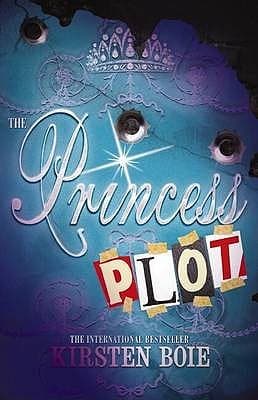
Kirsten Boie (2005)
Genre
Fantasy / Children's / Mystery / Young Adult
Reading Time
180 min
Key Themes
See below
Sign in to track this book
A girl's unexpected film role as a princess turns into a real-life mystery in a charming kingdom, where the line between script and reality blurs.
Jenna, a quiet and somewhat insecure girl from Germany, goes with her best friends, Clara and Marie, to an open casting call for a new movie, 'The Princess Plot.' Clara and Marie are more talented and outgoing than Jenna, and Jenna only goes to support them. To everyone's surprise, especially Jenna's, the director, Mr. Winter, and the casting agents choose her. Despite her lack of acting experience and self-doubt, she is offered the lead role of Princess Safira. Her strict and usually overprotective mother, who rarely allows Jenna much freedom, surprisingly gives her permission to accept the role and travel to the fictional kingdom of Scandia for filming. This sets the stage for Jenna's unexpected adventure.
When Jenna arrives in Scandia, a picturesque but secluded kingdom, she notices unsettling things. The film set is not a typical busy production; it feels unusually quiet and secretive. Her fellow cast members, especially the actors playing the royal family, treat her with an odd mix of respect and suspicion. The film crew is small, and security is tight, with bodyguards always present. Mr. Winter, the director, is often absent or avoids her questions. The script itself seems to change often without explanation. Jenna also notices that some of the 'props' and 'costumes' seem remarkably real, more so than typical movie materials, hinting at a deeper reality.
Jenna begins to notice that pages of her script often go missing or are changed without explanation. When she tries to talk about these changes with Mr. Winter or the other actors, they often dismiss her or give vague answers. She feels increasingly isolated, even though she is the lead. The 'royal family' actors, particularly the Queen and King, act with a surprising level of authority and formality, even when cameras are not rolling. Their interactions with Jenna often feel less like acting and more like genuine royal protocol. This constant change and secretive atmosphere make Jenna question the true nature of the film she is supposedly making.
During a 'filming' sequence, Jenna is led into what she believes is an elaborate set, only to realize it is the actual royal palace of Scandia. The grandeur and historical details are too real to be props. While exploring an area she was told was 'off-limits,' Jenna finds a hidden room. There, she meets a girl who looks exactly like her. This girl, Princess Safira, the true princess of Scandia, is being held captive. Safira reveals that she was kidnapped and replaced by Jenna in a sinister plot, confirming Jenna's growing suspicions that this is no ordinary movie production.
Princess Safira, initially wary, eventually trusts Jenna and explains the full conspiracy. She reveals that she was kidnapped by a shadowy group trying to overthrow the Scandian monarchy. The 'movie production' is a detailed trick meant to introduce Jenna, Safira's identical cousin, as a stand-in. The plan is for Jenna to pretend to be Safira during public appearances, especially a crucial upcoming ceremony, while the conspirators gain power and eventually get rid of the real princess. The 'director,' Mr. Winter, and most of the 'crew' are members of this secret group, using Jenna for their own bad goals.
Jenna is horrified by the truth and the realization that she has been an unwitting part of a dangerous political coup. She feels immense guilt for unknowingly helping the deception. Despite her fear, she decides to help Safira escape. Together, they begin to make a plan. Safira, having lived in the palace her entire life, knows its secret passages, security weaknesses, and the daily routines of her captors. Jenna, with her outsider's perspective, finds ways to use the 'movie' narrative as a cover for their actions, realizing the very trick meant to deceive can be used against the conspirators.
The day of the important royal ceremony arrives, and Jenna, disguised as Princess Safira, is forced to participate in a public procession. This event is a critical part of the conspirators' plan to make their takeover legitimate. However, Jenna has secretly arranged a signal. During a live broadcast, she subtly changes the script, using a pre-arranged phrase or gesture that only her friends, Clara and Marie, watching from home, would recognize as a distress signal. She hopes this will alert them and, through them, the international community, to the true situation in Scandia, despite the immense risk to her own safety.
Back in Germany, Clara and Marie are watching the Scandian royal ceremony on television. They immediately recognize Jenna's subtle, pre-arranged signal and realize something is very wrong. Using their resourcefulness and social media, they start spreading the word, sharing their suspicions and pointing out inconsistencies in Jenna's behavior on screen. They contact journalists and the German embassy, presenting evidence and their concerns. Their quick thinking and belief in their friend manage to draw international attention to the crisis in Scandia, putting pressure on the conspirators.
As international attention grows due to Clara and Marie's actions, the conspirators' plot begins to fall apart. Security forces, alerted by public suspicion and diplomatic inquiries, storm the palace. A tense confrontation follows, during which the true identities of Mr. Winter and his accomplices are revealed. Jenna and Princess Safira, working together, manage to avoid capture during the chaos. They are eventually found and rescued by loyal Scandian forces and international observers, ending the coup attempt and ensuring the safety of the legitimate princess.
With the conspirators caught, Princess Safira is safely returned to her place on the throne of Scandia. Jenna, having played an unexpected role in saving the kingdom, is praised as a hero. She returns home to Germany, no longer the insecure girl who left. The experience has changed her, giving her new confidence and a deeper appreciation for her friends, Clara and Marie, whose loyalty was invaluable. While the 'movie' was a sham, Jenna's adventure was real, strengthening her bond with Safira and leaving her with an incredible story and a stronger sense of self.
The Protagonist
Jenna transforms from a shy, self-doubting girl into a resourceful and courageous heroine who saves a kingdom.
The Supporting
Safira endures captivity and helps orchestrate her own rescue, reaffirming her strength and commitment to her kingdom.
The Antagonist
Mr. Winter's carefully constructed plot is exposed and ultimately foiled.
The Supporting
Clara's loyalty and quick thinking play a vital role in saving Jenna and exposing the conspiracy.
The Supporting
Marie's practicality and loyalty contribute significantly to the exposure of the plot and Jenna's rescue.
The Mentioned
Her initial mysterious permissiveness is an early plot point, hinting at deeper machinations.
The Supporting
His authority is challenged by the coup but ultimately restored with the rescue of his daughter.
The Supporting
Her family is threatened by the coup, but she is reunited with her daughter and her position restored.
The novel shows how Jenna, an ordinary and insecure girl, finds her true abilities when she has to pretend to be a princess. At first, she struggles with her perceived lack of talent and confidence, feeling like an imposter even before she knows the truth. However, the dangerous situation forces her to overcome her insecurities and become a stronger, more resourceful person. This is clear when she must convincingly play Safira, not just for the cameras, but to deceive the conspirators and protect the real princess. Her journey from self-doubt to courageous action is a main part of her character's development.
“She had always felt like an extra in her own life, but now, the spotlight was blinding, and she had to learn to shine.”
A main theme is the sharp contrast between what appears to be happening and the sinister reality underneath. The entire 'movie production' is a detailed deception, carefully made to trick Jenna and the outside world. The film set is a real palace, the actors are conspirators, and the script is a tool for manipulation. This theme is clear in Jenna's growing unease as she notices inconsistencies — the overly real props, the secretive atmosphere, the 'royal family's' too-authentic behavior — leading her to question the illusion. The story constantly challenges the reader to look beyond the surface, mirroring Jenna's own journey of discovery.
“The glitz and glamour were just a thin veil, barely concealing the cold steel of a cage.”
The strong loyalty of Jenna's best friends, Clara and Marie, helps save her and expose the conspiracy. Even though Jenna is far away in Scandia, her friends stay connected and observant. Their ability to recognize her subtle distress signal, their immediate belief in her danger, and their efforts to alert the media and authorities show the power of true friendship. Their actions demonstrate that even ordinary people, through their bond and determination, can make a significant impact against powerful enemies, highlighting friendship as a key part of rescue and justice.
“A true friend sees the truth in your eyes, even when the whole world is watching a lie.”
The novel examines how unchecked power can corrupt and how far people will go to seize it through deception. Mr. Winter and his co-conspirators plan a cruel plot to overthrow a legitimate monarchy, using an innocent girl as their unwitting pawn. Their willingness to kidnap, imprison, and manipulate shows the moral emptiness that can come with a desire for power. The 'Princess Plot' itself is a grand exercise in deception, showing how carefully built illusions can be used to control stories and manipulate public perception, ultimately threatening stability and justice.
“Power is a hungry beast, and it often devours truth first.”
Two identical individuals, Jenna and Princess Safira, whose resemblance is central to the plot.
The existence of two physically identical girls, Jenna and Princess Safira, is the fundamental plot device that drives the entire narrative. Their uncanny resemblance allows the conspirators to substitute Jenna for Safira without detection. This device creates immediate tension and mystery, as Jenna's initial role as a 'movie princess' slowly morphs into a real-life impersonation. It also serves to highlight themes of identity, as Jenna must not only act like a princess but become one in the eyes of the world, and eventually, to herself. The doppelgänger setup is the linchpin for the deception and the subsequent unraveling of the plot.
An elaborate fake movie production used to mask a real-world conspiracy.
The 'movie production' is a masterful red herring, designed to mislead not only Jenna but also the reader. It provides a plausible, glamorous reason for Jenna's presence in Scandia and explains away many of the initial oddities she observes. The film's title, 'The Princess Plot,' cleverly foreshadows the actual conspiracy without revealing its true nature. This device allows the antagonists to operate in plain sight, using the illusion of entertainment to cover their nefarious political agenda. The gradual revelation that the movie is a sham builds suspense and dramatically shifts the genre from lighthearted children's adventure to a political thriller.
Architectural features of the palace used for confinement and escape.
The Scandian royal palace is equipped with secret passages and hidden rooms, a classic plot device in mystery and adventure stories. These architectural features serve multiple functions: they are used to secretly imprison Princess Safira, allowing the conspirators to maintain the illusion of her presence. Later, Safira's intimate knowledge of these hidden routes becomes crucial for her and Jenna's escape. This device adds an element of classic intrigue and provides practical means for characters to move undetected, bypass guards, and access crucial information or escape routes within a confined and heavily monitored environment, heightening the tension and aiding the climax.
A pre-arranged, subtle sign used to communicate danger to outsiders.
The distress signal is a critical communication device that bridges the gap between Jenna's isolated predicament in Scandia and her friends in Germany. By agreeing on a specific, subtle gesture or phrase, Jenna creates a lifeline. This device is effective because it is inconspicuous enough to escape the notice of her captors during a public broadcast but distinctive enough for her loyal friends to recognize. It allows for a dramatic turning point in the plot, enabling the outside world to become aware of the conspiracy and initiating the rescue efforts, demonstrating the power of a small, pre-planned action in a high-stakes situation.
“The wind carried the scent of pine and something else, something wild and untamed, just like the country itself.”
— Describing the atmosphere of the mysterious country.
“Even a princess, especially a princess, needs to know how to think for herself.”
— A mentor figure advising the young princess.
“The truth, like a stubborn knot, can be difficult to untangle, but it's always worth the effort.”
— Reflecting on solving a puzzle or mystery.
“Sometimes the greatest disguise is simply to be yourself, in a place where no one expects you to be.”
— The princess hiding in plain sight.
“A crown might grant authority, but courage is something you must find within your own heart.”
— The princess facing a difficult challenge.
“The old stories weren't just tales; they were maps, if you knew how to read them.”
— Discovering hidden clues in ancient lore.
“Fear can be a powerful enemy, but it can also be a warning, if you listen carefully.”
— Learning to distinguish between real danger and unfounded fear.
“It's not about being fearless, but about acting despite your fear.”
— An important lesson learned about bravery.
“The most dangerous plots are often the ones that seem the most innocent.”
— Unraveling the layers of the conspiracy.
“Loyalty isn't given; it's earned, through trust and shared purpose.”
— Building alliances in a time of uncertainty.
“Sometimes the smallest voice can speak the loudest truth.”
— A quiet character revealing a crucial piece of information.
“A true leader doesn't just command; they inspire.”
— Reflecting on what it means to be a good ruler.
“The future is not a path already laid out, but a tapestry we weave with our choices.”
— Considering the impact of decisions on destiny.
“Magic isn't always about spells and potions; sometimes it's just seeing the world with new eyes.”
— Discovering the wonder in ordinary things.
Ready to see how well you understood this book? Take our interactive quiz with 10 questions.

Biography coming soon.







