“The difference between a king and a pauper is but a matter of clothes.”
— Tom Canty reflects on his experience swapping places with Prince Edward.

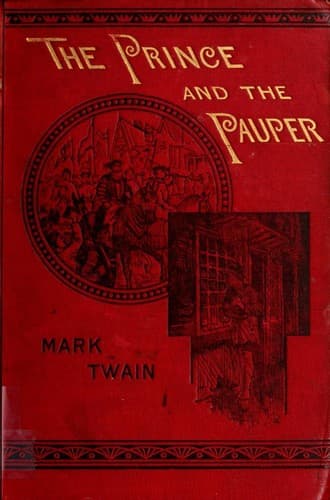
Mark Twain (1976)
Genre
Children's / Historical Fiction / Young Adult
Reading Time
240 min
Key Themes
See below
Sign in to track this book
A twist of fate swaps the lives of a pampered prince and a tattered pauper, forcing each to navigate a new world while uncovering the meaning of royalty.
On a particular day in the 16th century, two boys are born in London. One is Edward Tudor, the heir to King Henry VIII, whose birth is met with national celebration. The other is Tom Canty, born into poverty in Offal Court, a slum. Tom lives with his abusive father, John Canty, his grandmother, and two sisters, Bet and Nan. Despite his harsh life, Tom finds comfort in stories told by Father Andrew, a kind priest, and dreams of a better existence, often pretending to be a prince with other poor children.
One day, Tom Canty, curious, wanders near Westminster Palace. Palace guards roughly handle him. Edward, seeing this, brings Tom into the palace. Inside, the two boys are surprised by their identical looks. Edward is interested in Tom's stories of life outside the palace, while Tom is amazed by Edward's royal clothes. On a whim, they swap clothes, each wanting to experience the other's life briefly. Edward, dressed in Tom's rags, goes to fetch something, leaving Tom in his royal garments.
When Edward, in Tom's clothes, tries to return to the palace, guards turn him away, thinking he is the beggar boy. Despite his claims of being the Prince of Wales, he is beaten and thrown out. Meanwhile, King Henry VIII and the court find Tom, dressed as Edward, and believe the prince has gone mad, thinking he is a pauper. Tom, scared, tries to explain the swap, but his words are dismissed. The King, worried about his heir's mental state, orders that Tom be treated kindly but watched closely, forcing him to keep up the deception.
Edward, alone and in rags, is found by John Canty, Tom's abusive father, who mistakes him for his own son. John beats Edward for his supposed absence and his 'mad' claims of being a prince. Edward is pulled into the harsh world of Offal Court, experiencing hunger, cold, and violence for the first time. He is forced to beg and sees the realities of poverty, crime, and society's indifference. Despite his suffering, Edward's royal spirit and sense of justice remain, and he promises to return to his place and help his people.
Edward escapes John Canty and meets Miles Hendon, a kind but disgraced nobleman. Miles, having been disinherited and exiled by his younger brother, first thinks Edward's claims of being the prince are from a mad boy. However, he is moved by Edward's dignity and vulnerability, and out of kindness, protects the boy. Miles promises to shield Edward, even enduring public humiliation and beatings for him, forming a strong bond with the 'mad' prince.
Back in the palace, King Henry VIII dies. Tom Canty, still pretending to be Edward, is now the acting King. He struggles with royal responsibilities, always fearing exposure. However, his kindness leads him to make just and merciful decisions, often overturning harsh laws and pardoning people, surprising the court. He misses his family and simple life, and sometimes makes mistakes that raise suspicion among some courtiers, especially Lord Hertford.
Edward, still with Miles Hendon, continues his journey across England. They meet outlaws, beggars, and persecuted people. Edward sees the extreme poverty, the unfair legal system, and harsh punishments on common people. He is arrested, imprisoned, and put in the stocks, experiencing his kingdom's laws. These experiences deepen his understanding of his future subjects' problems and strengthen his resolve to be a just and kind ruler.
Miles Hendon, hoping to get back his inheritance, travels with Edward to his ancestral home, Hendon Hall. They find that Miles's younger brother, Hugh, has taken his title and lands and married Miles's beloved Lady Edith. Hugh denies Miles's identity and, with his servants, has Miles and Edward imprisoned and publicly flogged. Edward, seeing this injustice against his protector, is further angered by the abuse of power and promises to get revenge on Hugh, strengthening his bond with Miles.
The coronation day arrives, and Tom Canty, scared and guilty, is about to be crowned King Edward VI. As the ceremony begins, a tattered Edward, with Miles Hendon, bursts into Westminster Abbey, declaring himself the true king. At first, the court dismisses him as mad. Tom, however, recognizes the true prince and, with tears, admits his deception. The court is in an uproar, demanding proof from the two identical boys. Edward, with an idea, asks Tom a specific question about the Great Seal, which only the true prince would know.
When Edward asks about the Great Seal, Tom says he used it as a nutcracker. Edward then explains where he hid the real Great Seal, which had been lost, under a suit of armor. This detail, known only to the true prince, convinces the court. Edward is put back on his throne as King Edward VI. He immediately rewards Miles Hendon, giving him back his title, lands, and making him an Earl. Tom Canty becomes the King's 'Whipping-Boy,' a position of honor and comfort. Edward, having experienced his kingdom's harsh realities, rules with mercy and justice for the rest of his short reign, guided by his time as a pauper.
The Protagonist
Transforms from an aloof prince into a just and merciful king through his experiences of poverty and injustice.
The Protagonist
Rises from extreme poverty to wield immense power, demonstrating innate kindness before gladly returning to a life of honor but less responsibility.
The Supporting
Redeems his honor and reclaims his rightful place through unwavering loyalty to the true king.
The Antagonist
Remains a villain throughout, fleeing justice after his crimes are exposed.
The Supporting
Dies early in the story, setting the stage for the main plot.
The Supporting
Plays a role in managing the political transition during the deception and ultimately accepts the true king.
The Supporting
A benevolent mentor whose death frees Tom from some of his ties to Offal Court.
The Antagonist
Remains a villain, continuing his deceit until the true king's return, after which his fate is implied to be unfavorable.
The Supporting
Remains a victim of circumstance, her fate tied to the Hendon brothers' conflict.
The novel explores how identity is shaped by birthright and experience. Edward, without his royal clothes, learns what it means to be human and a just ruler by living a common man's life. Tom, forced into royalty, deals with his true self versus the role he plays. Their identical appearances show that true identity comes from character, actions, and inner belief. Both boys grow as they navigate their swapped lives, understanding themselves and their roles more deeply.
“What does it profit a man to gain the whole world and lose his own soul?”
Twain contrasts the rich life of the monarchy with the poverty and injustice common people faced. Edward's journey through slums, prisons, and beggar camps shows him the harsh realities of a society with unfair laws, cruel punishments, and widespread suffering. The novel critiques the class system and the powerful's indifference to the poor, advocating for kindness and change. The arbitrary nature of the law, where small offenses lead to severe penalties, appears often.
“He saw the great gulf which separated the poor from the rich, and how the law was but a net for the small fry, while the great fish broke through.”
The story examines what makes a good leader. Tom, without training, often makes merciful and wise decisions because of his kindness. Edward's experiences as a pauper give him deep empathy that shapes his future rule. The novel suggests that true leadership comes from understanding and compassion for one's subjects, not just birthright. It questions the divine right of kings by showing that a pauper can sometimes be a better ruler than a king who lacks empathy.
“He had seen the great and the lowly, the just and the unjust, and he had learned that a king's heart should be as wide as his realm.”
The central idea of identical boys swapping places directly addresses appearance versus reality. People in the story judge based on clothing and social status, failing to see the true prince in rags or the true pauper in royal clothes. The court's inability to tell Edward and Tom apart, despite their different behaviors and knowledge, shows how easily appearances deceive and how deep societal prejudices are. Only specific, undeniable proof reveals the truth.
“Clothes make the man. Naked people have little or no influence on society.”
Throughout Edward's journey, he sees many acts of injustice and cruelty, from abuse of the poor to unfair legal punishments. His experiences drive his desire to rule with mercy. Tom, as temporary king, also shows a surprising capacity for mercy, often pardoning those condemned under harsh laws. The novel supports the idea that justice should be balanced with mercy, and that a truly just ruler understands the human condition and the reasons for crime.
“From that day forth, no man in England suffered punishment for crimes which Edward Tudor would not himself have punished with a lighter hand.”
The uncanny resemblance between Prince Edward and Tom Canty.
The identical appearance of Edward Tudor and Tom Canty is the central plot device that drives the entire narrative. Without their perfect resemblance, the swap would be impossible, and the story would not exist. It allows Twain to explore themes of identity, social class, and the arbitrary nature of power, as both boys are mistaken for each other, forcing them to experience lives vastly different from their own. The doppelgänger serves as a catalyst for their respective journeys of self-discovery and social commentary.
The core conflict arising from the two boys being indistinguishable.
Mistaken identity is the engine of the plot, creating both the dramatic tension and the comedic elements of the story. Edward is repeatedly dismissed as a mad pauper, while Tom is forced to impersonate the prince, leading to humorous blunders and moments of genuine fear. This device allows Twain to highlight how easily society can be fooled by appearances and how difficult it is to prove one's true identity when all external markers are stripped away or falsely applied. It underscores the fragility of social order based on superficial recognition.
Both protagonists are thrust into unfamiliar and challenging environments.
This device applies to both Edward and Tom. Edward, a pampered prince, is suddenly exposed to the brutal realities of poverty, hunger, and violence in the slums of London and the English countryside. Tom, a pauper, is overwhelmed by the opulence, etiquette, and immense responsibilities of court life. This contrast highlights the vast differences between the social classes and forces each character to adapt, learn, and grow in their respective 'new' environments, leading to their personal transformations and the novel's social commentary.
A seemingly minor object that becomes the ultimate proof of identity.
The Great Seal serves as a crucial symbol and plot device for resolving the central conflict. Initially, it's just a royal artifact that Edward misplaced and Tom innocently used as a nutcracker. However, its specific location and the unique knowledge of its disappearance become the irrefutable proof of Edward's true identity during the coronation. This device cleverly uses a small, specific detail to cut through the confusion of mistaken identity, emphasizing that true knowledge and memory are more reliable than superficial appearance.
“The difference between a king and a pauper is but a matter of clothes.”
— Tom Canty reflects on his experience swapping places with Prince Edward.
“When I am king, they shall not have bread and shelter only, but also teachings out of books; for a full belly is little worth where the mind is starved.”
— Prince Edward vows reforms after experiencing poverty firsthand.
“Kings should go to school to their own laws at times, and so learn mercy.”
— Edward learns compassion through his hardships as a pauper.
“Truth is the most valuable thing we have. Let us economize it.”
— Tom Canty humorously advises on being cautious with honesty.
“The world is made up of fools, and a few wise men; the latter are always in doubt, while the former are positive.”
— Narrator's observation on human nature during the story's events.
“I am the king; and I will go.”
— Edward asserts his identity despite being in rags and facing disbelief.
“He had a rather pretty wit, what there was of it.”
— Description of Tom Canty's character early in the book.
“It is not best to swap horses while crossing the river.”
— A proverb quoted in the narrative, cautioning against change during crisis.
“The law is not for the king, but for his subjects.”
— Edward realizes the disparities in justice after his experiences.
“I will not have it so; I will not have my people suffer.”
— Edward expresses resolve to alleviate the suffering he witnessed.
“A man's a man, for a' that.”
— Echoing Robert Burns, the theme of inherent human worth despite status.
“The prince and the pauper were born the same day, and resembled each other as much as one twin resembles another.”
— Opening lines highlighting the central premise of the story.
“He had been kicked, cuffed, and spat upon; but he was a king still, and had a king's heart.”
— Description of Edward enduring hardships while maintaining his dignity.
Ready to see how well you understood this book? Take our interactive quiz with 10 questions.
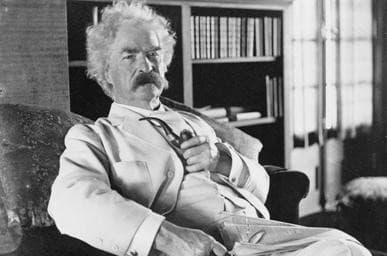
Samuel Langhorne Clemens, best known by his pen name Mark Twain, was an American writer, humorist, entrepreneur, publisher, and lecturer. He was praised as the "greatest humorist the United States has produced", and William Faulkner called him "the father of American literature". His novels include The Adventures of Tom Sawyer (1876) and its sequel, Adventures of Huckleberry Finn (1884), the latter of which has often been called the "Great American Novel". Twain also wrote A Connecticut Yankee in King Arthur's Court (1889) and Pudd'nhead Wilson (1894), and co-wrote The Gilded Age: A Tale of Today (1873) with Charles Dudley Warner.

Dan Gemeinhart
4.5
Kate O'Hearn
4.4

Jeanne Birdsall
4.4

Jen Wang
4.4
Wendelin Van Draanen
4.3

John Marsden
4.3

Chris Van Allsburg
4.3
Jennifer A. Nielsen
4.2