“The only thing that really interests me is the truth, and since I know that I cannot find it, I content myself with inventing it.”
— The narrator's cynical view on historical accuracy and his own role in fabricating documents.

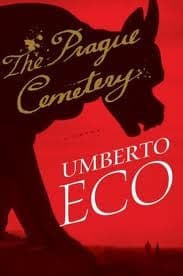
Genre
Historical Fiction / Mystery
Reading Time
10-12 hours
Key Themes
See below
Sign in to track this book
In 19th-century Europe, an amoral forger meticulously creates a web of deception that leads to the most infamous antisemitic document in history.
The novel begins in Paris, 1897, with Captain Simone Simonini, an elderly forger, waking up with severe amnesia. He finds a journal on his desk, written in two different hands, one of which he recognizes as his own. This journal becomes his main way to reconstruct his fragmented memories, though he suspects it might be a fabrication meant to mislead him. He starts to read, discovering entries that hint at a life filled with espionage, forgery, and manipulation, but the identity of the other hand, a supposed Abbé Dalla Piccola, remains a mystery. Simonini's first entries show frustration and growing paranoia, as he tries to make sense of the disturbing events described in the journal with his current, blank state, questioning the truth of every word, including his own.
The journal details Simonini's youth in Turin, Italy. He recalls his grandfather, a strong anti-Jesuit, who taught him to hate the Society of Jesus and fascinated him with conspiracies. Simonini, a talented forger from a young age, creates his first important forgery: a letter accusing Jesuits of a plot against the state. His grandfather then uses this letter to expose their supposed schemes. This early success establishes his talent and his willingness to use it for manipulation. He describes his disgust for Jews and his developing cynicism about human nature, influenced by his grandfather's prejudices and the political environment of Risorgimento Italy.
Simonini's career as an agent and forger begins. Various secret services, including those of Piedmont and France, recruit him to infiltrate revolutionary groups in Sicily. His mission is to cause conflict and create false evidence that discredits Giuseppe Garibaldi and the unification movement. He describes creating false proclamations and letters, using existing political rivalries and prejudices. He sees firsthand the brutal tactics of both revolutionaries and their opponents, which further solidifies his detached and cynical view of the world. His forgeries add to the complex misinformation surrounding the turbulent period of Italian unification.
Simonini moves to Paris, a city in political turmoil. He witnesses the Paris Commune and its bloody suppression. Here, he becomes deeply involved with various secret societies and intelligence agencies, often working for multiple sides at once. He details his work forging documents that accuse Freemasons of anti-clerical plots and revolutionary activities, fueling the paranoia of the Catholic Church and conservative groups. His forgeries are so convincing that powerful figures accept them as genuine, showing his significant influence on the political scene, even if his motives are purely mercenary and self-serving.
The journal entries show Simonini's important, though often hidden, role in the Dreyfus Affair. He describes creating and spreading forged documents that support the false accusations against Alfred Dreyfus, an innocent Jewish officer, further increasing anti-Semitism in France. His work for various intelligence agencies, often playing them against each other, highlights the deep-seated prejudices and political schemes of the era. Simonini's personal anti-Semitism, inherited from his grandfather and reinforced by his experiences, finds fertile ground in this scandal, allowing him to justify his malicious forgeries and manipulations.
Mixed with his political forgeries, Simonini's journal details his frequent visits to a run-down chapel in Paris, where he participates in Black Masses. These gatherings, often attended by disillusioned aristocrats, artists, and criminals, involve sacrilegious rituals, sexual orgies, and symbolic acts of rebellion against established religion and morality. Simonini, while not necessarily believing in the demonic, finds a perverse satisfaction in these events. He sees them as a reflection of humanity's inherent corruption and hypocrisy. He observes the participants with a detached, cynical eye, gathering information and occasionally using what he learns for his own purposes.
As Simonini continues to read and write in the journal, the presence of the second hand, that of Abbé Dalla Piccola, becomes more noticeable and unsettling. It gradually becomes clear that Dalla Piccola is not a separate person, but rather Simonini's own fragmented personality, a manifestation of his subconscious. Dalla Piccola represents Simonini's repressed conscience, his hidden desires, and his suppressed memories, particularly those related to his more terrible actions. The two 'voices' engage in a macabre dialogue within the journal, each trying to assert dominance and control the narrative of their shared past, blurring the lines between reality and delusion.
The most chilling revelation in the journal concerns the origin of *The Protocols of the Elders of Zion*. Simonini, or rather Dalla Piccola, describes how he compiled and fabricated this infamous anti-Semitic text. Drawing on existing anti-Jewish stereotypes, Masonic rituals, and revolutionary manifestos, he carefully crafts a document designed to prove a global Jewish conspiracy for world domination. He recounts the cynical pleasure he gets from this act of creation, knowing the immense power such a forgery could have. This act, more than any other, confirms his role as a master manipulator and a spreader of hatred.
As the journal continues, the difference between Simonini and Dalla Piccola disappears entirely. Simonini's amnesia and Dalla Piccola's fragmented memories merge into a single, delusional narrative. The forger becomes the forged, trapped within the maze of his own creations. He recounts further acts of espionage, bombings, and manipulations, often unsure whether he is the perpetrator or simply an observer. The journal shows his complete psychological breakdown, a descent into madness where his identity is consumed by the very conspiracies he helped to create, leaving him isolated and utterly lost in his own fabricated reality.
The journal entries eventually return to the present day in 1897 Paris, with Simonini's initial state of amnesia. The reader is left to wonder if the entire narrative has been an elaborate fabrication by the unreliable narrator, or a genuine attempt to piece together a horrifying past. The final entries show Simonini still struggling with his fragmented identity, haunted by the atrocities he has committed or witnessed. The novel ends without a clear resolution, emphasizing the cyclical nature of conspiracy, hatred, and self-deception, leaving Simonini's ultimate fate and the true extent of his sanity unclear, a prisoner of his own monstrous creations.
The Protagonist/Antagonist (depending on perspective)
From a young, precocious forger, Simonini descends into a fragmented, amnesiac state, his identity consumed by the very conspiracies and forgeries he created, culminating in a psychological breakdown.
The Aspect of Protagonist/Antagonist
Emerges as a distinct personality from Simonini's repressed subconscious, eventually merging with him as his amnesia progresses, symbolizing the unified corruption of his mind.
The Supporting/Influential
His influence is established in Simonini's youth, casting a long shadow over the protagonist's entire life and actions.
The Supporting
Their presence remains constant, illustrating the perpetual demand for Simonini's services in a world rife with conspiracy.
The Mentioned/Victim
His unjust persecution serves as a backdrop and consequence of Simonini's manipulative actions.
The Mentioned/Target
His political actions provide a historical context for Simonini's early forgeries, illustrating the impact of his work on real-world events.
The Supporting
Her recurring presence signifies Simonini's unchanging immersion in the decadent and morally ambiguous Parisian underworld.
The Framing Device
Serves as the unseen architect of the narrative, revealing the story through Simonini's unreliable perspective.
The novel carefully shows that history is not a fixed record but a story that is built, often manipulated by powerful people and groups. Simonini, as a master forger, actively creates documents that influence major historical events, from the unification of Italy to the Dreyfus Affair. The novel's structure, with its unreliable narrator and the blending of Simonini's and Dalla Piccola's accounts, makes the reader question the truth of every 'fact' presented. Eco demonstrates that 'truth' can be a manufactured product, easily shaped by prejudice and political goals. The creation of *The Protocols of the Elders of Zion*, a purely fictional document that greatly impacted real history, is the peak of this theme. It shows the destructive power of fabricated truth.
“What is truth? For me, it is merely the most convenient arrangement of facts, real or imagined.”
Anti-Semitism is a constant and core theme, inherited by Simonini from his grandfather and used throughout his career. The novel shows how anti-Semitic ideas are woven into 19th-century European society, providing fertile ground for conspiracy theories. Simonini actively contributes to this by forging documents that accuse Jews of various plots, ending with the creation of *The Protocols of the Elders of Zion*. Eco exposes the sneaky nature of these theories, showing how they provide easy scapegoats for societal worries and political failures, and how they can be deliberately made to control public opinion and justify persecution. The novel examines the historical origins and spread of one of history's most dangerous conspiracy theories.
“If there is no conspiracy, one must invent it, for men need to believe in something that explains their misfortunes.”
Simonini's amnesia and the emergence of Abbé Dalla Piccola as his alter ego are central to this theme. The novel explores how a life of deception, moral compromise, and immersion in fabricated realities can lead to a complete breakdown of the self. Simonini's inability to tell the difference between his own memories and the 'facts' he has forged, or between his own voice and Dalla Piccola's, signifies a deep psychological disintegration. His identity becomes a collection of lies and stolen personas, reflecting the fragmented and unreliable nature of the narrative itself. This fragmentation suggests that living a life built on deceit eventually destroys the deceiver, leaving behind an empty, mad shell.
“I am a void, filled with the echoes of others' lies and my own inventions.”
Simonini embodies a specific kind of detached, intellectual evil, driven not by passion but by deep cynicism and hatred of humanity. He views humanity with contempt, seeing people as easily manipulated puppets susceptible to their own prejudices and fears. His actions are often motivated by a desire to prove his own intellectual superiority and to expose the world's hypocrisy. He finds a perverse satisfaction in creating chaos and watching the powerful fall. The Black Masses he attends are not acts of genuine satanism but rather expressions of a nihilistic worldview, where all moral and religious frameworks are seen as mere shams. His evil is systematic, methodical, and rooted in a deep belief in the inherent corruption of human nature.
“Men are not good; they are merely afraid of being caught.”
The entire novel is a metafictional exercise, constantly reminding the reader that they are interacting with a constructed text. The journal format, the two competing narrators (Simonini and Dalla Piccola), and Simonini's explicit statements about forging documents within the narrative all serve to make the idea of a fixed, objective truth unstable. Eco challenges the reader to actively participate in figuring out what is 'real' within the story, blurring the lines between historical fact and fictional fabrication. This theme is important for understanding the book's commentary on how narratives, both historical and literary, are shaped and consumed, and how easily they can be manipulated.
“And if this journal, too, is a forgery? How would you know?”
A journal written by two hands, one of which is the protagonist's alter ego, used to reconstruct a fragmented past.
The novel's primary plot device is the journal kept by Captain Simone Simonini, which he discovers upon waking with amnesia. The journal is written in two distinct hands, one identified as Simonini's and the other as Abbé Dalla Piccola's. This device allows for an unreliable, multi-layered narration, reflecting Simonini's fragmented memory and the blurring of his identity. It serves as both a source of information and a further layer of deception, as Simonini himself questions its authenticity. The journal's structure mirrors the chaotic and manipulated history it recounts, forcing the reader to constantly question the 'truth' of the narrative.
The protagonist's memory loss, which serves as the catalyst for his journey of self-discovery through his journal.
Simonini's amnesia at the beginning of the novel is a crucial plot device. It provides the initial mystery and impetus for him to delve into the journal, and by extension, for the reader to follow his journey. The amnesia is not merely a narrative hook; it becomes a metaphor for the historical amnesia of society regarding its own manipulated past. It also allows for the gradual revelation of Simonini's horrifying deeds and the emergence of his alter ego, Dalla Piccola, as his memory slowly 'returns' or is 'fabricated' through the act of reading and writing in the journal. It underscores the theme of fragmented identity.
The protagonist, Simonini, whose sanity and honesty are constantly in question, making his account untrustworthy.
Simonini is the quintessential unreliable narrator. His profession as a forger, his confessed cynicism, his amnesia, and his eventual descent into what appears to be madness, all contribute to his inherent untrustworthiness. The presence of Dalla Piccola further complicates the narrative, as the reader cannot be sure whose 'voice' they are hearing or if either account is entirely true. This device challenges the reader to become an active participant in interpreting the story, constantly sifting through layers of potential deceit and self-deception. It emphasizes the novel's core theme about the constructed nature of truth and history.
The weaving of real historical events and figures into a fictional narrative to comment on historical manipulation.
Eco extensively uses historical intertextuality, embedding Simonini's fictional life within a meticulously researched backdrop of real 19th-century European events and figures. From the Risorgimento and Garibaldi to the Paris Commune and the Dreyfus Affair, the novel grounds its fictional conspiracies in actual historical turmoil. This device serves to highlight how easily real events can be manipulated and how fictional forgeries, like *The Protocols of the Elders of Zion*, can have profound real-world consequences. It blurs the lines between fact and fiction, making a powerful statement about the subjective and often fabricated nature of historical 'truth'.
“The only thing that really interests me is the truth, and since I know that I cannot find it, I content myself with inventing it.”
— The narrator's cynical view on historical accuracy and his own role in fabricating documents.
“To invent the enemy is to invent the nation. And if you invent the nation, you invent your own identity.”
— Reflecting on the creation of national identities through the demonization of an 'other'.
“A document is a lie that has become credible.”
— Discussing the power of forged documents to shape perception and historical narrative.
“The world is not governed by reason but by the imagination.”
— A character's realization about the irrational forces that drive human events and beliefs.
“Conspiracies are comforting. They allow us to explain the inexplicable.”
— Explaining the human tendency to seek out and believe in conspiracy theories.
“The greatest secret is that there is no secret.”
— A paradoxical statement about the absence of a grand, overarching conspiracy.
“Everything is a text, and every text can be interpreted in multiple ways.”
— Highlighting the subjective nature of interpretation and the malleability of meaning.
“Evil is not a force, it is a choice. And sometimes, a very convenient choice.”
— Exploring the motivations behind malevolent acts, often driven by self-interest.
“History is a vast cemetery where the past lies buried, but not always dead.”
— A metaphor for the enduring influence of past events and ideas on the present.
“To be truly free, one must first understand the chains that bind them.”
— A reflection on the nature of freedom and the importance of self-awareness.
“The best way to hide something is to put it in plain sight.”
— A strategy for deception, suggesting that obvious things are often overlooked.
“The stronger the prejudice, the less reason is needed to support it.”
— Observing how deeply ingrained biases resist logical counter-arguments.
“Memory is not a record, but a reconstruction.”
— Highlighting the unreliable and subjective nature of human memory.
“The world is full of signs, but only a few know how to read them.”
— Emphasizing the importance of interpretation and the ability to discern hidden meanings.
Ready to see how well you understood this book? Take our interactive quiz with 10 questions.
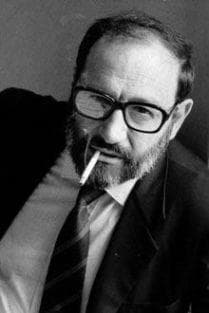
Umberto Eco was an Italian medievalist, philosopher, semiotician, novelist, cultural critic, and political and social commentator. In English, he is best known for his popular 1980 novel The Name of the Rose, a historical mystery combining semiotics in fiction with biblical analysis, medieval studies and literary theory, as well as Foucault's Pendulum, his 1988 novel which touches on similar themes.